Key Takeaway
- 📱 The iPhone 18 Pro is on Philippine shelves this week: official pricing starts at ₱94,990 (Pro) and ₱99,990 (Pro Max) per YugaTech — and deliveries plus Apple Store pickup began September 18.
- 💰 The foldable iPhone Duo prices at ₱159,990 to start (₱254,990 for 2TB) — but patience wins there: PH pre-orders open October 16 and stores October 23, five weeks after the Pro.
- 🤖 Apple Intelligence on iOS 27 is the real upgrade story: a more conversational Siri, on-device AI processing, and AI features across the new Watch lineup — the Pro’s chip is built around it.
- 💳 The PH buyer math: ₱94,990 is roughly 15 months of the average Metro Manila salary — the “is it worth it” answer depends on what your current phone is failing at, not on the keynote.
- ⏳ The honest timing note: Pro buyers who pre-ordered September 12 already hold theirs; walk-in buyers face the usual first-week shortages — and the Duo’s October window gives everyone time to think.
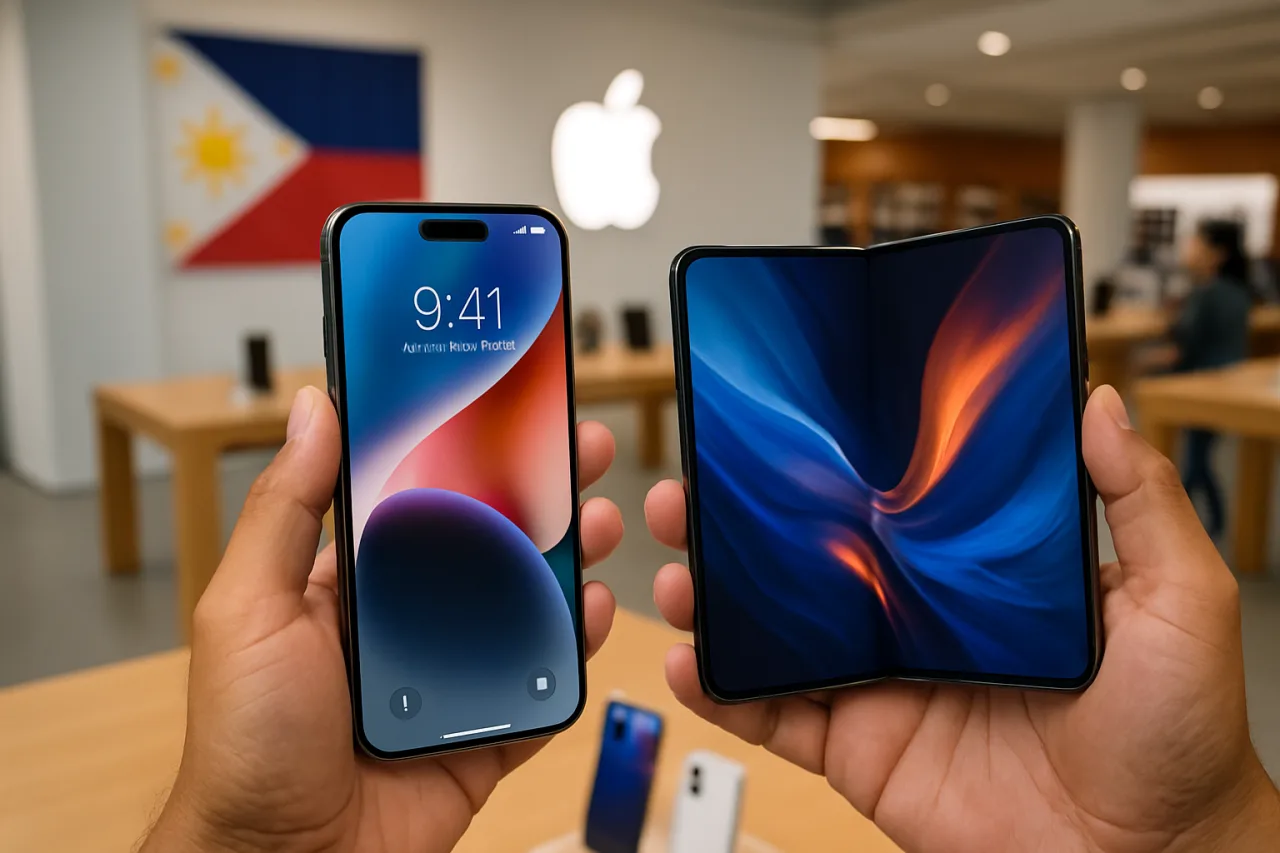
First-ship week has arrived, and the Philippine price list just answered the question every upgrade conversation was circling: the iPhone 18 Pro starts at ₱94,990, the Pro Max at ₱99,990 — and the foldable iPhone Duo, Apple’s first, opens at ₱159,990. Pre-orders for the Pro pair opened September 12 and deliveries hit Manila doorsteps and Apple Store counters from September 18, while the Duo waits for an October 16 pre-order and October 23 release. That five-week gap between the two phones is a gift: nobody has to decide in a rush. This field guide lays out the verified prices, the dates, what Apple Intelligence actually adds on iOS 27, and the honest framework for deciding whether any of it belongs in your hand — or in next year’s plan.
Table of Contents
The Official PH Prices: the Real Numbers
Per YugaTech’s report of the official Philippine lineup: the iPhone 18 Pro starts at PHP 94,990 and the iPhone 18 Pro Max at PHP 99,990 — a tighter gap between the two Pros than in past generations, which makes the Max’s larger screen and battery the whole decision between them. Storage tiers climb from there in the usual ₱5,000-8,000 steps per tier. The foldable iPhone Duo occupies its own bracket: ₱159,990 (256GB) per Inquirer Technology’s pricing reveal, rising through ₱175,990 (512GB), ₱207,990 (1TB) and a ₱254,990 2TB ceiling — the most expensive iPhone ever sold in the Philippines. Note the pattern against the older Pro pricing still circulating in group chats: the ₱69,990 figures people remember belonged to earlier non-Pro models. This year’s Pro line crossed six figures in Max-tier configurations, and the official Apple PH store lists all three phones with the usual trade-in estimator for those bringing older devices.
Ship Dates, Pre-orders and the Duo Wait
The iPhone 18 Pro and Pro Max opened for pre-order Saturday September 12 (12:00 midnight Pacific per the standard Apple schedule — 3:00 PM Manila), and the first deliveries and Apple Store pickups went out worldwide by September 18, per MacRumors — which means the phones are physically in the country as this guide publishes. Walk-in buyers this week face the classic first-ship pattern: core configurations (256GB, standard colors like the burgundy finish) available at Apple Stores and authorized resellers Beyond the Box, Power Mac Center and Switch; exotic storage tiers and colors slipping weeks behind. The Duo runs its own clock: pre-orders October 16, commercial availability October 23, 2026, per TeknoGadyet’s report of the local rollout. The strategic reading: the Pro market clears first, the foldable arrives after the hype cools — and Philippine history says the Duo’s premium will hold longer, with discounts arriving around the holidays rather than at launch.
Apple Intelligence on iOS 27: What Is Actually New
The A18-Pro-class chip inside the 18 Pro exists, per Apple’s positioning, to run Apple Intelligence at a depth the older Pros approximate but don’t match. The 2026 upgrade stack per the coverage of the September 9 event: a substantially more conversational Siri that handles multi-step requests with app awareness, on-device processing expanded to more AI features (fewer cloud round-trips, faster responses), and — arriving later in 2026 — SynthID-style invisible watermarking on AI-edited images. The Apple Watch’s S11 chip brought its own AI slate to the wearable lineup announced the same day, and AirPods 5 pick up the new Siri integration. The honest capability read for a Filipino buyer: the AI features are genuinely useful (translation, message drafting, photo cleanup, smarter Siri in Taglish-mixed contexts) but none are reasons alone to upgrade from a 15 Pro or 16 Pro — they are reasons the new phones exist, not reasons yours must.
The chip powering all this deserves its own line in the decision: the A18-Pro-class silicon runs Apple Intelligence’s expanded on-device stack without breaking the battery budget, and the camera system leans on it — the new Photonic Engine generation processes AI-cleaned shots on-device, and the Pro’s vapor-chamber cooling (new this generation) sustains video workloads the 16 Pro throttled. Battery life, per the first-ship reviews out this week, lands a genuine day-plus for the Max and a long day for the Pro — the Max’s physical advantage compounding with the efficiency gain. None of this is visible in a store demo; it shows up in week two of real use, which is why the first-ship reviews (and your own patience) are worth more than the keynote.
Pro vs Pro Max vs Duo: the Three-Way Choice
The ₱5,000 gap between Pro (₱94,990) and Pro Max (₱99,990) is the easiest call in the lineup: it buys the bigger screen and battery, and most hands adapt within a week — if you consume video and edit on-device, the Max wins; if one-hand use rules your day, the Pro holds. The Duo is a different product: Apple’s first foldable, at a ₱65,000 premium over the Pro, buying a screen that opens wide enough to replace a mini-tablet for reading, drafting and split-view work — at the cost of first-generation durability unknowns and an October 23 wait. The first-generation rule applies with force: foldables from any maker improve meaningfully by generation two, and the ₱65,000 difference is the price of being first. The field guide’s shape: Pro for the pragmatist, Max for the media-heavy, Duo for the enthusiast with budget and patience — and none of the three for the 16 Pro holder whose phone still feels new.
The Peso Math: Installments, Trade-ins and the Real Cost
The sticker is not the cost. Bank installments (0% promos from BPI, Metrobank, Security Bank on launch months) spread the ₱94,990 into roughly ₱7,900 monthly over 12 months — but the honest comparison is against what your current phone costs to keep: an iPhone 13 Pro still receiving iOS 27 support is not a broken phone, and the trade-in market pays ₱15,000-25,000 for clean 14/15 Pros, cutting the effective upgrade price by a fifth or more. The OFW-specific math: at the current ₱62.91 dollar rate, the Pro’s sticker equals roughly $1,510 — meaning US-price buyers (₱-converted) save meaningfully over local SRP even after shipping; balikbangan-box purchases remain the OFW family arbitrage, with the usual warranty caveat (Apple’s international warranty covers PH service for iPhones, but check the specific SKU). The framework this guide leaves you with: compute the effective price (sticker minus trade-in minus installment cost of money), then decide against your phone’s actual failures — battery, camera needs, storage ceiling — not against the keynote’s vocabulary.
The Honest Advice: Who Should Buy, Who Should Wait
Buy now if: your current phone is an iPhone 13 or older (battery and camera deltas are real), your trade-in covers ₱20,000+, and you use AI features daily for work — the iPhone 18 Pro is a two-to-three-year phone and this is its freshest week. Wait if: you hold a 16 Pro (the generational jump is incremental outside Apple Intelligence), you want the Duo but balk at ₱159,990 first-gen pricing (holiday-season discounts historically arrive by December), or your upgrade is driven by the keynote rather than your phone’s behavior — the surest sign of a purchase you’ll regret. The Philippine-specific note: telco plans (Smart, Globe) bundle the Pro at effective discounts over 24-36 months for heavy-data users, and those bundles typically sweeten in the weeks after first-ship as stores hit quota pressure. First-ship week is for the decisive; the price-conscious Philippines shops this phone through October and wins.
Frequently Asked Questions
How much is the iPhone 18 Pro in the Philippines?
Official YugaTech-verified pricing: iPhone 18 Pro from ₱94,990, iPhone 18 Pro Max from ₱99,990, with higher storage tiers climbing from there. The foldable iPhone Duo starts at ₱159,990 (256GB) and reaches ₱254,990 for the 2TB configuration, per Inquirer Technology’s pricing reveal.
When can I buy the iPhone 18 Pro in the Philippines?
Now: pre-orders opened September 12, 2026, and deliveries plus Apple Store pickup began September 18 per MacRumors — first-ship stock is at Apple Stores and authorized resellers (Beyond the Box, Power Mac Center, Switch). The iPhone Duo follows later: pre-orders October 16, stores October 23, 2026.
What is new in the iPhone 18 Pro’s Apple Intelligence?
iOS 27’s Apple Intelligence on the new Pro chip: a more conversational, multi-step Siri, expanded on-device AI processing (faster, more private), AI editing with SynthID watermarking arriving later in 2026, and deeper AI features across the new Watch (S11 chip) and AirPods 5. Useful upgrades for translation, drafting and photo work — but not, by themselves, a reason to retire a healthy 15/16 Pro.
Should I buy the iPhone Duo foldable or the iPhone 18 Pro?
The Duo is a first-generation foldable at a ₱65,000 premium — buy it if the tablet-sized screen is your workflow (reading, drafting, split-view) and ₱159,990 fits your budget without strain; buy the Pro if you want the mature, proven flagship now. The Duo’s October 23 release gives you a month to decide — and first-generation durability is the honest risk every early foldable carries.
Is it worth upgrading from an iPhone 16 Pro?
Most 16 Pro holders should wait a cycle: the 18 Pro’s deltas (conversational Siri, on-device AI depth, camera refinements) are evolutionary. The upgrade makes sense for 15-and-older holders, battery-compromised phones, or users whose work (content creation, translation-heavy communication) monetizes the AI features directly. The ₱94,990 ask deserves a reason stronger than novelty.
Where can I buy the iPhone 18 Pro in the Philippines?
Apple Store PH online (with trade-in estimator), Apple Stores, and authorized resellers: Power Mac Center, Beyond the Box, Switch, iStudio — plus telco postpaid bundles from Globe and Smart, which spread the cost across 24-36 months and occasionally land cheaper than cash over the contract life. First-ship week stock favors core storage tiers and standard colors.
Final Word: the Phone, the Peso, the Patience
First-ship week manufactures urgency; the price list manufactures decisions. The honest frame: ₱94,990 buys a genuinely excellent phone whose AI features matter mostly to people who use AI daily; ₱159,990 buys a first-generation experiment; waiting costs nothing and October discounts exist. The iPhone 18 Pro will still be excellent in November — the mountain’s counsel is to buy it when your old phone fails you, not when the keynote excites you. And for the OFW reader holding the peso conversion at ₱62.91: your dollar just made this phone cheaper than it has ever been to ship home — that arbitrage, not the keynote, is the week’s real feature.