Table of Contents
Key Takeaway
- 💸 Filipinos moved ₱22.1 trillion through InstaPay PESONet rails from January to August 2026 — up 44.7% year on year, per BSP data — and the InstaPay PESONet rules governing what you pay changed with it.
- 📜 BSP Circular 1238 (June 17, 2026) lifted the fee-freeze but installed guardrails: fees must reflect actual cost, the cross-bank premium is capped near the ₱1.50 switch cost, and recipients get the full amount with no deductions.
- 🏪 Small merchants (up to ₱250,000 monthly receipts) must receive digital payments free of charges — and recipients are protected by the no-receiving-fee rule from Circular 980.
- 🏦 The market moved first: BPI cut InstaPay fees from ₱25 to ₱10, RCBC went to ₱10 promo, and several banks waived cross-bank fees entirely — the “free transfers” wave has a regulatory spine.
- 🧭 This guide turns the rules into practice: when to use InstaPay vs PESONet, the ₱500,000 business limit, and a fee-decision checklist Filipino senders can run in 60 seconds.
InstaPay PESONet in 2026: the ₱22 Trillion Surge in Numbers
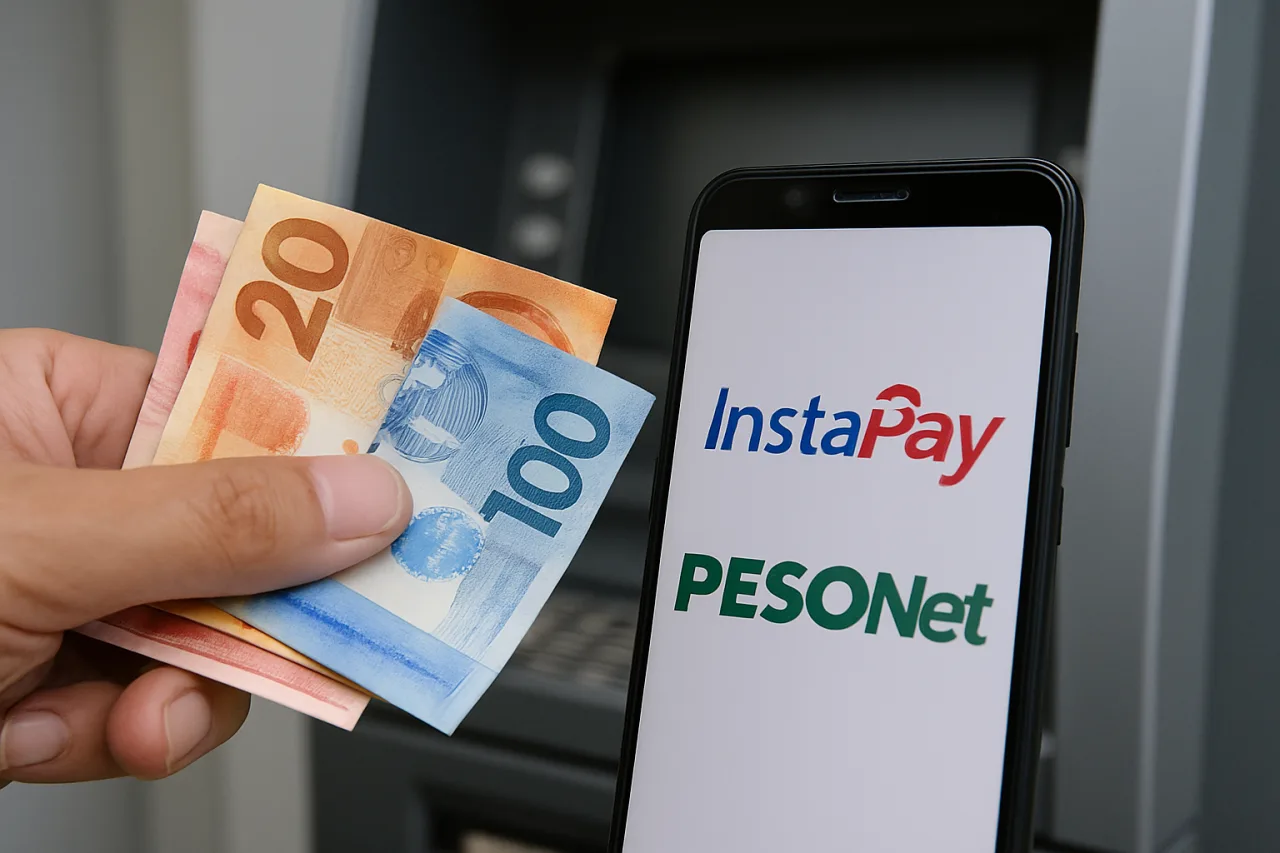
The InstaPay PESONet story of 2026 is a volume story with a rulebook twist. Bangko Sentral ng Pilipinas data reported in September showed InstaPay PESONet combined transfers through the two InstaPay PESONet automated clearing houses reached ₱22.1 trillion from January to August — up 44.7 percent from a year earlier — with volumes up 142 percent in eight months. The Inquirer’s reading of the BSP numbers puts InstaPay’s January–August value at nearly ₱11.1 trillion (up almost 61 percent) across 5.7 billion transactions, while PESONet carried the heavy batch loads: payroll, supplier settlements, and the large-value transfers that once rode on checks.
The context matters for interpreting the fees. InstaPay — the real-time rail for transfers up to ₱50,000 per transaction — passed ATM withdrawals in both volume and value back in 2020 and never looked back. It is the rail behind retail purchases, toll payments, e-commerce checkouts, and the InstaPay PESONet daily peer-to-peer habit of a cash-lite generation. PESONet is the batch electronic credit system that replaced the paper check for business-size movements; it settles in batches rather than instantly, which is why it costs less per peso moved.
Why should a sender care about a trillion-peso aggregate? Because volumes this large are exactly when regulators and banks reprice the plumbing — and in 2026 they did both. The BSP ended its fee moratorium in June and replaced it with a cost-based pricing regime, while banks competed on fee cuts that made headlines: BPI’s ₱25-to-₱10 InstaPay reduction through May 2027’s window, RCBC’s ₱10 promo, and outright cross-bank fee waivers at several institutions. The next section explains what actually changed and what it means at the moment you tap “send.”
What Circular 1238 Changed for InstaPay PESONet Users
On June 17, 2026, the BSP issued Memorandum No. M-2026-025 and BSP Circular No. 1238, lifting the long-standing moratorium on InstaPay/PESONet fee increases while simultaneously disciplining how fees may be set. The moratorium’s end does not mean fees can drift upward freely; the circular replaces the freeze with a pricing framework, and its four rules matter to every Filipino who taps “send”:
- Cost-reflective pricing. The fee on an interbank transfer may not be significantly higher than the same bank’s intrabank transfer fee — the only permissible difference is the actual switch cost, which the BSP pegs at roughly ₱1.50 for InstaPay. A ₱25 cross-bank fee next to a free internal transfer was exactly the gap this rule targets.
- Cost benchmarking and below-counter pricing. Fees must be benchmarked to actual processing cost and remain below over-the-counter charges — digital rails cannot become the expensive option.
- No deductions from the transferred amount. The recipient receives the full amount, consistent with the no-receiving-fee rule of Circular 980 and the transparency duties under the Financial Products and Services Consumer Protection Act (R.A. 11765). Sending ₱10,000 means the family receives ₱10,000.
- Zero-fee receipts for small merchants. Micro-enterprises with monthly gross receipts up to ₱250,000 must be able to accept digital payments free of charges to the merchant — a direct subsidy of sari-sari-store-scale commerce.
Covered institutions had until July 4, 2026 to comply, which is why the summer brought a wave of fee cuts and waivers rather than increases: the compliance deadline arrived with banks already undercutting each other on InstaPay PESONet pricing. The circular also eased onboarding for low-risk merchants — a valid ID may suffice — and set the rules for digital financial marketplaces: banks or e-money issuers operating them need at least three unaffiliated providers, an advanced electronic payments license, and at least ₱1 billion in combined capital.
InstaPay vs PESONet: Which Rail for Which Job
The two InstaPay PESONet rails are complements, not rivals, and choosing correctly is the cheapest optimization in Philippine personal finance.
Use InstaPay when speed is the point. Real-time, 24/7, up to ₱50,000 per transaction for individuals — family support top-ups, urgent bill payments, splitting expenses, paying a supplier today. It is the rail for the moment the money must be there now, and the rail most e-wallets and bank apps default to.
Use PESONet when size or batch is the point. It handles the large-value and batch work — monthly supplier payments, salary runs, tuition blocs — with fees typically lower per peso moved because settlement batches amortize costs. The trade is timing: credits arrive within the day’s batch windows rather than instantly.
The business upgrade changed the math in 2026. InstaPay for Business raised the per-transaction ceiling for registered businesses from ₱50,000 to ₱500,000, ending the old routine of splitting a ₱180,000 supplier payment into four transfers to stay under the retail limit. If you pay contractors, suppliers, or payroll digitally, ask your bank whether your account carries the business profile — the larger single transfers are now possible without switching rails.
A practical note on fees after the circular: check your bank’s current schedule rather than memory. BSP maintains a published summary of transfer fees across supervised institutions, and the post-July 2026 landscape genuinely varies — from free cross-bank transfers at some banks to ₱10–₱25 at others — which is precisely why the checklist below exists.
The 60-Second Fee-Decision Checklist
Before any transfer, four questions settle the cheapest correct InstaPay PESONet rail:
- Is it urgent? Yes → InstaPay. No → PESONet or an intrabank move (often free).
- Is it above ₱50,000? Yes → PESONet (or the business InstaPay ceiling if registered). Above-limit InstaPay attempts either fail or split into fee-multiplying chunks.
- Is the receiving account in the same bank group? Yes → intrabank transfer first; it is usually the cheapest path and the circular’s pricing logic now penalizes banks that overcharge the cross-bank version.
- Is the recipient a small merchant? Then receiving must be free under the zero-fee merchant rule — if a checkout charges them to accept your payment, that is a compliance question worth raising with the provider.
The compounding effect is where Filipinos save real money. A household sending four ₱3,000 support transfers monthly at ₱25 each spends ₱1,200 a year on fees; the same four transfers at ₱10 (or free on a waived-fee bank) costs ₱480 or nothing — enough to matter when the household budget is already stretched. The circular does not promise free transfers everywhere; it promises fees that make sense, and the sender who checks the schedule banks the difference.
For Merchants: Zero-Fee Receipts and the ₱500,000 Limit
If you run a store, online shop, or service business, two changes from the 2026 rules deserve immediate adoption. First, small merchants now have a legal basis to demand zero-fee acceptance: the micro-enterprise definition — up to ₱250,000 in monthly aggregate gross receipts — anchors the zero-fee treatment, so when your payment provider quotes receiving charges, the threshold question is whether you fall under it. Second, the ₱500,000 InstaPay business limit removes the “split the supplier payment” chore — one transfer instead of ten, one fee instead of ten, one reconciliation line instead of a spreadsheet puzzle.
The onboarding ease matters for the informal-to-formal transition too: low-risk merchants can open a receiving account with standard identification under the tiered, risk-based approach. Combined with the full-amount rule — no deductions from what buyers send — the 2026 rules quietly lower the cost of going digital for exactly the businesses that were paying the highest relative fees before.
The OFW Connection: Where the Rails Fit the Remittance Stack
For the OFW household, the InstaPay PESONet rails are the final mile, not the whole journey. Money arrives from abroad through a remittance provider, then moves inside the Philippines — from the receiving account to the provincial bank, the e-wallet, the sari-sari store’s QR, the tuition office. That final mile is where Circular 1238’s rules bite: the receiving account cannot be docked a receiving fee, cross-bank premiums are now bounded, and the household that times its internal transfers (batching the month’s provincial sends into one InstaPay PESONet run, urgent needs on InstaPay) keeps more of the remittance.
Pair the rails with the corridor economics we track in the Wise fee remittance guide and the big-picture shift in the ₱40-billion digital remittance shift: the InstaPay PESONet domestic leg of a corridor that used to cost double digits now often costs single digits end-to-end, and the domestic leg is the part Filipinos control directly. For stablecoin-salary households, the rails are also the conversion point — our PDAX-Toku stablecoin salary explainer shows peso distribution riding the same InstaPay/PESONet infrastructure.
Frequently Asked Questions
How much money moved through InstaPay and PESONet in 2026?
BSP data reported in September 2026 showed ₱22.1 trillion in combined value from January to August — up 44.7 percent year on year — with combined volumes up 142 percent. InstaPay alone carried nearly ₱11.1 trillion across 5.7 billion transactions in the same window.
What is BSP Circular 1238?
The June 17, 2026 issuance (with Memorandum M-2026-025) that lifted the moratorium on InstaPay/PESONet fee increases while installing cost-reflective pricing rules: cross-bank fees may not significantly exceed intrabank fees beyond the actual switch cost (about ₱1.50 for InstaPay), fees must stay below over-the-counter charges, recipients get the full amount, and micro-merchants receive digital payments free of charge.
What is the difference between InstaPay and PESONet?
InstaPay moves up to ₱50,000 per transaction in real time, 24/7 — the rail for urgent and everyday transfers. PESONet handles larger or batched transfers with same-day batch settlement — payroll, supplier payments, large personal transfers. In 2026, registered businesses gained a ₱500,000 per-transaction InstaPay ceiling.
Why did banks cut InstaPay fees in 2026?
A combination of the Circular 1238 pricing discipline (fees bounded by cost and cross-bank parity), compliance deadlines in early July 2026, and competition: BPI cut its InstaPay fee from ₱25 to ₱10, RCBC ran a ₱10 promo, and several institutions waived cross-bank fees outright as a customer-acquisition play in the surging digital-payments market.
Can my bank deduct fees from the amount I receive?
No. The full-amount rule requires recipients to receive the transferred value without deductions, consistent with the no-receiving-fee principle of Circular 980 and consumer-protection transparency duties under R.A. 11765. If a provider docks your receipt, that is a compliance issue you can raise with the BSP.
Do small merchants pay fees to accept InstaPay payments?
Not legally. Circular 1238 requires zero-fee digital payment acceptance for micro-merchants with monthly gross receipts up to ₱250,000, and eased onboarding so a valid ID can suffice for low-risk merchants. Confirm your provider applies the tier; if not, ask them to or switch.