Table of Contents
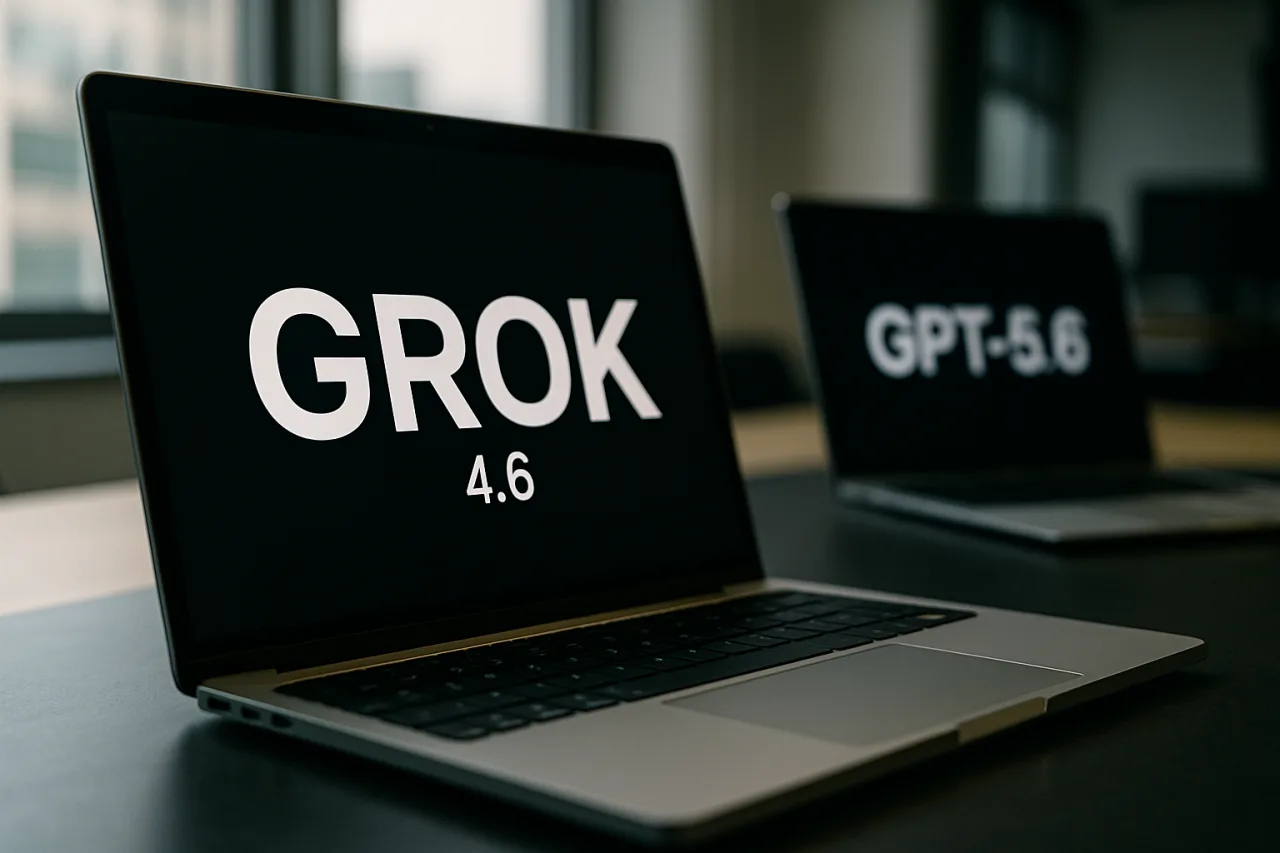
The week of August 10 to 16, 2026, will be remembered as the week the AI price war turned structural. SpaceXAI released Grok 4.6 on August 12, matching OpenAI’s GPT-5.6 Sol on the Artificial Analysis Intelligence Index at 61 while charging less than half the price. Google shipped Gemini 3.7 Flash a day later, doubling coding benchmark scores at half the cost of its three-week-old predecessor. Anthropic began watermarking Claude’s output globally. And Google DeepMind underwent its most significant leadership shake-up in a decade. This is AI World This Week #005 — your WorldNgayon Intelligence Brief.
Executive Brief
- Grok 4.6 arrives at the frontier. SpaceXAI’s latest model scores 61 on the Artificial Analysis Intelligence Index, tying GPT-5.6 Sol and trailing only Claude Opus 5 (63) and Claude Fable 5 (62), at $2/$6 per million tokens — over 60% below Claude Opus 5’s $5/$25.
- Google DeepMind reorganizes to catch up. Demis Hassabis stepped aside from day-to-day management, CTO Koray Kavukcuoglu took operational control, and legendary chief scientist Jeff Dean left after 27 years to start Discovery Loop, as Gemini 3.5 Pro remained delayed by two months.
- AI pricing collapses across the board. Gemini 3.7 Flash launched at half the price of 3.6 Flash, Meta Muse Code debuted at $0.10 per million tokens, and OpenAI’s July price cuts helped ChatGPT reach approximately 1 billion weekly active users.
Overall Weekly Impact: ★★★★☆ (4 of 5) — A defining week for AI economics, with frontier-grade intelligence becoming dramatically cheaper and a major lab reorganizing under competitive pressure.
AI World This Week — Weekly Brief
| Field | Detail |
|---|---|
| Issue | #005 |
| Week | August 10–16, 2026 |
| Reading Time | ~18 minutes |
| Top Story | Grok 4.6 matches GPT-5.6 Sol at half the price |
| Key Themes | Price war, leadership shakeups, watermarking, infrastructure buildout |
| Models Launched | Grok 4.6, Gemini 3.7 Flash, Muse Spark 1.2 (Muse Code) |
| Market Signal | Frontier intelligence is commoditizing faster than expected |
Quick Facts
| Specification | Grok 4.6 |
|---|---|
| Released | August 12, 2026 |
| Developer | SpaceXAI (formerly xAI) |
| Context Window | 500,000 tokens |
| AA Intelligence Index | 61 (ties GPT-5.6 Sol) |
| Input Price | $2 per million tokens |
| Output Price | $6 per million tokens |
| Terminal-Bench v2.1 | 88.4% |
| GDPval-AA v2 Elo | 1,753 (2nd overall) |
| Availability | Cursor, Grok Build, API, OpenRouter, Vercel, Cloudflare |
AI This Week by the Numbers
| Number | What It Represents |
|---|---|
| 2.4T | Parameters in Alibaba’s Qwen 3.8 Max MoE model (95B active) |
| 1M | Token context window for Gemini 3.7 Flash and Qwen 3.8 Max |
| 1B | Weekly active users on ChatGPT after OpenAI’s 80% price cut |
| 80% | Price reduction on GPT-5.6 Luna (from $1 to $0.20 per million input tokens) |
| $100B | Brookfield-NextEra AI data center investment in Kentucky |
| 27 years | Jeff Dean’s tenure at Google before leaving to start Discovery Loop |
| 61 | Grok 4.6’s Artificial Analysis Intelligence Index score |
| 65.3% | Gemini 3.7 Flash DeepSWE score (up from 49.0% in 3.6 Flash) |
| $0.10 | Meta Muse Code contributor tier price per million input tokens |
AI Impact Meter
| Dimension | Rating | Notes |
|---|---|---|
| Innovation | ★★★★☆ | Four frontier releases in one week, but none broke new ground |
| Business | ★★★★★ | Price war reshapes unit economics for every AI-dependent business |
| Developers | ★★★★★ | Frontier-grade coding agents at commodity prices |
| Consumers | ★★★☆☆ | ChatGPT hits 1B users but most changes are API-side |
| Investors | ★★★★☆ | $100B infrastructure commitment signals long-term confidence |
| Philippines | ★★★★☆ | Cheaper AI tools benefit Filipino developers and BPO sector directly |
The Week in Timeline
| Date | Event |
|---|---|
| Aug 2 | Anthropic Claude watermarking goes live globally under EU AI Act Article 50 |
| Aug 3 | Alibaba releases Qwen 3.8 Max (2.4T MoE, first open-source Max-class weights promised) |
| Aug 5 | Meta launches Muse Code, its first AI coding agent, at $0.10/M tokens contributor tier |
| Aug 5 | Google DeepMind reorganization begins: Hassabis moves to chairman role |
| Aug 8 | Jeff Dean announces departure from Google after 27 years to launch Discovery Loop |
| Aug 12 | SpaceXAI releases Grok 4.6 — AA Intelligence Index 61, $2/$6 pricing |
| Aug 13 | Google releases Gemini 3.7 Flash — DeepSWE 65.3%, half the price of 3.6 Flash |
Key Takeaway
- Frontier parity at commodity prices: Grok 4.6 matches GPT-5.6 Sol on intelligence at less than half the cost, proving that frontier-grade AI is no longer a premium product.
- Google under pressure: The DeepMind reorganization, Gemini 3.5 Pro delays, and Jeff Dean’s departure signal that Google’s AI execution has not kept pace with OpenAI and Anthropic.
- Watermarking goes mainstream: Anthropic’s global text watermarking under EU AI Act Article 50 sets a transparency precedent that other labs will face pressure to follow.
- Infrastructure scales up: The $100 billion Kentucky data center project confirms that AI infrastructure investment is accelerating, not slowing, despite bubble concerns.
- The developer wins: Four frontier coding models launched in one week at collapsing prices — the biggest beneficiary is any developer building AI-powered products.
1. 🤖 Models & Releases
The week saw four major model releases that collectively redefined the price-performance frontier. Grok 4.6, released by SpaceXAI on August 12, is the headline. It scores 61 on the Artificial Analysis Intelligence Index, a composite of nine benchmarks, matching OpenAI’s GPT-5.6 Sol and trailing only Anthropic’s Claude Opus 5 (63) and Claude Fable 5 (62). The 5-point gain over Grok 4.5 represents one of the largest single-release improvements in the index’s history.
What makes Grok 4.6 strategically significant is not the score alone but the price. At $2 per million input tokens and $6 per million output tokens, Grok 4.6 is priced identically to Grok 4.5 — and more than 60% below Claude Opus 5 ($5/$25) and significantly below GPT-5.6 Sol ($5/$30). For developers running high-volume API workloads, this changes the unit economics of AI-powered products. SpaceXAI is offering double usage quotas in Grok Build and Cursor for the first week to drive adoption.
On the agentic front, Grok 4.6 scores 1,753 Elo on the GDPval-AA v2 benchmark, second overall, and 88.4% on Terminal-Bench v2.1. The model completes complex agentic tasks in approximately 53 steps, compared to Claude Opus 5’s 103 steps — meaning it reaches solutions faster and at lower cost per task. Artificial Analysis measured the cost per agentic task at $0.84 for Grok 4.6.
Google responded a day later with Gemini 3.7 Flash, released August 13. The model delivers substantial coding gains over its three-week-old predecessor: DeepSWE v1.1 jumped from 49.0% to 65.3%, FrontierCode 1.1 Main from 34.4% to 43.6%, and AutomationBench nearly doubled from 17.0% to 30.4%. The introductory price of $0.75/$3.75 per million tokens is half the original 3.6 Flash cost, rising to $1.50/$7.50 in January 2027. Notably, Gemini 3.5 Pro — Google’s long-awaited flagship — remains unreleased and reportedly delayed by two months after internal testing showed it lagging behind rivals in coding.
Earlier in the week, Alibaba’s Qwen 3.8 Max continued generating attention following its August 3 release. The 2.4-trillion-parameter mixture-of-experts model with 95 billion active parameters leads on PaperBench (93.0) and Terminal-Bench 2.1 (86.6%), and Alibaba announced it would open-source the Max-class weights for the first time — a move that could reshape the open-weight landscape. Meta’s Muse Code, launched August 5 on the Muse Spark 1.2 model, entered the coding agent market at a contributor tier of $0.10 per million input tokens — 21 times cheaper than the standard tier, in exchange for users sharing data to improve the tool.
WorldNgayon Analysis: For Filipino developers and startups, the collapsing cost of frontier-grade AI is the most consequential trend of 2026. A developer in Manila or Cebu can now access Grok 4.6 intelligence for less than the cost of a coffee per million tokens. This democratizes AI-powered product development in ways that directly benefit the Philippine tech ecosystem, where budget constraints have historically limited access to premium AI APIs. The AI coding tools adoption curve among Philippine developers is accelerating precisely because the price floor keeps dropping.
Bottom Line: Frontier intelligence is commoditizing faster than anyone predicted, and the winner is the developer who can build the best product on top of it.
2. 💼 Industry & Business
The biggest industry story of the week was not a model release but a leadership earthquake at Google DeepMind. On August 5, Demis Hassabis stepped away from day-to-day management of the AI lab he co-founded, becoming chairman and Alphabet chief scientist. CTO Koray Kavukcuoglu took operational control as SVP. Three days later, Jeff Dean — Google’s most senior engineer, who had been with the company for 27 years — announced his departure to launch a startup called Discovery Loop with several top researchers. Nobel laureate John Jumper, who shared the Nobel Prize with Hassabis for AI protein structure prediction, had already left DeepMind earlier in the year to join Anthropic.
The reorganization is an implicit admission that Google’s AI execution has not kept pace. According to Reuters and CNBC reporting, Google delayed Gemini 3.5 Pro by two months after internal testing showed it lagging behind rivals in coding performance. Co-founder Sergey Brin had urged staff in an April town hall to move faster. Ben Wood, chief analyst at CCS Insight, told CNBC that Kavukcuoglu’s goal will be “to close the gaps with Anthropic and OpenAI in some areas.”
Meanwhile, OpenAI crossed a milestone that underscores the scale of the AI adoption curve. ChatGPT reached approximately 1 billion weekly active users, a figure that coincided with the company’s aggressive July 30 price cuts on GPT-5.6 Luna (80% reduction) and GPT-5.6 Terra (20% reduction). As we reported in AI World This Week #004, OpenAI also closed a $122 billion funding round at an $852 billion valuation earlier in August. The combination of a billion users and collapsing API prices creates a flywheel: cheaper access drives more usage, more usage generates more data, more data improves the models.
The competitive dynamics are stark. Anthropic leads on intelligence with Claude Opus 5 at AA Index 63. OpenAI matches on capability and dominates on distribution with a billion users. SpaceXAI matches on intelligence at half the price with Grok 4.6. Google has the research depth and infrastructure but is struggling to ship. Meta is competing on price with a data-sharing twist. And Alibaba is betting that open-source Max-class weights will capture the enterprise market that values control over convenience.
WorldNgayon Analysis: The Google DeepMind shakeup matters for the Philippines because Google is the default AI platform for many Filipino businesses through Google Workspace and Google Cloud. If Google falls further behind, enterprises that built their AI strategy around Gemini may need to diversify. Filipino companies should avoid single-vendor lock-in and evaluate Grok 4.6, Claude, and open-source alternatives alongside Gemini. The race for superintelligent AI is creating a fragmented landscape where no single provider is clearly dominant across all dimensions.
Bottom Line: Google’s AI leadership crisis is real, and the competitive gap is narrowing, not widening, despite its research strength.
3. 🏛 Policy & Regulation
Anthropic made a quiet but precedent-setting move this week that received less attention than the model releases but may prove more consequential over time. Starting August 2, 2026, all new Claude models launched in the EU — and globally, not just in Europe — embed invisible machine-readable watermarks in generated text and attach C2PA-compliant provenance metadata to supported file outputs including PNG, JPG, and SVG. The move complies with Article 50(2) of the EU AI Act, which requires AI providers to mark AI-generated content in a way that other systems can identify.
Anthropic confirmed that the watermark is embedded at the model level, meaning it appears regardless of which Claude product or surface generates the text. “Because the watermark is part of the text, it will travel with the text when it’s copied and pasted elsewhere, and may persist through some editing,” Anthropic’s support page states. The company has not disclosed the specific technical mechanism, and it acknowledges that heavy editing, translation, or very short outputs can weaken or remove the watermark.
This makes Anthropic the first major AI lab to implement text watermarking globally. OpenAI withdrew its own text watermarking feature for ChatGPT in 2023 citing concerns about false positives and user pushback. The EU AI Act’s transparency requirements, which took effect August 2, create a regulatory floor that may force other labs to follow. The transition period for generative systems placed on the market before August 2 extends to December 2, 2026, giving existing models a temporary reprieve.
The C2PA (Coalition for Content Provenance and Authenticity) standard that Anthropic uses for file metadata is the same standard adopted by Adobe, Microsoft, Sony, and others for content authenticity. Third-party detection tooling is still forthcoming, and Anthropic says older models will be updated to include marking during a transition period.
WorldNgayon Analysis: Watermarking matters for the Philippines because the country is ground zero for AI-generated disinformation. Filipino professionals working in media, content creation, and BPO services will need to understand that AI-generated text from Claude now carries embedded provenance signals. This could affect content verification workflows, plagiarism detection, and regulatory compliance under the Philippines’ own data privacy and anti-disinformation frameworks. As AI-powered attacks increase, provenance signals become a defensive tool.
Bottom Line: Anthropic’s global watermarking sets a transparency precedent that will reshape how AI-generated content is detected and regulated worldwide.
4. 🖥 Infrastructure
The most consequential infrastructure announcement of the past two weeks is the $100 billion AI data center campus that Brookfield Asset Management and NextEra Energy are developing at the Department of Energy’s former Paducah site in western Kentucky. The project, announced July 29, represents the largest private investment in Kentucky’s history and one of the largest AI infrastructure commitments globally.
The campus will occupy portions of the 3,556-acre site that once housed a Cold War-era uranium enrichment facility using gaseous diffusion technology — operations that ceased in 2013. Brookfield will develop and operate the 1.8-gigawatt data center campus, while NextEra Energy will build up to 2 gigawatts of natural gas-fired power generation and 2.6 gigawatts of battery storage capacity. The project is expected to create approximately 8,000 jobs and reach completion in 2031.
The scale is remarkable: 1.2 gigawatts of dedicated data center compute capacity, with up to 1.8 gigawatts of electricity that could also be supplied to the grid. The partnership with DOE repurposes federal land for private AI infrastructure, a model that could expand to other decommissioned government sites. The project comes as the Trump administration pushes to address surging power demand from data centers that threatens both the AI race against China and electricity prices ahead of November midterm elections.
Philippine Connection
While the Kentucky project is US-based, its implications ripple through Southeast Asia. The accelerating demand for AI compute capacity is driving hyperscalers to expand globally, and the Philippines is positioning itself as a regional data center hub. The country’s geographic position, improving power infrastructure, and growing IT workforce make it a candidate for secondary data center markets. Filipino engineers and construction workers — both domestic and OFW — are likely to participate in buildouts of this scale, whether in Kentucky or in emerging Southeast Asian AI infrastructure projects.
WorldNgayon Analysis: The $100 billion Kentucky project signals that AI infrastructure investment is accelerating despite bubble concerns. For the Philippines, this matters in two ways: first, global hyperscaler expansion increases the likelihood of significant data center investment in the country; second, Filipino OFWs in construction, engineering, and IT sectors stand to benefit from the global buildout. The infrastructure underpinning AI is becoming as important as the models themselves.
Bottom Line: A $100 billion bet on a former uranium site confirms that the AI infrastructure buildout is real, funded, and accelerating.
5. 🔬 Research
SpaceXAI’s Grok 4.6 announcement included notable detail about its training methodology. The model underwent a longer supplemental training run than Grok 4.5, using curated model-generated data for reasoning and advanced technical concepts, high-quality engineering data, and an improved optimizer and training recipe. The team then used Grok 4.5 to regenerate the SFT (supervised fine-tuning) trajectories across reasoning efforts, agent harnesses, and domains including STEM, software engineering, and knowledge work. Problematic traces were filtered out with model-based checks.
The RL (reinforcement learning) stage trained Grok 4.6 on a wide range of agentic tasks, including knowledge work, general coding, and domain-specific environments for kernel optimization, web development, and computer-aided design. This agentic RL approach — training the model to complete multi-step tasks rather than simply generate text — is becoming the standard method for frontier labs. The result is visible in the benchmarks: Grok 4.6 completes complex agentic tasks in approximately 53 steps, compared to Claude Opus 5’s 103, suggesting more efficient planning and execution.
On the Google side, Gemini 3.7 Flash demonstrated impressive multimodal capabilities. Google showcased the model generating playable 3D games from text prompts using Gemini 3.7 Flash combined with Nano Banana for dynamic asset generation, creating interactive landing pages with sub-agent orchestration, and training robotics models using multimodal understanding in a three-agent graph loop. The model’s GDP.pdf benchmark score of 34.0% (up from 22.0%) shows meaningful progress in complex document processing — a capability with direct applications in legal, financial, and regulatory workflows.
WorldNgayon Analysis: The training methodology behind Grok 4.6 — using the previous model to generate training data for the next — represents a scalable approach that could accelerate the model improvement cycle. For Filipino AI researchers and students, this is a case study in how iterative self-improvement loops work in practice. The specialized AI models like GPT-5.6-Cyber demonstrate that the same base techniques can be applied to domain-specific training, opening career paths in AI safety and specialized model development.
Bottom Line: Self-generated training data and agentic RL are becoming the standard recipe for frontier model improvement.
6. 📈 AI Market Watch
| Company | Context | Signal |
|---|---|---|
| NVIDIA (NVDA) | Stock trading around $223; Morningstar fair value estimate $280 | ↑ Undervalued relative to AI spending trajectory |
| OpenAI | ~1 billion weekly active users; $852B valuation from $122B raise | ↑ Distribution moat strengthening |
| Anthropic | AA Index leader with Claude Opus 5 (63); watermarking leadership | ↑ Intelligence and policy positioning |
| Alphabet (GOOGL) | DeepMind reorg; Gemini 3.5 Pro delayed; Flash shipping well | ↓ Execution risk increasing |
| Brookfield (BAM) | $100B Kentucky data center project; 1.8GW campus | ↑ Infrastructure exposure |
| NextEra Energy (NEE) | 2GW gas + 2.6GW battery storage for Kentucky project | ↑ AI-energy convergence play |
Morningstar’s $280 fair value estimate for NVIDIA implies price-to-adjusted-earnings multiples of 30 times for fiscal 2027 and 20 times for fiscal 2028, based on expected 80% total revenue growth in fiscal 2027. However, Morningstar flagged the pace of AI spending going forward as the biggest risk, noting that spending comes from a handful of customers who have an incentive to eventually optimize or reduce investments. The firm also foresees tech leaders turning to in-house chips for a portion of their workloads, which could reduce NVIDIA’s pricing power.
Filipino Investor Angle
For Filipino investors with exposure to US equities through local brokers or international platforms, NVIDIA remains the most direct play on AI infrastructure spending. The Brookfield-NextEra project validates the energy-AI convergence thesis. However, investors should watch for the point where hyperscaler capital expenditure growth slows — that is when the AI infrastructure trade could reset. On the model side, the price war means that the value is shifting from the models themselves to the applications built on top of them. Companies that build proprietary data advantages and workflow integrations will capture more value than those selling raw model access.
WorldNgayon Analysis: Filipino investors should note that the AI investment thesis is bifurcating. Infrastructure (NVIDIA, Brookfield, NextEra) is a capacity play driven by hyperscaler spending. Models (OpenAI, Anthropic, SpaceXAI) are a price war where margins are compressing. The sweet spot is the application layer — companies that use AI to solve real business problems are where the durable value is being created.
Bottom Line: NVIDIA’s fair value suggests upside, but the AI investment thesis is shifting from infrastructure to applications.
7. 🛠 Tool of the Week
Tool: Grok 4.6 in Cursor and Grok Build
What It Does: Grok 4.6 is a frontier AI model optimized for long-running agentic tasks — researching topics, analyzing information, working across codebases, and turning ideas into working applications. In Cursor, it functions as a coding agent that can plan changes, write code, and validate results across large projects. In Grok Build, it serves as a general-purpose AI agent for research and creative work.
Who It’s For: Developers, researchers, and product builders who need frontier-grade intelligence at the lowest available price point. Especially valuable for startups and solo developers in cost-sensitive markets like the Philippines.
Cost: $2 per million input tokens, $6 per million output tokens. A fast variant is available at twice the price. SpaceXAI is offering 2x included usage in Cursor and Grok Build for the first week. Prompts exceeding 200,000 tokens are billed at $4/$12 per million.
Quick Use Case: Open Cursor, select Grok 4.6 as your model, and describe a full-stack application you want to build. The model will research the domain, structure the application, implement core functionality, and iterate through feedback — staying with the task across many steps.
Our Verdict: Grok 4.6 is the best price-to-performance ratio available this week for developers who need frontier intelligence without frontier pricing. The 53-step average for complex tasks (vs. 103 for Claude Opus 5) means faster results at lower cost. For Filipino developers, it is worth testing as a primary coding agent, especially for high-volume API workloads where the $2/$6 pricing creates a meaningful cost advantage.
WorldNgayon Analysis: The AI tools that Filipino developers choose will shape career trajectories in the coming years. Grok 4.6’s aggressive pricing makes it accessible to developers who previously could not justify the cost of frontier-tier APIs. This is particularly relevant for Philippine startups and freelance developers serving international clients.
Bottom Line: At $2/$6 per million tokens with frontier-grade intelligence, Grok 4.6 is the most cost-effective frontier model available this week.
8. 🎯 Why It Matters
For Professionals: The collapse in AI pricing means that professionals in every industry can now afford to integrate frontier AI into their workflows. Whether you are a financial analyst in Manila, an engineer in Riyadh, or a content creator in Cebu, the cost of AI-assisted work is dropping to near-zero. The skill that matters now is not access to AI but the ability to use it effectively.
For Businesses: The price war creates both opportunity and risk. Opportunity: AI-powered products and internal tools become economically viable at scale. Risk: competitors can match your AI capabilities at lower cost, meaning competitive advantage must come from data, workflow design, and customer relationships rather than from the AI model itself. Businesses that built moats around “we use AI” are finding that moat disappearing.
For Students: The message from this week is clear: learn to build with AI agents, not just use AI chatbots. Four frontier coding models launched in one week, all optimized for agentic workflows. Students who master agent orchestration, prompt engineering for multi-step tasks, and AI-assisted development will have a significant advantage in the job market. The consensus from industry leaders is that AI literacy is no longer optional.
For Developers: This is the best week to be a developer in 2026. Grok 4.6 at $2/$6, Gemini 3.7 Flash at $0.75/$3.75, Meta Muse Code at $0.10, and Qwen 3.8 Max going open-source — the cost of building AI-powered applications has never been lower. Developers should test multiple models rather than committing to one, as the price-performance frontier is shifting weekly.
WorldNgayon Analysis: For Filipino professionals across every sector, the AI price war is the most economically significant trend of 2026. It removes the budget barrier that has kept many Philippine businesses and developers on the sidelines of the AI revolution. The question is no longer “can we afford AI?” but “can we afford not to build with it?”
Bottom Line: The cost of frontier AI is collapsing, and the professionals who move fastest to integrate it will capture the most value.
WorldNgayon Insight
The single most important insight from this week is not that Grok 4.6 matches GPT-5.6 Sol, or that Gemini 3.7 Flash doubles coding scores, or even that Google DeepMind is reorganizing. It is this: the AI industry is undergoing a simultaneous compression of price and expansion of capability that has no historical precedent. When Grok 4.6 delivers frontier intelligence at 60% below the competition, when Gemini 3.7 Flash ships at half the price of a model released three weeks earlier, when Meta offers coding intelligence at $0.10 per million tokens — the message is that intelligence itself is becoming a utility. Not because any single model is perfect, but because the gap between the best and the cheapest is narrowing so fast that premium pricing for raw intelligence is becoming unsustainable.
For the Philippines, this is unambiguously good news. A country where the median income cannot justify $30 per million output tokens can absolutely justify $6. A startup in Makati that could not build on Claude Opus 5 can build on Grok 4.6. A student in Davao who could not access frontier AI can now do so through free tiers and loss-leader pricing. The democratization of AI is not happening through policy or charity — it is happening through brutal market competition. And the biggest beneficiary is every Filipino professional who is ready to build.
WorldNgayon AI Index
| Dimension | Score (out of 10) | Notes |
|---|---|---|
| Innovation | 8 | Four frontier releases, but incremental rather than breakthrough |
| Business | 9 | Price war reshapes unit economics; DeepMind reorg signals competitive stress |
| Research | 7 | Agentic RL training methodology and multimodal gains notable but not paradigm-shifting |
| Policy | 8 | Anthropic’s global watermarking under EU AI Act is a regulatory milestone |
| Infrastructure | 8 | $100B Kentucky project confirms sustained infrastructure investment |
| Overall Week | 8 | A defining week for AI economics — price war, leadership shakeup, and watermarking in one package |
Looking Ahead
- Alibaba’s open-source release of Qwen 3.8 Max weights on HuggingFace — expected within days, could reshape open-weight landscape
- Gemini 3.5 Pro release timeline — Google’s delayed flagship remains the biggest unanswered question in the frontier race
- EU AI Act Article 50(2) December 2 deadline for pre-August 2 models — watch for OpenAI and Google watermarking announcements
- NVIDIA fiscal Q3 earnings — will validate or challenge the infrastructure spending thesis
- SpaceXAI Grok 4.6 adoption metrics — first-week usage data from Cursor and Grok Build will indicate whether the pricing strategy is working
- Discovery Loop — Jeff Dean’s new startup details, funding, and first projects
Stay tuned for AI World This Week #006.
Frequently Asked Questions
What is AI World This Week?
AI World This Week is the flagship weekly AI briefing from WorldNgayon, published every Sunday. It transforms global AI developments into practical insight for Filipino professionals worldwide, covering models, business, policy, infrastructure, research, markets, tools, and career implications in a single comprehensive issue.
What is the WorldNgayon AI Index?
The WorldNgayon AI Index is a weekly editorial assessment of how consequential the week’s AI developments were, scored across five dimensions: Innovation, Business, Research, Policy, and Infrastructure. It is not a model benchmark — it is an editorial judgment of impact and significance.
How does Grok 4.6 compare to Claude Opus 5?
Grok 4.6 scores 61 on the Artificial Analysis Intelligence Index, while Claude Opus 5 scores 63. However, Grok 4.6 is priced at $2/$6 per million tokens, more than 60% below Claude Opus 5’s $5/$25. On agentic benchmarks, Grok 4.6 completes complex tasks in approximately 53 steps versus Claude Opus 5’s 103 steps, meaning faster results at lower cost per task.
Why did Demis Hassabis step aside at Google DeepMind?
Hassabis moved to a chairman and Alphabet chief scientist role to focus on long-term strategy, with CTO Koray Kavukcuoglu taking operational control. The reorganization comes as Google races to catch OpenAI and Anthropic after Gemini 3.5 Pro was delayed by two months due to performance lagging behind rivals in coding benchmarks.
What does Anthropic’s watermarking mean for AI-generated content?
Starting August 2, 2026, all new Claude models embed invisible machine-readable watermarks in generated text and C2PA metadata in supported file outputs. The watermark travels with copied text and may survive some editing. This is the first global implementation of text watermarking by a major AI lab, complying with EU AI Act Article 50(2).
Is the $100 billion Kentucky data center a sign of an AI bubble?
The Brookfield-NextEra project represents a $100 billion private investment in AI infrastructure on a former uranium enrichment site, with 1.8 gigawatts of capacity and 8,000 jobs. Whether it signals a bubble depends on whether AI demand materializes at the projected scale. The project’s 2031 completion date means the bet is on long-term AI growth, not short-term hype.
Should Filipino developers switch to Grok 4.6?
Filipino developers should test Grok 4.6 alongside their current tools rather than switching exclusively. The $2/$6 pricing makes it the most cost-effective frontier model this week, but the AI landscape is shifting rapidly. Best practice is to use multiple models for different tasks — Grok 4.6 for high-volume agentic work, Claude for complex reasoning, and Gemini for multimodal tasks within the Google ecosystem.
This article is for informational purposes only and does not constitute investment advice or professional recommendation. AI model benchmarks and pricing change rapidly. Readers should verify current specifications and costs directly with providers before making business or investment decisions.