Table of Contents
Key Takeaway
- ⚖️ The launch: Gemini Enterprise Legal is here — Google Cloud unveiled the purpose-built agentic AI platform for law firms and corporate legal departments, debuting in preview with Cleary Gottlieb, Freshfields, Weil, and Williams & Connolly as launch customers.
- 🔌 How it works: The platform combines specialized legal skills, secure MCP connectors to more than 13 legal systems (iManage, NetDocuments, DocuSign, RelativityOne, Thomson Reuters HighQ), pre-built agents, and a governed control plane with verifiable grounding.
- 📊 Why now: 69% of legal professionals now use generative AI for work — more than double the 31% of a year earlier — yet 54% of firms provide no AI training. The gap between enthusiasm and governance is exactly what this product targets.
- 🇵🇭 Filipino angle: Philippine law firms and legal process outsourcing teams compete globally on cost and speed. Platform-grade legal AI resets that baseline — and Filipino legal professionals who master governed AI workflows gain a global market.
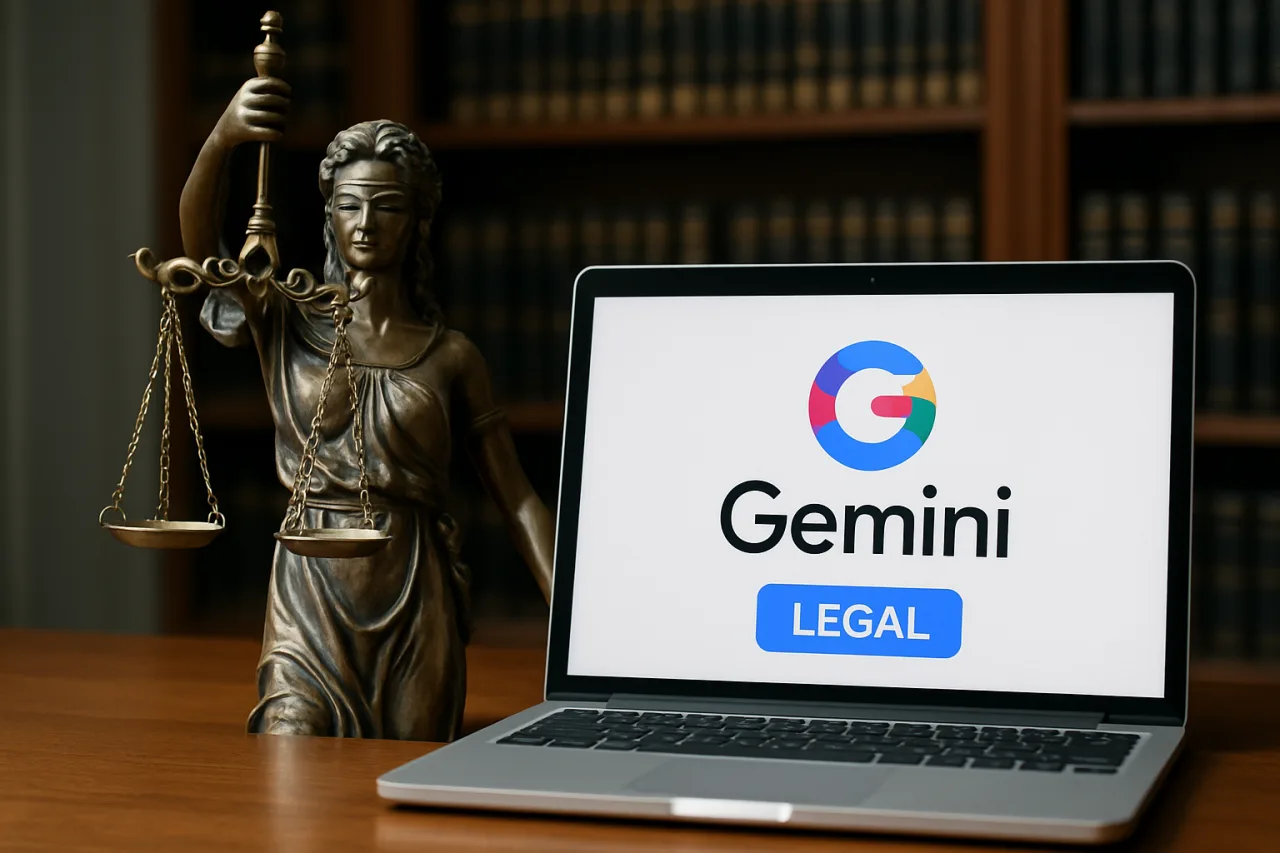
Gemini Enterprise Legal is Google’s answer to the industry every AI company has circled for two years but few have dared to serve: the law. Announced August 25, 2026 by Google Cloud CEO Thomas Kurian, the platform is engineered for the requirements that make legal different — strict confidentiality, privilege protection, verifiable citations, and compliance obligations where a hallucinated answer is not a bug report but a malpractice claim. Four of the world’s most demanding law firms signed on before launch. That detail, more than any feature list, is the story.
What Gemini Enterprise Legal Actually Does
The platform comprises four components, per Google’s announcement. First, purpose-built legal skills — domain-specific capabilities for tasks lawyers actually perform: contract review, legal research, regulatory monitoring, DSAR response, and court filing preparation. Second, secure MCP (Model Context Protocol) connectors that link the AI to the systems where legal work already lives — iManage, NetDocuments, DocuSign, Everlaw, RelativityOne, and Thomson Reuters HighQ, plus specialized AI services like Harvey — while respecting existing access permissions. Third, pre-built and specialized agents, including third-party agents from partners like Deloitte. Fourth, a governed control plane with verifiable grounding: every answer anchored to source documents, every action logged, every permission inherited from the firm’s existing security model.
That last component is the one that matters most to lawyers. A 2026 Stanford-led study found that even purpose-built legal AI tools hallucinate at rates between 17% and 33% — and U.S. courts have sanctioned lawyers for filing AI-generated citations that did not exist. Verifiable grounding, where the system must cite the document it drew from and can be audited doing so, is the difference between a demo and a product a general counsel can sign off on. Google Cloud’s own framing targets this directly: the platform automates workflows “across practice areas” while keeping data secure and confidential, with regulatory horizon scanning that proactively flags rule changes instead of waiting to be asked.
Quartz reported the platform is the first in a series of industry-specific offerings built on the Gemini Enterprise base — a companion product for financial services was announced the same day — signaling that Google intends to verticalize its enterprise AI push one regulated industry at a time.
The Adoption Numbers Behind the Gemini Enterprise Legal Launch
The legal industry did not ease into AI — it sprinted. The 8am 2026 Legal Industry Report, based on responses from more than 1,300 legal professionals, found 69% now use generative AI for work, up from 31% one year earlier — more than doubling in twelve months. Legal-specific tool use jumped from 21% to 42%. The Thomson Reuters 2026 AI in Professional Services Report put law firm generative AI adoption at 41%, up from 28%, with corporate legal departments climbing faster still — from 23% to 47%. Clio’s data puts overall AI usage among legal professionals even higher, at 79%.
The productivity data explains why. Lawyers report saving up to 32.5 working days per year using generative AI — more than six weeks returned to billable and strategic work. Wolters Kluwer’s Future Ready Lawyer 2026 survey of 810 lawyers found more than 90% use at least one AI tool daily, 62% report 6-20% weekly time savings, and 52% credit AI with revenue growth. Document review leads all use cases at 77% adoption, followed by summarization (77%) and legal research (74%).
But the same reports expose the gap Google is selling into: 54% of firms provide no AI training and have no plans to; 43% lack any formal AI policy. Individual lawyers are using consumer AI tools on firm matters without institutional guardrails — precisely the risk scenario that platform solutions with governance built in are designed to replace. The business case for Gemini Enterprise Legal is less “do more with AI” than “keep the AI your lawyers already use from becoming your next sanction.”
Why Law Is the Hardest — and Most Valuable — AI Vertical
Legal is where AI’s weaknesses are most expensive. A hallucinated answer in marketing copy is embarrassing; a hallucinated case citation ends careers. Confidentiality rules mean client data cannot simply flow into a public model. Privilege protection requires that AI systems not become discoverable surfaces that waive attorney-client privilege. And courts have already documented the consequences of getting it wrong — sanctioned filings, disqualified work, judicial warnings that have made “AI on trial” its own genre of legal news.
This is why the Gemini Enterprise Legal launch customer list matters. Cleary Gottlieb, Freshfields, Weil, and Williams & Connolly are not early-adopter boutiques — they are global firms whose entire franchise is trust. Their willingness to pilot the platform signals that the governance architecture (verifiable grounding, permission inheritance, audit trails) cleared scrutiny from people whose job is finding flaws. Reuters noted the competitive context: Anthropic and other rivals have expanded enterprise offerings in recent months, including in the legal sector, and Deloitte’s 2026 legal AI report found firms investing heavily even though the transformation remains early-stage.
For Google, the strategic logic is equally clear. Google Cloud has become one of Alphabet’s fastest-growing businesses, and Gemini Enterprise — launched for general business customers in October 2025 — is its vehicle for attracting corporate clients. Legal is the beachhead vertical because it pays premium prices, demands exactly the controls Google built, and once a firm’s workflows live inside a governed platform, switching costs do the retention automatically.
The Filipino Angle: Legal AI Meets the Philippine Legal Economy
The Philippines sits closer to this story than most readers realize. The country’s legal process outsourcing industry — LPO — employs thousands of Filipino legal professionals doing contract review, document discovery, and legal research for international clients. Those are precisely the workflows Gemini Enterprise Legal automates. When global firms deploy agents that review contracts and prepare filings, the offshore work that fed those departments changes: volume review shrinks, but oversight, quality control, and AI-workflow management grow. The Filipino legal professionals who move from doing the review to supervising the systems that do it will capture the higher-value end of that shift.
Domestically, the launch lands amid the Philippines’ own AI governance debate — multiple House and Senate bills, from the proposed AI Development Authority to the National AI Code, are working through the 20th Congress while the legal profession itself wrestles with AI use in practice and in legal education. The UP College of Law’s decision to bar AI tools in first-year core subjects, made precisely to protect reasoning skills, is the mirror image of a platform that promises governed, verifiable AI for working lawyers. Both respond to the same reality: AI is already inside the profession — the only question is whether its use is structured or improvised.
For Filipino lawyers and legal professionals, the practical takeaway is about skills, not tools. The 8am report’s finding that most firms provide no training is also an opening: the professional who brings governed-AI fluency — prompt discipline, verification habits, workflow design, data-privilege awareness — becomes the person the firm trusts to lead adoption. In a market where 95% of professionals expect AI to become central to legal work, that is a career-defining skill set. The lawyers who thrive in the Gemini Enterprise era will not be the ones who resist the platform or surrender to it, but the ones who can govern it.
What Comes Next
Watch three things for Gemini Enterprise Legal. First, how quickly the preview converts to general availability — and whether Google publishes pricing that undercuts the legal-AI specialists like Harvey, which the platform already integrates with. Second, whether Philippine law firms and BPO legal providers adopt platform-grade legal AI in 2026-2027; the LPO sector’s response will show whether the country’s legal services industry treats AI as threat or leverage. Third, the regulatory dimension: as courts and bar associations worldwide formalize AI-use rules, expect the governance features that distinguish this launch — grounding, audit trails, permission inheritance — to become procurement requirements, not differentiators.
The launch of Gemini Enterprise for Legal marks the moment AI stopped selling the legal industry a promise and started selling it infrastructure. The firms that signed up on day one understood what the rest of the market is about to learn: in law, the future belongs not to whoever has the best AI, but to whoever has the most trustworthy system for using it.
Frequently Asked Questions About Gemini Enterprise Legal
What is Gemini Enterprise for Legal?
A purpose-built agentic AI platform from Google Cloud, launched August 25, 2026, for law firms and corporate legal departments. It combines specialized legal skills, secure MCP connectors to 13-plus legal systems, pre-built agents from partners like Deloitte, and a governed control plane with verifiable grounding. It is initially available in preview, with Cleary, Freshfields, Weil, and Williams & Connolly as launch customers.
Which legal software does Gemini Enterprise Legal integrate with?
The platform connects via secure MCP connectors to widely used legal systems including iManage, NetDocuments, DocuSign, Everlaw, RelativityOne, and Thomson Reuters HighQ, as well as specialized AI services like Harvey. It respects existing access permissions, so the AI only reaches documents the connected user could access.
Can Gemini Enterprise Legal be trusted with confidential client data?
The platform is engineered for legal confidentiality requirements: data stays within the firm’s governed environment, answers are grounded in verifiable source documents, and actions run through a governed control plane with audit capability. This addresses the hallucination and confidentiality concerns documented in 2026 legal AI research, including Stanford findings that ungrounded legal AI tools hallucinate at 17-33% rates.
How widely do lawyers use AI in 2026?
Adoption has more than doubled year-over-year: 69% of legal professionals report using generative AI for work (up from 31%), 41% of law firms use generative AI per Thomson Reuters, and corporate legal departments climbed from 23% to 47%. Yet 54% of firms provide no AI training, which is the gap platform solutions target.
Does this affect Philippine legal process outsourcing?
Yes, significantly. LPO work — contract review, document discovery, filings — overlaps directly with the workflows the platform automates. Offshore volume review will shrink while oversight and AI-workflow management roles grow. Filipino legal professionals who master governed AI platforms position themselves for the higher-value work that remains and expands.
Is Gemini Enterprise for Legal available in the Philippines?
The product launched August 25, 2026 in preview for the legal industry; Google has announced preview availability through its enterprise channels. Philippine firms interested in access should engage Google Cloud partners, and adoption among multinational firms’ Manila offices is the most likely first local entry point.
How is Gemini Enterprise Legal different from Harvey and other legal AI tools?
Harvey is a specialized legal AI service — and notably, Gemini Enterprise Legal integrates with it via connectors rather than replacing it. Google’s platform plays a different layer: it is the governed enterprise foundation that connects a firm’s existing systems, models, and agents under one security and audit architecture. Firms can run specialized tools like Harvey inside that governed environment instead of as isolated deployments.
What else did Google announce at the same time?
Gemini Enterprise for Legal debuted alongside a companion product for financial services, both built on the Gemini Enterprise platform launched for general business customers in October 2025. The same-day pairing confirms Google’s stated strategy of building industry-specific editions for regulated sectors — legal and financial services first, with more verticals expected to follow.
What skills should legal professionals build for the AI era?
The reports point to a consistent set: verification discipline (checking every AI-cited authority against primary sources), workflow design (knowing which tasks to automate and which require judgment), data-privilege awareness (understanding how AI use interacts with confidentiality and privilege), and platform governance — the ability to configure, audit, and supervise AI systems. The 8am report found most firms offer no training, making self-directed skill building the realistic path for most professionals.