Table of Contents
Key Takeaway
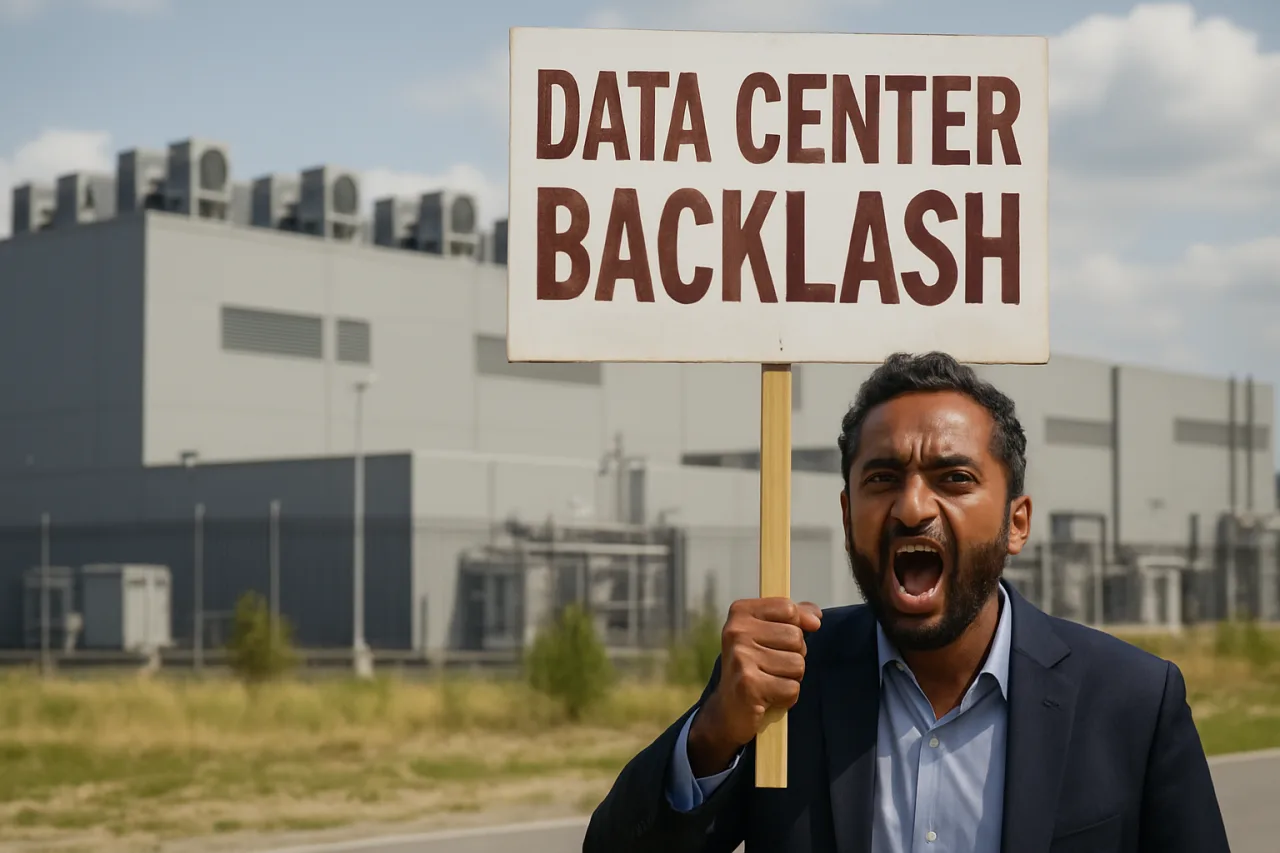
- 💥 The quote: The data center backlash went political this week: venture capitalist Chamath Palihapitiya posted on X on August 20, 2026 that “the collective leadership of frontier AI has failed miserably in doing the basics” — warning that data center opposition is a “powder keg” that could unwind 200-300 basis points of annual GDP if it metastasizes.
- 🗳️ The trigger: An Axios report revealed the National Republican Senatorial Committee warned AI companies that data centers have become a campaign vulnerability in Ohio’s dead-heat Senate race between incumbent Jon Husted and former Senator Sherrod Brown.
- 📋 The prescription: Palihapitiya’s three fixes — paint a positive picture of AI instead of catastrophizing, visibly enrich the communities hosting data centers “with a megaphone,” and stop infighting and trying to out-lobby the government.
- 🇵🇭 Why it matters to Filipinos: The Philippines is betting its AI future on data center buildout while managing grid constraints and community concerns. The American backlash is the preview every ASEAN government should study before siting its next facility.
One of the technology industry’s most prominent investors has turned on his own industry — publicly, by name, with a number attached. “The collective leadership of frontier AI has failed miserably in doing the basics,” Chamath Palihapitiya wrote to his millions of X followers on August 20, 2026, and the target was not a rival fund or a struggling startup. It was the executives building the AI future itself: Sam Altman, Dario Amodei, and everyone racing to cover the map in data centers. The data center backlash, he argued, is no longer a local zoning dispute. It is a national political force — and AI’s leaders have nobody to blame but themselves.
Related: Why US Cities Are Blocking AI Data Centers
The argument deserves attention precisely because of who is making it — and because the data center backlash is now measurable in votes. Palihapitiya is not a critic of AI; he is co-host of the All-In Podcast, a Social Capital founder, and one of the most aggressive AI bulls in venture capital. When a man whose net worth is tied to the technology’s success says its leadership “failed miserably” at public persuasion, the observation is not opposition research — it is an insider’s warning label. This piece unpacks what he actually said, why the political ground shifted so fast, and what the American backlash teaches the Philippines about its own data center future.
Why the Data Center Backlash Became a Senate-Race Weapon
The proximate trigger was a memo. Axios reported that the campaign arm for Senate Republicans — the National Republican Senatorial Committee — sent a stern communication to prominent AI development organizations pointing out that data centers have turned into a fierce campaign vulnerability in Ohio. The race in question is a dead heat: Republican incumbent Senator Jon Husted, completing the remainder of Vice President JD Vance’s term, against former Senator Sherrod Brown. The committee’s blunt assessment: data centers represent the heaviest anchor dragging down Husted’s campaign.
Palihapitiya’s response connected the dots across three states: “Texas, Pennsylvania and now Ohio. This is a powder keg and has the potential to unwind 200-300 basis points of annual GDP if it metastasizes.” The arithmetic behind that warning is straightforward — data center construction and the AI capex it supports have been significant contributors to US GDP growth during the buildout years, and a political wave that stalls construction unwinds that contribution. His diagnosis of the cause cut deeper: “Data centers have unfortunately become THE symbolic representation of the asymmetric upside for a very narrow tech elite and a class that are untrustworthy.”
Read that sentence twice, because it contains the entire political problem. The benefits of AI data centers — the model capabilities, the valuations, the stock returns — flow to a narrow, visible elite. The costs — power demand, water use, noise, grid strain, the sense of a changed landscape — flow to the communities that host the facilities. Every successful technology in history has had to answer the question “what’s in it for us?” The AI industry, in Palihapitiya’s telling, never bothered to answer.
The Three Failures Behind the AI Data Center Backlash
Palihapitiya’s post did not stop at diagnosis — it prescribed. The first failure is storytelling. The industry’s public voice, he argued, defaults to “pearl clutching, catastrophizing or arcane technical jargon that, together, breed mistrust, fear and skepticism.” The observation lands because it is true in both directions: AI leaders warn existentially about the technology in one interview and celebrate its productivity revolution in the next, leaving ordinary people to conclude that the industry itself does not believe its own safety story. His fix: paint a positive picture of what is possible with AI — concrete, local, everyday possibilities rather than abstractions.
The second failure is distribution of benefits. His directive: “Visibly and disproportionately enrich the local communities AI data centers operate in. Tell these stories with a megaphone and have local leaders lead with the financial proof so it’s irrefutable.” The word “disproportionately” is the tell — community benefit-sharing so visible that hosting a data center becomes a local political asset instead of a liability. That this needs saying in 2026, after hundreds of billions of dollars of buildout, is itself the indictment.
The third failure is political conduct: “Stop infighting and stop trying to influence the government or trick them because of the asymmetric knowledge the industry has relative to outsiders and observers. This further makes it seem like a shady money grab to many bystanders.” Coming from Palihapitiya — who has debated AI regulation loudly on his own podcast — this is a criticism of the entire lobby-and-fear dynamic: CEOs requesting regulatory capture in one hearing while warning of AI doom in another. The public reads the contradiction, and concludes the fix is negotiated in back rooms.
The Broader Warning: When AI’s Political Coalition Fractures
The Ohio memo matters beyond one Senate race because it marks a partisan realignment in the data center backlash. Data center opposition was supposed to be a progressive, NIMBY concern — wealthy suburbs fighting campuses. The NRSC memo documents the opposite: Republican campaign strategists now treat data centers as a liability that can sink their own incumbent. On the same August 21 episode of the All-In Podcast where Palihapitiya’s post was dissected, co-host David Friedberg cited polling showing capitalism’s favorability among Republicans dropped from 72% in 2019 to 61% in 2026, and 53% of conservatives under 40 support government-run grocery stores. The political economy of the AI buildout — tax incentives, power deals, land use — is being re-priced by voters who feel excluded from its upside.
There is also an irony the industry should not miss. Dario Amodei, one of the executives Palihapitiya implicitly addressed, has spent 2026 warning about exactly this kind of institutional fragility — from his essay on AI-enabled surveillance states to his defense of regulation on the very same podcast episode. The industry’s two poles — doom-sayers and accelerationists — have spent two years arguing about the future of AI while ignoring its present: the substation, the water table, the county commission meeting. The data center backlash is what happens when the future debate outruns the present delivery.
For readers tracking our previous coverage, this is the connective tissue: the memory shortage pushing AI server prices up 15% or more, the sovereign AI deals rerouting the technology’s geography, and now the political backlash threatening the physical buildout underneath it all. The AI economy’s constraints in 2026 are not primarily technical — they are material and political, and the political one just got a price tag: 200-300 basis points of GDP.
The Filipino Angle: What the Backlash Teaches the Philippines’ Buildout
The Philippines is not a spectator here. The country’s AI Infrastructure Master Plan and its push to attract hyperscaler investment depend on the same asset Americans are now fighting over: data centers. The Philippine buildout already wrestles with grid constraints and power reliability — and every new facility lands in communities that will ask the same questions Ohio’s voters are asking: who pays for the power, who gets the jobs, who bears the strain?
Palihapitiya’s three failures translate directly into Philippine planning principles. Storytelling: frame data center investment in terms of local electricity reliability, jobs during construction, and skills transfer — not as abstract “digital FDI.” Distribution: structure community benefit agreements before ground-breaking, not after the first protest; the cost of sharing revenue early is trivial compared to the cost of a stalled project. Political conduct: transparent permitting and published power agreements, because the perception of a “shady money grab” travels faster than any press release. The countries that learn from the American backlash will site and operate facilities the American way — with the megaphone — rather than repeating its mistakes.
For Filipino professionals, the deeper signal is about the industry’s maturity. The AI sector’s biggest investor-class voices now openly discuss its political fragility — which means the coming years will reward a new skill set: the people who can bridge AI infrastructure and communities. Public affairs roles, community relations for data center operators, energy policy literacy, regulatory affairs — these are the jobs the buildout quietly creates, and they are precisely the roles where Filipino professionals’ communication strengths, English fluency, and policy awareness are competitive advantages.
What Comes Next
Watch three markers in the data center backlash. First, the Ohio Senate race itself — if data centers visibly damage Husted, expect the NRSC memo to become a national playbook and candidates of both parties to run against data centers in 2026 midterms. Second, whether the industry takes Palihapitiya’s advice: a visible wave of community investment announcements, local hiring commitments, and benefit-sharing deals would signal the message landed; silence would signal the industry is betting the backlash peaks on its own. Third, whether the GDP-risk framing enters official forecasts — the moment economic institutions model data center opposition as a macro variable, the debate changes from aesthetics to arithmetic.
The Chamath warning deserves the last word it gave itself. The frontier AI labs solved problems in a year that researchers had chased for decades — and fumbled the elementary task of convincing their neighbors the buildout was worth it. Technology, his post reminds the industry, does not get a political exemption. The data center backlash is not a PR problem to be managed; it is the bill for two years of asymmetric upside coming due — and the executives who “failed miserably at the basics” now have one election cycle to prove they learned.
Frequently Asked Questions About the Data Center Backlash
What did Chamath Palihapitiya say about AI data centers?
In an August 20, 2026 post on X, Palihapitiya warned that data center opposition is a “powder keg” with “the potential to unwind 200-300 basis points of annual GDP if it metastasizes,” and wrote that “the collective leadership of frontier AI has failed miserably in doing the basics.” He also said data centers have become “the symbolic representation of the asymmetric upside for a very narrow tech elite and a class that are untrustworthy.”
Why did Chamath criticize AI leaders now?
He was reacting to Axios reporting that the National Republican Senatorial Committee sent a memo to AI companies flagging data centers as a campaign vulnerability in Ohio, where Republican Senator Jon Husted is in a dead-heat race against Democrat Sherrod Brown — the third state (after Texas and Pennsylvania) where data centers became an electoral issue.
What are Chamath’s three fixes for the AI industry?
First, paint a positive picture of what is possible with AI instead of catastrophizing and using jargon. Second, visibly and disproportionately enrich the local communities hosting data centers, with local leaders presenting the financial proof. Third, stop infighting and stop trying to out-lobby or trick the government, which makes the industry look like a “shady money grab.”
Are data centers really a political liability in the US?
Yes — increasingly. Nationwide protests against AI data center expansion have been documented across multiple states, the Ohio Senate race features data centers as a central campaign issue, and the NRSC memo shows Republican strategists treating the facilities as an electoral anchor in competitive races.
What does the data center backlash mean for the Philippines?
The Philippines’ AI ambitions — its infrastructure master plan, hyperscaler attraction, and data center buildout — depend on community and political acceptance. The US backlash is a preview: benefit-sharing, transparent permitting, and local storytelling need to be built into Philippine data center projects from the start, not added after opposition appears.
Could the backlash actually reduce US GDP growth?
Palihapitiya estimates 200-300 basis points of annual GDP at risk “if it metastasizes” — reflecting how much of recent US growth has come from AI infrastructure investment. That figure is his estimate, not a consensus forecast, but the direction is clear: political stalling of data center construction would remove a meaningful growth engine during the buildout years.