Table of Contents
Key Takeaway: Filipino Seafarers Black Sea Crisis
- ⚠️ Casualties: 3 Filipino seafarers confirmed dead, 15 injured, 1 missing, and 236 trapped across 17 ships during Russian drone strikes on Ukrainian ports in the northern Black Sea.
- 🛳️ Repatriation ongoing: 89 seafarers have been brought home so far, including 9 of the 15 injured. 12 ships carrying 180 Filipino seafarers remain in the danger zone.
- 🏠 Homecoming: Two injured seafarers from the Panama-flagged tanker M/T Gas Lisbon arrived at NAIA Terminal 3 on August 3, 2026, aboard Qatar Airways flight QR932, received by DMW and OWWA.
- 📋 DMW directive: Secretary Hans Leo Cacdac ordered all manning agencies to repatriate Filipino crew members from ships in the Black Sea and warned vessels planning to enter the area not to continue.
- 👨👩👧 Presidential instruction: President Marcos directed Cacdac to personally visit all families of the deceased and missing — a commitment the DMW secretary has fulfilled.
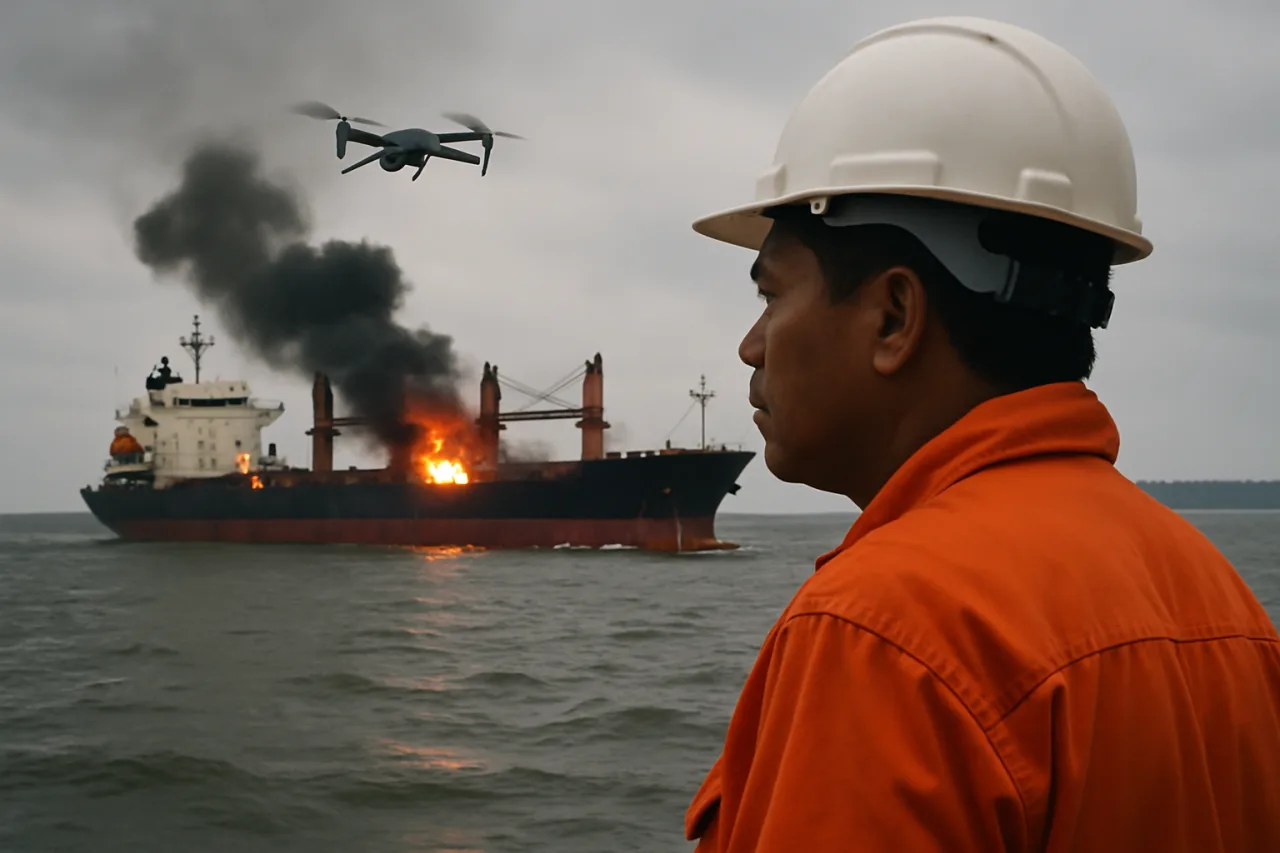
The Filipino seafarers Black Sea crisis is a story that should not exist in 2026. Filipino maritime workers — already among the most skilled and sought-after in the global shipping industry — are being killed, injured, and trapped by drone strikes in a war zone they never signed up to enter. The Filipino seafarers Black Sea toll stands at three dead, fifteen injured, and one missing. And 180 remain aboard ships in the northern Black Sea, waiting for manning agencies and shipowners to bring them to safety.
The crisis unfolded across July and August 2026, as Russian forces escalated drone and missile attacks on Ukrainian ports along the northern Black Sea. Ships transporting Filipino seafarers dock at these ports, and despite the dangers, some shipowners continued sailing into the area. On August 2, 2026, the Department of Migrant Workers confirmed that a third Filipino seafarer had been killed, bringing the death toll to three. Secretary Hans Leo Cacdac delivered the news at the Saturday News Forum: “Last week, two were deceased, but I am now reporting that another one was added to the casualties. So, three have died in the northern Black Sea attacks on Ukrainian ports.”
The Numbers Behind the Filipino Seafarers Black Sea Crisis
The scale of the Filipino seafarers Black Sea crisis is staggering. According to Secretary Cacdac, 17 ships carrying 236 Filipino seafarers were trapped during the strikes. Of those, 15 were injured and three killed, with one still missing. The DMW has so far repatriated 89 seafarers, including nine of the 15 injured. The remaining seafarers are scattered across Ukraine, Romania, Greece, and Turkey — distributed across countries as they fled the bombardment.
As of Cacdac’s August 2 briefing, 12 ships carrying 180 Filipino seafarers remain in the area, spared from attacks so far but still within the danger zone. “Our instruction to shipowners is to bring all these Filipino seafarers to safer ground or safer port,” Cacdac said. The DMW has also issued an advisory urging manning agencies and shipowners not to sail vessels with Filipino crew into the northern Black Sea.
The M/T Gas Lisbon: A Drone Strike Story
Two of the injured Filipino seafarers from the Panama-flagged tanker M/T Gas Lisbon arrived at Ninoy Aquino International Airport Terminal 3 on August 3, 2026, aboard Qatar Airways flight QR932. They were welcomed by Migrant Workers Assistant Secretary Maria Regina Angela Galias and representatives of the Overseas Workers Welfare Administration. The DMW and OWWA provided airport and financial assistance, and their licensed manning agency — Alpha Pearl of the Orient Maritime, Inc. — arranged their repatriation, hospitalization, and continuing care.
The DMW directed the manning agency to ensure that the seafarers undergo necessary physical and psychological examinations and debriefing sessions. This detail matters: the trauma of surviving a drone strike on a commercial vessel is not something a seafarer simply walks off. The requirement for psychological evaluation reflects an understanding — however belated — that maritime war zone exposure leaves scars that are not visible.
What the Philippine Government Is Doing
The Marcos administration’s response to the Filipino seafarers Black Sea crisis has been personal and direct. Cacdac told the Saturday News Forum that President Marcos had instructed him to personally visit all the families of the three deceased seafarers and the one who remains missing. “Per instruction of President [Marcos], I have personally visited all the families of the three deceased, including the one missing,” Cacdac said. He added that he will also visit Filipino seafarers in Romania, west of Ukraine.
The DMW is coordinating with shipowners regarding the repatriation of the bodies of the three deceased seafarers. For the living, the DMW has issued a formal advisory urging manning agencies and shipowners to repatriate all Filipino crew members aboard ships caught in the attacks. Ships planning to sail into the northern Black Sea have been advised not to continue, particularly vessels with Filipino seafarers onboard.
What Every Filipino Seafarer Should Know
The Filipino seafarers Black Sea crisis exposes a structural problem in the global maritime industry: Filipino crew members are deployed on vessels that enter active war zones, often without adequate warning or the option to refuse. For the approximately 500,000 Filipino seafarers working aboard international vessels, the crisis raises questions that every maritime worker and their family should be asking.
1. Know your vessel’s route. Before signing a contract, ask your manning agency whether the vessel’s route passes through any designated war risk areas. The northern Black Sea, the Gulf of Aden, and the Red Sea are all currently classified as high-risk zones. If your agency cannot confirm the route, do not sign.
2. Verify your OWWA membership. Sea-based OWWA membership costs ₱1,400 for two years and is mandatory for all Filipino seafarers with DMW-processed contracts. This membership unlocks repatriation assistance, medical benefits, and death compensation that are critical in a crisis. If you are not registered, contact your manning agency or the nearest OWWA office immediately.
3. Understand your DMW rights. The DMW has the authority to direct manning agencies to repatriate seafarers from danger zones. If you or a family member is aboard a vessel in a conflict area, contact the DMW hotline or the nearest Philippine embassy. The government has demonstrated — in the Middle East conflict repatriation of 12,000+ OFWs and now in the Black Sea crisis — that it will act when pressed. The illegal recruitment cases linked to the Russia-Ukraine conflict show that the risks extend beyond the battlefield.
4. Demand psychological support. The DMW’s directive requiring physical and psychological examinations for returning Black Sea seafarers should become standard practice for all seafarers repatriated from conflict zones. If your agency does not offer debriefing sessions, request them through OWWA.
The Bigger Picture: Filipino Seafarers and Global Risk
Filipino seafarers constitute approximately 25% of the global maritime workforce, according to International Labour Organization estimates. They are the backbone of international shipping — and they are disproportionately exposed to the risks of geopolitical conflict. The Filipino seafarers Black Sea crisis is not an isolated incident. In recent years, Filipino maritime workers have been caught in Red Sea Houthi attacks, Somali pirate hostage situations, and now Russian drone strikes on Ukrainian ports.
The pattern reveals a structural vulnerability: Filipino seafarers are deployed on vessels registered under flags of convenience — Panama, Liberia, Marshall Islands — that prioritize commercial interests over crew safety. The M/T Gas Lisbon, for instance, is Panama-flagged. When a drone hits a Panama-flagged tanker in a war zone, the Filipino crew member’s recourse is not to Panama but to the Philippine government, the DMW, and OWWA.
This is why the DMW’s advisory matters beyond the immediate crisis. By directing manning agencies not to sail into the northern Black Sea, the Philippine government is asserting that Filipino seafarer safety cannot be subordinated to commercial shipping schedules. Whether shipowners comply — and whether the DMW can enforce the advisory against agencies that continue to deploy Filipinos into war zones — will determine whether this crisis becomes a turning point or just another statistic.
What Families of Filipino Seafarers Should Do
For the families of Filipino seafarers currently deployed — whether in the Black Sea, the Red Sea, or any other conflict-adjacent route — the waiting is the hardest part. The DMW has set up channels for families to get information and request assistance, but many families do not know these channels exist until a crisis is already underway.
If your family member is a seafarer currently in the Black Sea region, contact the DMW’s 24/7 hotline immediately. The DMW is coordinating with Philippine embassies in Ukraine, Romania, Greece, and Turkey to locate and repatriate Filipino seafarers who have been displaced. The ₱3 billion OFW repatriation fund established for the Middle East crisis is also available to support Black Sea repatriation efforts, as the DMW has broad authority to deploy these resources for any Filipino worker in a conflict zone.
Families should also document everything: the seafarer’s contract, OWWA membership number, vessel name, manning agency contact information, and last known location. This information is critical when the DMW or Philippine embassy needs to locate a seafarer in a war zone. The OFW Global Summit in June 2026, where over 1,400 OFWs and families received services, demonstrated the value of proactive engagement with DMW programs — but the Black Sea crisis shows that emergencies can outpace even the best-prepared systems. Families who maintain organized records and know which government agency to contact can significantly reduce the time it takes to locate and repatriate their loved ones from a conflict zone.
Frequently Asked Questions
What happened to Filipino seafarers in the Black Sea?
The Filipino seafarers Black Sea crisis has resulted in three confirmed deaths, 15 injuries, and one missing seafarer following Russian drone strikes on Ukrainian ports in July-August 2026. A total of 236 Filipino seafarers across 17 ships were trapped during the attacks. The DMW has repatriated 89 so far, with 180 remaining in the area aboard 12 ships. The Filipino seafarers Black Sea situation remains active and dangerous.
How is the Philippine government helping the Filipino seafarers Black Sea victims?
The Department of Migrant Workers, under Secretary Hans Leo Cacdac, has ordered manning agencies to repatriate all Filipino crew from the Black Sea, issued advisories against sailing into the area, and is coordinating with shipowners to bring home the deceased. OWWA is providing financial and medical assistance to returning seafarers. President Marcos directed Cacdac to personally visit all families of the deceased and missing.
What should Filipino seafarers do if their vessel enters a war zone?
Filipino seafarers should verify their vessel’s route before signing contracts, ensure their OWWA membership is current (₱1,400 for sea-based workers, valid 2 years), and contact the DMW hotline or nearest Philippine embassy if deployed into a conflict area. The DMW has the authority to direct manning agencies to repatriate seafarers from designated danger zones.
How many Filipino seafarers are still in the Black Sea danger zone?
As of August 2, 2026, 12 ships carrying 180 Filipino seafarers remain in the northern Black Sea area, according to DMW Secretary Cacdac. These ships have been spared from attacks so far, but the DMW has instructed shipowners to bring all Filipino seafarers to safer ground or safer port. The Filipino seafarers Black Sea crisis is not over until every Filipino crew member is out of the danger zone.
What compensation is available for injured Filipino seafarers?
Injured Filipino seafarers are entitled to OWWA medical benefits, repatriation assistance, and financial aid from the DMW. Their manning agencies are responsible for arranging hospitalization and continuing care. The DMW has also mandated psychological examinations and debriefing sessions for seafarers repatriated from the Black Sea conflict zone. The level of compensation depends on the severity of injuries, the terms of the employment contract, and whether the seafarer’s OWWA membership was active at the time of the incident. Seafarers and their families should work with their manning agency and the DMW to ensure all entitled benefits are claimed.
Are Filipino seafarers still being deployed to the Black Sea?
The DMW has issued an advisory urging manning agencies and shipowners not to sail vessels with Filipino seafarers into the northern Black Sea. Ships planning to enter the area have been advised not to continue. However, enforcement depends on individual manning agencies complying with the directive. The Filipino seafarers Black Sea crisis has exposed the gap between government advisories and commercial shipping decisions — and the Filipino seafarers Black Sea toll proves that gap can be fatal. Until the Philippine government can enforce its advisories with penalties for non-compliance, Filipino maritime workers will remain at risk of being deployed into active conflict zones by agencies that prioritize contractual obligations over crew safety.