Table of Contents
Key Takeaway
- 🤖 The Salesloft Drift breach was a supply-chain attack that never touched a password: attackers stole OAuth tokens from Drift’s environment and walked straight into hundreds of customer CRMs as a trusted app.
- 🔑 OAuth tokens are keys your business already handed out — the audit question is not “are we hacked?” but “who holds keys to our data right now, and why?”
- ⏱️ The 15-minute audit below lists every connected app in Salesforce and Google Workspace, grades each by data access, and revokes what fails — copy-paste navigation paths included.
- 🇵🇭 Filipino SMEs run the same stack (Drift-class chatbots, CRMs, Workspace) — and NPC rules mean a vendor’s breach can become your breach notification problem.
- 🛡️ The lasting fix is the least-privilege habit: quarterly token reviews, scoped scopes, and treating every AI agent integration like a new employee with a key.
The Drift Breach: How Salesloft’s Chatbot Became the Entry Point
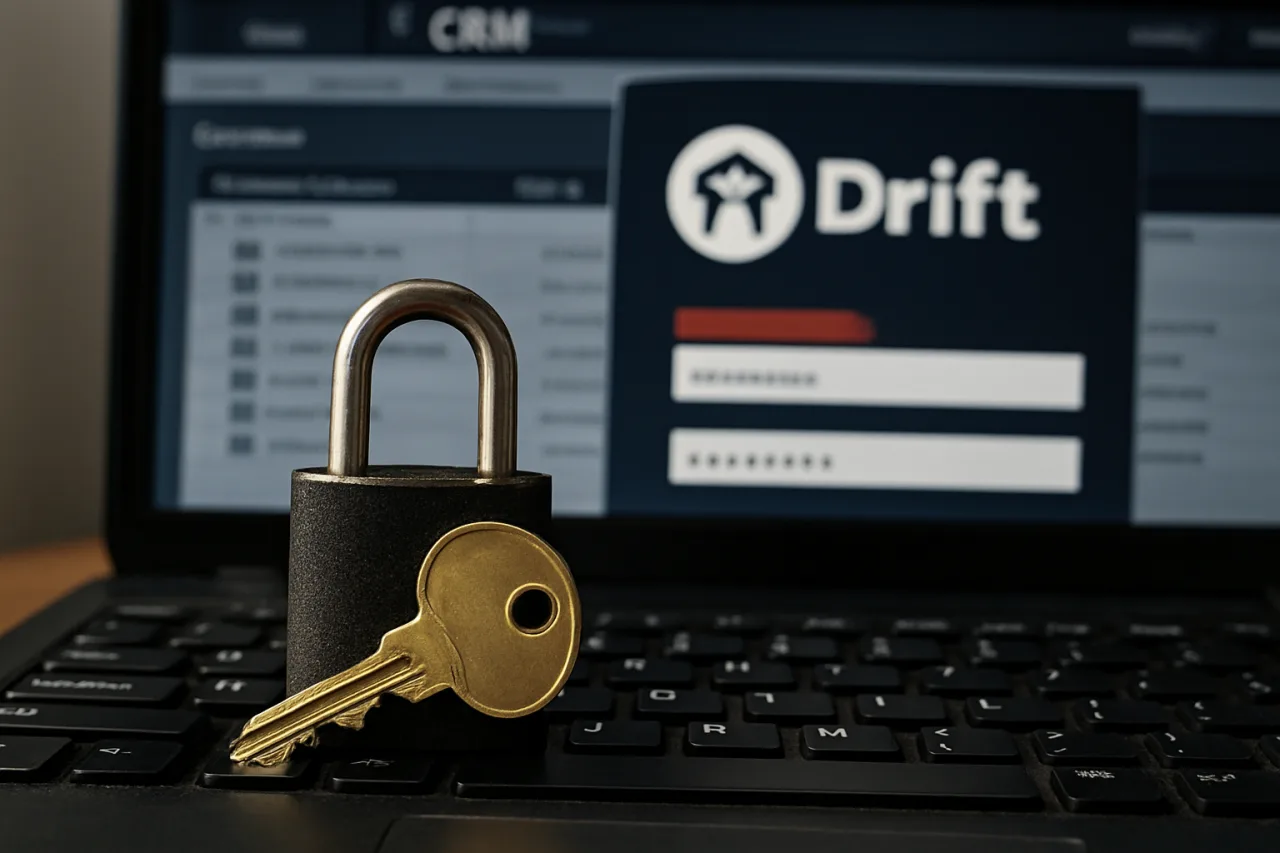
The Drift breach attack chain reads like a lock-picking lesson for the SaaS era. the Salesloft Drift — the AI chat agent that thousands of companies embed on their websites and connect to Salesforce and Google Workspace — was the breach point. Attackers (Google TAG tracks the actor as UNC6395) reached Drift’s environment, stole the OAuth and refresh tokens Drift held on behalf of its customers, and then did something elegantly awful: they used those valid Salesloft Drift tokens to log into customers’ Salesforce and Workspace instances as Drift.
No malware, no exploited vulnerability in Salesforce itself, no password ever guessed. Google’s Threat Intelligence Group confirmed the Salesloft Drift scope was not limited to the Salesforce integration and advised every Drift customer to treat all authentication tokens connected to the platform as potentially compromised; Google itself revoked the impacted Workspace tokens and disabled the integration while notifying administrators.
What made it undetectable in the moment: the queries looked like the chatbot doing its job. Massive data exports blended into normal API traffic because they came from an app the company had already approved. Security tools watched a trusted integration do an untrusted thing — and the logs said nothing alarming. Salesloft Drift customers got FINRA’s alert; the Cloud Security Alliance’s post-mortem both land on the same lesson: visibility into third-party integrations is now a first-class security control, not an IT nicety.
Why the Drift Breach Made OAuth Tokens the New Master Keys
OAuth is the plumbing behind “Sign in with…” and every chatbot-to-CRM connection: the user approves an app once, the app receives tokens, and the tokens keep working without the user’s password — sometimes for months. Three properties make them the attacker’s favorite instrument, in this breach and the next one: they carry access without identity (MFA never triggers because no login happens), they outlive employees (the token a former marketing manager approved keeps its access after she leaves), and they inherit trust (activity from an approved app is presumed legitimate).
The Salesloft Drift attack weaponized all three at once.
For a Filipino SME the mental model is simple: every “Allow access?” popup your team ever clicked created a key. Nobody keeps a list of those keys. The audit below is that list, made — in fifteen minutes.
The 15-Minute Token Audit (Step by Step)
Run this this week. Administrator access to Salesforce or Google Workspace required; a spreadsheet open for the inventory.
Minutes 1–5: list everything with a key (Salesforce path). Setup → Connected Apps → Manage Connected Apps / OAuth Usage — this screen shows every app holding OAuth grants and how many users each has. Screenshot it. Google Workspace path: Admin console → Security → API Controls → App Access Control — same inventory, same screenshot.
Minutes 5–10: grade each app. Three questions per app, answered in the spreadsheet: What data can it read (contacts only? full objects? email?), What can it write or delete, and Who approved it and when (if nobody remembers, that is your answer). Grade A = known vendor, minimum scope, named owner. Grade B = known vendor, oversized scope. Grade C = unrecognized, unused, or owner-departed — every C is a revocation candidate.
Minutes 10–13: revoke the Cs and the AIs. Any app nobody can explain gets revoked now — re-approval takes two minutes if it was actually load-bearing, and the breakage tells you who really owns it. Same for AI agent integrations (chatbots, AI SDR tools, meeting notetakers): they get the same scrutiny as any other app, because Drift just demonstrated they carry the same risk at higher trust.
Minutes 13–15: set the review clock. Calendar a quarterly recurring event titled “Token audit — 15 min” with the links above, and assign a named owner (a person, not “IT”). The Drift breach’s root cause was not exotic — it was an unaudited trust relationship at scale. The quarterly clock is the fix.
Bonus for the thorough: in Salesforce, check Setup → Security → View Setup Audit Trail for recent connected-app changes; in Workspace, review Security → Investigation Tool for OAuth activity anomalies. If a vendor used Drift-class tools and notified you, follow their rotation instructions first — several already had.
The Philippine Business Layer: NPC, Vendors, Clients
Two local realities make this audit more than imported prudence. First, the National Privacy Commission’s breach-notification framework does not ask whose vendor leaked the personal data — the personal information controller holding Filipino clients’ data is the one accountable. A CRM full of customer records is exactly that. Second, the SME supply chain is real: agencies, BPOs, and service firms hold client CRMs, and the Drift pattern shows a vendor one step away can carry the keys.
The audit question extends outward: do you know which of your vendors’ tools hold tokens into your systems? Asking three key vendors this week is fifteen more minutes well spent.
The Lasting Habit: Least Privilege for the AI Age
The Drift breach is the preview; the agentic-AI wave is the feature film. Every AI agent a business adopts — sales bots, support agents, browser copilots, workflow automations — arrives asking for OAuth-shaped keys. The CSA’s guidance says the quiet part loudly: apply least-privilege scopes, lifecycle reviews, and behavioral monitoring to AI agents from day one.
Concretely: grant read-only by default, expand only on demonstrated need, name an owner per integration, and keep the quarterly audit. The companies that walked away from this breach lightly were not the ones with better firewalls — they were the ones who knew exactly which apps held keys, and why.
Frequently Asked Questions
What happened in the Salesloft Drift breach?
Attackers compromised the Salesloft Drift chatbot platform and stole the OAuth tokens it held for customer integrations. Using those valid tokens, they accessed customers’ Salesforce and Google Workspace data as a trusted app — no passwords, no malware, no MFA prompts. Google TAG tracked the actor as UNC6395 and Google revoked impacted Workspace tokens.
Was my data exposed if my company used Drift?
If your organization connected Salesloft Drift to Salesforce, Google Workspace, or other integrations during the exposure window, treat those tokens as compromised — Salesloft and Google advised rotation and review. Check vendor advisories, rotate credentials per their instructions, and run the audit above to see what else holds keys.
Why didn’t MFA stop the attackers?
Because no login happened. OAuth tokens are pre-authorized keys issued when a user first approved the app — they work without passwords or MFA prompts until revoked. That is why token inventories and revocations, not just MFA rollout, are now core security hygiene.
How do I see which apps have OAuth access to my Salesforce or Google Workspace?
Salesforce: Setup → Connected Apps → OAuth Usage lists every connected app and its users. Google Workspace: Admin console → Security → API Controls → App Access Control. Both take minutes to review; the audit above turns the list into a graded inventory with revocations — the working answer to the Drift breach pattern.
Are AI chatbots riskier than other integrations?
They are integrations with high trust and broad scope — exactly what made Drift the perfect carrier. Any AI agent (sales, support, notetaking, browsing) deserves the same least-privilege scoping, named ownership, and quarterly review as any other app, plus extra attention to what data it can export.
What should a Filipino SME do after this breach?
Run the 15-minute audit, revoke unexplained apps, rotate credentials for any Salesloft Drift-connected tools, ask your three most critical vendors whether they used Drift, and set the quarterly review clock. If customer personal data may have been exposed through your systems, NPC breach-notification rules apply — verify obligations with counsel.