Key Takeaway
- 🏦 The BSP is piloting a central-bank-iss — BSP stablecoin 2027 watch:ued peso stablecoin — Governor Eli Remolona says the central bank is in the pilot stage and considers a peso-backed coin “very important,” issued by the BSP itself, not private firms.
- 🌍 2027 is the year it gets real: retail cross-border payments through the BIS Project Nexus should be “operational in 2027” — the corridor where a peso coin meets OFW remittances.
- 💸 The prize is remittance cost: Filipinos sent $3.24 billion home in July alone (up 1.9% year-on-year); every layer of cut conversion cost lands straight in family budgets.
- ⚖️ PHPC is the precedent: Coins.ph’s peso stablecoin launched June 2025 and exited the BSP sandbox — proof the rails work, and a counterpoint now visible during the DCPay cash-in freeze.
- 🧭 The reader’s move: track the pilot through BSP advisories, compare corridor fees now, and treat 2027 as the deadline by which your remittance route should be stablecoin-ready.
Table of Contents
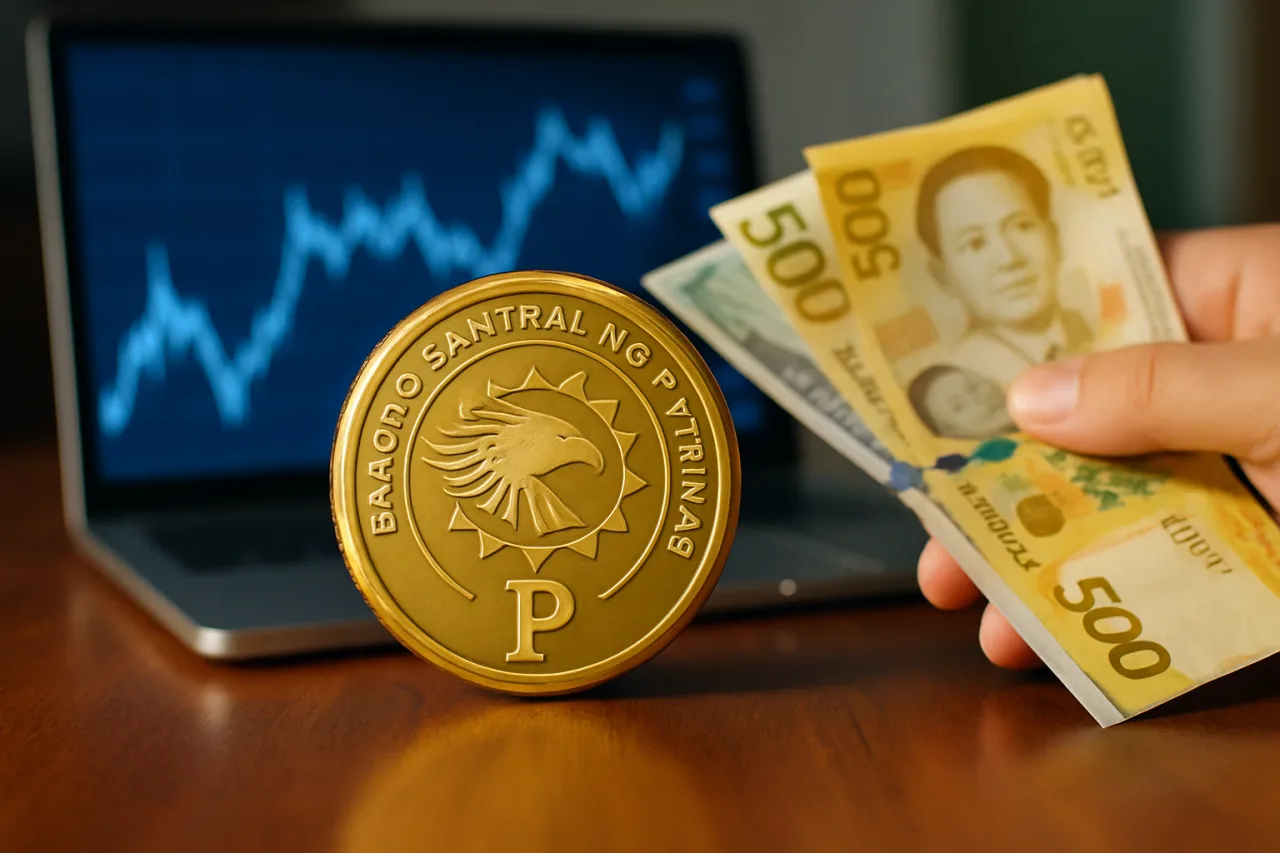
BSP stablecoin 2027 is the story that started moving this week, and it arrives with a governor’s signature on it. Bangko Sentral ng Pilipinas Governor Eli Remolona told The Banker the central bank is in the pilot stage of a peso-backed stablecoin, that the BSP considers a domestic currency-backed coin “very important,” and, the sharpest line in the BSP stablecoin 2027 case, that it should be issued by the central bank, not the private sector. In the same breath, the BSP confirmed its timeline for the cross-border rails that make a stablecoin useful to overseas Filipinos: “Retail cross-border payments should be operational in 2027. At the same time, we are contemplating something at the wholesale level.” BSP stablecoin 2027 is, in one phrase, a regulator putting a date on the corridor that carries $3.24 billion a month of family money — here is what it changes, and what to check before then.
Related: Weak Peso: What It Means for OFWs
Related: Stablecoin Tax France: The 2027 30% Levy, 5 Facts for Holders
What the Governor Actually Announced on the BSP Stablecoin 2027 Plan
The BSP stablecoin 2027 posture rests on three facts. First, the BSP is not studying a stablecoin — it is piloting one, with a peso backing, inside the central bank. Second, Remolona draws a hard line on issuer identity: a peso coin “should be issued by the central bank, not the private sector.” That is the CBDC instinct — the state as the money’s anchor — and it is a direct philosophical counterpoint to the private experiment already live in the market. Third, the BSP gives the corridor a date: retail cross-border payments operational in 2027 through Project Nexus, the Bank for International Settlements initiative linking the instant payment systems of the Philippines, India, Malaysia, Singapore, and Thailand, with a wholesale track to follow.
Remolona’s framing also matters for what he did NOT announce: no instrument number, no implementing rules, no launch date for the peso coin itself. The 2027 date attaches to Nexus rails — the plumbing — while the coin’s own rollout timeline remains open. Readers should hold both facts at once: the ambition is state-issued money on state-grade rails, and the honest status is pilot-stage, date-uncertain.
Why the BSP Stablecoin 2027 Posture Puts the Central Bank in the Issuer’s Chair
The BSP stablecoin 2027 strategy answers what the private sector already ran: this experiment — and the result shapes the BSP’s posture. PHPC, the peso-backed stablecoin whose sandbox exit we tracked launched by Coins.ph in June 2025 after central bank approval, exists and works, but “its use has not yet reached scale,” as The Banker notes. Economics commentators assembled around the policy debate explain why scale lags. Michael Batu, associate professor of economics at the University of the Fraser Valley, points to the unresolved regulatory boundary: for a central bank stablecoin to succeed, issuers and users alike need clarity on how it differs from deposits or e-money. His verdict frames the whole debate: “If properly implemented, it could position the Philippines as a leader in inclusive finance among emerging markets. Otherwise, it could introduce new risks without delivering meaningful gains.”
Ganesh Viswanath Natraj, associate professor at Warwick Business School, supplies the darker warning the BSP is acting on: reliance on US-dollar stablecoins risks digital dollarisation — a competing currency disintermediating Philippine banks, shrinking the deposit base, and blunting monetary policy. In that light, the BSP’s issuer-first posture is not vanity; it is monetary sovereignty defense. If Filipinos will one day hold digital cash on chains, the BSP wants that cash denominated in pesos and anchored by the Republic.
The BSP Stablecoin 2027 Remittance Math
The BSP stablecoin 2027 killer use case is the OFW corridor, and the numbers explain why. Remittances accounted for 8.7% of Philippine GDP in 2024 per World Bank figures. BSP data shows $2.79 billion sent home in February 2026 alone — $3.1 billion including informal channels. Fintech News Philippines reported July 2026 cash remittances at $3.24 billion, up 1.9% year-on-year. Each transfer crosses a conversion layer: the sender’s dollar (or dirham, or won) becomes pesos through a bank or VASP spread. Ganesh Viswanath Natraj’s cost argument is precise — today’s stablecoin remittances still travel in USD or EUR before converting, “which introduces a conversion cost,” while a peso-denominated coin collapses that layer.
Run the illustrative arithmetic.
February’s $2.79 billion at a two-point combined spread is roughly $56 million a month in corridor costs — money that a native peso coin plus Nexus instant rails could split between senders, receivers, and the operators smart enough to drop fees first. That is the concrete meaning behind the BSP stablecoin 2027 quote.
The Trust Backdrop the BSP Stablecoin 2027 Plan Lands In
Week two of the live test of “which rails do you trust” is underway. Set beside the BSP stablecoin 2027 ambition, the Monetary Board Resolution No. 839, executed through PPMI Advisory No. 2026-0929-029, ordered the network to freeze inbound InstaPay and PESONet transfers to DCPay Philippines — the e-money operator behind Coins.ph — while outbound transfers, QRPh merchant payments, and crypto services through its separate exchange arm remained operational. No public end date has been disclosed. Our full playbook on what still works is in the Coins.ph suspension playbook.
The stablecoin lesson hiding inside that enforcement: the state supervises private rails hard enough to freeze them mid-flight when it suspects problems — and a central-bank-issued coin is the same state stepping INSIDE the currency itself. Both are answers to the same trust question. Supervised private issuance (PHPC) already cleared regulators; state issuance removes the intermediary risk entirely but concentrates all faith in the BSP. Remittance senders now effectively have three lanes: legacy wires, private peso coins (PHPC), and — by 2027 — the state’s own coin. Watch which lane drops fees first; fees are the scoreboard.
The BSP Stablecoin 2027 Plan in Its Global Mirror: 21 Banks, Same Year, Same Architecture
The BSP stablecoin 2027 plan is not alone, which is why 2027 reads like a coordinated era rather than a local experiment. A consortium of 21 global banks — including Bank of America, Goldman Sachs, Santander, Deutsche Bank, and MUFG — announced a 1:1 reserve-backed USD stablecoin venture targeting a debut in the first half of 2027, explicitly designed to be “GENIUS Act and MiCA-compliant.” When Manila’s central bank and Wall Street’s consortium converge on the same year with the same 1:1 architecture, the stablecoin question stops being “if” and becomes “whose rails and whose fees.” For Filipino readers, add the domestic enforcement items to the same tape: the AMLC’s freeze of 25 crypto wallets and 86 bank accounts in the flood-control plunder probe shows chains are now standard instruments of Philippine justice — useful, traceable, supervised.
The Fee-Structure Decision Table: What Each Channel Actually Charges
Before the 2027 rails exist, the family still pays today’s fees — so the table below is the standing decision tool until the BSP coin arrives. Rate marks and fee bands reflect channel structures as published in current provider disclosures and the World Bank’s Remittance Prices data; verify the live rate at send time, because these are structural patterns, not locked prices:
| Channel | Fee on a $500 send | Rate behavior | Speed | Where the hidden cost lives |
|---|---|---|---|---|
| Traditional bank wire | $10–$25 + intermediary | 2–4 PHP below mid-market | 2–5 business days | Rate markup compounds with correspondent-bank deductions — the quiet double charge |
| Wise-style transparent fintech | ~0.6–0.7% ($3.50–$5.00) | Mid-market rate, no markup | Minutes–2 days | Almost none — the fee IS the rate |
| GCash/Maya in-app | $0–$4.99 | 1–2 PHP markup on the rate | Instant | Markup grows with amount — splits large sends |
| Pawnshop/cash networks | $2–$5 flat | Moderate markup | Same day | Cash-handling and provincial payout surcharges |
| Crypto/stablecoin rails (today’s informal) | ~$1–$3 | Market rate via licensed off-ramp | Minutes | Off-ramp spread + compliance friction |
| BSP 2027 peso coin (planned) | Tiered, near-zero at retail | One-to-one peso parity | Seconds, 24/7 | None by design — the point of the rail |
Read the table as the economics lesson itself: the invisible cost is never the printed fee — it is the rate mark. A “free” channel that marks the rate 2 pesos is more expensive on a $500 send than a $5 fee at mid-market, and the stablecoin rail matters precisely because it threatens to zero out the mark, not the fee. Every year the family loses to rate marks is a year the 2027 rail can claw back — which is why the governor’s announcement is worth more attention than any rate-hike headline this quarter.
The BSP Stablecoin 2027 Checklist for OFW Families
The BSP stablecoin 2027 checklist has four checks — read them beside our remittance-app spoof watch and the Wise USD-PHP freeze rails piece, both live on the same corridor beat, with no urgency, but a deliberate calendar. One: follow the instrument chain — BSP advisories and PPMI numbered notices are where the pilot’s real milestones will print before any press release. Two: audit your current corridor’s take — know the actual percentage your money loses today, because that number is what a stablecoin lane must beat. Three: note the private rails’ status — PHPC’s availability rides on Coins.ph’s current restrictions; PDAX and GCrypto carry the licensed-exchange alternatives. Four: watch Nexus milestones — each country’s instant-payment system linking into the BIS Project is a public event; when the Philippine lane goes live, the 2027 promise has a date on it. The family that knows its numbers before the rails arrive picks the winner on day one; the family that waits pays yesterday’s fees until someone tells them.
The Pension Rail: Where a BSP Coin Meets the SSS
Follow the money one layer down and the stablecoin pilot meets the pension system — the same OFW pocket, a different pipe. The SB 252 OFW ₱5,000 pension bill moved through this session’s cycle, and voluntary SSS contributions under Ra 11199 already give seafarers and land-based OFWs a self-funded track. A BSP-issued peso coin changes the settlement leg of both: pension credits that arrive on Nexus instant rails settle in minutes, not banking days, and a peso coin removes the FX guesswork from voluntary contributions made in dirham, won, or dollars. That is not speculation about features — it is arithmetic about rails: when cross-border retail settlement goes operational in 2027, every peso-denominated flow that adopts it stops paying the correspondent-bank hop.
The practical note for readers: none of this requires the coin to succeed. The 1:1 reserve architecture and BSP supervision make the coin boring on purpose — it is settlement infrastructure, not an investment product. The yield-bearing products will be built ON it by licensed institutions; the coin itself has no yield, and anyone promising yields on “the BSP coin” before 2027 is selling something else entirely. Mark that line: it will save some kababayan from a scam that will certainly wear this news as a costume.
Rest of the Tape
Bitget replenished its emergency protection fund to $300 million following the breach episode — the exchange-insurance market is re-pricing custodial risk in real time. CoinEx set its shutdown for December 2026 — a licensed-exchange exit that Philippine users holding balances there must file into their calendars now, not in November. Bitcoin closed the week near $85,977 (+2.13%) — the October tape discussed at Friday’s board keeps its shape: positioning, not prediction.
Frequently Asked Questions
What is the BSP stablecoin 2027 plan?
The BSP stablecoin 2027 architecture is a pilot: a peso-backed coin it intends to issue itself, and its cross-border retail rails through the BIS Project Nexus should be operational in 2027, per Governor Eli Remolona. The coin’s own launch date is not yet public; 2027 is the corridor timeline.
Will the BSP stablecoin replace GCash and Coins.ph?
No. The BSP postures the coin as part of the payment stack, not a wallet. E-wallets, banks, and licensed exchanges would likely distribute or convert it. PHPC’s private precedent also stays live. The change is in issuance and settlement rails, not in consumer apps.
How does a peso stablecoin cut remittance costs?
Transfers today convert sender currency to pesos through a spread at one or more layers. A peso-denominated coin on instant cross-border rails collapses the conversion chain. With $3.24 billion moving monthly, even one to two points of saved spread is family-budget scale.
Is PHPC still usable during the DCPay restrictions?
Crypto services and outbound transfers on Coins.ph remained operational while inbound InstaPay and PESONet transfers were frozen under MB Resolution No. 839. Check the wallet’s live status before relying on any single rail, and keep a secondary corridor.
What is Project Nexus?
A Bank for International Settlements initiative connecting the domestic instant payment systems of the Philippines, India, Malaysia, Singapore, and Thailand. Retail cross-border payments through it are targeted operational in 2027, per the BSP governor.
Should I wait for the BSP coin or use PHPC now?
Holding pesos digitally is already possible through PHPC and licensed exchanges, with supervisory protection behind them. The state coin is pilot-stage without a launch date. The practical rule: use what works today, keep the 2027 milestone on your watch calendar, and let fee comparisons — not headlines — move your money.
Financial Disclaimer: This article is for general information and education only and does not constitute financial, investment, or tax advice. Digital assets and stablecoins involve risk. Verify all figures with the BSP, your remittance provider, and a licensed adviser before making financial decisions.