Table of Contents
Key Takeaway
- ⚔️ The Fight: The Anthropic Pentagon dispute began when the company refused to let its Claude model be used for autonomous weapons and mass surveillance — and the Pentagon answered with contract cancellations and a “supply chain risk” designation.
- ⚖️ The Ruling: A federal judge blocked the designation in March 2026, writing that punishing Anthropic “for bringing public scrutiny to the government’s contracting position is classic illegal First Amendment retaliation.”
- ⏱️ The Clock: The removal of Claude from Department of War systems proceeds on a 180-day timeline, and Anthropic remains barred from prime or subcontractor roles on covered systems — a clock still running into September.
- 💥 The Precedent: OpenAI rushed in hours before the Iran war began to take the terms Anthropic refused — meaning the safety-policy fight now prices directly into who gets military AI contracts.
The Anthropic Pentagon dispute is the first head-on collision between an AI company’s safety policy and a government’s procurement power — and the outcome will define what any AI firm is allowed to refuse. Anthropic told the Pentagon its models could not be used for autonomous weapons or mass domestic surveillance. Defense Secretary Pete Hegseth’s department responded by threatening contract cancellation, branding the company a “supply chain risk,” and demanding access “for all legal purposes.” A federal judge has since called the government’s punishment what it legally is — retaliation for protected speech — but the machinery of removal is still running. This is no longer a Washington squabble. It is the test case for whether “no” is a word an AI company is permitted to say to its government.
The stakes reach every market where AI is being procured, including the Southeast Asian governments now writing their own AI frameworks — because the Anthropic Pentagon dispute will set the template for how states treat vendors that attach conditions to frontier capability.
How the Anthropic Pentagon Dispute Started
The road to the courtroom ran through a platform. In December 2025, Hegseth announced GenAI.mil, the Department of Defense’s artificial intelligence platform, initially contracting Google Gemini and then OpenAI’s ChatGPT; in January he added xAI’s Grok while decrying “woke AI” — a phrase widely understood inside the Pentagon and the press to be aimed at Anthropic. By late January 2026, Reuters reported the department was clashing with Anthropic over its usage policies: the company’s representatives opposed use of its products for surveillance or to develop lethal autonomous weapons. The dispute cost Anthropic a contract estimated at $200 million.
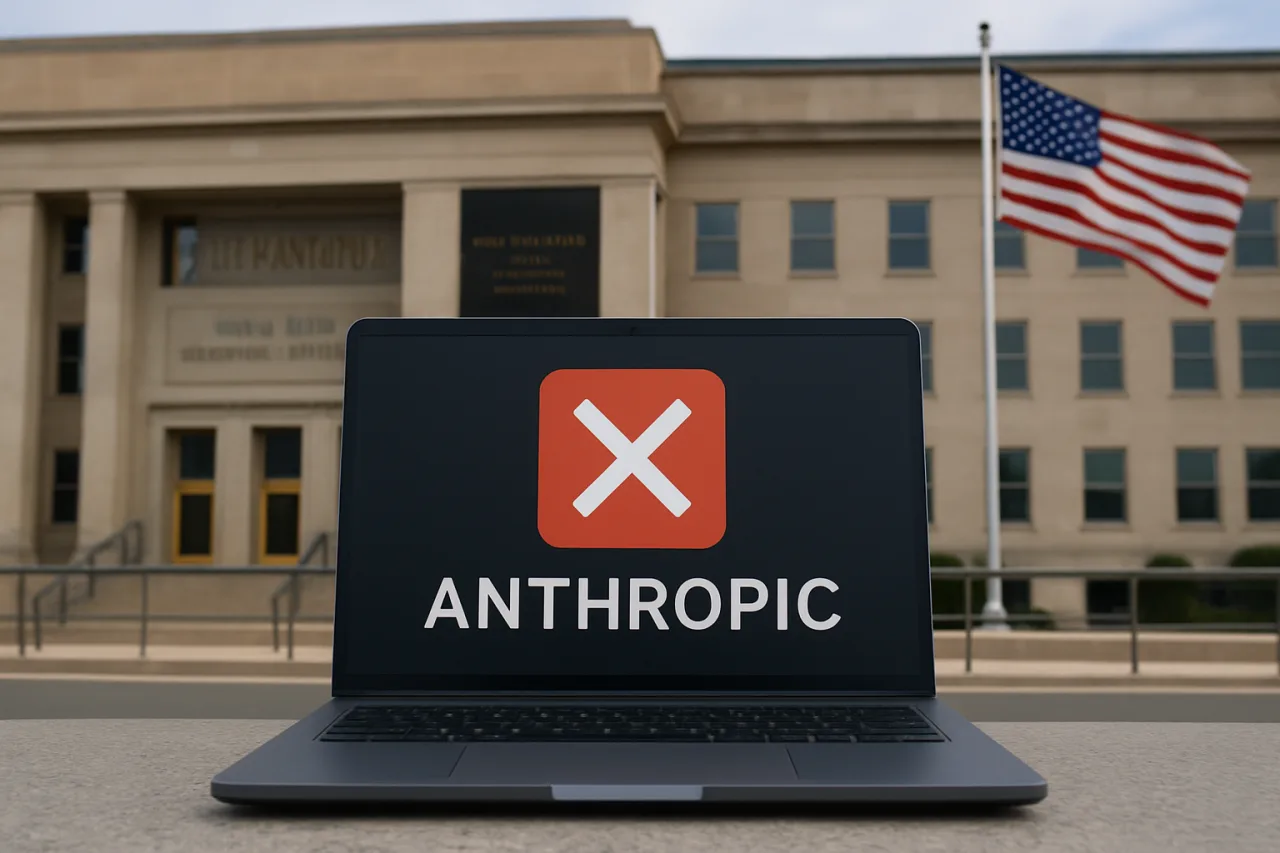
The pressure then escalated on a schedule. On February 24, Hegseth gave CEO Dario Amodei a deadline: relent by 5:01 p.m. on Friday, February 27, and allow unrestricted use of Claude “for all legal purposes.” Anthropic answered a day early — a public statement refusing to budge. On February 27, President Trump directed federal agencies to cease using Anthropic’s products, and the department designated the firm a supply chain risk under the Federal Acquisition Supply Chain Security Act — a statute Congress’s own research service now tracks as a live dispute — a label that would have forced military contractors to cut ties entirely.
What turned a procurement dispute into a constitutional one was the record. Under Secretary of Defense for Research and Engineering Emil Michael had publicly urged Anthropic to “cross the Rubicon” and let the department dictate how its technology is used. Pentagon officials had briefed reporters on the punishment plan before executing it. When Anthropic sued, Judge Rita F. Lin of the Northern District of California didn’t have to speculate about motive — the government’s own documents supplied it.
The Court Ruling at the Center of the Anthropic Pentagon Dispute
On March 26, Judge Lin granted a preliminary injunction halting most of the supply chain risk designation. Her written ruling is the sentence every AI executive should have framed: “The Department of War’s records show that it designated Anthropic as a supply chain risk because of its ‘hostile manner through the press.’ Punishing Anthropic for bringing public scrutiny to the government’s contracting position is classic illegal First Amendment retaliation.” She added that Anthropic had shown the punitive measures were “likely unlawful,” that it was suffering “irreparable harm,” and that amici had described “wide-ranging harm to the public interest, including the chilling of open discussion about important topics in AI safety.”
But the same month told the other half of the story. In April, the D.C. Circuit denied Anthropic’s emergency motion to lift the FASCSA designation for covered systems, writing that lifting it “would force the United States military to prolong its dealings with an unwanted vendor of critical AI services in the middle of a significant ongoing military conflict.” As legal analysts at Jones Walker summarized the state of play in late April: contract cancellations proceed, removal of Claude from DoW systems continues on a 180-day timeline, and Anthropic cannot serve as prime contractor or subcontractor on covered systems — the injunction narrowed the punishment, it did not stop the clock.
That split — one court calling the punishment retaliation, another letting the removal proceed on national security grounds — is precisely why this fight matters beyond the parties. Wired reported that several government contracting experts believe Anthropic has a strong case, but that courts sometimes refuse to overrule the White House on national security matters. The Anthropic Pentagon dispute is now the doctrine-building case for whether a vendor’s speech rights survive a procurement war — and for readers tracking how AI governance collided with state power, our coverage of OpenAI’s own safety reckoning shows the industry’s other half learning the same lesson from the opposite direction.
The War the Dispute Flew Into
The timing transformed a policy argument into a live-fire controversy. In February, The Washington Post reported Claude was being used in the US campaign against Iran; Axios reported its use during the Venezuela intervention, prompting Anthropic to say it would reassess its partnership. Then came the question that reframed everything: in a June Bloomberg interview, Amodei addressed reports that the US military had used Claude in targeting systems connected to the Minab school strike — the attack Amnesty International described as unlawful and Human Rights Watch said should be investigated as a war crime, with 156 people killed including 120 children. Amodei said Anthropic did not know whether Claude had been used in connection with the strike, but that if it had, the use case would not violate Anthropic’s red lines.
That sentence deserves to be read twice. The company that drew its line at autonomous weapons and mass surveillance — the line that cost it $200 million and a federal punishment — stated from the CEO’s chair that a military targeting use case might fall inside the line. Supporters read it as a legal answer to a hypothetical; critics read it as the red lines eroding under contract pressure. Either way, the Anthropic Pentagon dispute stopped being a story about corporate courage and became a story about whether any usage policy survives contact with a wartime customer.
OpenAI’s move completed the realignment. Hours before the US-Iran war began in March, OpenAI rushed to sign its own Pentagon deal — without the constraints Anthropic had sought. Sam Altman later told staffers he regretted the rush: “we shouldn’t have rushed to get this out on Friday… it just looked opportunistic and sloppy.” MIT Technology Review’s analysis was blunter: the published OpenAI terms “do not give OpenAI an Anthropic-style, free-standing right to prohibit otherwise-lawful government use” — the Pentagon can use the tech for any lawful purpose. The market had spoken: a vendor’s refusals are now a competitive feature someone else will sell.
What the Anthropic Pentagon Dispute Means for the AI Industry
Three consequences are already visible, and none of them stay inside the Pentagon’s fence line:
The chilling effect is now documented, not hypothetical. Judge Lin’s ruling put judicial weight behind what safety researchers feared: government power used against a company for speaking about its contracting position. Amici in the case described harm to “open discussion about important topics in AI safety” — the exact conversation the industry claims to want. Every safety researcher, policy lead, and CEO weighing whether to publicly refuse a government use case now prices in what happened to Anthropic: a $200 million contract, a supply chain label, six months of litigation.
Safety policies are repricing as commercial terms. The dispute proved that usage restrictions are no longer ethics documents — they are bid variables. Governments can now be expected to shop for the vendor without red lines, and investors to discount the ones that have them. 1789 Capital, the venture firm associated with Donald Trump Jr., abandoned a planned investment in Anthropic worth hundreds of millions after the dispute began. The market taught the lesson in real time.
The template is exportable. This is the part that matters in Manila, Jakarta, and Singapore. The Philippines is drafting its ASEAN AI framework and hosting the region’s AI summit this month; every government drafting procurement rules is watching whether the United States punishes a company for refusing military uses. If the American answer is “yes, and the courts will allow most of it,” expect Southeast Asian procurement documents to be written accordingly — with fewer vendors daring to attach conditions at all. Our coverage of the Philippines’ own AI legislation and the Pentagon’s GenAI.mil platform strategy now read as two ends of the same question: who sets the terms when the state is the customer.
What Comes Next in the Anthropic Pentagon Dispute
The dockets are still live: the D.C. Circuit’s April order is not final, and the Northern District litigation continues under Judge Lin. The 180-day removal timeline runs its course through the autumn. Anthropic’s IPO preparations continue in parallel — a company preparing to sell shares while a branch of the US government removes its product from military systems and a court weighs whether that removal was lawful. Whatever the appellate courts do, the Anthropic Pentagon dispute has already produced its lesson set: a federal judge’s finding that “woke AI” enforcement was retaliation; a divided appellate posture that let the clock run anyway; and a competitor that converted the vacuum into a contract within hours.
The deeper question outlives the case. If the price of saying no to autonomous weapons is punitive elimination from the market, the industry will stop saying no — quietly, everywhere, permanently. Judge Lin called that a chilling effect on AI safety speech. The rest of us should call it what it is: the moment the market learned what its safety language was worth to the state. This article is for general information only and does not constitute legal or investment advice.
Frequently Asked Questions About the Anthropic Pentagon Dispute
Why did the Pentagon punish Anthropic?
Anthropic refused to allow unrestricted military use of its Claude models — specifically opposing use for autonomous weapons and mass domestic surveillance. After Anthropic refused a February 27, 2026 deadline to permit use “for all legal purposes,” President Trump directed agencies to stop using Anthropic products and the Defense Department designated the company a supply chain risk.
What did the federal judge rule in the Anthropic Pentagon dispute?
On March 26, 2026, Judge Rita F. Lin of the Northern District of California granted a preliminary injunction, writing that the designation was “classic illegal First Amendment retaliation” for Anthropic’s public criticism, and that the measures were likely unlawful and causing irreparable harm.
Did the courts fully side with Anthropic?
No. In April, the D.C. Circuit denied Anthropic’s emergency motion to lift the FASCSA designation for covered systems, citing the ongoing military conflict. As of late April, contract cancellations proceed, Claude removal continues on a 180-day timeline, and Anthropic cannot serve as prime or subcontractor on covered Department of War systems.
Was Claude used in actual military operations?
According to The Washington Post, Claude was used in the US campaign against Iran, and Axios reported its use in the Venezuela intervention. In a June Bloomberg interview, CEO Dario Amodei said Anthropic did not know whether Claude was used in connection with the Minab school strike but that such use would not violate the company’s red lines.
What did OpenAI do during the dispute?
Hours before the US-Iran war began in March 2026, OpenAI rushed to sign a Pentagon deal without Anthropic-style usage constraints. Sam Altman later told OpenAI staff that the timing “looked opportunistic and sloppy,” and legal analysis found the deal does not grant OpenAI a free-standing right to prohibit lawful government uses.
Why should readers outside the US care about this dispute?
Because the case sets the global template for how states treat AI vendors that attach safety conditions to government contracts. Southeast Asian governments writing AI procurement frameworks — including the Philippines’ ASEAN AI initiatives — are watching whether refusal carries commercial punishment, and vendors are watching whether red lines survive contact with a wartime customer.
Financial Disclaimer
This article is for general information only and is not financial, investment, or legal advice. Legal proceedings described are ongoing and outcomes may change. Consult qualified professionals before making investment or business decisions related to the companies mentioned.
Sources: TechPolicy.Press dispute timeline; Reuters (January 29, 2026); Axios reporting (February 2026); Judge Rita F. Lin’s preliminary injunction order, Anthropic PBC v. Department of War, N.D. Cal. (March 26, 2026); Jones Walker analysis (April 27, 2026); Bloomberg interview with Dario Amodei (June 10, 2026); MIT Technology Review (March 2, 2026); CNBC (March 3, 2026).