Table of Contents
Key Takeaway
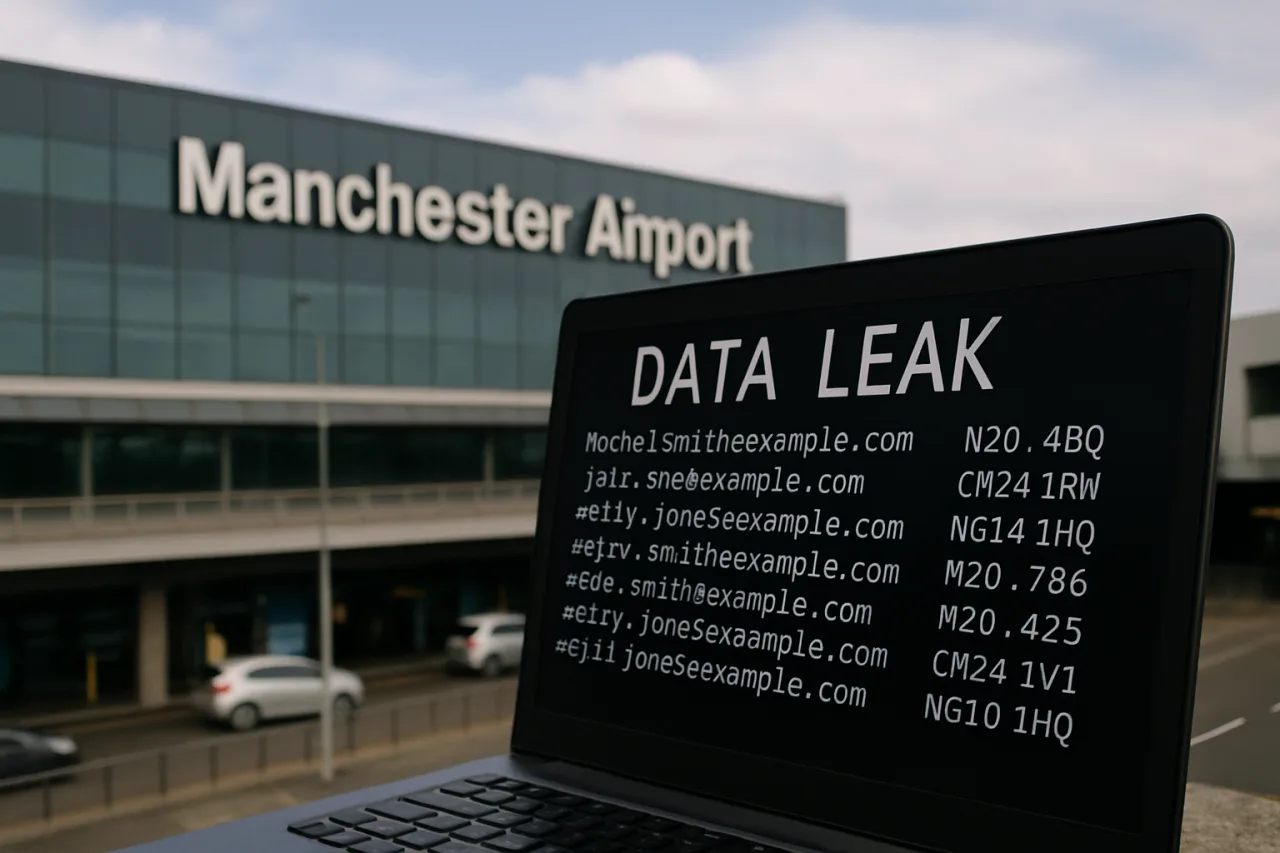
- ✈️ The release: The hacker group FulcrumSec published roughly 550GB of data on 8.7 million people who passed through Manchester, London Stansted, and East Midlands airports — after Manchester Airports Group refused its ransom demand.
- 📦 What leaked: Car park, lounge, and Fast Track bookings, Wi-Fi sign-up details, contact details, postcodes, and 108,077 vehicle registration plates — but no bank details or payment card data, per BBC reporting.
- 🚫 The stance: MAG followed UK government guidance in refusing to pay — and experts say payment was never likely to buy the data back.
- 🧭 The lesson: “We don’t pay” is a national policy, not a personal shield. The travelers’ defense is knowing exactly what data they leave behind at every counter — five practical steps below.
The airport data leak that just hit the UK’s third-busiest airport group is the most instructive breach of the year, because it answers a question every security policy debates in the abstract: what actually happens when a company refuses to pay? Manchester Airports Group refused. The criminals published the data anyway. Half a terabyte — bookings, contact details, vehicle registrations, the records of 8.7 million travelers — is now free for any scammer to download, not because the company hesitated, but because stolen data was never coming back regardless. For the millions of Filipino professionals and OFW families who pass through airports every year handing over names, plates, phones, and passports, the Manchester airport data leak is the clearest case study yet of what every booking quietly costs — and what to do about it.
The timeline matters as much as the numbers. The intrusion hit over a weekend and was discovered on Tuesday, August 25, 2026. MAG closed the entry point, brought in incident responders, notified law enforcement — and, per BBC reporting, knows the identity of the group but has not named it. The extortion attempt failed. And on September 2, the group made good on the threat that gives this whole crime genre its name: it released everything, offering the entire dataset free to other criminals through its own website, with the taunt that “every byte of it is pure PII.”
What Happened in the Manchester Airport Data Leak
The intrusion touched the systems behind everyday airport commerce: car park bookings, lounge access, Fast Track security purchases, and in-terminal Wi-Fi sign-ups across three airports operated by Manchester Airports Group. According to the BBC’s reporting on the data release, criminals posted the personal data of nearly nine million people online after the ransom went unpaid. The group behind it, FulcrumSec — which the BBC, like other outlets, has declined to name in its own coverage but which has been identified in security industry reporting — claimed access came through exposed admin keys, a root cause that will sound painfully familiar: not a zero-day, not an exotic exploit, just credentials left exposed on a system that never should have been reachable.
The scale of what was published is unusually well documented, because FulcrumSec published its own inventory. Per Computer Weekly’s coverage, the released trove includes 2,482,763 purchases — bookings for parking, lounge, and fast-track products — 461,433 SMS messages associated with bookings, car park and vehicle registrations, and 108,077 unique UK vehicle registration plates; the group also claims to have exfiltrated the platform’s configuration. SecurityWeek has not independently verified the attackers’ claims, and neither count should be treated as gospel — but the dataset’s shape matches what MAG disclosed: contact details, vehicle registrations, and postcodes from Wi-Fi and parking systems. Critically, MAG says no bank details or payment card data were exposed. The harm here is not direct financial theft; it is the raw material of everything that comes next.
That is the part worth underlining for every traveler who reads this and thinks “wrong continent.” The data released in this airport data leak is precisely the kind that powers secondary scams: enough to write a convincing fake refund email (“about your Manchester Airport parking booking…”), enough to target a household for burglary (vehicle plate plus postcode plus “away from home” patterns), enough to pass the credibility checks of phone scammers. No payment cards means no instant drain — it does not mean no harm.
The Ransom Refusal: Right Decision, Real Cost
MAG’s refusal puts it in line with UK government guidance, which has consistently discouraged ransom payments on the grounds that they fund further criminal activity and offer no guarantee of deletion. The experts quoted in the coverage are blunt about why. Timon Johnson, principal cyber essentials assessor at Closed Door Security, called the leak “an expected update, but… one none of the victims wanted to hear,” noting it was always unlikely MAG would pay because paying is “akin to doing business with criminals” — and that even payment would probably not have prevented exploitation of the data.
Here is the uncomfortable truth the decision exposes, and the reason this airport data leak belongs in every board pack: refusing to pay was the right call, and customers bore the cost anyway. Once the data left MAG’s systems, no currency could un-leak it. Paying might have delayed publication; it would not have prevented it — double extortion groups routinely publish anyway, and paying marks an organization as a solvent mark. The honest framing is therefore not “refusal failed the customers.” It is: the harm was done at the moment of theft, the refusal only chose who profits next, and the only variable still in the victims’ control is how prepared they are for the consequences. A company that chooses not to pay inherits an obligation — notifications, support, monitoring guidance — and MAG says it has contacted all those affected, including travelers with upcoming bookings. Whether that obligation is being met is the test customers and regulators should now watch.
The pattern around this leak is the deeper story. FulcrumSec’s release-for-free move is not generosity; it is marketing and pressure in one — humiliating the victim, arming other criminals, and signaling to MAG’s next negotiating counterpart that refusal buys nothing. The same playbook drove the 284-million-record McKesson extortion crisis and the Crimson Collective’s million-record theft from Brightspeed: steal, demand, publish on refusal, and let the secondary fraud harvest do the rest. Extortion has become a pipeline, and every traveler is downstream of it.
What Travelers Should Do After the Airport Data Leak
Nearly nine million people received — or will receive — breach notifications from MAG, and the company says it is reaching out to everyone with upcoming bookings. But the actionable advice extends far beyond that list, because the same data class is collected at every airport on earth. The sequence:
- Treat any booking-related message as suspect first. The leaked dataset is a mailing list for scammers. An email or SMS about “your parking refund,” “your Fast Track cancellation,” or “updated Wi-Fi terms” should be verified against the airport’s official app or website — never through links in the message itself.
- Expect personalized phone scams. With names, phones, plates, and postcodes in circulation, callers can sound legitimate in ways generic phishing never could. The reflex that works: hang up and call back through the official number. This is the same escalation rule that protected readers in the Teams vishing wave.
- UK-based colleagues: mind the physical angle. Vehicle plates paired with postcodes tell a burglar which home belongs to which car — and booking histories hint at when it will be empty. Driveway habits and home security deserve a second look; this is the rare cyber leak with a physical-crime tail.
- Know what you hand over when you travel. Parking portals, lounge bookings, Wi-Fi sign-ups, duty-free memberships — each one is a small database with your identity in it. The first 72 hours of any breach response, as we laid out in our data breach response guide, begin with knowing which companies hold which data. Travelers who keep that mental ledger react in minutes, not weeks.
- Watch accounts and set alerts. Even without card data, identity-assembling fraud starts with small probes: password reset attempts, verification texts you didn’t trigger, new logins from unfamiliar devices. Alerting on every transaction is the cheapest tripwire available in every banking app.
The identity-theft arithmetic of leaks like this compounds across incidents — a point made brutally concrete by this week’s separate disclosure that 153 million license scans surfaced on a dark web marketplace. Criminals don’t respect breach boundaries; they combine. A parking record from one leak plus a license image from another is a complete impersonation kit, which is why every individual leak deserves a response even when “no financial data” is in the headline. And the extortion economics now driving these publications were on full display in this month’s other headline case: local phishing volumes feed the same pipeline that turned the UK’s refusal into a free download for 8.7 million travelers’ data.
What the Airport Data Leak Means for Filipino Travelers
The Philippines runs one of the world’s great travel diasporas: millions of OFWs, families visiting the UK’s large Filipino community, professionals routing through global hubs every month. Manchester, Stansted, and East Midlands are entry points for exactly that traffic — the UK’s Filipino community is one of the largest in Europe, concentrated around NHS and service work in England’s regions. A Filipino nurse who parked at Stansted over Christmas, a family that booked a lounge during a stopover, a student who signed into airport Wi-Fi in March: any of them could be inside the 8.7 million. The direct advice is above; the strategic advice is broader.
First, assume the pattern travels. Philippine airport and transport systems collect the same data classes — plate numbers at NAIA parking, phone numbers for free Wi-Fi, bookings for lounges and fast lanes. The extortion groups now publishing on refusal do not respect geography, and Philippine transport and retail operators hold the same tempting datasets. The professional response for any Filipino organization running such systems is to treat the MAG case as a rehearsal: inventory where customer data sits, remove exposed admin interfaces, and write the no-pay decision before the attack, not during it.
Second, the leak reframes what “we take data protection seriously” must mean. MAG followed its national guidance and still ended up publishing a half-terabyte apology. The lesson is not that refusal is wrong — it is that prevention is the only lever that ever worked. For the traveler, that lever is minimal disclosure: skip the optional Wi-Fi sign-up, decline the marketing plate record, question why a two-hour lounge visit needs your full contact profile. For the Filipino professional managing any booking or loyalty system: the less collected, the less released. Every field you don’t store is a field no criminal can download.
Frequently Asked Questions About the Airport Data Leak
What happened in the Manchester Airport data leak?
Hackers breached Manchester Airports Group’s systems in late August 2026, stealing car park, lounge, and Fast Track booking data and Wi-Fi sign-up details across Manchester, London Stansted, and East Midlands airports. After MAG refused the ransom demand, the group FulcrumSec published roughly 550GB of data on 8.7 million people on September 2, 2026.
Was payment card or bank data stolen in the airport data leak?
No. According to BBC reporting, no bank details or payment card data were exposed. The leaked data consists of contact details, booking records, vehicle registrations, and postcodes — identity information that powers secondary scams rather than instant financial theft.
Who is behind the Manchester Airports breach?
The group calling itself FulcrumSec claimed the attack and published the data; MAG says it knows the identity of the group but has not named it publicly. Security industry reporting identifies FulcrumSec as the actor, and the group claimed access came through exposed administrative keys.
Did Manchester Airport make the right call refusing to pay?
The refusal aligned with UK government guidance, which discourages ransom payments because they fund crime and rarely guarantee data deletion. Security experts note payment was unlikely to prevent publication anyway — but the episode shows the real cost lands on customers, which is why breach-prevention and rapid support obligations matter more than the pay-or-not debate.
How do I know if my data was in the airport data leak?
MAG has contacted affected customers, including people with upcoming bookings. If you booked parking, lounges, Fast Track, or signed up for Wi-Fi at Manchester, Stansted, or East Midlands airports, treat your booking data as exposed and follow the protective steps — especially skepticism toward any booking-related email, SMS, or call.
What should Filipino travelers watch for now?
Secondary scams: fake refund or cancellation offers citing real booking details, convincing phone calls that know your plate or travel dates, and physical burglary risk for UK-based vehicle owners. Verify every booking-related message through official apps and channels, enable bank transaction alerts, and extend the same caution to parking and Wi-Fi sign-ups at any airport worldwide.
Financial Disclaimer: This article is for informational and educational purposes only and does not constitute professional cybersecurity advice. Readers who believe their data was exposed should follow official breach notifications and consult qualified security professionals about their specific situation.