Key Takeaway
- 🚨 The fear ring is live: searches for “AI crash is coming”, “is the AI crash here” and “when will the AI bubble burst” run on both US and PH geos in October 2026 — and the fresh verified warnings justify the anxiety: OpenAI’s annualized revenue came in $20 billion below a widely-reported figure, an Nvidia-and-Blackstone-backed data-center developer (Firmus) abandoned its IPO after investors balked, the IMF named an AI market correction a salient financial-stability risk, and Fitch warned a sharp AI-stock correction could push the US into recession.
- 🚦 The answer in one line: an AI crash is possible, not scheduled — the bull case (real chipmaker profits, real enterprise adoption) and the bear case (circular financing, hidden debt, valuation stretches) are BOTH documented, and the deciding evidence is the four red flags below, not the label.
- 🚩 The four red flags to watch: liquidity shortages at key AI firms (inability to recoup capex), a building AI price war (competition eating margins), a private-credit overexposure to software and data centers, and macro headwinds (rates, tariffs, energy costs). Watch those; the “bubble” label itself decides nothing.
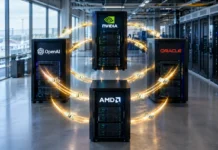
- 🔥 The contagion map: the most probable starting points per the institute literature are the most indebted model developers (OpenAI, Anthropic, SpaceX-class ventures), neocloud data-center debt, and Oracle-class hyperscale commitments — circular equity arrangements (Nvidia’s $100B into OpenAI, Oracle’s $300B OpenAI deal, AMD warrants) could become accelerants instead of flywheels if end-demand disappoints.
- 🛡️ The reader’s posture: this is a watch-don’t-panic situation — the honest record says a correction would be “more consequential than a novelty bubble, less than 2008” — and the watchlist pieces that follow this one carry the exact numbers to check monthly.
Is the AI crash here? Not yet — but October 2026 made the question legitimate: OpenAI’s annualized revenue came in $20 billion below a widely-reported figure, Nvidia- and Blackstone-backed Firmus Technologies abandoned a planned IPO after investors balked at its valuation, the IMF named an AI-driven market correction as a salient financial-stability risk, Fitch Ratings warned a sharp AI-stock correction could plunge the US into recession, and the Bank of England has already flagged the same overvaluation risk. This piece answers the question readers are actually asking — when could an AI crash happen, what would trigger it, and which evidence sides with calm versus caution — with every claim sourced and the two cases given equal load-bearing treatment.
Table of Contents
Why this guide beats the daily takes: the selloff recaps (this site’s AI-selloff explainers) covered what already happened; the crash QUESTION is structural — it needs the mechanism, the triggers, the timeline and the watchable numbers, all in one place. That is below.
The AI crash question, precisely
Three different events hide inside the phrase: a correction (a sharp but bounded stock drawdown), a bubble burst (a revaluation that destroys speculative excess and unwinds financing structures), and a credit crisis (debt defaults that propagate through banks and private-credit markets). Readers asking “will there be an AI crash” usually picture the third; the evidence base concerns all three with different probabilities. The honest answer names the differences: corrections happen routinely in concentrated markets; a burst is possible and pre-modeled (the institutional timelines are public); a 2008-class credit crisis is the tail case — the one the contagion literature says depends on the debt structures, not the stocks.
Why the question went mainstream: the AI boom concentrated equity markets to dot-com-era levels — roughly 30% of the S&P 500 was held up by just five companies (Nvidia, Microsoft, Apple, Alphabet, Amazon), the widest concentration in half a century, with the Shiller CAPE ratio exceeding 40 for the first time since the dot-com crash and the S&P forward P/E reading about 23 (per the Wikipedia-documented bubble literature). Valuation stretch plus concentration plus visible financing games = the textbook ingredients of the question. That is why Google’s autocomplete shows “ai crash is coming” as a live ring in the US and the Philippines simultaneously.
Fresh October 2026: why the fear ring spiked
The fresh verified warnings, on the record: 1 — the revenue revision: OpenAI’s annualized revenue was reported $20 billion below a figure circulated just weeks earlier — the single fact that reframed every circular-deal chart (a flywheel needs accelerating demand; a miss slows it). 2 — the IPO walk-away: Firmus Technologies — Nvidia- and Blackstone-backed — abandoned its planned Australian IPO after investors balked at valuation and prospects; the first big data-center-financing retreat of this cycle. 3 — the rating-agency line: Fitch warned a sharp AI-stock correction could trigger a US recession; the IMF named an AI-driven correction a salient financial-stability risk in its monitoring documents. 4 — the BoE warning (standing): the Bank of England had already warned that leading AI valuations — OpenAI’s $157B-to-$500B jump inside a year among them — could fall hard if infrastructure costs overwhelm revenue, and that investors were not properly cautioned.
The boom’s counterweights, equally on the record: SK hynix posted a quarter with operating profit up 632% on memory demand (the AI supply chain printing real money at scale); OpenAI signed a Google-chips supply deal reversing a rivalry; Broadcom committed $63B-scale to Anthropic; the world’s investment pieces on this site document the biggest capital commitments in the buildout (our AI-money trail carries the week-by-week ledger). The crash question is a BALANCE question — which side of the ledger grows faster — and both sides moved in October.
The case for calm: what the bull side actually shows
1 — the profits are real at the core: unlike 2000, when many dot-coms sold losses, the AI buildout’s CORE suppliers (chipmakers, memory, foundries, power equipment) report genuine earnings that grew alongside price gains — the ECB’s own analysis notes earnings growth has largely matched price increases for AI infrastructure leaders; the market’s valuation stretch lies in PRICING CONTINUED exceptional growth for years, not in fake current profits. 2 — the demand evidence exists: enterprise adoption is measurable (usage, contracts, the per-token economics this site documents in the inference-cost pieces); the technology demonstrably works, even where profits lag. 3 — the financing has defenders: asset managers (Janus Henderson’s “virtuous circle” framing) argue the deal web lines up suppliers, builders and customers for a genuine demand shock; Anthropic’s Dario Amodei said on the record (New York Times DealBook, December) that pairing long-term buy commitments with financing is simply how a capital-hungry revolution gets built.
What the bull case does NOT erase: the circular structure (investor money financing the customers’ purchases of the investor’s own products) is documented at hundreds of billions of scale; hidden debt is documented; the concentration risk is arithmetic. The bull case argues the flywheel holds while demand accelerates — it concedes, in effect, that the mechanism is exactly the one the bear case worries about.
The four red flags that decide
The academic framing (Servaas Storm’s INET working paper, the field’s sharpest red-flag list): 1 — escalating liquidity shortages for key AI firms: the moment big spenders cannot recoup rising capital and operating costs from revenue — the OpenAI revenue revision is this flag’s live sample; watch capex-vs-cash-flow gaps quarterly. 2 — a building AI price war: competition pushing model prices down faster than costs fall — visible in 2026’s per-token price cuts and multiple-provider matching; margins are the scoreboard. 3 — a budding private-credit crisis: credit-market overexposure to software firms and AI data centers — neocloud debt, SPV financing, off-balance-sheet structures; watch spreads and any big refinancing miss. 4 — macro headwinds: tariffs, energy costs and policy shocks pushing rates up — because a rate-cutting world forgives leverage, and its opposite does not.
The OMI/AFR additions (the October 2026 report’s structure): circular financing, debt hidden off balance sheets, and opacity as the three systemic amplifiers — their report names the most probable starting points explicitly: the most precarious model developers (OpenAI, Anthropic, SpaceX-class capital structures), the fragile data-center debt of overextended neoclouds, and Oracle’s hyperscale commitments. Any single flag turning red is a warning; multiple flags turning red together is the historical signature of the real thing.
The trigger map: who falls first
The sequence the literature draws: tier 1 — the capital-starved model developers: entities whose survival depends on continuous capital at bubble prices; a failed raise (the Firmus walk-away is the template) hits them first. tier 2 — the neocloud debt stack: the AI-first clouds financed with high-yield debt against GPU depreciation; revenue shortfalls make the debt service math fail quickly (this site’s neocloud explainer carries the structure). tier 3 — the hyperscale commitments: Oracle-class balance-sheet strain where contracted revenue depends on a few concentrated counterparties. tier 4 — the accelerant layer: circular equity arrangements — if Nvidia-class stakeholders face writedowns on investments whose purpose was buying Nvidia chips, the writeoff magnifies their own exposure — the “circular deal” risk both Bloomberg’s chart and the Vanderbilt policy paper document as the crash accelerant.
What the map does NOT include: the installed enterprise base, the actual tooling layer (the pieces of AI that businesses already use and pay for), or the infrastructure’s real physical value — the assets survive a downturn; the valuations and unfinished bets do not. That asymmetry is why post-crash recoveries in technology markets historically reprice the speculators, not the infrastructure.
The circular-deal accelerant: flywheel or house of cards
The structure, named: Nvidia invests up to $100B in OpenAI (which builds data centers filled with Nvidia chips); Oracle signs a $300B compute deal with OpenAI; Microsoft holds a large OpenAI stake; AMD issued warrants against OpenAI purchases; Google supplies chips to a rival it invests in. Each deal is defensible in isolation (supply-chain construction for a revolution); together they form a money web where A’s revenue includes money A invested in B — circular financing, the structure regulators historically flagged before past bursts (the Vanderbilt paper’s “vendor financing” parallel).
The two readings, honestly held: the flywheel reading: capital-rich players locking demand into place while the technology matures — Amodei’s defense; fine while every participant’s revenue grows. the house-of-cards reading: one dollar of end-user demand creating dollars of reported revenue across the loop; if the end-user demand disappoints, the loop unwinds in the reverse order of its construction and magnifies every participant’s fall (Bloomberg’s own analysis language: circular deals “can create skewed incentives … and magnify losses if demand for AI fails to match today’s lofty expectations”). The deciding variable is identical under both readings: end-user demand growth. Everything else is structure around that single question — which is why the watchlist (piece 5A of this slate) measures demand, not vibes.
The history lens: dot-com, and what is actually parallel
What actually parallels: 1 — vendor financing: the late-1990s telecoms built networks on supplier-financed equipment purchases; the AI deal web is the same shape (the parallel is documented, not invented). 2 — the concentration: five names holding 30% of the S&P mirrors past extremes (the “greatest concentration in half a century” line from the Wikipedia-cited research). 3 — the valuation math: CAPE above 40 plus 23× forward earnings sits in the same band as past peaks. 4 — the expert split: Ray Dalio’s dot-com-parallel warning and Jamie Dimon’s (October 2025: some money invested now will be wasted; the chance of a meaningful drop within two years is higher than markets price) sit against Sam Altman’s own August-2025 concession “I believe a bubble exists” — and against the industry’s flywheel defense. What does NOT parallel: the core profitability of the suppliers, the measurable enterprise demand, and the infrastructure’s cash-generating capacity once built — the dot-com analogy carries the financing structure better than it carries the business fundamentals, and the honest histories say the same.
WorldNgayon Insight: the crash question is a demand question
Strip the noise and the whole crash debate compresses to one measurable line: does end-user AI revenue keep compounding at the pace the capital structure presumes? The circular deals, the debts, and the valuations are all commitments priced against a demand curve nobody can see yet. That is why this site’s crash series (this piece plus the bubble definition, the circular-deal explainer, the burst timeline and the stocks watchlist) keeps returning to the same instruments: revenue revisions (OpenAI’s $20B gap is the model), price/margin trends in the per-token market, credit spreads on the debt stack, and IPO-market behavior (Firmus is the template for what a failing financing window looks like). The label “AI crash” will be assigned by history; the number series decides it in real time — and every one of those numbers is public.
What an AI crash would mean for money, work and the Philippines
For portfolios: the exposure question comes first — Philippine equity and retirement accounts reach the Mag7 through global index trackers and feeder funds (the concentration risk travels through them, the same channel the ECB traced for European households); knowing the exposure percentage is the whole first step (the pension-fund-risk piece carries the institutional version). For the peso and remittances: the WEF analysis expects the dollar to behave unusually in an AI-adjacent stress event (weaker-than-traditional safe-haven status given the crash’s US-tech concentration) — historically, global risk-off events have strengthened the dollar and Philippine markets move with it; the OFW exchange-rate math deserves a scenario note, not a forecast. For careers: the NPR synthesis adds the uncomfortable layer — recessions historically accelerate automation adoption, meaning a bust could cut AI jobs AND trigger the efficiency-driven replacement wave at the same time; the honest career advice (durable skills, the AI-jobs structural read, cash reserves) predates the crash question and answers it too. For the local buildout: a crash SLOWS the data-center pipeline (the capex pieces carry the spending dependency) — the region’s energy-storage and interconnection projects would reprice at the same time portfolios reprice. The scenario planning is real, and it begins with not needing to guess the date.
Verdict: watch the flags, not the label
Is the AI crash here? October 2026’s honest answer: not yet, and the timing is unknowable — but the risk is no longer fringe: the IMF calls a correction salient, Fitch ties it to recession, the BoE warns on valuations, one flagship’s revenue just missed by $20 billion, and one IPO walked away. The four flags — liquidity, price war, private credit, macro — are watchable monthly. The bull case (real profits, real demand) is documented too. The disciplined posture is neither panic nor complacency: it is the watchlist. The mountain does not move early — and does not move late.
Sources on the record: Open Markets Institute report · WEF burst-anatomy analysis.
Financial Disclaimer
This article is editorial analysis of publicly reported information, not investment or financial advice, and no outcome is promised. Figures are as reported by the named sources and change frequently; verify before acting. Markets carry substantial risk, including loss of capital.
- openmarketsinstitute.org/publications/brace-for-impact-report-release — Open Markets Institute report
- weforum.org/stories/2026/01/how-would-the-bursting-of-an-ai-bubble-ac… — WEF burst-anatomy analysis
External sources linked in this article, in order of first mention. Spotted an error or a broken link? Tell us.
Cite this pagePublished Oct 31, 2026
Agron, E. (2026, October 31). AI Crash: Will It Happen, When, and the Four Red Flags That Decide. WorldNgayon. https://worldngayon.com/ai-crash/
Agron, Edmon. “AI Crash: Will It Happen, When, and the Four Red Flags That Decide.” WorldNgayon, 31 Oct. 2026, worldngayon.com/ai-crash/.
Agron, Edmon. “AI Crash: Will It Happen, When, and the Four Red Flags That Decide.” WorldNgayon, October 31, 2026. https://worldngayon.com/ai-crash/.
Agron, E. (2026) ‘AI Crash: Will It Happen, When, and the Four Red Flags That Decide’, WorldNgayon, 31 October. Available at: https://worldngayon.com/ai-crash/.
E. Agron, “AI Crash: Will It Happen, When, and the Four Red Flags That Decide,” WorldNgayon, Oct. 31, 2026. [Online]. Available: https://worldngayon.com/ai-crash/
@online{agron2026aicrash,
  author       = {Agron, Edmon},
  title        = {{AI Crash: Will It Happen, When, and the Four Red Flags That Decide}},
  year         = {2026},
  date         = {2026-10-31},
  organization = {WorldNgayon},
  url          = {https://worldngayon.com/ai-crash/},
  urldate      = {}
}TY - ELEC AU - Agron, Edmon TI - AI Crash: Will It Happen, When, and the Four Red Flags That Decide T2 - WorldNgayon PY - 2026 DA - 2026/10/31/ UR - https://worldngayon.com/ai-crash/ Y2 - ER -
Cite the version you read; the page may be updated. Zotero and Mendeley can also import this page directly.