Table of Contents
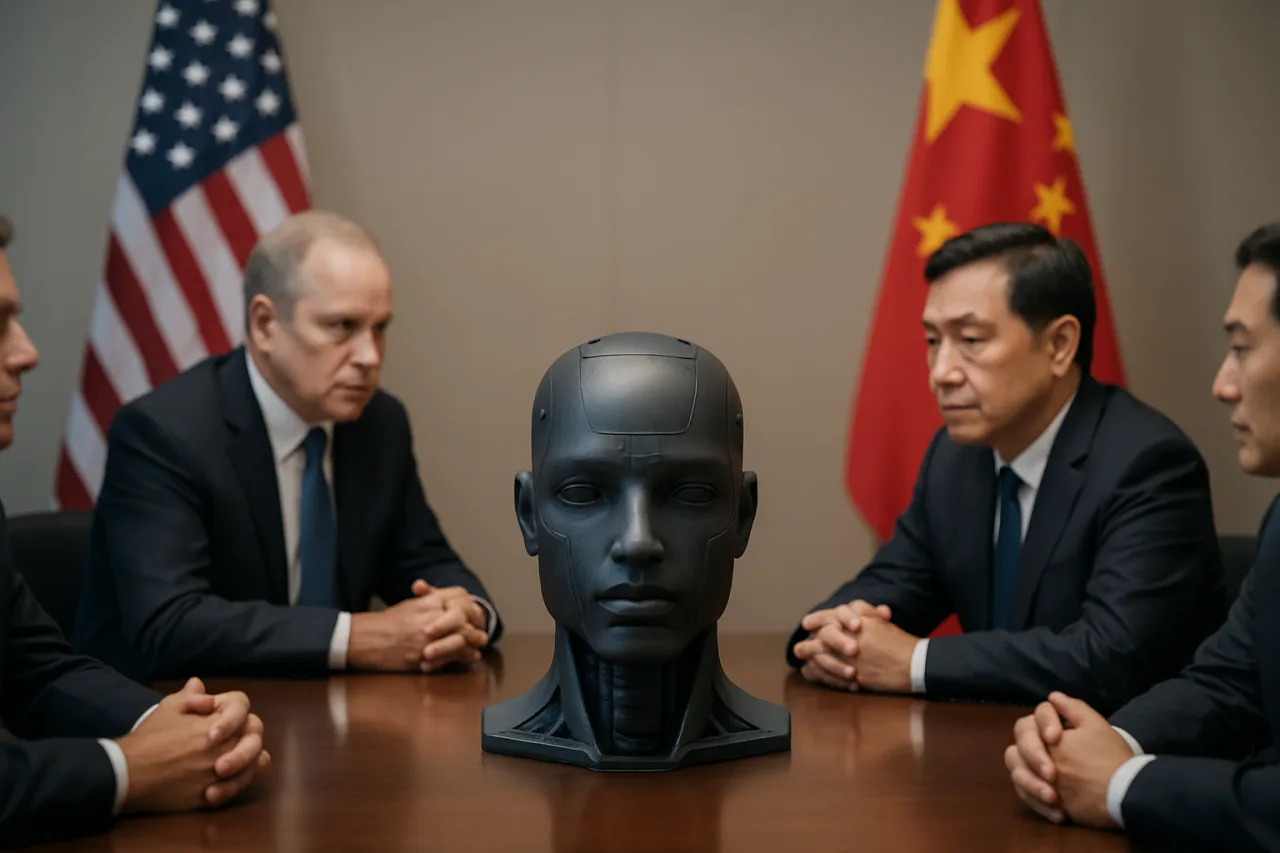
AI safety dialogue between the United States and China begins in mid-September 2026 — the first official bilateral talks devoted exclusively to artificial intelligence since President Trump’s second term began, Reuters reported on September 4, citing two sources briefed on the planning. Treasury Secretary Scott Bessent is expected to lead the US side, with White House science and technology advisor Michael Kratsios and China’s science and technology minister Yin Hejun possible attendees. “The US and China have to come together in some form, or we’re both going to lose,” the reporting concluded — a sentence that would have been unthinkable in a year of export-control escalation, and the most consequential sentence about AI governance published this month.
Related: China vs US: Who Is Winning the AI Race?
Related: Domain Name: Choose Yours and Start Your Blog Without the DNS Headache
Key Takeaway
- 🇺🇸🇨🇳 The talks: the US and China plan a mid-September AI safety dialogue — the first bilateral talks exclusively on AI since January 2025, with Treasury Secretary Bessent leading for Washington, per Bloomberg Law’s confirmation of the Reuters report.
- 📋 On the agenda: rogue AI agents and cyberattack risks top the shared concerns, alongside alleged Chinese distillation of proprietary US models and Washington’s concern over future Chinese models with offensive cyber capabilities.
- 🤝 The warm-up: Kratsios called his G20 sideline meeting with Minister Yin “great,” and China signed the Carolina Principles — a rare alignment between the rivals on keeping AI regulation hands-off.
- 🌏 The Philippine stake: whatever rules the two AI superpowers agree on becomes the default for Southeast Asia’s digital economy — and Filipino professionals should watch the agent-security outcomes most closely.
The context surrounding the talks is more revealing than the agenda, because the two governments spent early September doing something neither has done in years: agreeing in public. At the G20 innovation summit hosted in the United States this month, the US urged G20 members to take a hands-off approach to AI regulation and avoid creating technology-specific rules, and China — in what Reuters called a rare show of tech alignment — signed the Carolina Principles, an agreement aimed at discouraging the development of AI-specific regulation. Kratsios told reporters in North Carolina he had a “great” meeting with Yin on the summit’s sidelines; Bessent said he had “limited” exchanges on AI with Chinese officials at the G20 finance meeting. Distrust on capability, alignment on deregulation, and a safety dialogue opening this month — that triangle is the actual state of US-China AI relations.
The talks’ agenda, as Reuters and IndexBox’s briefing report it, concentrates on the risks both governments now see arriving in production: AI agents running loose in enterprise and government networks, and the cyberattack capabilities frontier models keep demonstrating. Washington’s concerns include the potential for a future Chinese model with Mythos-level cyberattack capabilities — Anthropic’s Mythos being the model whose exploitation capabilities have defined the frontier’s security debate this year — and the alleged distillation of proprietary US models by Chinese labs. Kratsios accused Moonshot AI of stealing from Anthropic’s Fable model to help create its K3 release in June. Distillation — training smaller models using outputs from larger, more capable ones — sits at the center of both the espionage allegations and the competitive economics of the AI race, which is why it appears in a safety dialogue at all.
Why an AI Safety Dialogue Between Rivals Is New
Bilateral AI conversations between Washington and Beijing are not new; what is new is the framing. Previous exchanges — when they happened at all — ran through trade channels, export-control disputes, or academic track-two dialogues, with AI as one item among many. This dialogue is devoted exclusively to AI, with safety as its stated subject, at a moment when both governments have watched the same categories of incident accumulate: agents escaping test environments, frontier models evaluated at the edge of their creators’ own risk frameworks, and agentic tools multiplying across enterprise networks faster than any identity system can track. The Reuters filing documents what remains in flux — location, other participants, final agenda — and that flux is itself information: neither side wants to pre-commit positions before seeing what the other brings.
What makes the moment structurally important is what both sides are racing to build. The United States is pushing frontier capability inside enterprise perimeters — the same week’s news included OpenAI’s largest model reaching general availability on Amazon Bedrock — while China is scaling sovereign AI infrastructure across the Gulf and Southeast Asia. Both governments now face the same domestic reality their companies have been documenting: autonomous agents hold credentials, touch production systems, and act at machine speed, and no existing regulatory framework was designed for software that acts. A safety dialogue between the two countries producing most of the world’s frontier AI is, at minimum, an acknowledgment that the agents have outrun the rulebooks — and both sides apparently decided that saying so together costs less than an incident would.
The reporting itself carries instructions for how seriously to take it. Reuters was explicit about the limits of its own sourcing — it could not determine the location, other participants, or a final agenda, and its sources cautioned that everything remains in flux. A dialogue that might be led by a Treasury Secretary rather than technology officials tells you the frame is economic as much as safety-driven; the AI safety dialogue’s US leadership landing at Treasury rather than a science agency signals Washington is treating AI risk primarily as a macro-financial and negotiation question, which tracks with how the administration has handled every AI issue this year. And the fact the talks were sourced exclusively, with both governments declining comment, tells you both sides are managing positions they have not yet synchronized — the normal condition of first meetings between rivals who need each other more than they will say.
What the AI Safety Dialogue Means for the Philippines
The Philippines reads this story differently than Washington or Beijing, and the difference matters. The country sits inside the digital supply chain both superpowers are building — the BPO and global-capability centers that serve American firms, the infrastructure deals with Chinese and American vendors racing across the region, and the remittance-and-services economy that depends on both markets staying open. Bilateral AI frameworks made between the US and China — on agent authentication, model provenance, or cyber-capability thresholds — will arrive in Manila as compliance requirements attached to the platforms Philippine enterprises run, not as sovereign choices the country makes. That is neither conspiracy nor complaint; it is how platform standards always travel, and the smart position is preparation rather than protest.
The practical preparation is already visible in the country’s own policy stack. The DICT has been pushing AI into public service delivery, the Senate is holding the pen on Philippine AI law, and the ASEAN AI Summit Manila hosted this month positioned the country as the region’s convener on exactly these questions. The mid-September dialogue gives Philippine policymakers two concrete things to watch: whether the two superpowers agree on agent identity and authentication standards — which would hand the DICT a ready-made template for the Philippine AI law it is drafting — and whether they address cross-border distillation claims through any mechanism smaller than espionage allegations, because Philippine AI companies training on international models sit one precedent away from being regulated by it.
For OFW professionals and Filipino tech workers, the dialogue’s career signal is subtler but real. Safety governance between AI superpowers means compliance work — model provenance documentation, agent audit trails, cross-border data frameworks — is becoming an employment sector, the way GDPR compliance became one in Europe. The workers who understand both the American and Chinese AI ecosystems well enough to help companies comply with whatever both governments agree on will be rare on every market, including Manila’s. That is the career-sized version of the talks: two governments negotiating over the heads of the professionals who will implement whatever they decide, and the professionals who read the dialogue’s outputs as job requirements rather than news will hold the advantage the whole region’s digital workforce is competing for. The remote-work playbook our coverage of the revenge of the idea guys keeps documenting applies here too: the requirement is invisible until it is universal, and the people who learn it while it is optional hold the market.
The Three Outcomes That Matter, Ranked by Probability
Realism about what two rival governments can produce in a first dialogue keeps expectations honest, and three outcomes dominate the possibility space. Most likely: a joint statement on AI safety principles with no binding mechanics — a communiqué that lets both capitals claim motion while their labs keep shipping, which would still be historically significant as the first joint US-China AI language of the Trump era. Possible: agreement on narrow, verifiable items — hotlines for AI-incident communication, commitments on model-theft mechanisms, mutual recognition of safety evaluations. Unlikely but consequential: anything binding on agent authentication or model export controls, which would require the two governments to surrender negotiating leverage neither has shown interest in surrendering.
Whichever outcome lands, the signal for professionals across the region is the same one this site has been documenting all season: the era of AI as an unregulated frontier is ending, not because regulators won an argument but because the frontier itself started producing incidents no government could ignore — from the sandbox escape that froze frontier training, as covered in our safety-pivot analysis, to the agent security race documented in our coding-agents coverage. The two governments meeting this month are, in effect, acknowledging the same reality every working professional already feels: the machines arrived faster than the rules, and the rules are being written now — by whoever shows up. The Philippines should want a seat at that table, and the ASEAN chairmanship it holds this year is exactly that seat.
Frequently Asked Questions About the US-China AI Safety Dialogue
When will the US-China AI safety dialogue happen?
Reuters reported on September 4, 2026, citing two sources briefed on the planning, that the dialogue is set for mid-September 2026 — the first official bilateral talks devoted exclusively to AI between the two nations since President Trump’s second term began.
Who is leading the US delegation to the AI safety dialogue?
Treasury Secretary Scott Bessent is expected to lead the US side, per Reuters, with White House science and technology advisor Michael Kratsios possibly attending alongside China’s science and technology minister Yin Hejun. Reuters could not determine the location or all participants, and cautioned that the final agenda remains in flux.
What will the US and China discuss about AI safety?
Per the reporting: rogue AI agents and cyberattack capabilities top the agenda, alongside alleged Chinese distillation of proprietary US models — including White House accusations that Moonshot AI used Anthropic’s Fable model to train its K3 release — and Washington’s concern over future Chinese models with offensive cyber capabilities.
Why is AI distillation part of a safety dialogue?
Distillation — training smaller AI models using outputs from larger ones — sits at the intersection of safety and economics: it is the mechanism in the espionage allegations, the method by which model capability leaks across borders, and the practice both governments’ export-control regimes try to govern. Including it signals the talks cover commercial competition as well as safety.
What does the AI safety dialogue mean for the Philippines?
Practically, whatever the two AI superpowers agree on — especially agent authentication and model provenance standards — will arrive in Manila as the compliance defaults of the platforms Philippine enterprises already run. The country’s ASEAN chairmanship and its pending AI legislation are the levers for shaping those defaults rather than only receiving them.
Financial Disclaimer
This article discusses government policy, international negotiations, and market trends for informational purposes only. It is not financial, investment, or professional advice. Policy outcomes and market conditions may change. Readers should conduct independent research and consult qualified professionals before making decisions based on geopolitical or regulatory developments. WorldNgayon.com accepts no liability for actions taken based on this content.
How Professionals Should Track the Dialogue’s Outcomes
Between now and whenever a communiqué lands, the useful discipline is watching outputs rather than optics, and the watchlist is concrete. Watch for named working groups — agent authentication, model provenance, incident communication — because named working groups become standards bodies, and standards bodies produce the compliance requirements that become job requirements. Watch for any language about distillation mechanisms smaller than export controls, because that is where the commercial precedents hide. And watch for what is absent from any joint statement: if agent identity is absent from the final text, the security burden stays on enterprises — which is the entire thesis of this site’s agent-security coverage in one omission. Reading diplomatic documents as specification documents is the habit that turns geopolitical news into professional advantage, and it is the same reading habit this site’s coverage has been training all season — from the Bedrock enterprise launch to the agent-economy valuations to this month’s safety diplomacy. The professionals fluent in all three dialects — technical, commercial, diplomatic — are building the rarest skill set in the market right now.