Key Takeaway
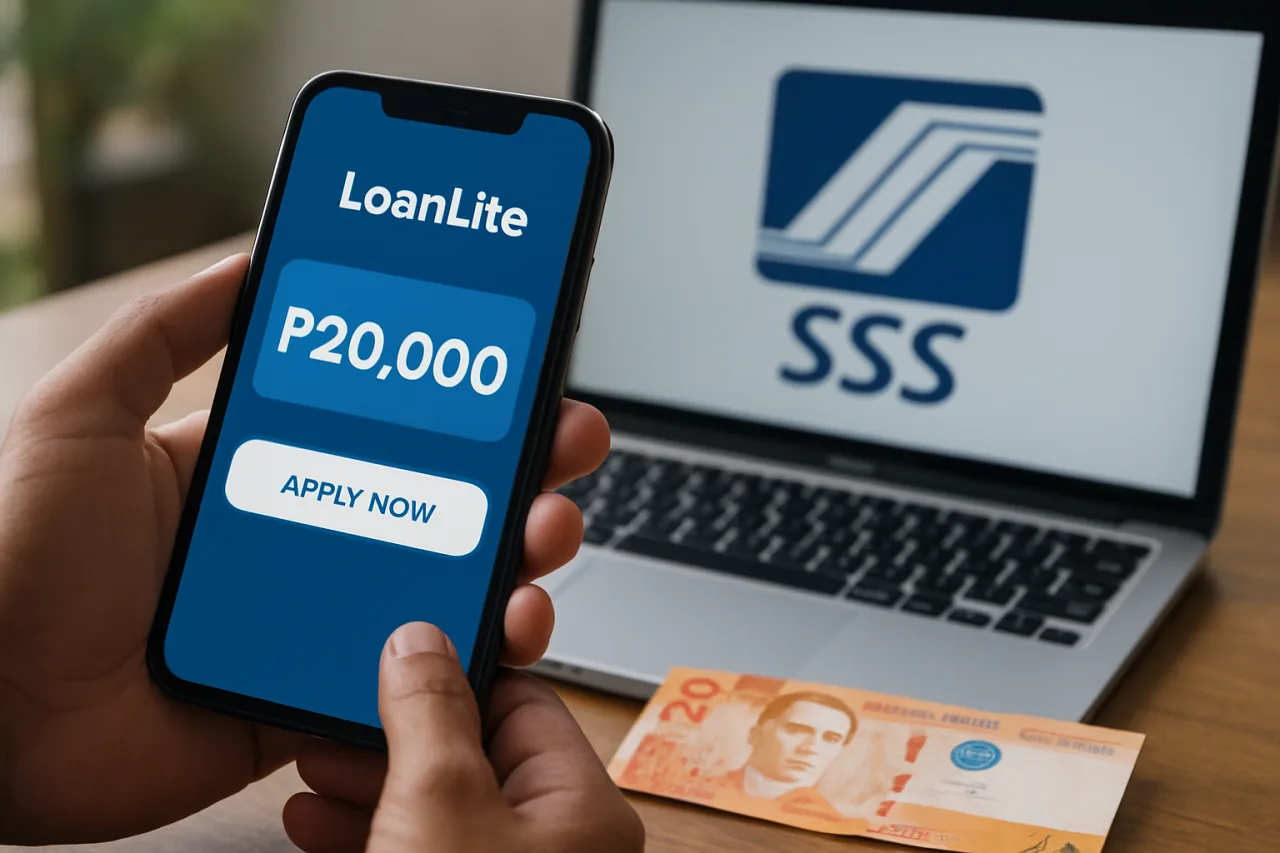
- 💵 SSS LoanLite — the SSS Micro Loan Program, updated for the October 2026 push — lends ₱1,000 to ₱20,000 through UnionDigital Bank’s app — applied and received fully digitally — this SSS LoanLite update covers everything the October push confirmed, with no employer certification.
- 📅 Repayment runs 15, 30, 60, or 90 days at the salary-loan interest rate, credited straight to your bank account.
- 🧹 The SSS Conso Loan wipes 100% of penalties if you pay the consolidated loan in one payment within 30 days — installment plans condone penalties progressively.
- 🧾 LoanLite eligibility: 12 posted monthly contributions, no past-due short-term loan, no pending final benefit; OFW members qualify.
- ⚖️ The two programs solve opposite problems: LoanLite for fast cash, Conso for cleaning up an old loan — pick the one that fits before borrowing anywhere else.
Update, October 6: the Push Is Official, the Numbers Confirmed, the OFW Catch-Up Route Written
The October 2 advisory made it official: SSS President Robert Joseph M. de Claro is publicly urging members with at least 12 posted monthly contributions to apply — the SSS LoanLite push is now a state marketing campaign. SSS LoanLite re-verified this week against the official posting: loans range ₱1,000 to ₱20,000 scaled by the average of your 12 latest Monthly Salary Credits (12-contribution members borrow 11% of that average — an average MSC of ₱20,000 yields ₱2,200, SSS’s own worked example), with the full ₱20,000 ceiling unlocked for members holding at least 36 total contributions including six within the last 12 months. Rates stand confirmed at 8% per annum (≈0.67%/month) on 15/30/60/90-day terms, collected via automatic debit from the enrolled account. UnionDigital Bank remains the only live channel; RCBC, Landbank, and UnionBank are being onboarded.
The OFW catch-up note for overseas readers — one of the most-requested follow-ups since this piece ran: lapsed-posting members can rebuild eligibility under voluntary-payment rules (accredited collecting partners abroad and the SSS app channels), but the floor counts POSTED months, not merely paid ones. The drill: check My.SSS postings → pay the catch-up → allow the posting cycle → apply when the 12th posts. The program’s doors do not close; a clean record at application beats any explanation letter after.
And one discipline addition this update earns: the renewal rule. Renewal is allowed only after full payment, per the PFI’s report — and the member who borrows should hold a single rule from day one: keep the full repayment amount untouched in the enrolled account from the day proceeds land. The debit schedule does not negotiate; the member who pre-funds it never meets a penalty, never renews by reflex, and never converts a state-priced bridge back into the revolving habit LoanLite was built to end.
The most expensive money a Filipino worker can borrow is still the corner 5-6 lender’s — 20% in a week, collected aggressively, invisible to any credit system that might ever reward you.
The Social Security System built a cheaper answer and, this month, made it radically easier to reach: SSS LoanLite, the micro-loan facility that went fully live inside UnionDigital Bank’s mobile app on September 8, 2026, under Circular 2026-005.
SSS LoanLite — it lends ₱1,000 to ₱20,000, approves through a bank app rather than a branch queue, requires no employer certification, and repays in 15, 30, 60, or 90 days — a shape built for the real emergencies members actually face: a medical bill, a tuition gap, a broken appliance, a small-business restock.
Table of Contents
What SSS LoanLite Is — and Who Can Borrow
LoanLite is the SSS Micro Loan Program — the fund’s first short-term loan facility for employed members with a fully digital application, delivered through participating financial institutions, with UnionDigital Bank as the launch partner.
The eligibility gate is deliberately simple: you must be at least 18 (and below 65 at loan end), have at least 12 posted monthly contributions, no past-due short-term member loan, no pending or settled final benefit claim, no active restructured loan, and an account enrolled in the participating bank’s online facility.
Employed, self-employed, voluntary, and OFW members all qualify — a rare SSS loan that a seafarer or a Riyadh engineer can run from a phone without an HR signature.
That last point — no employer certification — is the feature that changes borrowing behavior. The traditional SSS salary loan requires employer documentation, which for many members means revealing a financial situation to a supervisor they would rather keep private. LoanLite moves the entire application into the PFI’s app: the borrower’s contributions speak for them.
The SSS designed it as a safer, cheaper alternative to high-cost informal lending — the 5-6 systems that charge effective monthly rates no bank would dare print.
The Terms: Interest, Periods, and the Details That Matter
Borrowing runs ₱1,000 to ₱20,000 with repayment at 15, 30, 60, or 90 days. Interest follows the prevailing rate for an initial SSS salary loan — a rate the SSS sets and publishes, not the lender — and proceeds land directly in your account with the participating bank.
The mechanics that trip people up are worth naming. First, LoanLite is short-term by design: this is bridge money for a gap measured in weeks, not a home-renovation loan; stretching it across months defeats its pricing.
Second, you need the PFI account before you apply — enrollment in UnionDigital’s facility is itself a requirement, so the practical first step is opening and funding the app account this week, not during the emergency.
Third, the loan renews only after full payment, so the discipline of the 15-90 day window is what keeps the next loan available.
For household planning, the right comparison is the total cost of the emergency.
A ₱20,000 gap bridged at a 5-6 stall costs thousands in effective interest; borrowed at LoanLite’s published rate and repaid on 90 days, the cost is a fraction — and every on-time repayment strengthens the record that keeps SSS and the bank lending.
The Other SSS LoanLite Program: the Penalty Wipe Nobody Mentions
LoanLite is for members in good standing. The SSS program built for the opposite situation is SSS Conso Loan Program — consolidation with penalty condonation — and it quietly does something no informal lender ever offers: it wipes accumulated penalties.
Eligibility covers member-borrowers with past-due short-term member loans (salary loans including SLERP, calamity, emergency, and restructured loans) — specifically those more than three monthly amortizations behind or carrying an unpaid balance past maturity. Requirements: no final benefits received (no retirement or permanent-total-disability claim), no fraud disqualification, an active My.SSS account.
The mechanics reward decisiveness. Consolidation bundles all outstanding principal and interest into one SSS CONSO LOAN; penalties consolidate separately for conditional condonation.
Pay the whole consolidated loan within 30 days of approval and 100% of the penalties disappear. Choose the installment route — at least a 10% down payment within 30 days, then equal amortizations on a published table (balances above ₱5,000 stretch from 6 months at ₱5,001-₱10,000 up to 60 months above ₱72,000) — and penalties condone proportionally to the down payment, with the remainder fully condoned after full payment.
Interest on the consolidated loan runs 10% per annum on a diminishing balance; late amortizations carry a 1% monthly penalty. The caution: leaving a balance at term’s end reimposes the uncondoned penalty, and unpaid balances deduct from future benefit claims.
Choosing Between the SSS Loan Options: the Decision Table
The two programs answer different emergencies, and picking correctly saves both money and credit standing. LoanLite is for a new gap — cash needed this week, paid back inside three months, available only if your record is clean.
Conso Loan is for an old problem — the delinquent loan whose penalties grow monthly and quietly tax every future SSS benefit.
Borrowing fresh money through LoanLite while carrying delinquent loans is impossible by design; the sequence for a member in that bind is Conso Loan first, restore good standing, then borrow through LoanLite if the gap remains.
Both beat the informal alternative on price and safety. The 5-6 collector compounds weekly and reports to nobody; LoanLite compounds your on-time record inside the system that will one day pay your pension.
The comparison is not even close — and the fact that the government facility requires no workplace disclosure makes it usable in real life.
The OFW Angle: Why SSS LoanLite Matters Abroad
OFW members qualify for LoanLite — a meaningful change for workers whose contributions continue from Riyadh, Dubai, or Hong Kong but whose cash needs often arrive between contracts. A seafarer between vessels with 12 posted contributions can now borrow against his own record without flying paperwork through an employer.
The same logic covers the family back home: an OFW member can keep contributions current precisely because facilities like LoanLite exist to smooth the gaps between contracts — the program exists to keep membership continuous, and continuous membership is what pensions are made of.
For delinquent OFW borrowers — often members whose contributions lapsed after an agency dispute — the Conso Loan is the re-entry door. Penalties that accumulated through no strategy at all get waived on payment; good standing returns; contributions can resume.
The SSS built the exit door years ago; this week’s LoanLite news simply means the system now serves both sides of the crisis: the borrower before the trouble and the borrower emerging from it.
The SSS LoanLite Worked Example: ₱20,000 Emergency, Three Ways to Fund It
Put the decision in numbers. Imagine the emergency is ₱20,000 — a parent’s hospital bill in the provinces, due now.
Route one: the corner 5-6 lender, where the effective cost is commonly 20% per loan cycle; borrow ₱20,000 and repay ₱24,000 within weeks, an effective cost of ₱4,000 for one cycle, and the cycle tends to repeat.
Route two: a credit-card cash advance at 3.5% monthly plus a fee — cheaper than 5-6 but still compounding monthly against a borrower who may take months to clear it.
Route three: LoanLite at the published SSS salary-loan rate over 90 days — the total interest cost lands in the hundreds of pesos, not thousands, with every peso of on-time repayment recorded inside the pension system.
Run the same discipline on the delinquent side. A member who owes a ₱15,000 salary-loan balance with three years of accumulated penalties can watch those penalties add thousands more, or file the Conso Loan, pay the consolidated principal-and-interest once within the 30-day window, and watch 100% of the penalty column vanish from the account.
The member who does the math — penalty column versus payment deadline — is the one who walks into retirement with a full benefit check instead of a deduction notice.
The Three SSS LoanLite Mistakes That Turn Small Loans Into Big Problems
First mistake: borrowing before checking eligibility. LoanLite’s gates are mechanical — 12 posted contributions, no past-due loans, no active restructured loan — and a rejected application wastes the emergency window. Two minutes inside My.SSS checking your contribution count and loan status tells you which program is yours before you open the bank app.
Second mistake: treating the 90-day window as optional. The facility renews only after full payment, and the PFI relationship deepens or dies on this behavior.
A member who rolls one LoanLite into another immediately after repaying trains no one — but a member who repays on day 85 and waits a week keeps both the credit line and the record clean.
Third mistake: ignoring the Conso Loan because the debt feels old. Penalties on a delinquent SSS loan grow monthly forever, and unpaid balances eventually deduct from benefit proceeds — retirement checks included.
The penalty wipe has a 30-day clock after approval; members who wait for a better month wait past the cheapest money they will ever be offered.
What the Bank Partnership Changes
LoanLite’s distribution through participating financial institutions is the structural shift worth understanding. The SSS holds the contribution data and sets the rate; the PFI holds the app, the account, and the payment rails; the member gets a loan decision in-app without visiting either institution.
UnionDigital Bank — the digital bank arm of UnionBank — is the launch partner, and the SSS announced LoanLite’s availability through the UnionDigital app on September 8, 2026, with LANDBANK’s earlier releases signaling the PFI network will widen.
For members, the practical meaning is that eligibility travels with the SSS record rather than with a branch visit — the same portable logic that took remittances digital.
How To Apply — the Copy-Paste Checklist
LoanLite, in five steps: (1) Open your My.SSS account and confirm at least 12 posted monthly contributions and no past-due loans. (2) Download UnionDigital Bank’s app and complete its account enrollment. (3) Inside the app, select the SSS LoanLite facility; the bank pulls your SSS eligibility digitally.
(4) Choose your amount (₱1,000-₱20,000) and term (15/30/60/90 days). (5) Accept, and proceeds credit to your UnionDigital account. No employer signature appears anywhere in the flow.
Conso Loan, in four: log into My.SSS and check your loan balances; if any short-term member loan is 3+ amortizations past due, apply for the SSS CONSO LOAN online; on approval notice, pay the one-time full amount within 30 days for the full penalty wipe (or at least the 10% down payment for the installment route); keep the payment proof until the condonation reflects on your record.
The application, approval, and payment status all live inside My.SSS — the program was built digital-first, and the 30-day clocks start at the approval notice, so check the account after applying.
Frequently Asked Questions
Can an OFW member apply for LoanLite?
Yes — the eligibility list explicitly includes employed, self-employed, voluntary, and OFW members with at least 12 posted monthly contributions and no past-due short-term member loan.
What is LoanLite’s interest rate?
The interest follows the prevailing rate for an initial SSS salary loan; the SSS publishes the rate, and LoanLite’s terms cap the borrowing at ₱20,000 with 15-90 day repayment.
Does LoanLite require employer certification?
No — that is the program’s core design feature. Eligibility is verified digitally against SSS records through the participating bank’s app.
Who qualifies for the Conso Loan penalty condonation?
Member-borrowers with past-due short-term member loans (salary/SLERP, calamity, emergency, restructured) more than three amortizations behind or unpaid past maturity, with an active My.SSS account, no final benefits received, and no fraud disqualification.
How much penalty does the conso loan waive?
100% of consolidated penalties if the loan is paid in full within 30 days of the approval notice; on installments, penalties condone proportionally to the down payment, with the remainder condoned after full payment.
What happens if I miss the 30-day deadline?
The condonation is conditional: miss the window and the penalties remain (one-time) or the uncondoned portion remains reimposable, with default rules applying to the account.
Can I have LoanLite and a Conso Loan at the same time?
No — LoanLite requires no past-due short-term loans, so the delinquent member’s path is Conso Loan first, then LoanLite once good standing is restored.
Is LoanLite available to non-UnionDigital bank customers?
LoanLite is available through the web or mobile apps of participating financial institutions; UnionDigital Bank is the launch partner, and the SSS lists participating PFIs on the official program page as the facility expands.
Financial Disclaimer: This article is for general information only and is not professional financial advice. Loan terms and program rules change; verify current details with the SSS or the participating bank before applying.