Table of Contents
Key Takeaway
- 🚨 Deadline Risk: Employment contracts and educational documents expire for red ribbon OFW authentication — a contract older than 5 years from signing requires re-authentication, and many OFWs discover this only after their employer rejects the document at the visa stage.
- 🎯 What It Is: Red ribbon authentication by the DFA certifies that a Philippine document is genuine — foreign governments and employers require it for work visas, school enrollment, and legal transactions.
- 💰 Cost Reality: Regular processing costs ₱100 per document (10 working days), while expedited processing costs ₱200 per document (4 working days) — but OFWs abroad must add courier fees of ₱1,500-3,500 for mailing documents both ways.
- 🛡️ OFW Shortcut: OFWs can process red ribbon authentication through the nearest Philippine Embassy or Consulate without returning to the Philippines — saving ₱30,000-80,000 in airfare and lost wages.
- 💡 Pro Tip: Authenticate ALL your documents at once before leaving the Philippines — diploma, transcript, NBI clearance, birth certificate, and marriage certificate. Processing them individually from abroad costs 3-4x more and takes 2-3x longer.
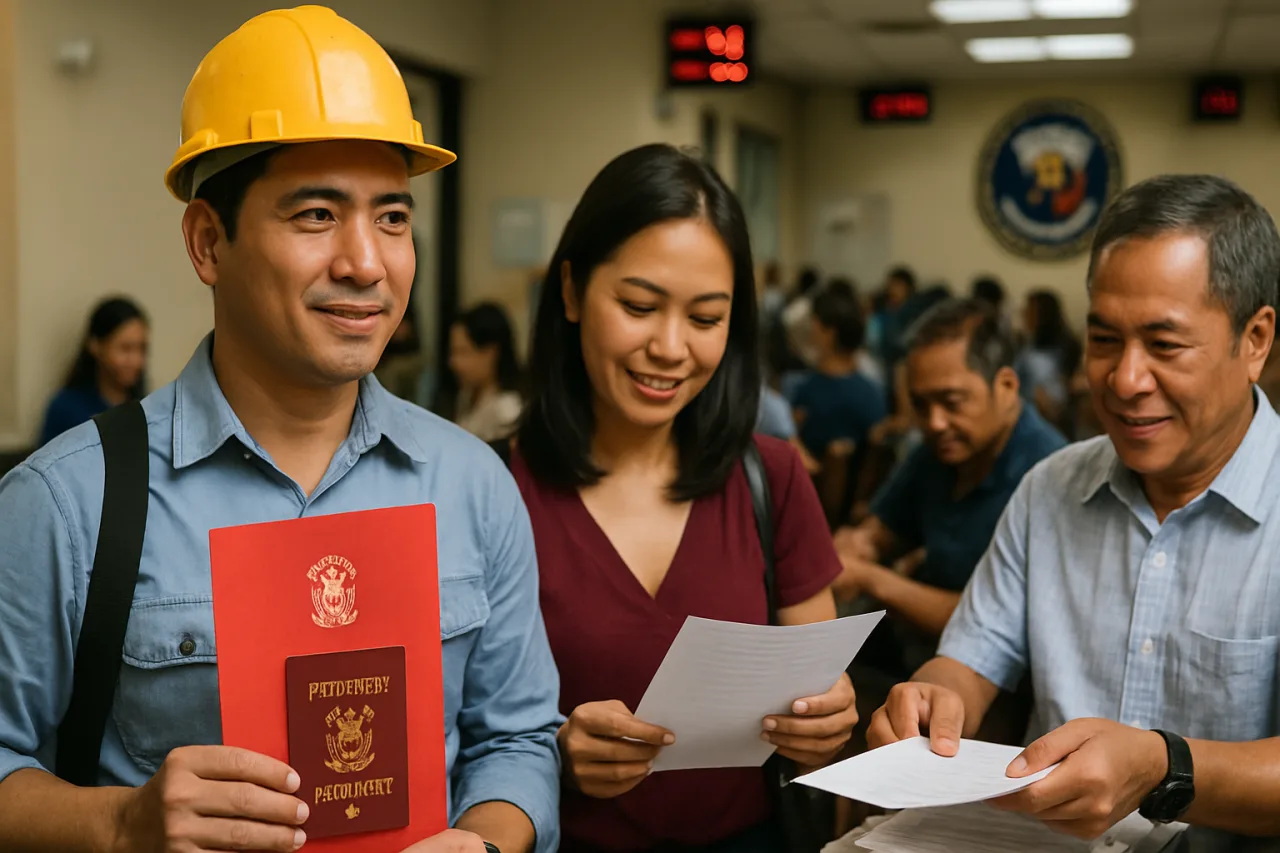
For millions of Filipino overseas workers, the red ribbon OFW process is the gatekeeper between them and legitimate employment abroad. A red ribbon — the literal red ribbon attached by the Department of Foreign Affairs to authenticated documents — proves to foreign governments and employers that your Philippine documents are genuine. Without it, work visa applications stall, school enrollments get rejected, and legal transactions freeze. Understanding the red ribbon OFW authentication process is not optional — it is a prerequisite for every stage of working and living abroad.
Why Red Ribbon Authentication Cannot Wait
The consequences of missing red ribbon OFW authentication are severe and expensive. The Department of Migrant Workers reported in 2025 that 12,400 OFW deployments were delayed by an average of 23 days due to missing or expired document authentication. Each delay costs the worker ₱30,000-50,000 in lost wages, delayed benefits, and additional processing fees. Some workers lose their job offers entirely when employers cannot wait.
Red ribbon authentication has been required by the Department of Foreign Affairs since Apostille Convention compliance began. The Philippines became a party to the Apostille Convention in 2019, which theoretically simplified authentication for countries that are also members. However, many popular OFW destinations — including Saudi Arabia, Kuwait, and some African nations — are NOT Apostille members and still require traditional red ribbon authentication.
What Documents Need Red Ribbon Authentication
Educational Documents
Diplomas, transcripts of records, and certificate of grades require red ribbon authentication for foreign credential evaluation. Employers and licensing boards in the UAE, Saudi Arabia, Qatar, and Singapore require authenticated educational documents before issuing work permits. CHED and TESDA certifications also need authentication.
Legal Documents
NBI clearance, police clearance, court records, and notarized affidavits must be authenticated. Special Power of Attorney (SPA) documents for property transactions in the Philippines must carry the red ribbon to be legally valid. Birth certificates from the Philippine Statistics Authority also require authentication for foreign use.
Commercial Documents
Business registrations, SEC certificates, and DTI permits need red ribbon authentication when OFWs establish businesses abroad or enter into commercial partnerships. Company documents for OFW recruitment agencies also require DFA authentication.
Medical Documents
Medical certificates and vaccination records may need red ribbon authentication depending on the host country’s requirements. Seafarers particularly need authenticated medical fitness certificates for flag-state compliance.
Complete Requirements and Fees Table
| Document Type | Pre-Requisite Authentication | DFA Fee (Regular) | DFA Fee (Expedited) |
|---|---|---|---|
| Educational (diploma, TOR) | CHED/TESDA + DepEd certification | ₱100/doc | ₱200/doc |
| NBI Clearance | None (DFA direct) | ₱100 | ₱200 |
| Birth/Death/Marriage Certificate | PSA certification | ₱100 | ₱200 |
| SPA / Affidavit | Notarization + Clerk of Court | ₱100 | ₱200 |
| Business Documents | SEC/DTI certification | ₱100 | ₱200 |
| Medical Certificates | DOH certification | ₱100 | ₱200 |
| Court Documents | Clerk of Court certification | ₱100 | ₱200 |
Red Ribbon OFW Processing Methods
Method 1: DFA Consular Office in the Philippines
Visit any DFA Consular Office (DFA-CO) or DFA Satellite Office. Book an appointment through the DFA Online Appointment System at dfa.gov.ph. Walk-in applicants are accepted only for senior citizens, persons with disabilities, and OFWs with urgent departures (show proof of flight within 30 days). Processing: 10 working days (regular) or 4 working days (expedited).
Method 2: Through Philippine Embassy or Consulate Abroad
OFWs already abroad can submit documents to the nearest Philippine Embassy or Consulate. The embassy forwards documents to DFA Manila for authentication, then returns them to the applicant. This is the preferred red ribbon OFW method for workers who cannot return to the Philippines. Processing: 30-45 working days (including mail time). Costs include DFA fee + embassy handling fee (varies by post, typically $20-50 per document) + courier fees.
Method 3: Through Authorized Representative
If you are abroad and cannot visit the embassy, you can authorize a representative in the Philippines to process on your behalf. Requirements: Special Power of Attorney (SPA) specifically authorizing document authentication + photocopy of your passport + representative’s valid ID. The SPA itself must be consularized at the Philippine Embassy before your representative can use it — creating a chicken-and-egg problem if you also need the SPA authenticated.
Step-by-Step: Red Ribbon OFW Authentication Process
Step 1: Determine Which Documents Need Authentication
Check your destination country’s requirements at the DFA website or through your recruitment agency. Most Gulf countries require authenticated educational documents + NBI clearance + birth certificate. Prepare all documents at once to save on processing time and fees.
Step 2: Get Pre-Requisite Certifications
Educational documents need CHED (for college) or TESDA (for vocational) certification before DFA will authenticate them. Birth certificates must be PSA-certified (not municipal copy). SPA documents need notarization and Clerk of Court certification. Each pre-requisite adds 3-7 working days.
Step 3: Book DFA Appointment or Visit Embassy
In the Philippines: Book at dfa.gov.ph appointment system. Abroad: Contact the nearest Philippine Embassy for their document submission schedule and procedures.
Step 4: Submit Documents and Pay Fees
Present original documents + one photocopy of each. DFA verifies the document against the issuing agency’s records. Pay the authentication fee per document. Ensure your name on all documents matches exactly — even a middle initial discrepancy causes rejection.
Step 5: Claim Authenticated Documents
In the Philippines: Return on the claim date shown on your receipt. You may also authorize someone to claim with an authorization letter + your receipt + their valid ID. Abroad: The embassy will notify you when documents are ready for pickup or will mail them to your address.
Step 6: Verify the Red Ribbon and Security Features
Authenticated documents have a red ribbon, gold seal, and DFA stamp. Check that your name, document type, and date are correct. The authentication number can be verified through OWWA or DFA’s verification portal.
Processing Times by Region
| Method | Middle East | Asia | Europe | Americas | Oceania |
|---|---|---|---|---|---|
| Via Embassy | 30-45 days | 25-35 days | 35-50 days | 40-60 days | 35-50 days |
| Via Representative in PH | N/A (PH only) | 10 days (regular) / 4 days (expedited) | |||
| DFA Walk-in (OFW urgent) | 3-5 working days with flight proof | ||||
Common Rejection Reasons for Red Ribbon Authentication
1. Name Mismatch — The name on the document does not match the name on your passport. Even “Maria Santos” vs “Maria C. Santos” can trigger rejection. Ensure all documents use the same name format.
2. Missing Pre-Requisite Certification — DFA will not authenticate educational documents without CHED or TESDA certification. Submit all pre-requisites together.
3. Expired Documents — NBI clearance older than 1 year is rejected. Educational documents older than 5 years from date of issue may require re-certification from the issuing school.
4. Certified True Copy Instead of Original — DFA requires the original document or a Certified True Copy (CTC) from the issuing agency — not from a notary public.
5. Damaged or Illegible Documents — Torn, water-damaged, or faded documents are automatically rejected. Request replacement from the issuing agency before authentication.
Apostille vs Red Ribbon: Which Does an OFW Need?
Since 2019, documents destined for Apostille Convention member countries do not need red ribbon authentication — they receive an Apostille certificate instead. However, red ribbon OFW authentication remains required for non-Apostille countries.
Apostille countries accepting Philippine documents (2026): Japan, South Korea, Australia, New Zealand, most of Europe, Canada, United States, and 120+ other nations.
Red ribbon required (non-Apostille): Saudi Arabia, Kuwait, Iraq, Iran, most African nations, and some Central Asian countries.
Check the Hague Conference on Private International Law website for the current list of Apostille member countries before deciding which authentication method you need.
Special Situations for OFWs
Lost Authenticated Document: DFA does not re-issue authenticated copies. You must start the entire red ribbon OFW process again: get a new certified copy from the issuing agency, obtain pre-requisite certifications, and submit to DFA. This is why making photocopies of authenticated documents and storing them securely is essential.
Document Needs Translation After Authentication: Some countries require documents to be translated by a certified translator after DFA authentication. The translation must also be notarized and may need its own authentication. Budget an additional ₱2,000-5,000 per document for certified translation.
Emergency Authentication: OFWs with confirmed flights within 7 days can request emergency processing at DFA Aseana or any DFA Consular Office. Bring your flight itinerary and employment contract as proof. Emergency processing takes 1-2 working days but costs ₱200 per document minimum.
Seafarer Documents: MARINA-authenticated sea service records and certificates follow a different process through the Department of Migrant Workers and do not require DFA red ribbon authentication. Seafarers should process through MARINA directly.
Tips from Consular Officers
1. Always bring extra photocopies. DFA requires one photocopy per document, but having extras prevents delays if a copy is rejected for quality. Bring at least 2 copies of each document for your red ribbon OFW processing.
2. Authenticate documents BEFORE applying for your visa. Start the red ribbon OFW process at least 45 days before your intended departure. Visa processing plus document authentication can take 60-90 days total.
3. Check if your destination accepts Apostille. If your country accepts Apostille, you can skip DFA entirely and get a faster, cheaper authentication through the Department of Justice-OSS (for documents already authenticated by their issuing agency).
Connection to Other OFW Document Requirements
- NBI Clearance OFW Guide — Your NBI clearance needs red ribbon authentication for most Gulf countries.
- Passport Renewal OFW Guide — Ensure passport is valid for at least 6 months before submitting documents for authentication.
- OFW Deployment Requirements — Complete checklist of pre-departure documents including red ribbon requirements.
Frequently Asked Questions (FAQ)
Q: How long is red ribbon authentication valid?
A: DFA red ribbon authentication is valid for 5 years from the date of issuance for most documents. However, some receiving countries and employers impose shorter validity periods (1-2 years). NBI clearance authentication expires when the NBI clearance itself expires (1 year from issue).
Q: Can I process red ribbon authentication while on vacation in the Philippines?
A: Yes, and this is the fastest method. Book a DFA appointment before your flight lands. If your vacation is shorter than 10 working days, choose expedited processing (4 working days). Bring all documents and pre-requisite certifications to avoid return trips.
Q: Does the Philippines still use red ribbon or has it changed to Apostille?
A: Both systems coexist. Apostille applies to documents destined for Apostille Convention member countries. Traditional red ribbon authentication (now called DFA authentication with a gold seal and stamp) applies to non-Apostille countries. The physical red ribbon is still attached to authenticated documents.
Q: How much does it cost to authenticate documents through the Philippine Embassy abroad?
A: DFA fee (₱100-200 per document) + embassy handling fee ($20-50 per document, varies by post) + courier fees ($30-70 both ways). Total per document: approximately $50-120 (₱2,800-6,700) — significantly more than processing in the Philippines.
Q: Can I authorize someone else to claim my authenticated documents?
A: Yes. Provide an authorization letter, the original receipt, a photocopy of your ID, and the representative’s valid ID. The representative must present all documents at the DFA claiming window.
Q: What if my document is rejected by DFA?
A: DFA will return the document with a note explaining the reason for rejection. Common fixes: get missing pre-requisite certifications, correct name discrepancies, or submit a certified true copy from the issuing agency instead of a photocopy. Re-submit with the corrected documents and a new appointment.
Q: Do I need red ribbon for documents going to Canada?
A: No. Canada is an Apostille Convention member since January 2024. Documents for use in Canada need Apostille certification, not traditional red ribbon authentication. This is faster and cheaper than red ribbon processing.
Q: Can I use the red ribbon authentication from my previous OFW deployment?
A: Only if the red ribbon OFW authentication is still within its validity period (5 years) AND the authenticated document itself has not expired. NBI clearance authentication, for example, expires when the NBI clearance expires (1 year). Educational document authentication typically remains valid for 5 years.
Disclaimer: This article is for informational purposes only and does not constitute legal advice. DFA authentication requirements and fees are subject to change. Always verify current procedures with the Department of Foreign Affairs or your nearest Philippine Embassy before submitting documents. Processing times may vary by location and demand.