Key Takeaway
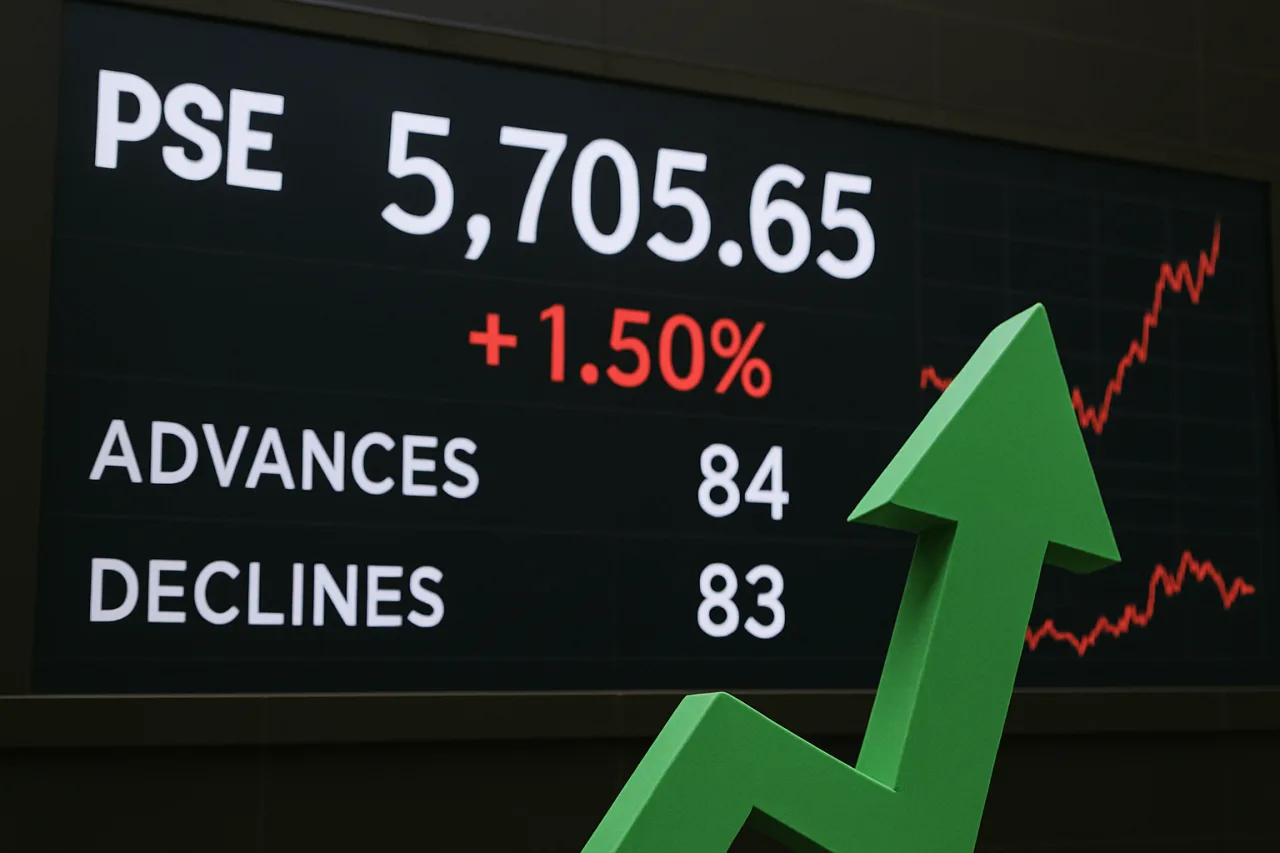
- 🔥 The reclaim: PSEi breadth turned positive as the index pushed above 5,700 on October 7 — but the number that matters more is the census line: 84 advancers against 83 decliners, the first breadth-positive tape after a month that shaved 6.19% off the index.
- 📊 Breadth beats price: a 0.90% gain carried by four mega-caps can reverse overnight; a gain carried by 84 separate names shows money spreading through the market — that is the difference between a bounce and a turn.
- 📅 Two dates decide everything: October 12 (GCash IPO retail window closes — liquidity drain) and October 23 (BSP Monetary Board Meeting No. 11 — the rate decision that inflation at 7.2% has loaded).
- 🛠️ The drill is yours: this piece hands you the 4-check PSEi breadth drill — runnable on any session from edge.pse.com.ph in under five minutes — plus position-sizing bands by risk tier.
- ⚠️ The honest frame: confirmed turns announce themselves in breadth AND volume; this session printed breadth without a volume surge — treat it as a claim, not a verdict.
Table of Contents
The Print: 5,700 Reclaimed on a Split Tape
The Philippine Stock Exchange index did something on October 7 that it had failed to do in six sessions: it climbed back above the 5,700 line, printing 5,728 intraday — a 0.90% gain on the day, per the benchmark CFD tracking the index. Price, by itself, is the least interesting part of that sentence. The PSEi breadth underneath it is the story. The PSEi breadth underneath it is the story.
Open the exchange’s own index summary — the live census — and the midday read showed 84 issues advancing against 83 declining, 58 unchanged, on 36,654 trades worth ₱2.10 billion in value. That is not a narrow, fat-finger drift upward. That is a market where slightly more than half of everything listed is being bid — and PSEi breadth has not printed that even-or-better line in weeks. On October 6 the index closed 5,677.12, up 48.12 points with foreign flow still net-negative at ₱1.71 billion — and the session before that, and the three before that one, painted red.
So the honest question an OFW investor with a PSE position — direct, via a REIT, or through the fund route — needs answered is not “did the market go up today?” It is: is money spreading, or is the index being carried? The rest of this piece answers it with a drill you can run yourself.
Why PSEi Breadth Is the Number That Matters
Index points can lie. A capitalization-weighted index like the PSEi hands disproportionate power to its largest names — SM, BDO, BPI, ICTSI, PLDT-class tickers. When two or three of those rally together, the index prints green even if seventy percent of the market is bleeding. Traders call the tell “narrow advance,” and it is the classic fingerprint of a dead-cat bounce: index up, tape weak, follow-through absent. Reading PSEi breadth instead of the price line protects you from exactly that trap.
PSEi breadth measures the opposite thing: how many members of the market are participating. The October 7 midday census — 84 up, 83 down — is a hair above even, but even is what matters after a month of negative breadth. On the red sessions of the past month, the census consistently printed 20-30 more decliners than advancers. A positive-even print is a regime marker, and it is why PSEi breadth — not the index price — headlines tonight’s watch. It is the first session in weeks where your small-cap REIT was more likely to green than to bleed.
The second check is value turnover. ₱2.10 billion by 12:44 p.m. Manila is a middling pace — the strong PSE sessions of 2026 pushed past ₱6-8 billion full-day. Breadth with thin value says: sentiment improved, conviction hasn’t fully arrived. That combination — breadth positive, volume unremarkable — is precisely why this piece treats the reclaim as a claim rather than a verdict. Verdicts need a second session of confirmation, ideally with value turnover backing it.
The Month That Hurt: Context Before Celebration
Zoom out before celebrating one green morning. Over the trailing month the index has lost 6.19% — and year-over-year it sits 6.08% underwater. The drivers are not mysterious. September inflation printed at 7.2%, a four-month high, led by food and transport — the two line items that squeeze every household the index’s companies sell to. Higher inflation pulls forward the rate-hike probability, and higher rates compress the valuations of exactly the dividend-yield stocks OFW investors prize. The PSE does not trade in a vacuum; every peso-rate expectation flows straight into those price targets.
Into that strained tape, the GCash IPO opened its retail window — October 6 through 12 at ₱6.60 per share. This is the part most commentary misses: a mega-IPO subscription is a liquidity event. Every peso parked in an IPO application is a peso not bidding the secondary market. History rhymes here — the 2021 listings and several 2025 offerings each coincided with visibly thinner secondary volumes during the subscription window. So the current bounce is happening against a known liquidity draw, which makes the positive breadth print slightly more impressive — and slightly less trustworthy, because the draw deepens through October 12.
The composite read: a market attempting a floor, doing so while the country’s largest fintech IPO siphons retail cash toward the primary market, three weeks before a central bank decision that inflation data has tilted toward hikes. That is the honest map.
The Two Dates That Decide the Week
October 12 — the GCash IPO window closes. Retail subscription ends, settlement runs the same day, and listing follows on October 20 under ticker GCASH. Between now and then, expect secondary-market volumes to run thin — money parked in application monies is money out of circulation. After listing, whatever cash comes back into the secondary market arrives with fresh attention on the financials sector, which GCash-adjacent sentiment (Mynt’s stakes in banks and the digital-bank complex) will color. If you hold banks or telco-adjacent financials, your tape gets noisier, not quieter.
October 23 — BSP Monetary Board Meeting No. 11. This date is now the fulcrum of Philippine asset prices. The inflation print at 7.2% — driven by the heavily-weighted food and non-alcoholic beverages line, per the government’s own statement — has loaded the probability toward another 25-basis-point move, with major foreign-bank desks (Standard Chartered among them, per their October 6 note) shifting from “hold” to “hike to 5.25%.” The official BSP calendar pins the meeting on Wednesday, October 23, with the Advisory Committee convening October 22. Between now and then, expect every data release — retail prices, remittance figures, the peso print — to be read as BSP evidence.
For an OFW investor the translation is mechanical: positions sized for a benign rate environment are mis-sized for this window. The bands below exist for exactly that reason.
The 4-Check PSEi Breadth Drill (Run It Yourself)
Five minutes, one page, any session — here is the drill this desk runs, named with the exact primary source:
- Open the census. edge.pse.com.ph → Index Summary. Read three numbers: advances, declines, total value. These three numbers ARE the PSEi breadth reading; writing them down at the same time of day keeps them comparable.
- Compute the spread. Advances minus declines. Positive and growing across 2-3 sessions = breadth trend turning. Negative print inside a rebound leg = the index is being carried; discount the move.
- Check value against the day’s pace. ₱2.10B by mid-session annualizes to middling. If you see breadth positive AND value above the recent full-day average, you have a genuine turn candidate. Breadth with thin value = one more day of data needed.
- Overlay the calendar. Any session inside October 6-12 (IPO draw) or the final week before October 23 (BSP quiet period) gets its readings discounted half a grade — structural flows and positioning suppress honest signals there.
Run the PSEi breadth drill three sessions in a row and you will have a better read on this market than most commentary — because you are measuring participation, not price.
Position Bands by Risk Tier
The drill exists to feed decisions, so here is the decision layer this desk runs for each risk posture:
- Conservative (dividend collectors, REIT holders): hold current income positions; add nothing new before October 23. A hike decision re-prices REIT yields mechanically; buying REITs the week before a rate decision is betting on the coin flip, not the yield.
- Balanced (index + blue chips): if the drill prints breadth-positive AND value-strong for two consecutive sessions outside the two structural windows, staging back into beaten quality names (banks, conglomerates) in thirds is defensible. Inside the windows, wait. The two-date map is your permission slip.
- Aggressive (small caps, second-liners): breadth is YOUR signal class — small caps live and die by participation. The 84-up print is the first honest PSEi breadth data in a month; one session does not make a trend. Enter on the second confirming print, exit discipline intact, and remember thin-value sessions gut small-cap liquidity fastest.
No band here is advice to act on a single day’s data — the whole point of the drill is that confirmation is a process, not a print.
What Confirms, What Kills
Confirmation signs: a second bread-positive session with value turnover above the recent average; foreign flow flipping from net-selling (the Oct 6 print was ₱1.71B net foreign selling) to neutral or buying; the peso stabilizing against the dollar (the USD/PHP print near 62.8 has been an import-cost pressure on listed industrials); and inflation expectations getting walked back in pre-BMP commentary.
Kill signs: the index pushing higher while the census flips negative again (the carried-index fingerprint); value collapsing during the IPO window’s final days; any pre-meeting BSP signal that the 7.2% print changed the Board’s reaction function; and a peso break above 63 that imports fuel-cost pressure into every transport-heavy P&L on the exchange.
Write both lists down. Markets reward the investor who decided in advance what evidence would change their mind — and PSEi breadth is the evidence class that decides first — and this week hands you two dates where that evidence arrives on schedule.
Financial Disclaimer
This article is for general information and education only. It is not investment advice, not a recommendation to buy or sell any security, and not an offer of any financial product. Markets carry risk, including loss of principal; past performance does not guarantee future results. Consult a duly registered financial advisor before making investment decisions. WorldNgayon.com and its writers hold no position in any security mentioned as of publication.
FAQ
What is PSEi breadth, in plain words?
PSEi breadth is the count of how many stocks on the exchange rose versus fell in a session. The index tells you where the average price went; breadth tells you how many names traveled there together. Breadth-positive sessions show spreading participation — the healthier signal.
Why does the October 23 BSP meeting matter to the stock market?
The Monetary Board sets the policy rate. With September inflation at 7.2%, markets expect possible further tightening. Higher rates cut the present value of future dividends, which presses valuations on yield stocks — the core holding class of many OFW portfolios.
Does the GCash IPO drain money from the stock market?
Temporarily, yes. Subscription cash sits in application accounts from October 6-12, reducing secondary-market buying power. After the October 20 listing, some capital typically recycles back — with sentiment effects on the financial sector.
Where can I check the advances-declines census myself?
The Philippine Stock Exchange’s own site: edge.pse.com.ph, Index Summary page. It is free, updated live during the session, and requires no account. The drill in this piece uses exactly that page.
Is today’s bounce a buying signal?
Not yet a verdict. Breadth printed positive but value turnover was middling and foreign flow was still net-negative the session before. The drill above exists precisely so you can check the second and third confirming sessions yourself instead of trusting one print.
How does the peso rate fit into PSE decisions?
A weaker peso raises the peso value of dollar earners and import costs alike; the current print near ₱62.8 to the dollar has been pressure on industrials and transport-linked names. Currency direction is one of the kill-sign checks above.
What OFW-specific angle does this piece carry?
OFW investors typically hold dividend-yield instruments — REITs, banks, telcos. Those are the exact securities most sensitive to the October 23 decision. The position bands are tiered to that reality.