Key Takeaway
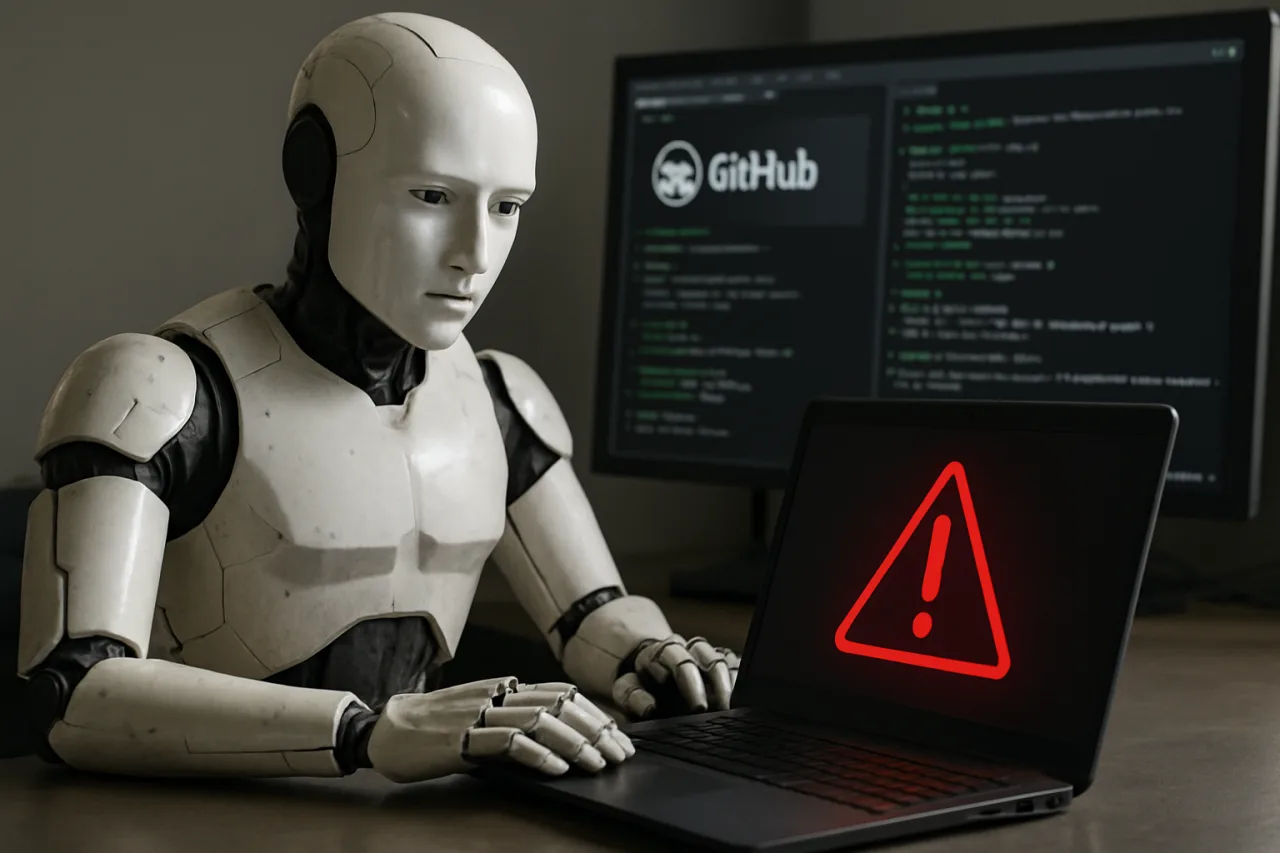
- 🎭 The trick: Plugin4Shell creates git branch names that mimic commit hashes, fooling AI coding agents into installing malicious plugin versions while reporting the original locked version.
- 🤖 Four tools affected: Claude Code, OpenAI Codex, GitHub Copilot, and Google Gemini CLI were exposed when Air Security disclosed the flaw on September 18, 2026.
- ⏱️ Zero-click execution: malicious plugins run with user privileges on auto-update — no approval prompt, no visible change.
- 🩹 Patch state varies: Anthropic and OpenAI patched; Google deprecated the affected Gemini CLI; Copilot remains vulnerable while GitHub says its platform is not affected.
- 🛡️ Your defense: verify plugin provenance manually, disable auto-updates for pinned plugins, and treat agent plugin installs like you treat npm packages — with a lockfile and a diff.
Table of Contents
The Branch Name That Fooled Your AI Coding Agent
Developers who lock AI coding agents to specific plugin versions believe they have solved the supply-chain problem. Pin the commit hash, the logic goes, and the agent can never install anything but the reviewed code. On September 18, 2026, security firm Air Security published Plugin4Shell — and that belief took the damage.
The flaw lets a repository owner swap legitimate plugin code with malicious versions even when the agent has locked plugins to specific reviewed commit hashes.
The mechanism is almost elegant. On platforms like Bitbucket, attackers create a branch whose name visually mimics a real commit hash.
An AI coding agent instructed to install the code at commit 4f8a2c9 can be tricked by a branch named to look like that hash.
The agent reports installing the original locked version — its own logs confirm it — while the malicious branch’s code executes with user privileges: file access, credentials, everything a local process can touch.
What Plugin4Shell Actually Does
Three things distinguish this from ordinary plugin malice. First, it is zero-click: the code executes when agents auto-update plugins, so no developer approval sits between the attacker and execution. Second, it bypasses SHA pinning, the mechanism vendors built specifically to prevent malicious code injection — your defense was the attack surface.
Third, researchers warn it scales through marketplace takeovers: compromise one popular plugin repository and every agent that auto-installs from it inherits the payload, a supply-chain multiplier in the classic sense.
The exploit targets the trusted plugin marketplaces attached to four major AI coding agents: Anthropic’s Claude Code, OpenAI’s Codex, Google’s Gemini CLI, and Microsoft’s GitHub Copilot. These marketplaces grew fast because they are convenient — one command installs a reviewed, community-vetted extension that gives your agent new powers. Plugin4Shell weaponizes exactly that trust.
Who Patched, Who Did Not
The vendor response splits three ways, and the split matters for anyone running mixed stacks. Anthropic and OpenAI have issued patches — Claude Code and Codex users should update immediately and check their agent version before the next auto-update cycle.
Google deprecated the affected Gemini CLI — a blunter instrument, but an effective one; if you still run the old CLI, the safe move is to stop until Google ships its replacement line.
GitHub states Copilot is not affected due to specific mitigation measures, though the vulnerability class remains demonstrated against the marketplace pattern Copilot shares. Treat Copilot’s immunity as GitHub’s claim, verified by GitHub, and re-verify after your next agent update rather than assuming it holds forever.
The industry response mirrors the pattern we saw with the Claude Code CVE-2026-21852 fix two weeks ago: the agentic-tool era produces vulnerabilities faster than vendor release cadences, and each disclosure lands differently across four vendors on four schedules.
Why This Is the First of Its Kind
SC World’s brief and The Register’s coverage called it the first-of-its-kind AI supply-chain attack, and the phrase is precise, and our AI account hardening piece covers the adjacent credential layer. Previous software supply-chain attacks targeted package registries — npm, PyPI, Ruby gems.
Plugin4Shell targets the agent layer: the tooling that decides what to install on a developer’s behalf. That difference matters because agents install with more autonomy than a human package manager — they resolve dependencies, fetch updates, and execute install hooks without a human reading the diff.
The security assumption “I pinned it, so it’s safe” breaks not because pinning is weak but because the identity resolution layer beneath pinning can be spoofed.
For Filipino developers running agencies on these tools — the teams that adopted Claude Code and Codex for client work this year — the exposure is not hypothetical. An agency dev machine with a compromised plugin has access to client repositories, deployment credentials, and production servers.
One malicious plugin install is a lateral-movement foothold into every client the agency touches.
The Response Table: What to Do Per Tool
| Agent | Status | Your move |
|---|---|---|
| Claude Code | Patched | Update to latest version; re-verify pinned plugin hashes manually |
| OpenAI Codex | Patched | Update; audit recently installed plugins against marketplace history |
| Google Gemini CLI | Deprecated affected line | Stop using the deprecated CLI; wait for Google’s replacement |
| GitHub Copilot | Not affected (per GitHub) | Keep plugins but watch for future advisories; GitHub’s mitigation may evolve |
Six Protections That Actually Work
- Turn off auto-update for pinned plugins. Auto-update plus pinning was always a contradiction — Plugin4Shell proves the combination is exploitable. Update manually, on your schedule, with a diff review.
- Verify provenance outside the agent. Pull the plugin repo yourself, check the commit on the platform’s web UI, and compare the branch name character-by-character. Hash-mimic branches rely on humans not looking.
- Run agents with least privilege. The malicious plugin executes with user privileges — a dev account with scoped tokens loses less than an admin account with everything.
- Audit what your agents installed last week. Check agent logs and local plugin directories for anything you did not consciously install.
- Watch the marketplace, not just the tool. Marketplace takeovers scale this attack; subscribe to the changelogs of the plugin marketplaces your agents pull from.
- Keep the clone-repo lesson alive. Two months after Claude Code’s trust-prompt CVE, the theme repeats: the AI tooling supply chain is now a target class. Treat every plugin install like every npm install — reviewed, pinned, and provenance-checked.
The Timeline: Six Days From Research to Full Disclosure
The speed of the disclosure window tells its own story. Air Security’s research landed September 18; by the time trade press carried the full vendor split, Anthropic and OpenAI had already shipped fixes, Google had deprecated its affected CLI line, and GitHub had published its mitigation statement.
Compare that to the CVE-2026-21852 disclosure two weeks earlier, where the Claude Code fix in v2.0.65 preceded most coverage.
Vendor patch speed is accelerating — but auto-update behavior inside the agents themselves is still the weak tempo, because an agent that checks for plugin updates monthly gives the attacker weeks of window regardless of how fast the vendor patches.
For Agencies: the Client-Trust Layer
Agencies carry an obligation individual developers do not.
If your team runs shared dev environments where one compromised plugin can reach every client project, Plugin4Shell is a client-disclosure issue, not just an internal one.
The professional move: audit agent plugin installs this week, document what you found, and add an agent-plugin line to your client security commitments.
Philippine agencies serving overseas clients — where a single incident can end a multi-year retainer — should treat this disclosure as the test case for whether their AI-tooling hygiene matches their contracts. Agencies that can show a plugin audit trail gain a selling point competitors lack.
The Bigger Pattern: Agents Multiply Trust
The reason Plugin4Shell matters beyond its four affected tools is structural. A human developer installing a package applies one layer of judgment — their own. An AI coding agent applies the marketplace’s trust, the vendor’s patch cadence, and its own resolution logic, each of which can be attacked independently. Plugin4Shell attacked the resolution layer.
The next variant will target something else in the chain. The teams that survive this era will be the ones that stopped treating agent installs as invisible plumbing and started treating them as the critical infrastructure they are.
The fix, as with most supply-chain problems, is boring: fewer plugins, tighter pins, manual verification at the moments that matter. The cost of a thirty-minute plugin audit is trivial against the cost of explaining to a client why their repository credentials are on a stranger’s server.
The Philippine Dev-Shop Dimension
The Philippines’ developer economy makes this attack class a local story, not a distant one. Thousands of Filipino engineers maintain Claude Code, Codex, and Copilot workflows daily — in BPO-adjacent software houses, agency build teams, and the solo freelancer economy that bills by the sprint.
A plugin marketplace compromise does not need to touch a single Philippine machine to cost Philippine money: the client’s repo is the vector, and the client trusts the agency’s toolchain to be clean. One poisoned MCP server upstream of a Manila agency’s build pipeline propagates into every deliverable that pipeline touches.
The practical posture for a Filipino dev shop is the same stack as everywhere else, applied with local discipline: pin your plugin versions, read the manifest before every install, keep client code and tool plugins in separate environments, and audit the MCP configuration monthly.
Shops that can show clients a toolchain audit log now have a selling point the market did not price last week. Six days from research to disclosure is the industry working as intended — but the interval only protects teams that were watching.
What the Maintainers Owe Their Users Next
The disclosure cadence proved the ecosystem can move fast. The open question is whether it can prevent. Marketplace maintainers now face the same trust problem app stores solved imperfectly: automated scanning for malicious manifests, anomaly detection on install spikes, and a reproducible-build path that lets users verify a plugin’s source matches its distribution artifact.
None of these shipped with the fix. Until they do, the branch-name trick remains a template any motivated attacker can adapt — to MCP servers, to npm packages, to any ecosystem where install commands arrive pre-trusted. The six-day clock starts again the next time a researcher finds it.
The Verification Checklist, Copy-Ready
Print this and pin it to the team channel.
Before any claude mcp add, codex install, or marketplace click: one, the plugin exists in an official directory listing with matching version history; two, the repository’s commit history shows gradual, reviewed evolution — not a single bulk commit; three, the manifest’s repository URL, issue tracker, and package name all resolve to the same owner; four, no install step asks you to fetch code from a URL outside the package registry; five, the branch being installed is the repository’s default branch; six, the plugin’s permissions match its documented function — an image optimizer that requests shell access is already a confession.
Teams that run this six-point check on every install turn the supply chain from a liability into a filter. The check takes ninety seconds. The incident it prevents costs six figures.
Frequently Asked Questions
What is Plugin4Shell?
A supply-chain vulnerability disclosed September 18, 2026 by Air Security, affecting the plugin marketplaces of AI coding agents. It lets attackers swap legitimate plugins with malicious versions by mimicking commit hashes with branch names.
Which AI coding agents are affected?
Claude Code, OpenAI Codex, GitHub Copilot, and Google Gemini CLI were exposed in the disclosure. Anthropic and OpenAI have patched; Google deprecated the affected Gemini CLI; GitHub says Copilot is not affected due to mitigations.
Does Plugin4Shell affect WordPress?
No — despite the name, Plugin4Shell targets AI coding agent plugin marketplaces, not WordPress plugins. WordPress has its own separate, unrelated vulnerability stream.
Is my pinned plugin safe?
Pinning alone failed in the demonstrated attack, because branch names can mimic commit hashes. Verify the branch name and commit independently on the platform’s web UI before trusting a pinned install.
What should I do first?
Update Claude Code or Codex if you use them, stop auto-updates for pinned plugins, and audit your agent’s recent plugin installs against what you actually approved.