Table of Contents
Key Takeaway
- 📉 Oracle’s restructuring bill keeps growing: a Friday SEC filing revealed roughly $700 million in additional restructuring costs on top of the $2.1 billion already recognized — pushing the 2026 program toward $2.8 billion while headcount is down about 21,000 year-over-year.
- 🏗️ The money has one destination: AI data-center capital expenditure — Oracle invested $55.7 billion in infrastructure in fiscal 2026 and posted a $23.7 billion cash outflow, betting the company’s future on buildout its own balance sheet struggles to fund.
- 💼 More cuts may be imminent: internal chatter and press reports point to a possible announcement around September 14-15 — no official confirmation, but managers have reportedly been asked to identify positions, with some teams facing double-digit reductions.
- 🔄 This is now the industry template: Oracle cuts payroll to fund compute; the same pattern drives layoffs across big tech — the salary-to-silicon trade has become the defining corporate finance move of the AI era — and Oracle restructuring is its template.
- 🇵🇭 The Philippines angle: displaced senior engineers are landing in mid-market roles within weeks, and the demand for people who can operate AI infrastructure — not just build it — keeps rising. Our regional workforce is positioned to catch both flows.
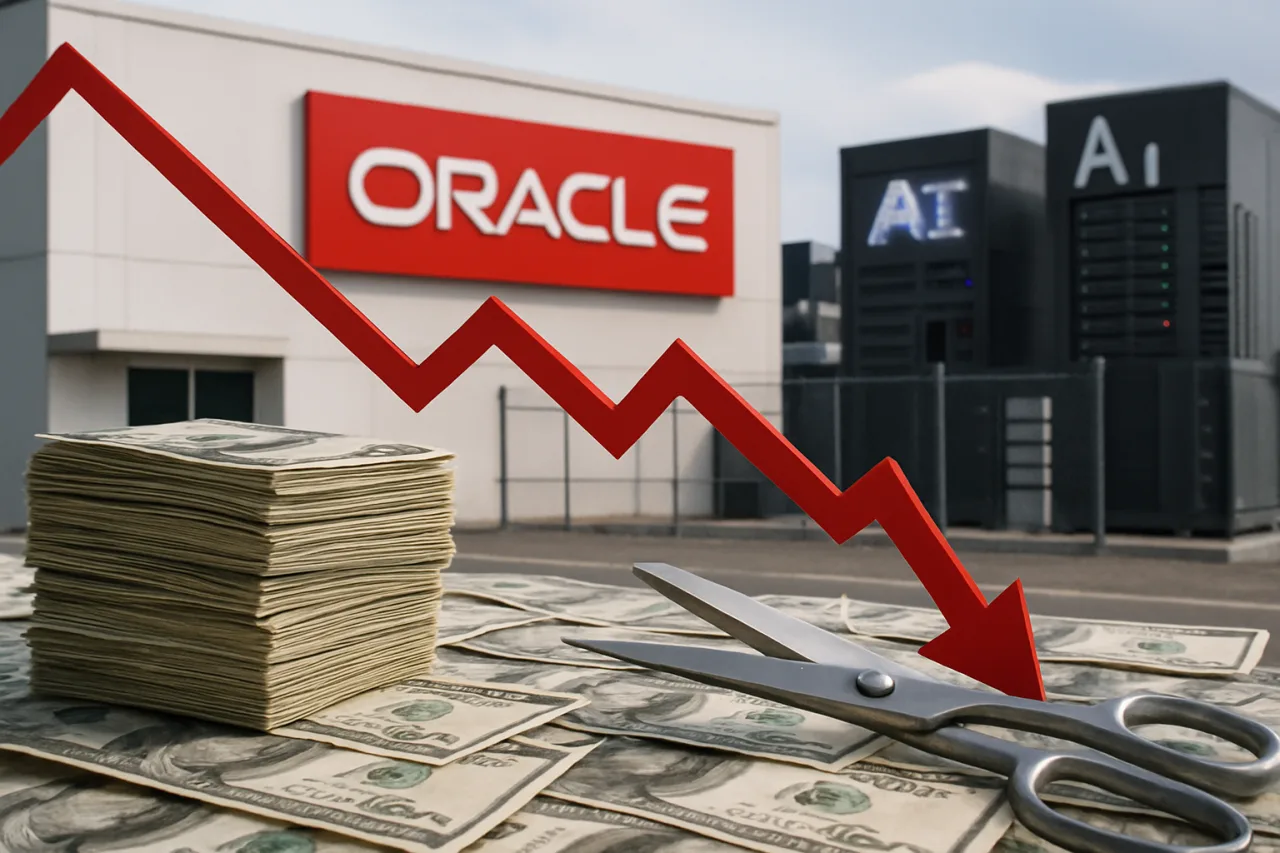
Oracle restructuring just gave the AI era its clearest financial document. In a Friday SEC filing that instantly became required reading across Silicon Valley, the company disclosed approximately $700 million in additional restructuring costs on top of the $2.1 billion already booked for its 2026 program — severance-heavy, tied to a workforce already reduced by about 21,000 people in a year. The reason sits one line down the balance sheet: tens of billions in AI infrastructure spending that Oracle’s own filings show it cannot comfortably afford. This Oracle restructuring is the salary-to-silicon trade in its purest documented form, and it explains what every technology worker in the Philippines — and every professional watching the AI economy — should understand about where corporate cash is flowing.
Related: Your AI Blog Can Publish Every Day—and Still Earn Nothing. Here’s the
The Numbers: What the Oracle Restructuring Filing Reveals
The Oracle restructuring filing’s key line: “Subsequent to August 31, 2026, our management supplemented the 2026 Restructuring Plan by approximately $700 million,” bringing the projected total to about $2.8 billion, with severance expected to account for a large portion. Context makes the figure meaningful. Oracle’s fiscal 2026 (ended May 31) saw headcount fall from roughly 162,000 to 141,000 — a cut of about 21,000 people, or 13% — while restructuring spend jumped from $374 million the prior year to $1.84 billion. Meanwhile the AI buildout accelerated: $55.7 billion in infrastructure investment, a cash outflow $23.7 billion beyond what operations generated, and remaining performance obligations of $553 billion, up 325% year-over-year, driven almost entirely by AI contracts — including a reported $300 billion, five-year commitment from a single customer.
Put plainly: Oracle is paying $2.8 billion to remove people so it can afford the machines those people were supposed to work with. The company’s own filing language admits the tension — restructurings “may lead to shortages of sufficiently skilled employees in certain roles, loss of valuable institutional knowledge, and damage to employee morale and retention.” That is not a footnote; it is a risk factor that describes the operating condition of the entire AI economy.
Oracle Restructuring as an Industry Template: The Salary-to-Silicon Trade
Oracle restructuring is not an outlier; it is the leading indicator of the AI era’s corporate finance. The pattern across big tech in 2026 is consistent: redirect the payroll line into the capex line, because the AI buildout rewards capacity, not headcount. Oracle cut roughly 30,000 roles by some counts of the full program, IBM trimmed thousands while tripling entry-level hiring, Cisco reshuffled net-neutral while shifting to AI networking and custom silicon. The logic is brutal but coherent — AI data centers generate future revenue obligations ($553 billion, in Oracle’s case), while the roles that once produced that revenue are themselves candidates for automation. Companies are not just building AI; they are paying for it with the jobs it partially replaces, a closed loop that has no precedent at this scale.
The second-order effect deserves as much attention as the cuts themselves. Displaced senior engineers are reportedly landing new roles in 17 to 30 days — the market for people who can operate AI infrastructure remains brutally tight, and mid-market companies, professional-services firms, and private-equity-backed operators are absorbing talent the giants release. The salary-to-silicon trade is not a shrinking of the technology workforce; it is a redistribution of it — away from legacy maintenance inside mega-vendors and toward the deployment layer everywhere else. Our AI careers analysis maps which roles absorb this flow, and our Gartner 40% analysis shows the discipline the survivors share.
The Oracle restructuring redistribution also has a geography, and it favors readers of this site. Mid-market operators, managed service providers, and the professional-services firms implementing AI for enterprises have become the net importers of big-tech talent — they get senior engineers at mid-market salaries, and the engineers get broader scope than they had inside a giant. For Filipino professionals, both ends of that trade are reachable: the absorber firms hire remotely, and the skills the giants deprioritized are the ones the region’s BPO-to-AI transition needs. A restructuring filing in Austin is, functionally, a hiring signal in Manila — timing just takes a quarter to translate.
Reading the Ripple: What the Oracle Restructuring Means for Vendors and Talent
Every restructuring of this size redraws a supply map. Oracle’s cuts shrink procurement for the office ecosystem — facilities, support vendors, internal tooling — while enlarging the order book of anyone selling compute-adjacent goods: power, cooling, networking, and the integration services that stitch AI infrastructure together. Suppliers who read the filing correctly will re-price their pipelines this quarter; suppliers who miss it will wonder where their enterprise renewals went. The same map applies to talent agencies and recruiting firms — the flow of senior engineers toward mid-market operators is now a documented channel, not a trend piece, and the firms that position between displaced big-tech staff and the absorber economy will earn placement fees on both sides.
For enterprises buying from Oracle, there is a subtler lesson. A vendor mid-restructuring is a vendor whose support quality, roadmap commitments, and account staffing deserve re-verification before renewal. The filing itself warns about productivity loss and knowledge attrition — those are not abstractions for customers running workloads on the affected teams. The professional move is not to flee but to ask precise questions: which product lines were touched, how support coverage is guaranteed, and what the escalation path looks like for the next twelve months. Restructurings are survivable; surprises are not.
What Happens Next — and Why September 14-15 Matters
The near-term watch item is immediate: reports and internal chatter point to September 14-15 as possible dates for another layoff announcement. Nothing is confirmed — September 1 came and went without the long-rumored action — but the supplemental $700 million makes further action arithmetically likely: that money budgets severance, and severance budgets people. For Oracle employees, the practical guidance is unglamorous: update credentials, review severance formulas (reported at four weeks of base pay plus a week per year of service, capped at 26), and warm up the network before the announcement rather than after.
The Deeper Ledger: What $2.8 Billion Buys, and What It Costs
It is worth being precise about what Oracle’s restructuring dollars actually purchase, because the accounting tells the strategy. Severance is the visible line — four weeks of base pay plus a week per year of service, capped at 26 weeks, by reporting on the program’s terms — but the invisible lines matter more: data-center land, power contracts, GPU deliveries, and the debt service that bridges the gap between what the buildout costs today and what the AI contracts pay tomorrow. The $700 million Oracle restructuring supplemental is best read as a bridge payment — cash to hold the structure together while the $553 billion in performance obligations converts, contract by contract, into revenue that may take years to arrive at the margins investors expect.
The risk Oracle’s own filing names is the one that travels: restructurings create skill shortages exactly where skill matters most. Run a data-center business with 21,000 fewer people and every outage, every capacity planning error, and every security gap becomes a question about whether the cut went too deep. The industry’s answer so far is automation — precisely the AI systems the cuts are funding — which makes the trade self-referential: the people removed are being replaced, in part, by the machines they were removed to buy. History offers few precedents for a company automating itself at this scale while its own filings warn about lost institutional knowledge; the honest summary is that nobody, including Oracle, knows whether the loop closes cleanly.
For workers, the actionable reading is about positioning rather than panic. The redistribution favors three profiles: infrastructure operators (someone must run what the capex buys), AI-adjacent specialists in mid-market firms (the absorbers of displaced talent), and professionals who pair domain expertise with AI tooling rather than competing against it. The profiles it punishes are equally clear — legacy maintenance roles inside mega-vendors with no AI exposure. The trade is harsh, but it is legible, and legible trades can be planned around. The Philippines’ advantage is that its tech workforce skews young, cloud-native, and English-fluent — precisely the profile the deployment layer hires.
WorldNgayon Analysis: Strip the Oracle logos and read the mechanism, because it will reach every industry that touches AI. The restructuring filing is the formal admission that AI infrastructure and legacy headcount now compete for the same peso — and infrastructure is winning because it has a revenue story attached. For the Philippines, the Oracle restructuring strategy reads in two moves: first, capture the redistributed talent (the senior engineers the giants cut are the mentors and builders the local AI ecosystem lacks); second, grow the operator class — the people who run the racks, the pipelines, and the workflows — because the buildout guarantees the demand. The companies winning this era are not choosing between payroll and silicon; they are choosing which side of the redistribution to stand on.
Bottom Line: Oracle’s $700 million supplemental restructuring is the AI era’s core transaction in one filing — people are being converted into compute, and the professionals who understand that trade are the ones it will never touch.
Watch two numbers this week in the Oracle restructuring story: whether the September 14-15 rumor becomes a confirmed announcement, and whether Oracle’s next filing repeats the risk language about lost institutional knowledge. If both land, the salary-to-silicon trade stops being an Oracle story and becomes the corporate template every technology leader in this region plans against — the ones who read the mechanism early will have already positioned their careers and their teams on the receiving side of the redistribution.
Frequently Asked Questions
What did Oracle disclose in its September 2026 SEC filing?
An additional approximately $700 million in restructuring costs beyond the $2.1 billion already recognized, bringing the 2026 Restructuring Plan to roughly $2.8 billion, with severance expected to account for a large portion of the increase.
How many employees has Oracle laid off?
About 21,000 in fiscal 2026 (ended May 31, 2026) — roughly 13% of its workforce, down from 162,000 to 141,000 — with restructuring spend of $1.84 billion, up from $374 million the prior year. Reports suggest further cuts may be announced as soon as September 14-15, though Oracle has not confirmed any date.
Why is Oracle cutting jobs while spending on AI?
The buildout is consuming cash faster than operations generate it — $55.7 billion of infrastructure investment in fiscal 2026 and a $23.7 billion cash outflow. Cutting payroll redirects funds toward data-center capex that backs $553 billion in remaining performance obligations, mostly AI contracts including a reported $300 billion five-year deal.
What does Oracle’s restructuring mean for tech workers?
Two practical realities: displaced senior engineers are being reabsorbed by the broader market within weeks (mid-market companies and PE-backed operators hire them first), and skills that operate AI infrastructure — cloud ops, data pipelines, GPU cluster management, automation — are the demand side of the same trade. The salary-to-silicon shift redistributes careers rather than simply eliminating them.
Is this layoff pattern unique to Oracle?
No — it is the industry template. Comparable moves at IBM, Cisco, and other giants show the same mechanism: headcount redirected toward AI infrastructure and the roles that build or operate it, away from legacy maintenance. Oracle is simply the largest and most documented example this quarter.
Financial Disclaimer
This article is for general information and editorial analysis only and does not constitute financial, investment, or legal advice. Figures reflect public filings and reporting as of September 14, 2026; restructuring programs and dates are subject to change by the company. Mentions of Oracle Corporation are not recommendations to buy or sell securities. Readers should conduct their own research and consult a licensed professional before making financial or career decisions. WorldNgayon.com publishes under Edmon Agron.