Table of Contents
Key Takeaway
- 🚨 You Can Renew Without Flying Home: OFW driver’s license renewal can now be done from abroad through LTO caravans, online via LTMS portal, or authorized representatives — no need for expensive emergency leave just for license renewal.
- 🎯 Fee Waivers Save You Money: As of January 2026, LTO waived medical and courier service fees for OFWs renewing through government caravans abroad, potentially saving you ₱1,500–₱3,000 per renewal.
- 💡 CDE Certificate Is Mandatory: All renewals require a Competency Driver’s Education (CDE) certificate, which you can obtain online through the LTMS portal — no need to attend in-person seminars.
- 🛡️ Expired Licenses Over 2 Years Need Exams: If your license has been expired for more than two years, you must pass both written and practical driving tests — plan ahead to avoid this scenario.
- 📋 UAE OFWs Get Online Renewal: OFWs in the United Arab Emirates can now renew their Philippine driver’s license entirely online through the LTMS system, with delivery directly to their address abroad.
Every year, thousands of overseas Filipino workers face the same stressful dilemma: their Philippine driver’s license is expiring, and they are thousands of miles away from home. The OFW driver’s license renewal process used to mean flying back to the Philippines, taking unpaid leave, and spending precious vacation days standing in LTO lines. That era is over. In 2026, the Land Transportation Office (LTO) has expanded options specifically for OFWs — from fee waivers and online processing to mobile caravans deployed at Philippine embassies and consulates worldwide. Whether you are a nurse in the UK, a seafarer on contract, or a domestic worker in the Middle East, this complete guide walks you through every OFW driver’s license renewal option available, the exact requirements, fees, and step-by-step procedures to get your license renewed without disrupting your overseas employment. If you are also managing other Philippine government documents from abroad, you may want to read our guides on Philippine passport renewal for OFWs and NBI clearance from abroad.
Why OFW Driver’s License Renewal Matters in 2026
For most OFWs, a Philippine driver’s license serves purposes far beyond driving. It is the most widely accepted government-issued ID in the Philippines — used for banking transactions, remittance pickups, property purchases, SSS and Pag-IBIG transactions, and even as valid identification for notarization. An expired license can block your ability to transact with Philippine banks, claim benefits, or authorize family members to act on your behalf.
The Commission on Filipinos Overseas estimates that over 2.19 million Filipinos work abroad as of 2026, and a significant portion hold Philippine driver’s licenses. Before the 2026 reforms, OFWs who let their licenses lapse faced a painful choice: fly home and lose weeks of income, or let the license expire and lose access to essential financial services. The LTO’s OFW driver’s license renewal reforms directly address this problem.
According to the LTO’s January 2026 announcement reported by Inquirer.net, OFWs renewing through government caravans abroad no longer need to pay for medical examinations or courier services. This policy alone saves each renewing OFW between ₱1,500 and ₱3,000 — money that can instead be sent home to families. The LTO has also expanded its partnership with the Department of Foreign Affairs (DFA) to bring renewal services closer to OFW communities in major deployment countries. For OFWs planning their eventual return and retirement to the Philippines, maintaining a valid license also supports your retirement planning by ensuring uninterrupted access to financial services.
Understanding the CDE Certificate Requirement
The single most important prerequisite for OFW driver’s license renewal is the Competency Driver’s Education (CDE) certificate. This is a mandatory requirement under Republic Act No. 10930, which mandates that all driver’s license renewals must be accompanied by proof that the holder has completed a refresher course on traffic rules and road safety.
The good news: OFWs can complete the CDE online through the LTO LTMS (Land Transportation Management System) portal at portal.lto.gov.ph. Additional information is available on the official LTO website. The online CDE module takes approximately 30-45 minutes to complete and covers updated traffic laws, road signs, defensive driving principles, and the LTO’s new point system for traffic violations. Upon completion, the system generates a digital CDE certificate that is valid for the current renewal period.
To register for the online CDE, you need your LTO Client ID (found on your current or most recent driver’s license), a valid email address, and a stable internet connection. The system is accessible 24/7, making it convenient for OFWs in any time zone. Once you complete the module, the CDE certificate is automatically linked to your LTO record — no need to print or submit physical copies when renewing through official channels.
Option 1: LTO Mobile Caravans at Philippine Embassies and Consulates
The most popular OFW driver’s license renewal method for 2026 is the LTO mobile caravan program. These are periodic visits by LTO personnel to Philippine embassies, consulates, and POLO (Philippine Overseas Labor Offices) in major OFW destinations. The caravans handle everything on-site: application processing, biometrics capture, photo taking, and license printing.
As of mid-2026, LTO caravans regularly visit the following locations:
- Middle East: Riyadh, Jeddah, Dubai, Abu Dhabi, Doha, Kuwait City, Manama
- Asia-Pacific: Hong Kong, Singapore, Kuala Lumpur, Taipei, Tokyo, Seoul
- Europe: London, Rome, Milan, Madrid, Paris, Berlin
- North America: Los Angeles, San Francisco, New York, Toronto, Vancouver
To use the caravan service, OFWs must monitor announcements from their nearest Philippine embassy or consulate. The DFA and LTO coordinate schedules quarterly, and slots are typically limited. Registration is done through the embassy’s online portal or social media channels. When the caravan arrives, bring your original expiring/expired license, passport (original and photocopy showing bio page, visa page, and latest arrival), and a medical certificate (though fees are waived under the 2026 OFW waiver policy).
The caravan renewal process takes approximately 2-4 hours on the day of the event. Your new license is typically printed on-site and released the same day. This is the fastest OFW driver’s license renewal option if a caravan is scheduled near you.
Option 2: Online Renewal Through LTMS Portal (UAE and Select Countries)
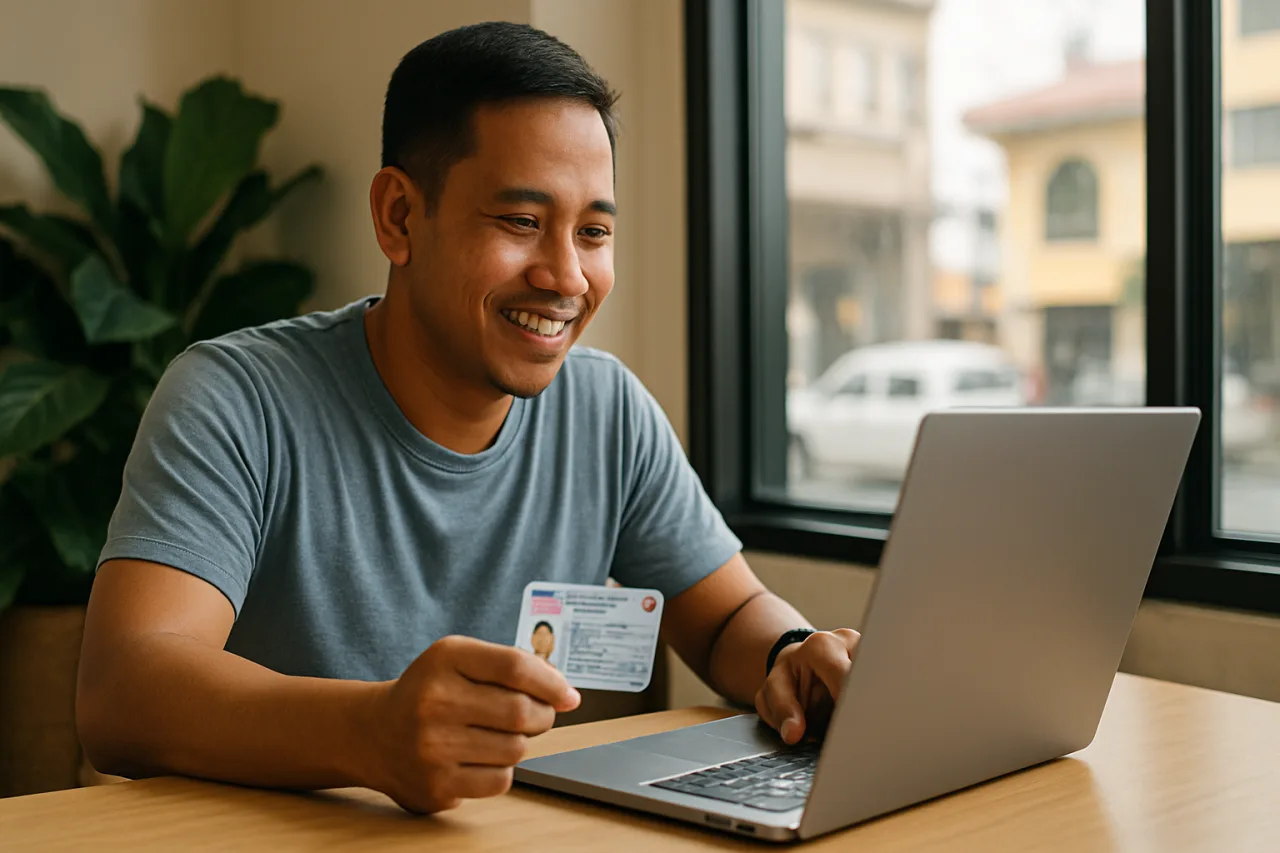
In January 2026, the LTO expanded its online renewal program to include OFWs in the United Arab Emirates, with plans to roll out to additional countries throughout the year. This OFW driver’s license renewal option allows you to complete the entire process from your phone or computer — from CDE certificate to payment to delivery.
The LTMS online renewal process works as follows:
- Create or log in to your LTMS account at portal.lto.gov.ph using your LTO Client ID
- Complete the online CDE module (if not already done) — takes 30-45 minutes
- Select “Driver’s License Renewal” from the services menu and verify your personal details
- Upload required documents: clear photo of your current license (front and back), passport bio page, and visa/employment permit
- Pay the renewal fee online (₱585 for professional license + ₱50 computer fee = ₱635 total for valid licenses; higher for expired licenses)
- Schedule biometrics appointment at the nearest Philippine embassy or consulate (if not previously captured)
- Receive your new license via courier delivery to your address abroad (delivery fee waived under 2026 OFW policy)
The entire process, from online application to license delivery, takes 2-4 weeks depending on your location and the embassy’s biometrics schedule. This is the most convenient OFW driver’s license renewal option for those who cannot take time off work to attend caravans.
Option 3: Renewal Through an Authorization Letter (Representative)
If you cannot attend a caravan and online renewal is not yet available in your country, the third OFW driver’s license renewal option is to authorize a family member or trusted representative in the Philippines to process the renewal on your behalf. This requires a notarized Special Power of Attorney (SPA) specifically authorizing the representative to handle your LTO renewal.
The SPA must be notarized at the Philippine embassy or consulate in your country of employment — not a local notary public. The Philippine embassy notarization fee is typically USD 25-30 (approximately ₱1,400-₱1,700). Your representative will need to present the original SPA, your current/expired license, photocopies of your passport, and their own valid ID at the LTO district office.
Important limitations of the authorization letter method: the LTO requires the license holder to appear in person for biometrics if their previous biometrics are more than 4 years old or if this is their first renewal since the LTO’s digital system migration. Check with your nearest LTO office whether your representative can complete the full process or if you will need to appear in person when you next visit the Philippines.
OFW Driver’s License Renewal Fees and Costs Breakdown
Understanding the fee structure helps you budget for your OFW driver’s license renewal. Here is the 2026 fee breakdown:
| Item | Cost (Valid License) | Cost (Expired <2 years) | Cost (Expired >2 years) |
|---|---|---|---|
| Renewal Fee | ₱585 | ₱585 + ₱75 penalty = ₱660 | ₱585 + ₱200 penalty = ₱785 |
| Computer Fee | ₱50 | ₱50 | ₱50 |
| CDE Certificate | Free (online) | Free (online) | Free (online) |
| Medical Examination | ₱0-₱500 (waived at caravans) | ₱0-₱500 (waived at caravans) | ₱0-₱500 (waived at caravans) |
| Courier/Delivery | ₱0-₱1,500 (waived for OFWs) | ₱0-₱1,500 (waived for OFWs) | ₱0-₱1,500 (waived for OFWs) |
| Written Exam (if needed) | N/A | N/A | ₱100 |
| Practical Exam (if needed) | N/A | N/A | ₱100 |
| Total Estimated | ₱635 | ₱710 | ₱1,035 + exams |
The 2026 OFW fee waiver policy eliminates medical examination fees and courier charges for OFWs renewing through official LTO channels (caravans and online). This represents significant savings compared to the pre-2026 cost structure, where OFWs paid up to ₱3,000 in total fees and delivery charges.
Required Documents for OFW Driver’s License Renewal
Prepare these documents before starting your OFW driver’s license renewal to avoid delays:
- Original current or expired Philippine driver’s license (front and back photocopy)
- Valid Philippine passport (original and photocopy of bio page, visa page, and latest arrival stamp)
- LTO Client ID number (found on your license or retrievable through LTMS portal)
- CDE Certificate of Completion (digital copy from LTMS — automatically linked to your record)
- Medical certificate (from LTO-accredited clinic; waived at caravans under 2026 policy)
- Special Power of Attorney (only if using representative method — notarized at Philippine embassy)
- 2×2 ID photo (white background; taken at caravan or uploaded for online renewal)
For OFWs whose licenses have been expired for more than two years, additional requirements apply: you must pass the LTO written examination (25 questions, 20 correct to pass) and the practical driving test. Both exams must be taken in person at an LTO licensing center in the Philippines — there is no remote testing option. This is why timely OFW driver’s license renewal is critical: letting your license expire beyond two years means you will need to fly home and pass both exams.
Step-by-Step: OFW Driver’s License Renewal at a Caravan
If an LTO caravan is coming to your area, here is the exact process to follow for smooth OFW driver’s license renewal:
- Monitor announcements: Follow your Philippine embassy or consulate’s Facebook page and website. Caravan schedules are typically announced 4-6 weeks in advance.
- Pre-register online: Most caravans require pre-registration through the embassy’s portal. Fill out the form completely and upload scanned copies of your documents.
- Complete the CDE online: If you have not already done so, finish the CDE module at portal.lto.gov.ph at least 3 days before the caravan date.
- Prepare originals and photocopies: Bring your original license, passport, and 2 photocopies of each document on the day of the caravan.
- Arrive early: Caravans operate on a first-come, first-served basis even with pre-registration. Arrive at least 1 hour before the scheduled start time.
- Proceed to document verification: Present your documents to the LTO staff for initial screening and verification.
- Biometrics and photo: Have your photo, signature, and fingerprints captured at the biometrics station.
- Medical examination: Undergo the medical check (vision test, blood pressure, basic physical) — free under the 2026 OFW waiver.
- Payment: Pay the renewal fee (₱635 for valid licenses) at the cashier station.
- License release: Wait for printing and claim your new 5-year validity license (typically 1-2 hours after payment).
The entire process at a well-organized caravan takes 3-5 hours from arrival to license release. Bring water, snacks, and patience — queues can be long, especially in high-OFW-density locations like Dubai and Riyadh.
Common Problems and How to Solve Them
Even with improved processes, OFW driver’s license renewal can hit snags. Here are the most common issues and their solutions:
Problem: Lost or damaged license.
Solution: File a notarized affidavit of loss at the Philippine embassy. You will need to apply for a new license (not renewal) and may need to take the written and practical exams. Processing time is longer — allow 1-2 additional weeks.
Problem: Unpaid traffic violations.
Solution: The LTO system will flag any outstanding violations. You must clear these before renewal. Check your violation status through the LTMS portal or ask a representative to check at an LTO office. Pay violations through LTO’s online payment channels or at any Bayad Center in the Philippines.
Problem: Name discrepancy (married women).
Solution: If your passport shows your married name but your license shows your maiden name (or vice versa), bring your PSA-issued marriage certificate. The LTO will update your records during renewal. If documents are not in Philippine records, you may need to file a petition for correction of entry.
Problem: License expired more than 2 years ago.
Solution: You must pass written and practical exams. Schedule these at an LTO licensing center during your next home visit. Some Philippine embassies can arrange written exams at the consulate — inquire with your local POLO office.
Problem: No LTO Client ID.
Solution: Retrieve your Client ID through the LTMS portal’s “Forgot Client ID” feature using your license number and personal details. If the system cannot find your record, visit an LTO office in person with your PSA birth certificate and valid IDs for record verification.
OFW Driver’s License Renewal: Special Cases
Seafarers on active contract: If you are a seafarer whose license expires while you are at sea, the LTO allows a grace period. You can renew within 30 days of your return without penalty. Bring your seaman’s book and contract showing you were deployed during the expiration period.
OFWs with dual citizenship: If you have acquired citizenship in your host country but retain Philippine citizenship, you can still renew your Philippine driver’s license. Present your Philippine passport (dual citizens must travel on their Philippine passport when entering the Philippines) and your foreign passport for additional identification.
OFWs converting from non-professional to professional license: If you need a professional license for work purposes (e.g., driving for hire), you must pass the written and practical exams for the higher classification. This cannot be done at caravans — you must visit an LTO licensing center in the Philippines.
OFWs needing an International Driving Permit (IDP): The Philippines is not a signatory to the 1949 Geneva Convention on Road Traffic, so Philippine driver’s licenses cannot be directly converted to IDPs. However, you can apply for an IDP through the LTO if you plan to drive in a country that requires one. The IDP is valid for one year and costs ₱376. Some OFWs obtain a driver’s license in their host country instead, which is often simpler.
Tips for a Smooth OFW Driver’s License Renewal
Based on the experiences of thousands of OFWs who have gone through the process, here are proven tips for hassle-free OFW driver’s license renewal:
- Start early: Begin the process 3-6 months before your license expires. This gives you buffer time for document gathering, CDE completion, and scheduling around caravan dates.
- Complete the CDE immediately: The online CDE takes less than an hour and is valid for the entire renewal period. Do it now so it is one less thing to worry about later.
- Follow embassy social media: Caravan announcements appear on embassy Facebook pages first. Turn on notifications for your local Philippine embassy and consulate pages.
- Keep digital copies: Scan your license, passport, and all documents. Store them in cloud storage (Google Drive, Dropbox) so you can access them from anywhere.
- Check for violations: Before starting your renewal, verify you have no outstanding violations through the LTMS portal. Clearing violations remotely saves time.
- Coordinate with other OFWs: If you have friends or community members renewing at the same caravan, go together. You can share information, watch each other’s place in line, and help with document preparation.
- Consider the timing: Avoid scheduling renewal during peak seasons (Christmas, Holy Week, summer) when caravans are crowded and embassy services are stretched thin.
Frequently Asked Questions (FAQ)
Q: Can I renew my Philippine driver’s license if I am an OFW living abroad?
A: Yes. OFWs can renew through LTO mobile caravans at Philippine embassies and consulates, through the LTMS online portal (available in UAE and expanding to other countries), or by authorizing a representative in the Philippines with a notarized SPA. The OFW driver’s license renewal process is specifically designed for overseas workers.
Q: How much does OFW driver’s license renewal cost in 2026?
A: For a valid professional license, the total cost is ₱635 (₱585 renewal fee + ₱50 computer fee). Medical examination and courier fees are waived for OFWs under the 2026 policy. If your license is expired, penalties apply: ₱75 for less than 2 years expired, ₱200 for more than 2 years (plus you must pass written and practical exams).
Q: What is the CDE certificate and do I need it for renewal?
A: The Competency Driver’s Education (CDE) certificate is a mandatory refresher course on traffic laws and road safety required for all license renewals under Republic Act No. 10930. OFWs can complete the CDE online through the LTMS portal at portal.lto.gov.ph in approximately 30-45 minutes. It is free and the certificate is automatically linked to your LTO record.
Q: My license expired 3 years ago. Can I still renew it as an OFW?
A: Yes, but with additional requirements. Licenses expired for more than 2 years require you to pass both the LTO written examination (25 questions, need 20 correct) and the practical driving test. These exams must be taken in person at an LTO licensing center in the Philippines — they cannot be taken at caravans or online. Plan a home visit to complete the exams before your renewal.
Q: I am an OFW in Saudi Arabia. When is the next LTO caravan?
A: LTO caravans in Saudi Arabia typically visit Riyadh, Jeddah, and the Eastern Province (Dammam/Khobar area) on a quarterly basis. Check the Philippine Embassy in Riyadh’s Facebook page (@PHSaudiArabia) and the Philippine Consulate in Jeddah (@PHinJeddah) for announcements. The LTO also coordinates with POLO-Riyadh and POLO-Jeddah for scheduling.
Q: Can someone renew my driver’s license for me while I am abroad?
A: Yes, through a notarized Special Power of Attorney (SPA). The SPA must be notarized at the Philippine embassy or consulate in your country of employment. Your authorized representative can then process the renewal at any LTO district office in the Philippines. Note: if your biometrics need updating (every 4 years), you may still need to appear in person.
Q: Is the OFW driver’s license renewal fee waiver permanent?
A: The fee waiver for medical examinations and courier services was announced in January 2026 and is currently in effect. The LTO has not announced an end date, but policies can change. Check the official LTO website (lto.gov.ph) or your nearest Philippine embassy for the latest updates on OFW fee waivers.
Q: I lost my driver’s license while abroad. Can I still renew it?
A: A lost license requires a different process — you must apply for a new license rather than a renewal. File a notarized affidavit of loss at the Philippine embassy, then proceed with a new license application. You will likely need to pass written and practical exams. Processing takes longer than standard renewal, so start immediately.
Q: How long is a renewed Philippine driver’s license valid?
A: Under the 5-year validity law (Republic Act No. 10930), a renewed Philippine driver’s license is valid for 5 years from the date of renewal. The LTO has discussed moving to 10-year validity for drivers with clean records, but as of 2026, the standard validity remains 5 years.
Q: Can I use my Philippine driver’s license as valid ID for bank transactions after renewal?
A: Yes. A renewed Philippine driver’s license from the LTO is a valid government-issued ID accepted by all major Philippine banks (BDO, BPI, Metrobank, Landbank, etc.), government agencies (SSS, PhilHealth, Pag-IBIG), and most private institutions. It is one of the most versatile IDs for OFWs managing Philippine financial affairs from abroad.
Disclaimer: This article is for informational purposes only and does not constitute legal or government advisory. LTO policies, fees, and procedures are subject to change. Always verify current requirements with the nearest Philippine embassy, consulate, or the official LTO website at lto.gov.ph before making travel or financial decisions based on this guide.