Key Takeaway
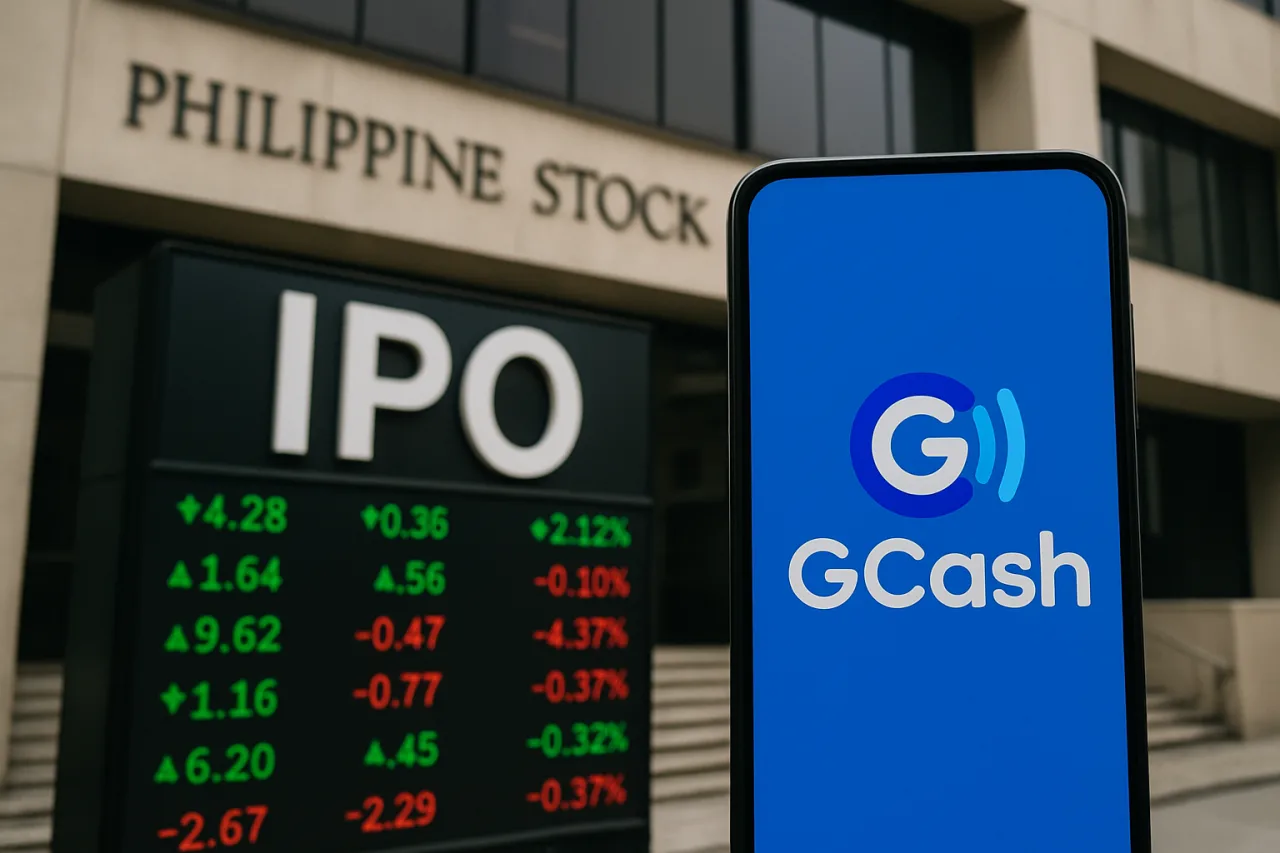
- 💰 The GCash IPO is official: parent company Mynt Inc. prices on October 1 and lists on the PSE October 20, 2026 — the biggest market debut in Philippine fintech history at ₱92.32 billion.
- 📅 The timetable matters more than the hype: offer period runs October 6–12, pricing notice hits the PSE and SEC October 2 — and the final price is where all the analysis lives.
- 📊 The ₱10-per-share ceiling is already contested: independent brokerages cluster at “below ₱7,” BDO Capital’s own president says ₱7.50–8.50 gets “a deal to be done,” and Trading Edge’s math puts ₱8 at 24.7× annualized 2026 earnings.
- 🧾 Mynt is offering about 12% of outstanding capital, targeting at least an $8 billion valuation — and it’s a three-way partnership: Globe Telecom, the Ayala Group, and Ant Financial.
- ⚠️ The retail check before subscribing: IPO hype in Manila has a record — read the prospectus sections on growth and related-party ties (Globe-Ant) before the app opens, not after.
The GCash IPO story starts with the app 94 million Filipinos use to pay jeepney fares, receive remittances and borrow in emergencies is about to trade on the stock exchange. The GCash IPO — technically the Mynt Inc. listing — prices on October 1 and debuts on the PSE on October 20, 2026, and it is already the most argued-over deal of the year: the registration statement lists a ₱10-per-share ceiling, while the brokerages building the book quietly cluster their expectations below ₱7. For the ordinary subscriber deciding whether to put savings into the wallet they already use daily, the difference between the ceiling and the clearing price is the whole game. This guide walks the five numbers that decide it — and the checks to run before the offer window opens.
Table of Contents
Number 1: The ₱92 Billion Timetable
The GCash IPO runs on a published clock, per the prospectus and GMA News’ report of the listing target: pricing date October 1, 2026; notice of final offer price to the PSE and SEC on October 2; offer period October 6–12; official PSE listing October 20. The ₱92.32 billion figure is the maximum offering size registered with the SEC on September 3 — the approval that started the clock. What that number is not: the valuation. Mynt is seeking at least $8 billion in valuation; the offer size, the float percentage and the final price together decide whether the market agrees. The GCash IPO dates matter for a practical reason: the bookbuild — where institutions tell the underwriters what price they’d pay — happens before October 1, which means the smartest price signal you will ever get arrives in the next two weeks, in the form of analyst notes and underwriter comments, not in the offer window itself.
Number 2: The 12 Percent Float
Mynt is offering roughly 12% of its outstanding capital to the public. That number sets the GCash IPO market’s behavior after listing: a 12% float is a tight supply — enough for liquidity, thin enough for a strong debut to move the price quickly, and small enough that the controlling owners (Globe, Ayala, Ant) keep the company’s direction firmly theirs. For retail subscribers, the 12% float cuts both ways. It supports the classic IPO pattern where early buyers see a listing pop when demand is hot; it also concentrates risk, because with 88% of the stock privately held, the public market’s influence on governance is a voice, not a vote. The 12% also explains the ₱92.32 billion headline: that’s the maximum value of roughly one-eighth of the company at the ceiling price — the company’s implied full valuation at ₱10/share is the number that makes analysts blink, and the next section is why.
Number 3: The ₱10 Ceiling vs the Analyst Range
The registration statement’s ₱10-per-share maximum is a ceiling in name only — the documented analyst feedback says the institutional market sees fair value well below it. Abacus Securities said the market is clustering around “below ₱7” as attractive, and would want pricing closer to ₱6 — roughly 15 to 16 times Mynt’s 2027 earnings estimate — to get more enthusiastic. Eduardo Francisco, president of BDO Capital & Investment (a domestic lead underwriter — a party with direct interest in a high price), nonetheless put the deal range at ₱7.50 to ₱8.50: “I think there’s a deal to be done” there, he told the Manila Bulletin. Ron Acoba of Trading Edge provided the cleanest framework: at ₱8, Mynt trades at approximately 24.7× annualized 2026 earnings — a level that credits GCash’s dominant position without requiring heroic near-term growth assumptions. Translation for the retail reader: the deal that actually prints will likely land somewhere in the ₱6–8.50 band, and every peso below the ceiling is a discount to the registered maximum. The final price announcement lands October 2 — one day after pricing, before the offer opens. That single document decides whether the GCash IPO is a bargain, a fair price, or a pass.
Number 4: Who Owns Mynt — and Why It Matters
Mynt is a three-way partnership: Globe Telecom, the Ayala Group, and Ant Financial (Ant Group, the Alibaba-affiliated fintech giant). Each owner shapes the listing differently. Globe brings distribution and — per broker commentary from B.A. Securities and H.E. Bennett — the IPO could act as a catalyst for Globe’s own stock, a cross-ownership signal worth watching if you hold both. Ayala brings the conglomerate’s governance weight and a century of Philippine market history. Ant Financial brings the technology lineage: GCash is, structurally, the Philippine cousin of Alipay, and Ant’s playbook — payments first, then lending, insurance, investments — is exactly the road GCash has walked. The GCash IPO related-party question is the honest one to ask before subscribing: GCash’s fees, deposits and lending flows touch its own owners’ ecosystems, and the prospectus’s related-party transactions section is where a careful reader checks how much of GCash’s revenue is earned inside the family. It usually is, in this structure — the question is whether the pricing compensates.
Number 5: The 94 Million User Base
The scale argument for the GCash IPO: GCash says it has been used by over 94 million Filipinos — accounting for 94% of the country’s fintech app usage, per Fintech News Philippines’ analysis of the IPO. That is not a user count in the Western sense; it is a national infrastructure number. The remittance you receive, the sari-sari store QR you scan, the government aid disbursed through the app — GCash is the default rail of Philippine money movement. The investment question the user base answers is growth: with near-saturation penetration, the growth story shifts from adding users to deepening use — lending (GCredit), investments (GFunds), insurance (GInsure), and merchant fees. Analysts pricing the deal at 15–25× earnings are, in effect, betting on that deepening. The risk the user base hides is the mirror: when one app is 94% of a category, its failure modes — outage, fraud wave, regulatory shock — are systemic events, and the market prices that concentration into exactly the multiple debates you see in the ₱6–8.50 range.
How to Subscribe: the Retail Checklist
The GCash IPO mechanics are simple; the discipline is not. Step one: wait for the October 2 final-price notice — subscribing at the ceiling before the price is set is buying blind. Step two: read two prospectus sections before the offer opens October 6 — the use of proceeds (what the money is actually for) and related-party transactions (how much business runs through Globe/Ant/Ayala). Step three: size the position like a bet, not a belief — the PSE’s own history of hot IPOs includes first-day pops and first-month slides, and the household rule this site uses for every speculation applies: money you can lose without changing your month. Step four: use a broker that participates in the offering (your existing BDO/BPI/Col-Financial account covers it; GCash’s own securities arm, GCash Stocks, is expected to offer subscription access — using the wallet to buy its own parent is the loop of the year). Step five: decide your listing-day plan in advance — flip or hold — because October 20’s opening print is where undisciplined decisions happen.
The Honest Risks
Four GCash IPO risks the hype skips. Valuation risk: the analyst range exists because ₱10 prices in growth the market isn’t sure of — if it clears high anyway, the downside is real. Concentration risk: 94% category share means regulatory or competitive shocks hit the whole company, not a segment. Related-party risk: the owner-ecosystem revenue mix deserves prospectus-level scrutiny, not brochure-level trust. Market risk: the PSE’s week of the listing matters — this IPO arrives after a week where the PSEi fell 102 points on Fed-hike nerves, and a hiking Fed (September’s move to 3.75–4.00%) pulls global liquidity from emerging-market equities; timing is a risk you don’t control. None of these make the listing bad; all of them make “how much and at what price” the only questions that matter.
Frequently Asked Questions
When is the GCash IPO listing date?
October 20, 2026 on the Philippine Stock Exchange. The GCash IPO timetable per the prospectus: pricing October 1, final-price notice to PSE/SEC October 2, offer period October 6–12. The offer is the only window for retail subscribers — after October 12, you buy on the open market at whatever price the listing prints.
How much is the GCash IPO offering?
The GCash IPO offering: up to ₱92.32 billion registered with the SEC (approved September 3, 2026), about 12% of Mynt’s outstanding capital. The per-share ceiling is ₱10; independent analysts (Abacus, BDO Capital, Trading Edge) have publicly indicated the deal is likely to price in the ₱6–8.50 range. The final price is announced October 2.
Should ordinary Filipinos invest in the GCash IPO?
It’s a legitimate candidate for a small, sized-to-survive allocation — the user base (94 million Filipinos, 94% fintech usage) is genuinely national infrastructure — but it is not a guaranteed win: the ₱10 ceiling vs the analyst range shows the smart money expects to pay less, and IPO history includes first-month slides. The discipline: read the prospectus (use of proceeds, related-party transactions), wait for the October 2 price, and invest only money whose loss changes nothing about your month.
What is the difference between Mynt and GCash?
GCash is the app and the business; Mynt Inc. is the parent company that owns it and the entity actually listing on the PSE. When you subscribe to the IPO or buy the stock, you’re buying Mynt — the Globe-Ayala-Ant partnership behind GCash. The distinction matters in the prospectus: Mynt’s financials, including the holding structure and related-party flows, are what you’re pricing, not just the app’s transaction volumes.
Who owns Mynt, GCash’s parent company?
A three-way partnership: Globe Telecom, the Ayala Group, and Ant Financial (the Alibaba-affiliated fintech group that built Alipay). After the IPO’s ~12% float, these owners retain control. The structure explains both the strengths (Ant’s fintech playbook, Ayala’s governance, Globe’s distribution) and the scrutiny point (related-party transactions inside the owner ecosystem).
What price will the GCash IPO list at?
Unknown until October 1 (pricing date), announced October 2. The registration ceiling is ₱10 per share. Documented analyst expectations: Abacus Securities “below ₱7” (enthusiastic closer to ₱6, ~15–16× 2027 earnings), BDO Capital’s Francisco at ₱7.50–8.50, Trading Edge’s Acoba putting ₱8 at 24.7× annualized 2026 earnings. The clearing price lands where institutional bookbuild demand meets the offer — expect the ₱6–8.50 band unless demand surprises high.
Final Word: Read the Price, Not the Hype
The GCash IPO is the rare deal where every reader is also a user — and that cuts both ways: familiarity breeds comfort, and comfort is what overpriced subscriptions are made of. The five numbers above compress into one instruction: the ceiling is marketing, the analyst range is signal, and the October 2 price notice is the only document that turns either into a decision. Read it. Then decide like an investor: sized to survive, priced against the ₱6–8.50 evidence, and held to a plan you wrote before October 20’s opening bell.
Financial Disclaimer: This article is for general information and education only — it is not investment advice, a recommendation, or an offer to buy or sell securities. IPO investing involves risk of loss; past performance does not guarantee future results. Figures (pricing ranges, analyst views, timetables) reflect publicly available sources as of September 21, 2026 and may change. Consult a licensed financial advisor and read the full Mynt Inc. prospectus before making any investment decision. worldngayon.com and its authors are not liable for financial outcomes resulting from actions taken on this content.