Table of Contents
Key Takeaway
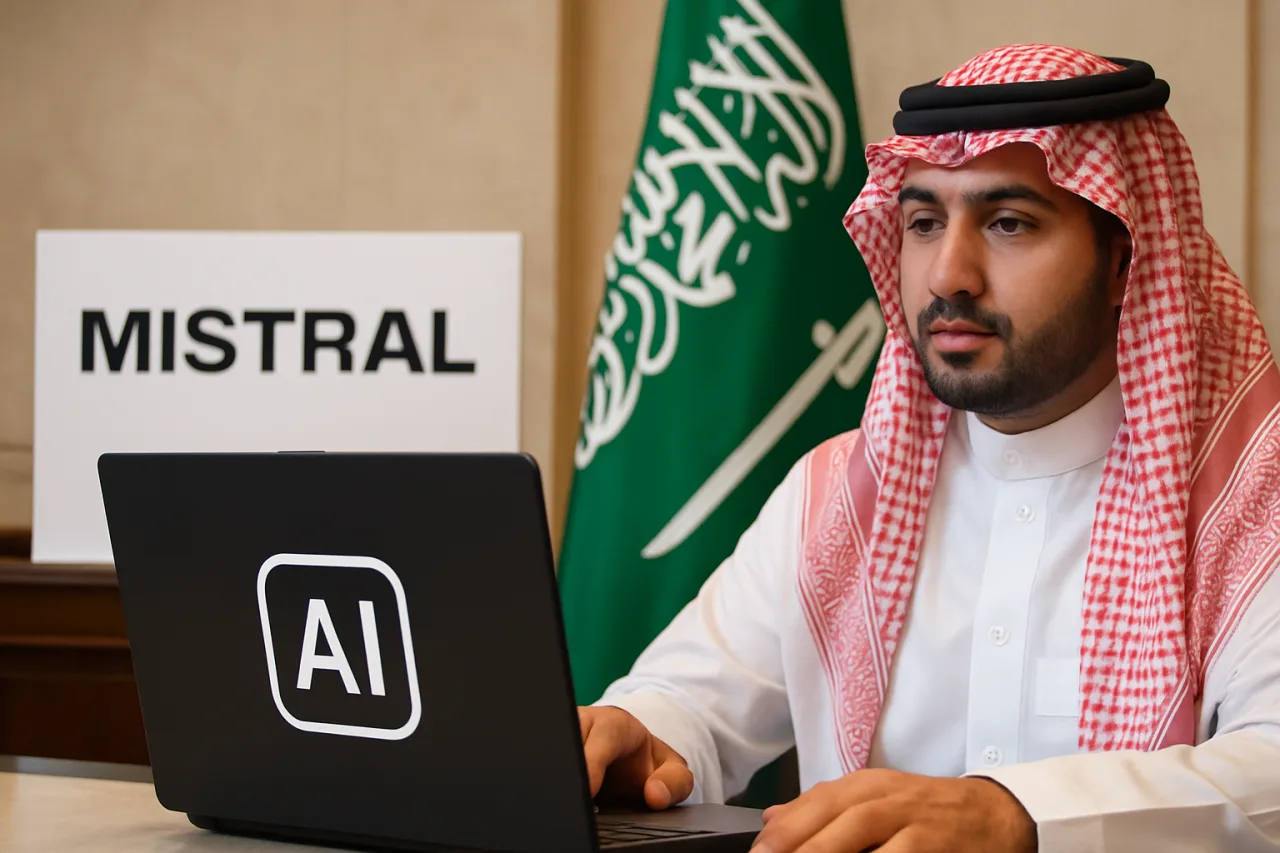
- 🌍 The deal: The Mistral HUMAIN partnership — worth hundreds of millions of euros — was announced in Riyadh on August 24, 2026 — covering AI infrastructure, advanced model development, and AI deployment across Saudi Arabia and the region.
- 🔐 Sovereign AI is the product: The partnership keeps data, compute, and model weights under customer control — open-weight models that can be adapted and owned, running on infrastructure and in jurisdictions the customer chooses.
- 🗣️ Arabic-first focus: The two companies plan frontier models that perform strongly in Arabic, targeting cybersecurity and voice as initial focus areas, plus a joint go-to-market strategy for regulated Saudi industries.
- 🇸🇦 Why it matters to Filipinos: Nearly a million Filipinos live and work in Saudi Arabia, and Southeast Asian nations are racing to strike similar sovereign AI deals — this agreement is the template they will study.
Mistral HUMAIN is the partnership that just moved Saudi Arabia’s sovereign AI ambitions from plan to production. Announced in Riyadh on August 24, 2026, the collaboration — worth hundreds of millions of euros — spans three layers at once: HUMAIN’s data center infrastructure will host Mistral’s compute needs, the two companies will develop and localize advanced AI models including frontier Arabic-language systems, and a joint go-to-market strategy will carry AI into the Kingdom’s regulated industries. For the Filipino professionals watching from Riyadh to Manila, this is not a Gulf news item — it is the blueprint for how nations will buy AI from here on.
The Deal: What Mistral and HUMAIN Actually Signed
The announcement, carried by PR Newswire from Riyadh, describes a collaboration across AI infrastructure, model development, and deployment — but the details reveal a deliberately layered strategy. Mistral will explore using HUMAIN’s data center capacity to support growing local compute demand. HUMAIN and Mistral plan to develop and localize advanced models together, with cybersecurity and voice named as the first focus areas. And the two companies will build a joint go-to-market motion aimed squarely at regulated industries — financial services, telecommunications, public sector — where buying AI is an act of national policy, not just procurement.
The financial scale is deliberately understated: “a collaboration in the hundreds of millions of Euros,” per the release — no exact figure, no equity structure disclosed. What is explicit is the philosophy. The partnership exists to deliver what both companies call sovereign AI: AI that keeps data, intelligence, compute, and operations under the customer’s control. Data stays within customer-defined boundaries. Models run on open weights, so they can be adapted and owned rather than rented. Training and inference run in jurisdictions the customer chooses. No external platform owns the learning loop.
That definition matters because it is the exact opposite of how most of the world buys AI today — through closed APIs from a handful of US hyperscalers. Mistral, the French open-weight pioneer, brings the models; HUMAIN, the Public Investment Fund’s AI champion, brings the infrastructure. Neither could sell sovereignty alone.
Who HUMAIN Is: The $100 Billion AI Company Behind the Deal
HUMAIN is not a startup — it is a state project. Launched in May 2025 under Saudi Arabia’s Public Investment Fund and chaired by Crown Prince Mohammed bin Salman, the company is building the entire AI stack: next-generation data centers, cloud platforms, advanced models, and sector applications. PIF’s official portfolio page highlights ALLAM, one of the world’s most powerful multimodal Arabic large language models, co-developed with SDAIA, the Kingdom’s AI authority.
The numbers attached to HUMAIN are sovereign-scale. The company has announced roughly $23 billion in technology deals spanning NVIDIA, AMD, AWS, and Qualcomm, with 18,000 NVIDIA GB300 GPUs planned for the first phase and 500 megawatts of planned AI compute capacity. In February 2026, CNBC reported HUMAIN invested $3 billion in xAI’s Series E funding round. In July 2026, Reuters reported a partnership with Canada’s Cohere to work on AI compute and sovereign models. And on August 26 — two days after the Mistral deal — HUMAIN announced the first milestone of a long-term collaboration with Microsoft, bringing the ALLAM model into the Microsoft Foundry and M365 Copilot ecosystem.
For perspective on what PIF is building: analysts peg the total program value at around $100 billion. Mistral, for its part, is Europe’s most valuable AI startup — the French company that built its brand on open-weight models and “a decentralized and transparent approach to technology,” with a growing presence in the US, UK, and Singapore.
Why Sovereign AI Is Suddenly the Hottest Category in Tech
The Mistral HUMAIN announcement is not an isolated event — it is the sharpest expression of a shift that has been building for two years. Governments have watched AI concentrate into a few US platforms and concluded that depending on them is a strategic risk. The result is a global scramble for AI that keeps data and models under national control.
Saudi Arabia’s approach is the most aggressive: build the entire stack at home. The Mistral HUMAIN deal is the newest piece of that stack. But it is not alone. The European Union is enforcing its AI Act with new transparency rules that began August 2, 2026. India has attracted a $15 billion Google AI infrastructure commitment. And in Southeast Asia, every major economy is now pursuing some version of the same playbook — Malaysia with its data center corridor, Indonesia with sovereign cloud mandates, and the Philippines writing its own AI governance framework while courting hyperscaler investment.
The pattern is consistent across all of them: local infrastructure, localized models, and legal authority over data. What varies is the depth of the stack each country can actually build. Saudi Arabia is attempting the full stack — chips, data centers, models, applications — with PIF’s balance sheet behind it. Most nations, including the Philippines, will assemble their sovereign capability from partnerships, exactly the kind Mistral and HUMAIN just signed.
Inside the HUMAIN Machine: The Deal Portfolio Behind the Partnership
To understand why Mistral chose HUMAIN — and why HUMAIN chose Mistral — look at the portfolio the Saudi company assembled in the sixteen months since its launch. In August 2025, HUMAIN released HUMAIN Chat, a generative AI application powered by ALLAM, positioned as the world’s most advanced Arabic-first large language model. In February 2026, CNBC reported its $3 billion investment in xAI’s Series E round — a sovereign fund buying a seat inside an American frontier lab. In March 2026, it partnered with Palo Alto-based Turing to build what both companies describe as the world’s first enterprise AI agent marketplace, combining Turing’s model evaluation and fine-tuning expertise with HUMAIN’s infrastructure and orchestration.
Then came the compute and cloud layer. In July 2026, Reuters reported the Cohere partnership — HUMAIN supplying AI compute to the Canadian enterprise-model company while the two work on sovereign AI models together. AWS, NVIDIA, AMD, and Qualcomm appear across HUMAIN’s roughly $23 billion in announced technology deals, and the Microsoft collaboration announced August 26, 2026 brings ALLAM into Microsoft Foundry and the M365 Copilot ecosystem — a sovereign Arabic model distributed through the world’s largest productivity platform.
Read together, the Mistral HUMAIN agreement completes a specific gap in this portfolio. HUMAIN had American hyperscalers (Microsoft, AWS, NVIDIA), an enterprise model partner (Cohere), and an agent marketplace (Turing). What it lacked was a European open-weight frontier lab — the one partner whose models a sovereign customer can legally own, adapt, and redeploy without licensing strings. Mistral is that partner, and the hundreds of millions of euros committed suggest both sides expect this to be more than a pilot.
The Filipino Angle: OFWs in the Kingdom in the Kingdom, and a Region Watching Closely
For the Filipino community in Saudi Arabia — among the largest OFW populations in the world — the deal lands in their workplaces before it reaches their news feeds. HUMAIN’s AI solutions target the Kingdom’s biggest employers: government services, energy, telecommunications, and finance. As regulated industries adopt sovereign AI systems, the Filipino engineers, healthcare workers, and administrators inside those systems will be first to use them — and first to see which AI skills the Saudi market starts demanding.
For the Philippines, the Mistral HUMAIN template is both a warning and an opportunity. The warning: the countries attracting sovereign AI infrastructure are locking in compute capacity, talent pipelines, and regulatory expertise that latecomers will pay dearly for. The opportunity: the Philippines is not standing still — its own AI Infrastructure Master Plan, ASEAN AI governance leadership, and data center buildout are the domestic versions of the same strategy.
The deeper lesson for Filipino professionals is about the architecture of the AI economy. The Mistral HUMAIN deal confirms that the next phase of AI will not be one global platform — it will be a lattice of sovereign or regional stacks, each with localized models, local compute, and local compliance. That lattice needs builders: engineers who understand both the technology and the regulatory environment. The professionals who understand sovereign AI — what it is, why governments want it, how it changes procurement — will be scarce, and scarcity pays.
What Comes Next
Watch three markers in the coming quarters. First, whether the partnership’s first concrete deliverables appear — localized Mistral models running on HUMAIN infrastructure, or joint cybersecurity offerings for Saudi ministries. Second, whether the “hundreds of millions” figure grows into disclosed contracts with named Saudi buyers. Third, whether Southeast Asian governments respond with their own open-weight sovereign deals — a Mistral-style partnership with an ASEAN champion would be the natural next move, and the Philippines, with its ASEAN AI summit hosting duties in September 2026, is positioned to broker one.
The Mistral HUMAIN agreement is two years of sovereign AI theory becoming a signed contract. For Filipino professionals in the Kingdom, it is the future arriving at their workplace. For the Philippines, it is the template arriving in the region — and the countries that read it correctly will be the ones signing the next version of this deal.
Frequently Asked Questions About the Mistral HUMAIN Deal
What is the Mistral HUMAIN partnership?
A strategic collaboration announced August 24, 2026 in Riyadh, spanning AI infrastructure, advanced model development, and AI deployment in Saudi Arabia and the region. It is valued in the hundreds of millions of euros and includes plans for Arabic-language frontier models, with cybersecurity and voice as initial focus areas.
What is sovereign AI?
Sovereign AI keeps data, intelligence, compute, and operations under the customer’s control — data stays within defined boundaries, models run on open weights that can be adapted and owned, and training and inference happen in jurisdictions the customer chooses, without ceding the learning loop to an external platform.
Who owns HUMAIN?
HUMAIN is a Public Investment Fund (PIF) company, launched in May 2025 and chaired by Crown Prince Mohammed bin Salman. It builds the full AI stack: data centers, cloud platforms, advanced Arabic models including ALLAM (co-developed with SDAIA), and sector AI applications.
How big is the Mistral HUMAIN deal?
The companies describe it as “a collaboration in the hundreds of millions of Euros.” No exact figure or equity structure was disclosed. For scale, HUMAIN’s broader program has roughly $23 billion in announced technology deals, and PIF’s total AI program value has been estimated around $100 billion.
Why is Saudi Arabia investing so heavily in AI?
AI is central to Vision 2030, the Kingdom’s plan to diversify beyond oil into a knowledge economy. HUMAIN is expected to generate high-tech jobs and position Saudi Arabia as a regional AI hub — controlling its own compute, models, and data rather than renting intelligence from foreign platforms.
What does this mean for Filipino workers in Saudi Arabia?
HUMAIN’s AI solutions target the industries where most Filipinos in the Kingdom work — government, energy, telecommunications, and finance. As those sectors deploy sovereign AI, Filipino professionals will encounter these systems first-hand, and demand will grow for workers who can implement, train, and govern AI systems under Saudi regulatory requirements.
Does the Mistral HUMAIN deal affect data privacy rules?
Indirectly, yes — in the reader’s favor. Sovereign AI’s core promise is that data stays within customer-defined boundaries and jurisdictions. For organizations in Saudi Arabia and the region, the deal means AI services that keep data under local legal control rather than on foreign platforms, aligning with the Kingdom’s data governance frameworks.
Can the Philippines strike a similar sovereign AI deal?
The building blocks exist: the Philippine AI Infrastructure Master Plan, active ASEAN AI governance leadership, and hyperscaler investment in local data centers. A Mistral-style open-weight partnership with an ASEAN champion would be the natural next move — and the Philippines hosting the ASEAN AI Summit in September 2026 puts it in the room where such deals start.