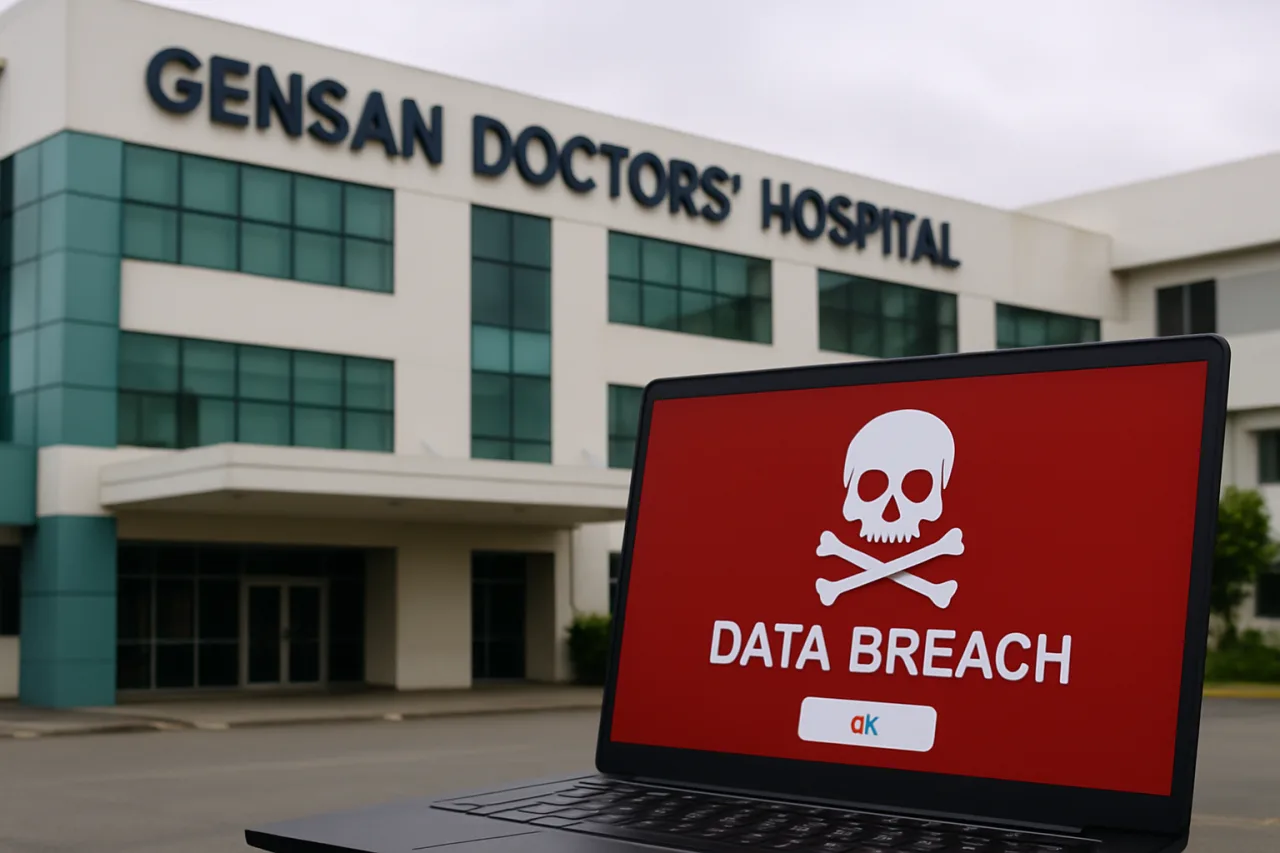
Key Takeaway
- 🏥 Confirmed, not alleged: — GenSan Doctors Hospital data breach watch: General Santos Doctors Hospital says its September 11 incident was unauthorized access AND a data breach — affected patients are being notified, per the hospital’s September 25 advisory.
- 💀 Rhysida claimed it first: the ransomware group listed GSDH on its leak site September 10, claiming 2.44 TB and 3.5M+ files, demanding 8 bitcoins (~₱39 million). The hospital has NOT confirmed the group’s numbers.
- ⚖️ Your rights are concrete: under the Data Privacy Act and NPC Circular 16-03, affected patients may demand notification details, copies of their data, correction, and damages — and the NPC has precedent of suing over hospital breaches.
- 🛡️ The 5-step playbook: verify what leaked, freeze financial exposure, file with the NPC if notification lags, harden your personal data hygiene, and document everything.
- 📢 The sector lesson: hospitals are the softest targets in PH healthcare — the PhilHealth precedent says regulators move when patients move first.
Table of Contents
GenSan Doctors Hospital data breach confirmation on September 25 turned the Rhysida leak-site claim into a verified patient-data question — and this GenSan Doctors Hospital data breach explainer carries a ransomware leak-site claim into a verified patient-safety question — and the 3.5 million files Rhysida claims to hold now carry a regulatory tail. Here is what is confirmed, what is claimed, and the five moves patients and families should make THIS week, using rights that already exist under the Data Privacy Act of 2012. for every confirmed fact of the GenSan Doctors Hospital data breach. No speculation, no leaked-file inventories — only the advisory, the claim as claimed, and the lawful playbook in between.
What the GenSan Doctors Hospital Data Breach Confirmed — and When
The GenSan Doctors Hospital data breach sequence matters for rights purposes. GSDH first reported a “data security incident” on September 11. Rhysida listed the hospital on its leak site September 10, claiming 2.44 terabytes and about 3.5 million files stolen, demanding 8 bitcoins — near ₱39 million — per MindaNews’ September 12 report. On September 25, the hospital’s own public advisory confirmed the incident “involved unauthorized access and a data breach,” that affected individuals are being notified, and that investigation continues — while noting it has not confirmed the group’s claimed data volume. That distinction is the legally important one: the BREACH is confirmed (rights attach), the SCALE is unconfirmed (demand nothing yet, document everything now).
What Rhysida Actually Does With GenSan Doctors Hospital Data Breach Files
The GenSan Doctors Hospital data breach claim comes from Rhysida — a ransomware-as-a-service operation sitting alongside LockBit, RansomHub, and Akira — smaller in volume but consistent in method: steal, encrypt, extort, auction on a leak site when unpaid. Its 2026 catalog includes the Berlin state network (5.79 TB claimed, 30-bitcoin demand) and a trail of healthcare and local-government victims across three continents. What Rhysida does with hospital data specifically: sells it in bulk dumps, auctions files to identity-fraud operators, and uses raw medical records for targeted phishing — “your HMO claim was denied, pay this administrative fee” scams built on real claim numbers. The hospital has not confirmed the claim’s file inventory, and prudent readers treat claimed volumes as marketing by criminals until regulatory or forensic confirmation lands. Our standing explainer on the PH data-breach rights map covers the DPA mechanics in depth.
5 Rights After the GenSan Doctors Hospital Data Breach Under the Data Privacy Act
After a GenSan Doctors Hospital data breach confirmation, your name plausibly inside it — the DPA hands patients five concrete rights. Right to be notified: NPC Circular 16-03 makes notification mandatory where harm is likely; the hospital says notifications are underway — if you were a patient this year and hear nothing by mid-October, that silence itself is actionable. Right to access: demand in writing what data of yours was involved. Right to correction: wrong or stale medical data must be corrected on request. Right to damages: the DPA’s Section 32-c gives independent claims for identifiable harm — phishing losses that follow a medical-data leak qualify in principle. Right to complain: file with the NPC — the commission’s healthcare precedent is real (Asian Hospital, VRP Medical Center, the PhilHealth probe) and it has ordered corrective advertising, data-destruction, and fines against hospitals before. The NPC’s own PhilHealth precedent — its firm-stand statement — warns that even downloading or sharing leaked hospital data can be prosecuted. Do not go hunting for the leak files; that hunt is itself a crime.
The 5-Step Patient Playbook for the GenSan Doctors Hospital Data Breach
Step one: inventory your exposure — list the dates you consulted at GenSan Doctors, the HMO claims you filed there, and the ID numbers you presented; this list becomes the evidence base for every later step. Step two: freeze financial exposure — replace compromised claim references, watch your bank and e-wallet statements for small test charges, and treat any call or SMS that cites your real medical details as hostile until verified against the provider’s official hotlines. Step three: file the NPC complaint if notification lags — the privacy.gov.ph complaint portal takes the DPA case directly; a confirmed breach plus slow notice is its cleanest case shape. Step four: harden the personal layer — new passwords on health-insurance portals, SMS app locks, and the phishing-reflex of verifying any medical-sounding money request through a second channel. Step five: document everything — every scam call citing your data, every denied claim, every unanswered notification request; documentation is what turns a patient’s grievance into the NPC’s enforcement file.
The GenSan Doctors Hospital Data Breach Sector Lesson: Hospitals Are the Soft Target
The GenSan Doctors Hospital data breach is not an outlier — it is the PH healthcare pattern at district scale, three years after PhilHealth proved what a national-scale failure looks like. Hospitals hold exactly the data identity thieves monetize: verified identities, family contacts, claim numbers, health conditions that embarrass. Their IT budgets are small, their legacy systems are many, and their downtime costs patients’ lives — which makes them pay ransoms and stay quiet, the combination every ransomware group prices in. The policy answer already exists: NPC Circular 16-03’s 72-hour notification duty and the DPA’s penal provisions — no new law is needed for the regulator to act on GenSan; what is needed is patients exercising the rights they already hold — the same citizen-demand lever our PNP AI body-cameras piece documents in the surveillance domain. The PhilHealth precedent proves the formula our three-government-breaches piece tracked: public complaints triggered the investigation that produced corrective orders and criminal referrals.
Inside the Leak-Site Listing: What the Claim Says, and What It Doesn’t
Read the GenSan Doctors Hospital data breach listing the way investigators do — as a criminal’s sales brochure, claimed in bad faith but structured with real information. Rhysida’s September 10 entry carries a data volume (2.44 TB), a file count (3.5 million-plus, per the security-community reposts), a deadline mechanic (auction countdown), and a bitcoin price (8 BTC ≈ ₱39M). What the listing does NOT carry is verifiable content: no sample records the hospital has authenticated, no confirmation that the claimed volume exists, and no way for a reader to distinguish stolen medical files from padded filler — ransomware groups routinely inflate counts with junk files to raise their asking price. MindaNews’ reporting captured the claim without endorsing it — the correct journalistic and legal posture, and the hospital’s September 25 language (“has not publicly confirmed the group’s claimed volume”) mirrors it deliberately. For patients, the operational takeaway stays constant regardless of which number is true: act on the CONFIRMED breach, not the claimed scale. Rights attach to the fact of unauthorized access — which the hospital has already acknowledged — not to the terabytes a criminal advertises.
The OFW Family Lens: Scam Calls Home Now Have Real Medical Details
The GenSan Doctors Hospital data breach has an angle most coverage misses: the payer is often a thousand kilometers away. General Santos families run on OFW remittances — and the remittance payer is precisely the target profile for medical-emergency scams. A caller who knows a real patient name, a real hospital, and a real claim number (all plausibly inside a stolen hospital database) can manufacture a convincing “your mother’s admission needs an immediate deposit” call to a seafarer in Norway or a nurse in Riyadh. The defense protocol for families abroad: never move money on a call — call the hospital’s published trunkline or the family member directly back; treat any request routed through a new e-wallet account as hostile by default; and pre-agree a family code word for genuine medical emergencies. The hospital-side lesson travels with it: data leaks cross borders at call-center speed, and the OFW corridor is where stolen patient files convert to cash fastest. This is also why breach notifications matter doubly here — the DPA’s notification duty exists so the PAYER gets warning before the scammer does.
The 72-Hour Rule: What the Law Required Here
NPC Circular 16-03 sets the clock: a personal information controller that learns of a breach posing likely harm must notify the Commission within 72 hours and affected data subjects as promptly as circumstances allow. Run the timeline: Rhysida listed the hospital September 10; GSDH reported a “data security incident” September 11 — day one of the clock. The confirmation that the incident was in fact a breach, with unauthorized access established, arrived in the September 25 advisory — two weeks later. Whether the interim period involved scope determination (the circular permits delay only to the extent necessary to determine scope and prevent further compromise) is exactly the kind of judgment NPC investigators make; a section 32-c damages claim or an NPC complaint can test it. Patients don’t need to litigate the timeline to benefit from it: the longer the notification gap, the stronger the case for demanding expedited individual notice now — and the clearer the template for the sector-wide enforcement NPC has historically applied after healthcare breaches.
How much compensation can a breach victim claim?
The DPA does not cap damages — Section 32-c awards depend on proven harm: documented phishing losses, forged-claim fraud, identity-theft remediation costs. The practical ceiling is the evidence, which is why the documentation step in the playbook matters more than any legal theory.
Can patients file a class action over the GenSan Doctors Hospital data breach?
Philippine procedure allows group claims through the Rule on Class Actions for consumer cases; privacy injuries more commonly aggregate through NPC complaints — hundreds of individual filings on one breach is the historical pattern that produced the PhilHealth-scale enforcement. Group coordination through lawful complaint channels works; parallel “legal claim collectors” soliciting fees door-to-door are themselves a known scam pattern after every breach.
Did the hospital pay the 8-bitcoin ransom?
No payment outcome has been publicly disclosed by the hospital. What the record shows is administrative resilience being maintained and notifications proceeding — and the September 25 advisory’s careful language avoiding any confirmation of the criminal’s terms. Patients should rely on hospital advisories and NPC issuances for outcome facts, not leak-site bravado.
Frequently Asked Questions
Was the GenSan Doctors Hospital data breach confirmed?
Yes — the hospital’s September 25 advisory confirmed unauthorized access and a data breach from the September 11 incident, with notifications to affected individuals underway. The scale (Rhysida claims 2.44 TB / 3.5M+ files) is not confirmed by the hospital.
What did Rhysida demand in the GenSan Doctors Hospital data breach?
In the GenSan Doctors Hospital data breach listing, Rhysida demanded 8 bitcoins, roughly ₱39 million at the time of the September 10 leak-site listing, per MindaNews. The hospital has not confirmed the claimed volume, and no ransom outcome has been publicly disclosed.
What rights do patients have after a hospital data breach like GenSan’s in the Philippines?
Under RA 10173 and NPC rules: the right to breach notification, to access the data held, to correction, to damages under Section 32-c, and to file an NPC complaint. NPC precedent includes enforcement actions against multiple hospitals and PhilHealth.
Can I sue the hospital for leaking my medical records?
The complaint pathway starts with the NPC, which can order corrective measures and fine violators; independent civil claims for damages run under the DPA itself when identifiable harm can be shown. A lawyer’s advice is worth it before filing civil suits — the NPC route is free and precedented.
Should I look for the leaked GenSan Doctors Hospital data breach files online?
No. In every PH breach — the GenSan Doctors Hospital data breach included — the NPC has publicly warned that downloading or sharing exfiltrated data from a breach can itself be prosecuted as unauthorized processing of personal information.
How do I know if my data was in the GenSan Doctors Hospital data breach?
If the GenSan Doctors Hospital data breach included your consultations, wait for the hospital’s notification; if none arrives by mid-October, contact the hospital’s data protection officer in writing and, in parallel, ask the NPC. The confirmation duty is the hospital’s — not yours to prove.
Financial Disclaimer: This article is for general information and education only and does not constitute legal or financial advice. Verify all figures with the hospital advisory, NPC official issuances, and licensed counsel before acting.