Table of Contents
Korea’s Biggest AI IPO Fell 32% on Day One: What Elice Says About AI IPOs Everywhere
AI IPO scoreboard, October 20 — the day the two-pile rule became visible: Elice (KOSDAQ, Korea’s biggest IPO of 2026) priced top-of-range at ₩90,500, raised $151M, then closed its debut at ₩61,500 — down 32.04% | Cerebras (+68% day one in May) sat 8.4% below offer by October 1 | SpaceX (+11% open in June on history’s largest offering) held above its $135 price | Mynt/GCash opened above offer in Manila and faded to the line | Rule of 2026: the day-one print is the auction, not the verdict
Key Takeaway
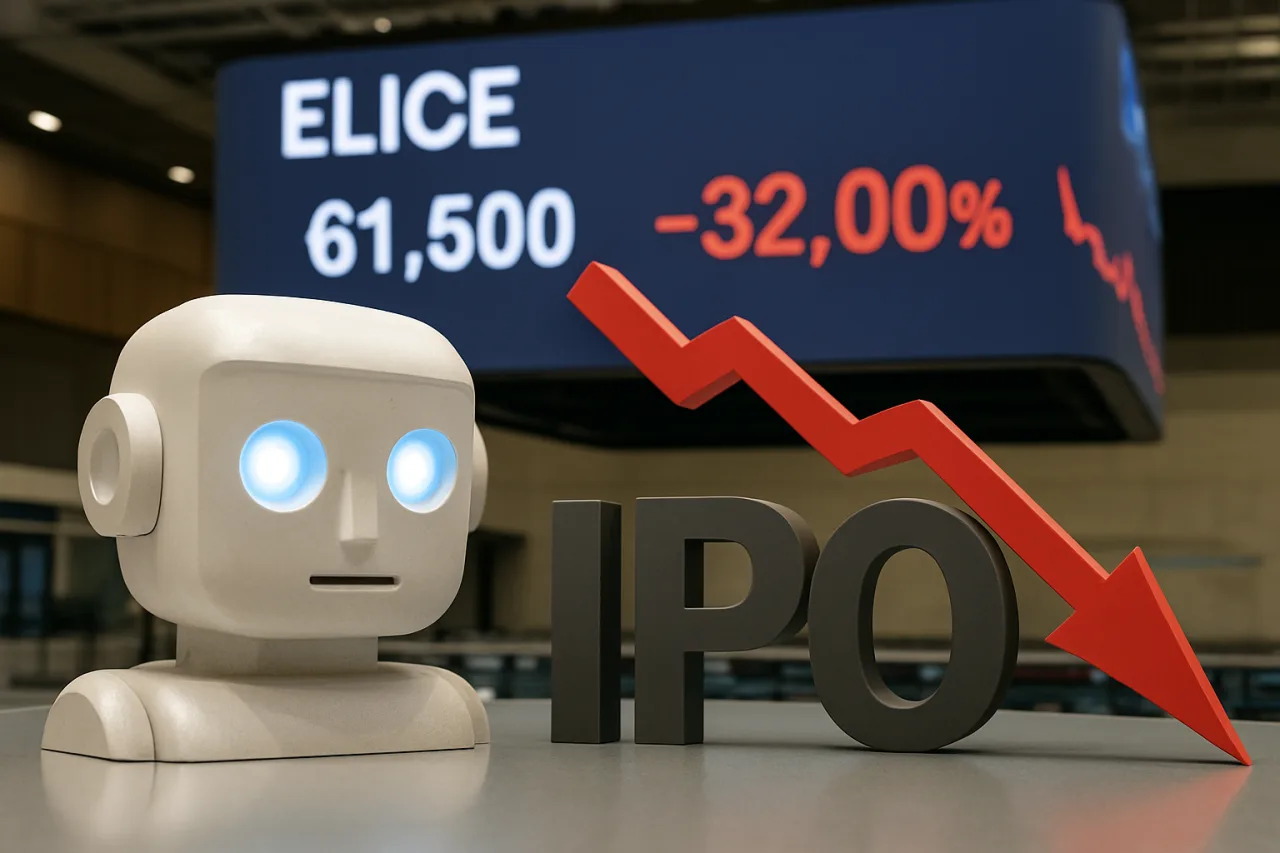
- 📉 The year’s hottest AI IPO just took the year’s worst debut. Korea’s Elice Group — KOSDAQ’s largest offering of 2026 — closed its first day at ₩61,500, down 32.04% from its top-of-range ₩90,500 price, after demand that had exceeded 400x subscription.
- ⚖️ The AI IPO market split into two piles this year. Companies selling AI revenue today — chips (Cerebras), launched cash flows (SpaceX) — got the day-one pops. Companies selling AI capex promises — data centers, neoclouds — got Elice’s −32% and CoreWeave’s debt scare.
- 🔁 The pop-fade law is now documented. Cerebras popped 68% on debut day in May; by October 1 it closed below its $185 offer after its lockup expired and officers filed to sell. Day-one euphoria didn’t survive the tape.
- 🧮 Arithmetic beats narrative at IPO pricing. Elice raised $151M on about $25M of annual revenue and priced at the very top of its range — a top-of-range price on an infrastructure story is exactly the combination 2026 refuses to reward.
- ⚠️ Analysis, not advice: this piece maps what happened and why — it does not tell you to buy, sell or subscribe to anything. The checklist at the end is a reading aid, not a recommendation.
Today, October 20, the AI IPO experiment ran two live tests twelve hundred kilometers apart and both failed the same way. In Seoul, Elice — the AI-infrastructure and education company that drew more than ₩10 trillion in retail deposits, a 408x-subscribed retail tranche and 388.84x institutional demand — opened 16% below its offer price and closed its first day down 32.04%. In Manila, Mynt, the GCash parent behind the Philippines’ largest-ever IPO, opened above its offer and faded back toward the offer line all session. The lesson writing itself across both tape rooms: 2026’s AI IPO market is no longer paying for enthusiasm on day one — it is repricing AI offerings with the discipline it learned from a year of AI-debt scares, and every investor watching upcoming AI IPOs, anywhere in the world, gets to study the new rules from today’s print.
The Debut, by the Numbers First
The offering itself was engineered for maximum narrative impact. Elice sold 2.22 million new shares at the very top of its marketed range — ₩90,500 against an indicative band of ₩70,400 to ₩90,500 — raising about ₩201.1 billion (roughly $151.12 million) and valuing the company just above the ₩1-trillion mark (about $790 million) before a single share traded. Founded in 2015 as an AI education platform and expanded into GPU cloud infrastructure, the company earmarked the proceeds for AI data centers and overseas growth.
Then the tape opened. Elice printed its first trade at ₩75,700 — 16% below the offer — and sank through the morning: reported around ₩66,600 within the opening hour, then ₩63,000 (−30.39%) by 9:30 a.m. Korea time, with an early-session low near ₩61,000 and a first-day close at ₩61,500, a 32.04% discount to the IPO price. The wider KOSDAQ index fell about 1% at the same hour, so roughly ninety percent of this damage is specific to the deal, not the market. For scale: on Elice’s disclosed 2025 revenue of about ₩39.5 billion (near $25.3 million), the IPO price valued the company at roughly thirty-one times sales — arithmetic the secondary market no longer chose to underwrite once a technology-led selloff put AI capital spending under real scrutiny.
Why the Hottest AI IPO Book-Building Couldn’t Stop the Worst Debut
This is the part most debuts never explain, and Elice demonstrated it perfectly. Before listing, demand looked unanswerable: 2,367 domestic and foreign institutions entered book-building, the retail tranche was subscribed 408.26 times, and more than ₩10 trillion (about $7.2 billion) sat in subscription deposits — cash that in Korea’s system had to be actually committed, not merely promised. By the conventional logic of IPO mechanics, that is a lock: pricing at the top of the range, a fast multiple of the raise, a green first day.
But the subscription window and the secondary market answer different questions. Book-building asked who wants an allocation at the final price — and in a market where allocation on oversubscribed tranches is rationed, bidders rationally overstate demand because they expect to receive only a fraction of what they bid for. The secondary market asks what price clears the whole float, every day, with no rationing — and that question got answered within ninety minutes of the first trade. When the deposits unlock and allocated holders see a −16% open, the rational move is to exit before the queue behind them forms; the same 408x that powered the book-build becomes the selling pressure of the debut. It is the same paradox every hot AI IPO carries: the more oversubscribed the primary, the larger the locked-in crowd that owns shares only because they expected a pop — and the thinner the secondary demand once the pop fails to show. Retail euphoria gets you the top-of-range price; it does not buy you a shareholder base that still loves the story in hour two.
The Two-Pile Rule: What the 2026 AI IPO Tape Actually Rewards
Zoom out from Elice and the year’s AI IPO ledger reveals a pattern sharp enough to write rules against. Pile one: AI revenue that exists today. Cerebras, the AI-chip challenger, took the year’s biggest US IPO on May 14 and rewarded the market with a first-day pop of roughly 68%. SpaceX — history’s largest IPO at about $75 billion raised and a near-$1.75-trillion valuation — opened its June debut at $150, 11% above its $135 offer price, and closed the day higher still. Pile two: AI capital-expenditure stories. Elice, the GPU-cloud-and-data-center operator, priced at the top of its range on ~31x sales and gave back a third of its value on day one. And pile two was already damaged goods before this debut: our coverage this month documented CoreWeave’s roughly $50 billion debt load and the lender pushback that triggered this autumn’s AI-selloff — the exact fear that our AI-selloff explainer traced and CNBC, reporting on Elice’s plunge, described as a retreat in sector sentiment that has derailed other planned listings, with data-center operators withdrawing or pausing their own offerings.
Read the two piles together and one rule emerges: the 2026 market buys AI output and audits AI infrastructure. Chips that ship compute get priced on demand they can see; clouds that borrow to build capacity get priced on the debt that demand must eventually repay. Elice did not fail because AI stopped working — the KOSDAQ index was down only 1% that hour. It failed because the market’s patience for revenue-later AI stories expired sometime between the CoreWeave bond repricing and this week, and Elice’s book-build completed inside the blast radius.
The Pop-Fade Law: What AI IPO Debuts Don’t Tell You
Here is the discipline most retail IPO chasers skip, and 2026 has now provided the evidence base for it. A first-day pop is not a verdict on value; it is a verdict on allocation hunger. The cleanest exhibit is Cerebras: +68% on debut day in May, then a slow bleed until October 1, when the stock closed at $169.52 — 8.4% below its $185 offer price — immediately after its post-IPO lockup expired and a senior officer filed SEC Form 144 notices for planned share sales. The pop lasted five months; the fade arrived on schedule. Elice compressed the same arc into one session: allocation hunger collapsed straight into float clearing, skipping the euphoria phase the 2021-2025 tapes allowed.
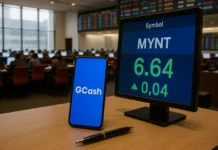
SpaceX shows the other edge of the law: as of its early history it still held above its $135 IPO price — but notice that even history’s largest offering, with the strongest narrative in the market, settled well below its own first-day close. And Mynt tested the law in the gentlest register: the biggest IPO in Philippine history opened above its offer on ₱6.64 and spent the day being pulled back toward the ₱6.60 line — demand holding, euphoria absent. The practical translation for anyone eyeing the next AI offering: the debut tells you how bad the queue wanted shares; nothing about the debut tells you what the business will earn. The verdict arrives at the lockup expiry, the first post-IPO earnings report, and the first quarter the company has to fund its own growth without the offering’s cushion. That is the calendar to watch, and it is why the desk treats every AI IPO pop — and every AI IPO plunge — as information about positioning, not about value.
What Elice Means for AI IPOs Everywhere From Today
Three repricing effects land immediately on every IPO pipeline that touches AI. First, top-of-range pricing stops being automatic. An offering that books its price at the maximum of its band on subscription mania now carries visible downside risk the moment secondary trading begins — expect bankers to leave more room to the downside in upcoming AI deals, because Elice just proved the penalty for not doing so. Second, the AI-capex discount is now explicit. Data-center and neocloud offerings — the pipeline segment CNBC reported as already paused or withdrawn in Korea after the selloff — must now demonstrate either existing cash flows or substantially cheaper valuations to clear a book-build. The CoreWeave debt story set the fear; Elice set the price of the fear. Third, the revenue-today premium hardens. AI companies whose products are already billing — chips, inference platforms, established operators — become the scarce, tradeable category. For the Philippines’ own market, freshly re-opened by the Mynt listing’s ₱441.5 billion debut, this is a cautionary gift: a revived IPO window only stays revived if its AI-adjacent issuers arrive priced like 2026, not like 2024.
And for investors holding or eyeing AI IPO allocations anywhere — Seoul, New York, Manila, wherever the window reopens — the Elice print adds one more piece to the checklist of disciplined participation: do the revenue math before the band is even announced. Elice’s ~31x-sales price was available in the prospectus one full day before the debut punished it. The offer documents told anyone who read them that the deal was priced for a market that no longer existed. When the next AI IPO arrives — and the 2026 pipeline still holds several, including names as large as Anthropic on the US watchlists — the five checks below are the desk’s reading order.
The Five-Point Checklist for the Next AI IPO You Subscribe To
- 1. Revenue versus raise, on one line. Annual revenue ÷ nothing fancy: divide the implied valuation by trailing revenue and ask what growth rate justifies it. Thirty-one times sales on infrastructure spending is a bet, not a valuation — and if the revenue is growing fast but the company is cash-flow negative, price the dilution that the next raise will bring.
- 2. What the money is for. Proceeds that fund capacity (data centers, GPUs) in a market repricing AI debt deserve skepticism; proceeds that fund demand (product, sales, delivery of existing orders) read differently. Elice’s own use-of-proceeds named AI data centers and overseas expansion — pile two on arrival.
- 3. Who absorbs the primary. Cornerstones with lockups that mirror yours. If the book is stacked with momentum allocators who can exit at 9:31 a.m., your exit queue forms behind theirs; the 408x-subscribed tranche was a queue, not a cushion.
- 4. The lockup date and the first earnings date. These are the two days the pop-fade law actually fires. Note them before subscribing; Cerebras’s fade arrived with its lockup expiry and officer-sale filings, not with the tape’s mood.
- 5. The price of the range, not the story. Top-of-range pricing on an unprofitable infrastructure model is the 2026 kill pattern. The cheaper end of the band — or a deal priced below it — is where the discipline the market just demonstrated gets rewarded.
FAQ
What happened to Elice’s KOSDAQ debut?
Elice Group, a South Korean AI infrastructure and education company, opened its October 20 debut 16% below its ₩90,500 offer price, fell past −30% within the first hours, and closed at ₩61,500 — down 32.04% on day one — despite the strongest subscription demand on a Korean board this year (a 408x-subscribed retail tranche and more than ₩10 trillion in deposits). The offering had priced at the top of its range, valuing Elice near $790 million on about $25 million of 2025 revenue.
Why did Elice fall 32% on its first day?
Three forces stacked: the deal was priced top-of-range for maximum proceeds (~31x sales); the broader AI-data-center trade was already under pressure after CoreWeave’s debt repricing and a technology-led selloff; and the subscription mania itself created the exit queue — allocated holders who only wanted the pop had no reason to hold through a −16% open. Korean data-center IPO plans have been withdrawn or paused as investors turned selective on AI capex stories, per reporting on the debut.
Are AI IPOs still a good investment in 2026?
The 2026 tape splits AI IPOs into two piles. AI companies with existing revenue and cash flows (Cerebras chips, SpaceX’s launched operations) received the year’s strong debuts and, in SpaceX’s case, held above their offer price. AI capital-expenditure stories (data centers, GPU clouds) met the year’s worst debut print in Elice and a deep repricing around CoreWeave’s debt. The category is investable — but 2026 prices AI output and audits AI infrastructure. Whether any specific offering is a good investment depends on which pile it lands in, at what price, on the day it prices.
Why did Cerebras fall below its IPO price after popping 68%?
Cerebras surged about 68% on its May 14 debut — the biggest US IPO of the year at the time — but by October 1 it closed at $169.52, 8.4% below its $185 offer, after its post-IPO lockup expired and a senior officer filed planned-sale notices. The pattern is now a documented law of AI IPO trading: day-one performance reflects allocation hunger; the months after the lockup reflect what the business earns.
What should I check before subscribing to the next AI IPO?
Five checks, in order: revenue against the implied valuation (Elice was ~31x sales in the prospectus a day before the debut); what the proceeds fund (capacity vs demand); who holds the locked-up primary; the lockup expiry and first earnings dates (the two days the pop-fade law fires); and the pricing position in the range — a top-of-range price on an unprofitable infrastructure model was 2026’s kill pattern.
Does the Elice flop mean the AI IPO window is closed?
No — it means the window is selective. The same month produced a +27%-style open for history’s largest IPO (SpaceX) and a record-setting ₱441.5 billion debut in Manila (Mynt). What closed is the era of unconditional top-of-range pricing for AI capex stories. Revenue-backed AI offerings still clear; infrastructure stories must arrive cheaper or better-funded.
Financial Disclaimer: This article is a market analysis for general information only — it is not investment advice, an endorsement, a recommendation, or an offer to subscribe to, buy or sell any security or IPO. IPO investing carries substantial risk of loss, including loss of principal; first-day performance of any listing does not predict future returns, and past subscription demand is not a guarantee of value. Prices, multiples, subscription statistics and dates are cited from sources on record (October 20, 2026) and change with every session. Nothing here is tailored to your objectives or situation — consult a licensed financial adviser and read the prospectus of any offering before acting. worldngayon.com holds no position in any security named and is not liable for outcomes from actions taken on this content.
Sources: Reuters wire carried by TechNode Global (“Elice shares fall in KOSDAQ debut after $151M IPO,” Oct 20) and Korea Economic Daily (top-of-range pricing, ~$790M valuation); CNBC (“South Korea’s Elice plunges 30% in market debut”); BigGo Finance (day-one close ₩61,500, −32.04%); FinanceFeeds (“Cerebras Stock Falling Below Its $185 IPO Price,” Oct 1); Space Foundation (“SpaceX IPO Closes Higher Than $160 Per Share,” June 13) and IPO.club ($75B raise, ~$1.75T valuation); worldngayon.com’s own coverage: CoreWeave’s $50B debt map, the AI-selloff thesis, and Mynt’s ₱441.5B PSE debut.