Table of Contents
Key Takeaway
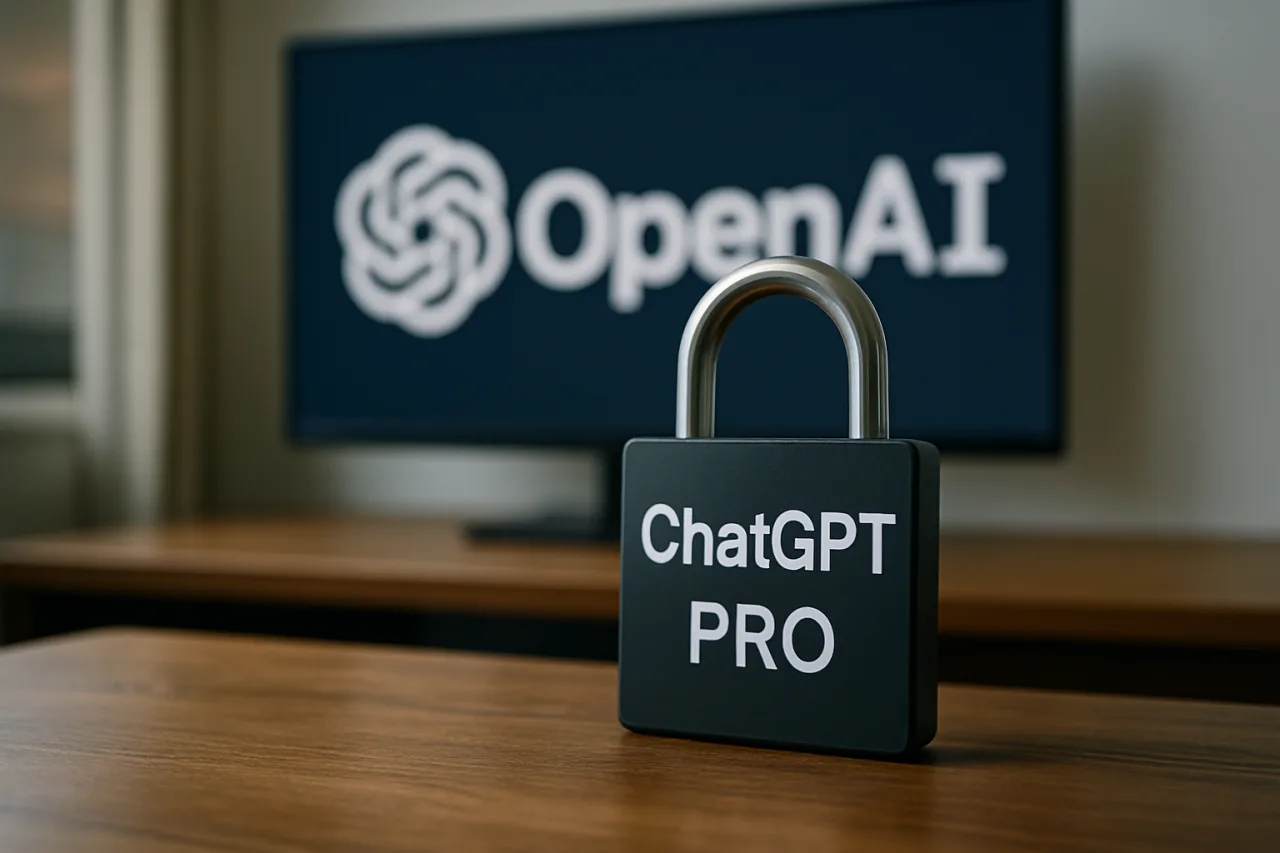
- 🚪 OpenAI turned away paying customers: on September 10, 2026, the company paused new sign-ups for ChatGPT Pro — its $200 tier — new sign-ups and upgrades for its $200-per-month ChatGPT Pro 20X tier — not because of a bug or a lawsuit, but because demand for the GPT-6 Astra model exceeded what its systems could serve.
- 💬 The quote that frames the era: product lead Thibault Sottiaux called Astra demand “unprecedented” and the pause “the smallest step that allows us to continue giving the broadest access possible” — rationing language from a company priced like a growth-at-all-costs startup.
- 📊 The mechanics: existing $200 Pro subscribers keep everything; downgraders can’t re-join until the pause lifts; the $100 Pro tier, Plus, Go, and API access stay open. This is demand shaping, not a shutdown.
- 🏗️ The real story is capex: OpenAI sits inside a $500 billion Stargate buildout with at least 10 GW of new Nvidia capacity, a 6 GW AMD deal, and 10 GW of Broadcom accelerators on the schedule — and even that cannot outrun Astra demand.
- 🇵🇭 Why Filipinos should care: when the most valuable AI tier is supply-constrained, capacity — not features — becomes the competitive edge that agencies, enterprises, and even nations are really buying.
Companies spend fortunes persuading people to buy their most expensive product. On September 10, OpenAI did the opposite: it stopped selling its most expensive subscription. New sign-ups and upgrades to the $200-per-month ChatGPT Pro 20X tier are paused, with the company citing strain that GPT-6 Astra’s demand is placing on its infrastructure. Existing subscribers keep their plans; everyone else now waits. A company turning away revenue at the height of the AI boom is either a crisis or a signal about ChatGPT Pro demand — and the interesting question is which one, because the answer reorganizes how every enterprise should think about AI procurement for the next two years.
What Exactly Happened, in Sequence
The warning came first. On September 9, Sottiaux wrote that demand for Astra was “really unprecedented,” that OpenAI was “pulling all the levers possible to sustain the demand,” and that the company “might have to pause new Pro subscriptions for a bit if this continues.” One day later, the pause became official: new purchases of and upgrades to the $200 Pro 20X tier were disabled, a decision Sottiaux confirmed directly. The tier in question is the highest-usage plan OpenAI sells — the one that “puts the most strain on our systems,” in his words. Existing $200 subscribers are unaffected; customers who downgrade forfeit their re-entry path until the freeze lifts; and the $100 Pro plan, Plus, Go, and all API access remain on sale. This is not an outage. It is ChatGPT Pro demand formalized into a queue on a pricing page.
The context makes the decision legible. Astra launched September 3; within a week its consumption patterns were bending the company’s infrastructure roadmap. OpenAI’s capacity pipeline is the largest in the industry’s history — the $500 billion, four-year Stargate buildout, at least 10 gigawatts of Nvidia systems, a 6-gigawatt AMD GPU agreement, and a Broadcom partnership for 10 gigawatts of custom accelerators beginning in the second half of 2026. When a company with that order book chooses to refuse cash rather than degrade service for existing users, the message is not scarcity theater. It is a prioritization decision: protect the experience of the customers you have, throttle the ones you haven’t met yet.
Capacity Is the New Moat
The deeper story is what this reveals about competitive advantage in 2026. For two years, the AI race was narrated as a model race — benchmarks, parameter counts, context windows. The ChatGPT Pro freeze says the race has moved down the stack. When demand exceeds a lab’s ability to serve it, the binding constraint is gigawatts, GPU allocation, and data-center throughput — assets that take years and tens of billions to assemble and cannot be conjured by a good research quarter. Analysts quoted in coverage read it as allocation, not inconvenience: frontier capacity is now rationed across customers, tiers, and products, and the rationing will tighten as agentic workloads multiply consumption per user. Our AI server price investigation documented the same force from the hardware side — memory costs pushing server prices up 15% just as demand compounds.
It also reframes the subscription economics that made ChatGPT famous. A $200 tier that costs more to serve than it brings in — under heavy agentic use — is a loss-making product wearing a premium badge. The pause is, implicitly, an admission that unlimited-feeling plans and frontier-priced compute had to collide eventually. The likely direction of travel is visible in OpenAI’s own history: usage tiers that flex with load, priority pricing for guaranteed capacity, and enterprise contracts that charge for certainty rather than access. The all-you-can-eat era of AI subscriptions is ending not with a price increase but with a velvet rope.
The Economics of a Waitlist: What Rationing Does to an AI Business
Refusing revenue is only irrational until you price the alternative. Serving a heavy agentic user on an all-you-can-consume plan burns inference compute that could serve dozens of lighter customers — or the enterprise contracts that pay per guaranteed throughput. Economics calls it opportunity cost; operations teams call it congestion; and every infrastructure business in history has eventually had to price it. Telecommunications carriers invented peak pricing when networks jammed. Cloud providers invented reserved instances when demand outran data centers. OpenAI’s velvet rope is that same education arriving at the frontier of AI, delivered one freeze at a time.
The subtler effect is on the product’s psychology. Scarcity changes how customers treat a service: plans that were casually upgradeable become things people fear losing, and the downgrade lockout — downgraders cannot re-join until the pause lifts — turns the existing subscriber base into a protected class. Some of that is deliberate retention engineering; some is simply what happens when supply cannot meet demand. Either way, the freeze converts ChatGPT Pro from a subscription into something closer to a membership, and membership pricing behaves differently: it holds its price, tolerates waiting lists, and — as any luxury operator knows — gains perceived value precisely because not everyone can get in.
Watch what happens to the enterprise side, because that is where the real money is moving. A freeze on consumer Pro while API and enterprise access stay open is a statement about margin structure: business customers on negotiated contracts are more profitable and more predictable than premium hobbyists on a fixed-rate plan. The likely sequence from here is familiar from cloud computing’s history — consumer tiers get throttled and restructured, enterprise commitments get priority treatment, and the “unlimited” consumer plan either quietly gains limits or migrates to usage-based pricing. The velvet rope is not just at the door; it is being built into the rate card, and ChatGPT Pro users just watched it go up in real time.
For the broader market, the freeze is also a data point in the debate this week’s pacing essay ignited. Amodei asked the industry to slow capability growth deliberately; OpenAI’s capacity crunch shows a version of slowdown arriving anyway — imposed by physics and power grids rather than policy. Whether the constraint arrives through restraint or through congestion, the effect on customers is similar: the frontier is something you queue for, plan around, and pay premiums to guarantee. The only question is who collects the scarcity rent — the labs that built early, or the markets that learned to wait.
What Enterprises and Professionals Should Do About It
For enterprises: treat guaranteed capacity as a procurement requirement, not a perk. The organizations that negotiate reserved capacity now — with commitments on both sides — will not be in the queue when the next freeze hits. Diversify across providers for the same reason; the freeze is a stress test of single-vendor architecture (our multi-model deployment playbook shows the hedge), and the organizations that failed it were the ones that built everything on one endpoint.
For agencies and builders: architect for degradation. The products that survived this week gracefully were the ones with graceful fallbacks — a cheaper model tier, a queue, a cached result. If your service dies when your provider sneezes, that is an architecture decision you made, and this week made it visible.
For professionals in the Philippines: the freeze is a hiring signal in disguise. Capacity planning, inference-cost engineering, and multi-model routing are becoming procurement-critical skills — the same supervision-and-efficiency layer the rest of this week’s coverage keeps surfacing — and the skill shift Huang described points the same way. The people who can stretch a compute budget are about to be as employable as the people who can build the models.
WorldNgayon Analysis: There is a historical rhyme here that the AI industry keeps declining to hear: every transformative infrastructure — electricity, telephony, cloud — passed through a rationing phase where demand outran buildout, and the companies that managed scarcity gracefully turned it into pricing power. OpenAI’s pause is the first time the frontier has rationed by refusing revenue, which is either maturity or arrogance, and probably both. The strategic reading for Southeast Asia is uncomfortable but useful: the capacity crunch lands everywhere, but it lands hardest on markets that depend entirely on someone else’s data centers. The compute-sovereignty conversation our region keeps deferring just acquired a deadline.
Bottom Line: OpenAI just proved that in the AI economy of 2026, the scarce resource isn’t intelligence — it’s the electricity and silicon to serve it, and that changes who holds the power.
The pause will lift, probably within weeks, and the ChatGPT Pro pricing page will scroll back to normal. What will not revert is the lesson underneath it: in an economy where the best model can be rationed by physics, procurement strategy is now as important as model choice. The organizations that learned that lesson this week — for the price of a paused signup button — got the cheapest consulting they will ever receive.
Frequently Asked Questions
Why did OpenAI pause ChatGPT Pro sign-ups?
Because demand for the new GPT-6 Astra model put unprecedented strain on its systems. Product lead Thibault Sottiaux said Pro subscriptions put the most load on infrastructure, and pausing new ones was “the smallest step” to protect service for existing subscribers. The pause began September 10, 2026.
Which plans are affected by the freeze?
Only new sign-ups and upgrades to the $200-per-month Pro 20X tier. Existing $200 subscribers keep full access, though downgraders cannot repurchase until the pause lifts. The $100 Pro tier, Plus, Go, Business, and API access remain available.
How long will the ChatGPT Pro pause last?
OpenAI has not announced a timeline. It says it is adding capacity, and its infrastructure pipeline — including at least 10 GW of new Nvidia systems, 6 GW from AMD, and 10 GW of Broadcom accelerators — is scheduled to begin arriving in the second half of 2026.
What does this mean for businesses using ChatGPT?
Three lessons: guaranteed capacity is becoming a premium product worth negotiating for; single-provider dependency is now a proven business risk; and inference-heavy AI products should be architected to degrade gracefully — with cheaper model tiers, queues, or caching — when the top tier is rationed.
Is AI demand really outpacing supply?
Yes — across the industry. OpenAI’s freeze, Anthropic’s $517 billion in compute commitments, and double-digit server price inflation all point the same direction: demand for frontier inference is growing faster than power, chips, and data centers can be brought online.
Financial Disclaimer
This article is for general information and editorial analysis only and does not constitute financial, investment, or legal advice. Subscription details reflect public reporting as of September 13, 2026 and are subject to change by the vendor. Company mentions are not recommendations to buy or sell securities. Readers should conduct their own research and consult a licensed professional before making financial decisions. WorldNgayon.com publishes under Edmon Agron.