Key Takeaway
- 📅 The calendar first: there was no BSP rate decision today — the Monetary Board’s last action was the August 27 hike to 5.0%, and its next meeting lands in October. Every “final 25 bps” headline this week was anticipation, not policy.
- 📈 Where rates stand: the BSP has hiked three times in 2026 — April 23 (4.5%), June 18 (4.75%), August 27 (5.0%) — reversing 2025’s easing cycle as the Middle East conflict fed inflation.
- 💵 The new variable: the Fed’s September 16 hike to 3.75-4% narrowed the gap with BSP policy — the first time since 2024 the two central banks are moving in the same direction.
- 🇵🇭 The peso reality: the peso has slid toward P63 per dollar as markets priced the Fed’s move — favorable for remittance conversions, uncomfortable for imported inflation.
- 🏦 The saver’s edge: with policy at a 5% peak, peso time deposits and T-bill yields are at cycle highs — the window to lock rates before October’s decision is open now.
Table of Contents
What Actually Happened Today: Nothing — and That Is the Story
If you came looking for a BSP rate decision today, the honest answer is that none existed.
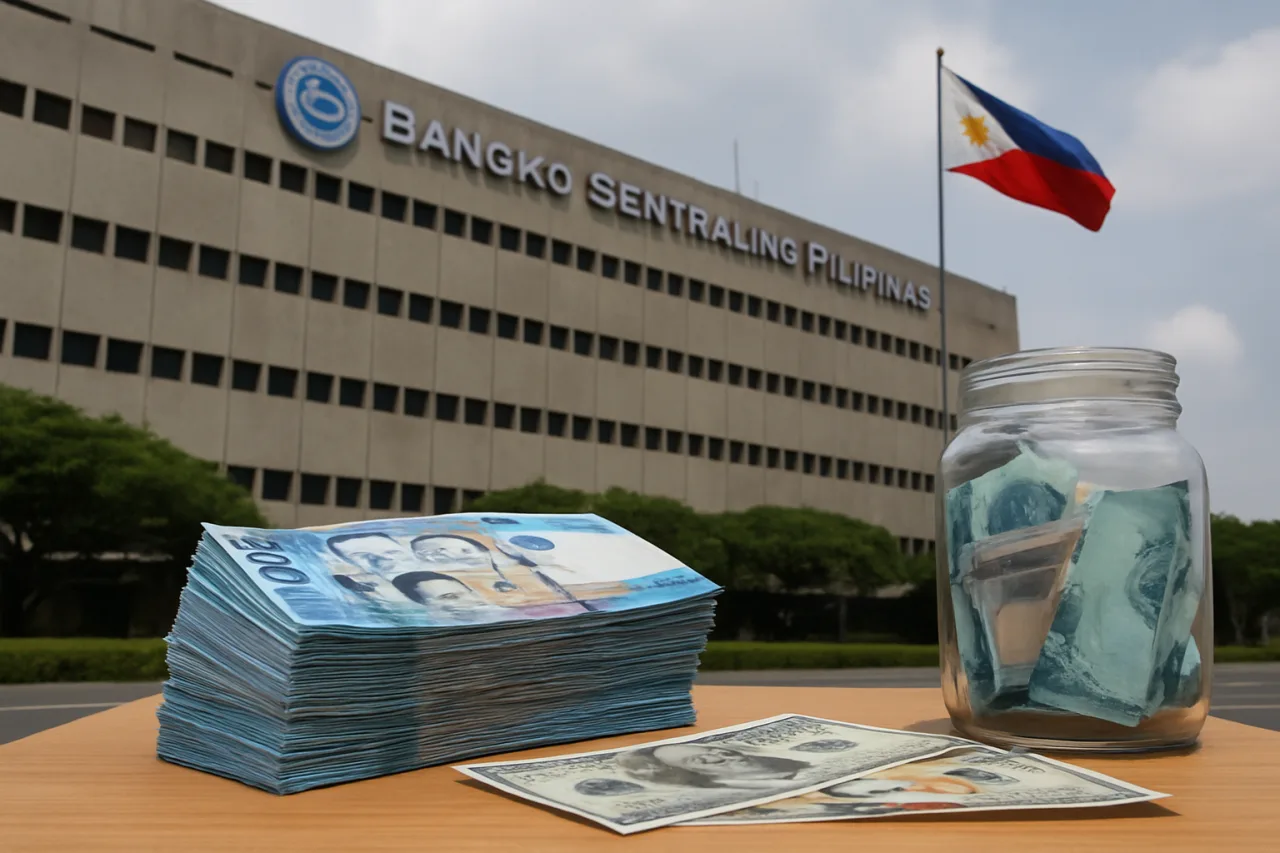
The Monetary Board’s meeting calendar has no September 25 sitting; the last verified policy action was the August 27 hike that lifted the target reverse repurchase rate to 5.0 percent, with the overnight deposit facility at 4.5 percent and the lending facility at 5.5 percent.
The next scheduled decision lands in October — and that is where the year’s most consequential peso call will get made.
The anticipation itself is the news. Markets spent the week pricing a “final 25 basis points” onto Philippine rate expectations, but the phrase belongs to a different monetary path than the one 2026 actually took.
This was never an easing year winding down — it is a tightening cycle mid-flight, three hikes deep, watching the Fed turn hawkish. Reading the calendar wrong is how savers miss windows; reading it right is the whole edge.
The 2026 Ledger: Three Hikes Reversing Three Years of Easing
The year’s policy path deserves its full accounting, because each step reshapes the OFW saver’s math. February 19 opened with a cut — 25 basis points to 4.25 percent, the lowest in over three years, as the Monetary Board tried to restart growth dented by the flood-control scandal’s confidence shock.
March brought an off-cycle hold at 4.25 percent. Then the direction reversed hard: April 23 hiked to 4.5 percent — the first increase in over two years — as the Middle East war pushed oil and inflation risks upward. June 18 hiked again to 4.75 percent. August 27 completed the trilogy at 5.0 percent.
Since easing began in August 2024, the net ledger now reads: 225 basis points of cuts, 75 given back. The policy rate sits at 5.0 percent — a full cycle high for this decade — with inflation expectations under pressure from a war the Fed itself now prices into dollar rates.
October’s meeting inherits this structure: a central bank that tightened three consecutive meetings, against a Fed that just joined the hiking side of the ledger.
The Fed Variable: Why September 16 Changed October’s Math
The Federal Reserve’s September 16 hike — its first since 2023, to 3.75-4 percent with another projected — does two things to the BSP’s October decision.
First, it narrows the interest-rate differential: Philippine policy at 5.0 percent now clears the Fed by only about 100-125 basis points, versus a much wider gap when the BSP was cutting and the Fed held. Differentials are the peso’s ballast; a thinner one invites capital-flow volatility and adds pressure to an already-weak exchange rate.
Second, it removes the policy-cover argument. When the Fed stood still, the BSP could hike knowing its moves alone defended the peso. Now both central banks are tightening — and the BSP’s October choice is less about matching the Fed than about how much domestic inflation it is willing to tolerate from the peso’s slide.
The currency has drifted toward P63 per dollar in recent weeks as markets priced the Fed’s hawkish turn. Every weak peso is a remittance windfall for dollar earners and an imported-inflation cost for the households receiving them — the two sides of the OFW ledger that October’s decision will referee.
What October Could Decide — and What Each Path Means
| October outcome | What it signals | The OFW money move |
|---|---|---|
| Fourth consecutive hike (5.25%) | Inflation fighting dominates; growth concerns parked | Lock peso time deposits now, before more hikes peak the curve |
| Hold at 5.0% | Peak declared; the cycle pauses to digest | Lock deposits before any easing talk returns; ladder maturities |
| Surprise cut | Growth panic overrules inflation — unlikely but possible | Lock immediately; the deposit-rate window closes fast in easing |
The asymmetry favors action before the meeting in all three rows. If October hikes, today’s deposit rates were the bargain. If it holds, today’s rates were the peak — and the next move is down. If it cuts, today’s rates were definitively the top.
There is no October outcome that makes locking later the better trade, which is the rare case where the calendar itself gives the saver the answer.
The Deposit Window: Reading the 5% Peak Correctly
Policy at 5.0 percent filters down to the instruments OFW households actually buy. Competitive peso time deposits — the 6-to-12-month lock-ins banks reprice off the policy rate — have been climbing all cycle, and the best offers now sit meaningfully above the lows of 2024-2025.
Philippine retail Treasury bills price off similar expectations and add the sovereign guarantee. MP2, the Pag-IBIG savings program whose dividend track has beaten bank deposits through most of this decade, re-enters the conversation at these levels because its annual rate resets while bank term rates float with policy.
The mechanical advice stays boring because it works: split the horizon. Emergency money stays liquid. The 1-3-year peso goals lock now — time deposits at the cycle’s high, T-bills at auction. The long horizon keeps its schedule.
And the dollar side runs its own book: the Fed’s cycle keeps USD deposit offers elevated too, so the OFW holding both currencies should re-shop both, not default to the currency that happens to be nearest.
Remittance Timing: What P63 Means for the Family Budget
The weak peso is the cycle’s compensation prize. An $800 monthly remittance at P63 converts to ₱50,400 — versus ₱46,400 at the P58 levels of early 2026. That ₱4,000 monthly difference is real household money, and the Fed’s projected second hike keeps the drift favorable for dollar earners.
The staged-conversion discipline from the Fed piece applies unchanged: send on schedule, capture the trend, never bet a family budget on calling the top. Households budgeting in pesos should update the conversion assumption embedded in their plans — the rate that priced last spring’s budget is already stale by more than a peso.
One more channel deserves the family’s attention: the peso’s slide feeds import prices — fuel, food staples, gadgets — so the stronger conversion rate arrives alongside a costlier basket at home. The BSP’s October decision weighs exactly this trade-off, and the household’s own spending mix decides whether the net lands positive.
Dollar earners whose families buy mostly Philippine-made goods capture the windfall cleanly; families heavy on imported consumption split it with inflation.
The Historical Anchor: What the Last Peak Paid
The 2024 peak offers the template.
When BSP policy last topped out, the OFW savers who locked 12-month time deposits at the high captured a full year of elevated returns while the easing cycle that followed slowly dragged new offers down — the 2025 cuts were generous to borrowers and quiet punishment to savers who waited.
The current 5.0 percent peak runs the same clock in reverse: every week of delay is a week of peak rates not banked. The lesson from that cycle was not “predict the peak” — nobody reliably does — but “act inside the peak window,” which the calendar makes visible even when the direction is not.
October’s meeting is the near horizon; the December meeting is the far one. Between them sits the household’s entire quarter-end money plan. The BSP rate decision that matters is coming — and the preparation for it, unlike the decision itself, starts today.
The OFW Family’s October Playbook, Hour by Hour
Turn the strategy into assignments with dates attached. This week: run the deposit-shopping pass — pull the current peso time-deposit offers from your bank, two competitor banks, and one digital bank, and note the 6-month and 12-month rates side by side.
Next week: execute the lock on the 1-3-year peso money — split across two maturities (a 6-month and a 12-month) so a better rate window in spring still catches half the money.
Before the meeting: update the family budget’s conversion assumption to the current market rate, and reconfirm the emergency fund’s floor — the liquidity buffer that makes the locked deposits safe to hold.
Meeting week: watch the BSP release itself, not the pre-meeting chatter — the statement’s first paragraphs carry the signal language (“inflation risks remain tilted to the upside” versus “risks have become more balanced”) that tells you whether the next meeting continues the hikes or opens the easing debate.
The family version of this playbook takes fifteen minutes total across the month, and it converts a central-bank meeting from a headline you consume into a calendar event you prepared for.
That shift — from audience to operator — is the entire difference between households that the rate cycle works for and households it works on.
The Bottom Line for the Peso and the Family
Strip the week’s noise and the standing facts are simple. The policy rate is 5.0 percent, at a decade high, after three consecutive hikes. The Fed just joined the tightening side, narrowing the gap that shields the peso.
The currency sits near P63, tilting every remittance conversion in the dollar earner’s favor while feeding the imported-inflation basket. And the BSP rate decision that resolves the next direction arrives in October — with every plausible outcome rewarding the household that locked its rates early.
The mountain does not rush the season, and neither should the family rush its money plan; but the calendar is published, the window is priced, and the quarter’s best move is the one made before the meeting, not after it.
Frequently Asked Questions
Was there a BSP rate decision today?
No. The Monetary Board’s last decision was the August 27 hike to 5.0 percent, and its next meeting is in October. Any “final 25 bps” headlines this week were analyst anticipation, not policy action — verified against the BSP’s own Monetary Policy Decisions page.
What is the current BSP policy rate?
5.0 percent on the target reverse repurchase rate, set August 27, 2026 — with the overnight deposit facility at 4.5 percent and the lending facility at 5.5 percent.
Why did the BSP hike three times in 2026?
The Middle East conflict pushed inflation and commodity risks upward after a February cut to 4.25 percent; the Monetary Board responded with hikes in April, June, and August — its first increases in over two years.
How does the Fed’s hike affect the BSP’s October decision?
It narrows the rate differential that supports the peso and removes the BSP’s policy cover — both central banks are now tightening, and October’s decision will weigh the peso’s slide toward P63 against domestic growth needs.
Should OFW savers lock deposits before October?
The asymmetry says yes: if October hikes or holds, today’s rates were the bargain; if it cuts, today’s rates were the peak. No outcome makes waiting the better trade — lock the 1-3-year peso goals now and keep emergency money liquid.
What does the weak peso mean for remittances?
More pesos per dollar — an $800 remittance at P63 yields about ₱50,400 — favorable for dollar-earning OFWs and their peso budgets, though imported goods cost more; staged monthly conversions capture the trend without timing risk.
Financial Disclaimer
This article is general financial information, not investment advice. Rates and central-bank decisions change; verify with official BSP releases and consult a licensed financial adviser before making financial decisions.