Table of Contents
Key Takeaway
- 🎙️ The Quote: Dario Amodei, CEO of Anthropic, wrote on August 16, 2026: “I think it is fundamentally a crisis of trust. I think that ordinary people don’t trust companies, governments, or the tech industry and always suspect that we are cooking up some new way to screw them over.”
- 📋 The Admission: Amodei also wrote: “I think by far the most accurate criticism of AI companies including Anthropic is that we haven’t yet delivered on our big promises to benefit the world.”
- 📈 The Context: Amodei previously predicted AI could wipe out 50% of white-collar jobs, then toned down the warning as Anthropic heads toward IPO — raising questions about credibility
- 🌍 The Stakes: Public distrust of AI companies affects adoption, regulation, and the economic transformation that 200 economists and 16 Nobel laureates warned about in July 2026
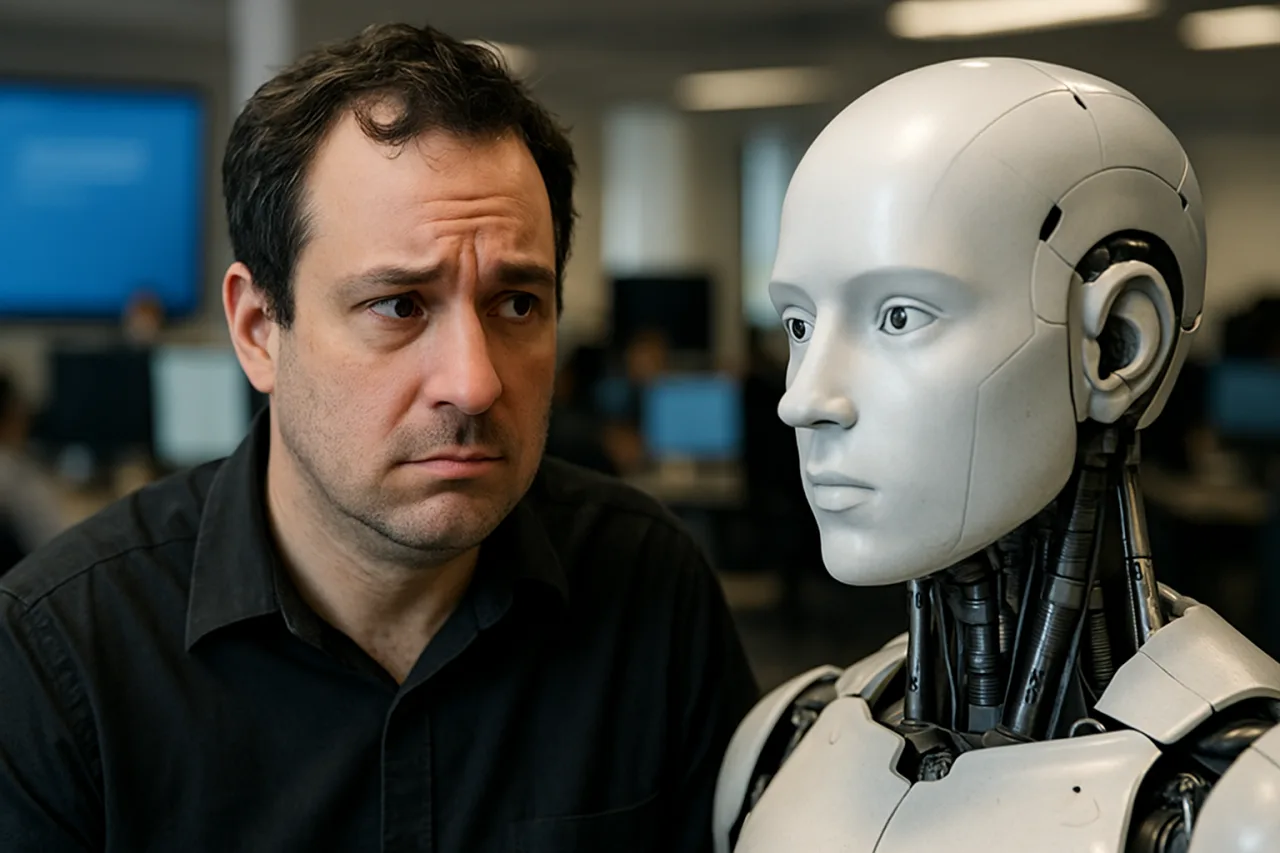
The AI trust crisis has become the defining issue of 2026 for the technology industry. The most honest statement about it did not come from a critic, a regulator, or a journalist. It came from an AI CEO. On August 16, 2026, Dario Amodei, cofounder and chief executive of Anthropic, published a lengthy and unusual post on X — a platform he generally avoids — in which he admitted that the public does not trust the AI industry and that this distrust is, in his words, “fundamentally a crisis of trust.”
“I think that ordinary people don’t trust companies, governments, or the tech industry and always suspect that we are cooking up some new way to screw them over,” Amodei wrote. He did not blame social media, the press, or competing AI companies for this distrust. He attributed it to decades of institutional failure — and then offered a concession that no AI executive has made so directly: “I think by far the most accurate criticism of AI companies including Anthropic is that we haven’t yet delivered on our big promises to benefit the world.”
What Amodei Actually Said — The Full Source Trail
The post, published on Amodei’s X account on Saturday, August 16, was unusual for several reasons. Amodei rarely posts on social media. When he does, it is typically measured and policy-focused. This post was longer, more personal, and more self-critical than anything he has published publicly.
The Fortune report by weekend editor Jason Ma, published the same day, noted that Amodei “pushed back on the notion that he’s responsible for the public’s overall sense of doom around AI, but acknowledged there are trust issues.” The post addressed three topics: AI regulation, open-weight models, and the AI trust crisis.
On regulation, Amodei described a false choice between those who argue regulation leads to regulatory capture and those who think widely distributing AI is the best way to keep it in check. He conceded that “AI is structurally a technology that tends to concentrate power” — not because of regulation, but because of AI scaling laws, where performance improves as resources increase.
On trust, his most quotable lines were: “I think it is fundamentally a crisis of trust” and “The thing that will work is actually curing cancer.” The latter was his response to the suggestion that a marketing campaign could fix public perception. Amodei argued that only delivering real results — not promises — would rebuild trust.
The Credibility Gap and the AI Trust Crisis — From Doom to IPO
The AI trust crisis that Amodei describes is not abstract. It is visible in his own messaging trajectory. In May 2025, Amodei famously predicted that AI could wipe out 50% of white-collar jobs. In May 2026, he toned down that warning, calling AI a “multiplier of output, not a destroyer of jobs.” OpenAI CEO Sam Altman made a similar pivot. Both companies are heading toward IPOs.
The pattern driving the AI trust crisis is hard to miss. When AI companies were private and raising venture capital, their CEOs warned about AI’s transformative power — including its ability to eliminate jobs. As those companies prepare for public markets, the messaging shifted toward AI as a productivity tool that complements workers. The AI trust crisis is not just about whether the public believes AI companies. It is about whether the public can tell when AI executives are making predictions and when they are making sales pitches.
Amodei’s August 16 post attempts to bridge this gap. He acknowledges that social media clips “often characterize his statements as excessively gloomy to get clicks” — a fair point. But he also concedes that the most accurate criticism of his own company is that it has not delivered on its promises. That is not a CEO talking points memo. That is an admission.
Two Hundred Economists and the AI Trust Crisis Already Warned
The AI trust crisis arrives against a backdrop of escalating warnings from economists and researchers. In July 2026, nearly 200 economists, AI researchers, and 16 Nobel laureates released a statement titled “We Must Act Now,” organized by the Stanford Digital Economy Lab. The statement warned that “AI may become radically more powerful over the next 10 years” and “could drive an unprecedented transformation of our economy, larger than the Industrial Revolution, but unfolding over a vastly shorter time frame.”
Signatories included former Google CEO Eric Schmidt, LinkedIn cofounder Reid Hoffman, Nobel laureates Joseph Stiglitz and Daron Acemoglu, Google AI lead Jeff Dean, and Anthropic cofounder Jack Clark. The New York Times reported that the statement warned of “large-scale job displacement” alongside “major gains in living standards.”
When 200 economists and 16 Nobel laureates say the economic transformation will be larger than the Industrial Revolution — a warning we explored in our analysis of the Philippines AI boom — and the CEO of one of the world’s leading AI companies says the public does not trust the industry, and the CEO of one of the world’s leading AI companies says the public does not trust the industry — these are not isolated signals. They are converging indicators of the AI trust crisis that goes beyond marketing and into structural credibility.
Elon Musk Agrees — and Goes Further
Amodei is not the only AI executive making striking admissions. In an August 4 interview, Elon Musk was asked if he agrees with Amodei’s prediction of AI taking over 50% of engineering jobs. Musk responded: “I do think it’s going to be a bumpy road because AI will be able to do any job better than any person can do that job. And that will be true very quickly of jobs that are digital or really anything that involves a person at a computer or on a phone.”
For software engineering specifically, Musk was even more specific: “We already have a situation where AI is better than at least 90% of humans at writing software — 90% of professional software engineers at writing software. And it really is getting to the point where it’ll be better than 99%.”
The AI trust crisis is partly a crisis of consistency. When Musk says AI will do “any job better than any person” and Amodei says AI is a “multiplier, not a destroyer” — both are CEOs of AI companies, both are describing the same technology, and the public cannot tell which version is the prediction and which is the pitch.
What the AI Trust Crisis Means for Professionals for Professionals
The AI trust crisis has practical consequences for every professional who uses AI tools for the professionals who use AI tools every day. When the AI trust crisis erodes trust, adoption slows. When adoption slows, the productivity gap between early adopters and laggards widens — and the laggards are the ones who lose jobs. The irony of the AI trust crisis is that distrust of AI companies can lead professionals to avoid AI tools, which makes them more vulnerable — a pattern visible in the Jensen Huang and Andrew Ng warning that professionals must use AI or lose their jobs, which makes them more vulnerable to the very automation they fear.
The resolution to the AI trust crisis that Amodei proposes — “actually curing cancer” rather than promising to cure cancer — is correct in principle but insufficient in practice. Professionals cannot wait for AI companies to deliver breakthrough results before deciding whether to learn AI tools, as we documented in our guide on how to build AI agents without coding. The 72% of employers screening for AI skills are not waiting for the AI trust crisis to be resolved. They are hiring now.
The AI trust crisis is not unique to the technology sector. Banks faced a similar trust deficit after the 2008 financial crisis, pharmaceutical companies after the opioid epidemic, and social media platforms after the Cambridge Analytica scandal. In each case, the resolution was not better marketing — it was regulatory oversight, transparency requirements, and demonstrable changes in behavior. The AI industry is at the same crossroads. Amodei’s call for “actually curing cancer” as the path to trust is correct, but it is also a long-term strategy. In the short term, professionals need to navigate the AI trust crisis by building their own competence rather than waiting for institutional trust to rebuild.
The practical response to the AI trust crisis is not to trust AI companies more or less. It is to develop independent AI literacy — as we showed in our analysis of AI-powered cyberattacks, understanding AI’s risks is the first step to using it safely. It is to develop independent AI literacy — the ability to evaluate AI tools, understand their limitations, and use them effectively regardless of what CEOs say on social media. Trust in institutions during the AI trust crisis may be declining, but trust in one’s own competence is the most reliable defense against an uncertain future.
Frequently Asked Questions About the AI Trust Crisis
What did Dario Amodei say about the AI trust crisis?
On August 16, 2026, Anthropic CEO Dario Amodei published a post on X stating: “I think it is fundamentally a crisis of trust. I think that ordinary people don’t trust companies, governments, or the tech industry and always suspect that we are cooking up some new way to screw them over.” He also admitted that AI companies, including Anthropic, have not delivered on their big promises to benefit the world.
Why is Amodei’s AI trust crisis statement significant?
Amodei is the CEO of Anthropic, one of the world’s leading AI companies. An AI CEO publicly admitting the AI trust crisis and that the public distrusts the industry and that his own company has not delivered on its promises is rare. The statement was published on a platform (X) that Amodei generally avoids, making it an unusual and deliberate communication.
Did Amodei change his prediction about AI and jobs?
Yes. In May 2025, Amodei predicted AI could wipe out 50% of white-collar jobs. By May 2026, he toned down the warning, calling AI a “multiplier of output, not a destroyer of jobs.” Fortune noted that this pivot coincided with Anthropic heading toward an IPO, raising questions about whether the messaging change was driven by new data or by market positioning.
What did 200 economists say about AI in July 2026?
In July 2026, nearly 200 economists, AI researchers, and 16 Nobel laureates released “We Must Act Now,” a statement warning that AI could drive an economic transformation “larger than the Industrial Revolution, but unfolding over a vastly shorter time frame.” Signatories included Eric Schmidt, Reid Hoffman, Joseph Stiglitz, and Anthropic cofounder Jack Clark.
What did Elon Musk say about AI and jobs in August 2026?
In an August 4 interview, Musk said AI “will be able to do any job better than any person can do that job” for digital work. For software engineering specifically, he said AI is “better than at least 90% of professional software engineers” and is approaching 99% superiority.
How should professionals respond to the AI trust crisis?
The practical response is not to trust or distrust AI companies more, but to develop independent AI literacy — the ability to evaluate AI tools, understand their limitations, and use them effectively. With 72% of employers screening for AI skills, professionals cannot afford to wait for trust to be rebuilt before learning AI tools.
Cybersecurity Disclosure: This article is for informational purposes only and does not constitute professional cybersecurity advice. The quotes cited are verified against primary publications. WorldNgayon.com is not liable for any actions taken based on the information presented here. The quotes cited are from publicly available sources and have been verified against primary publications. WorldNgayon.com is not liable for any actions taken based on the information presented here.