Table of Contents
Key Takeaway
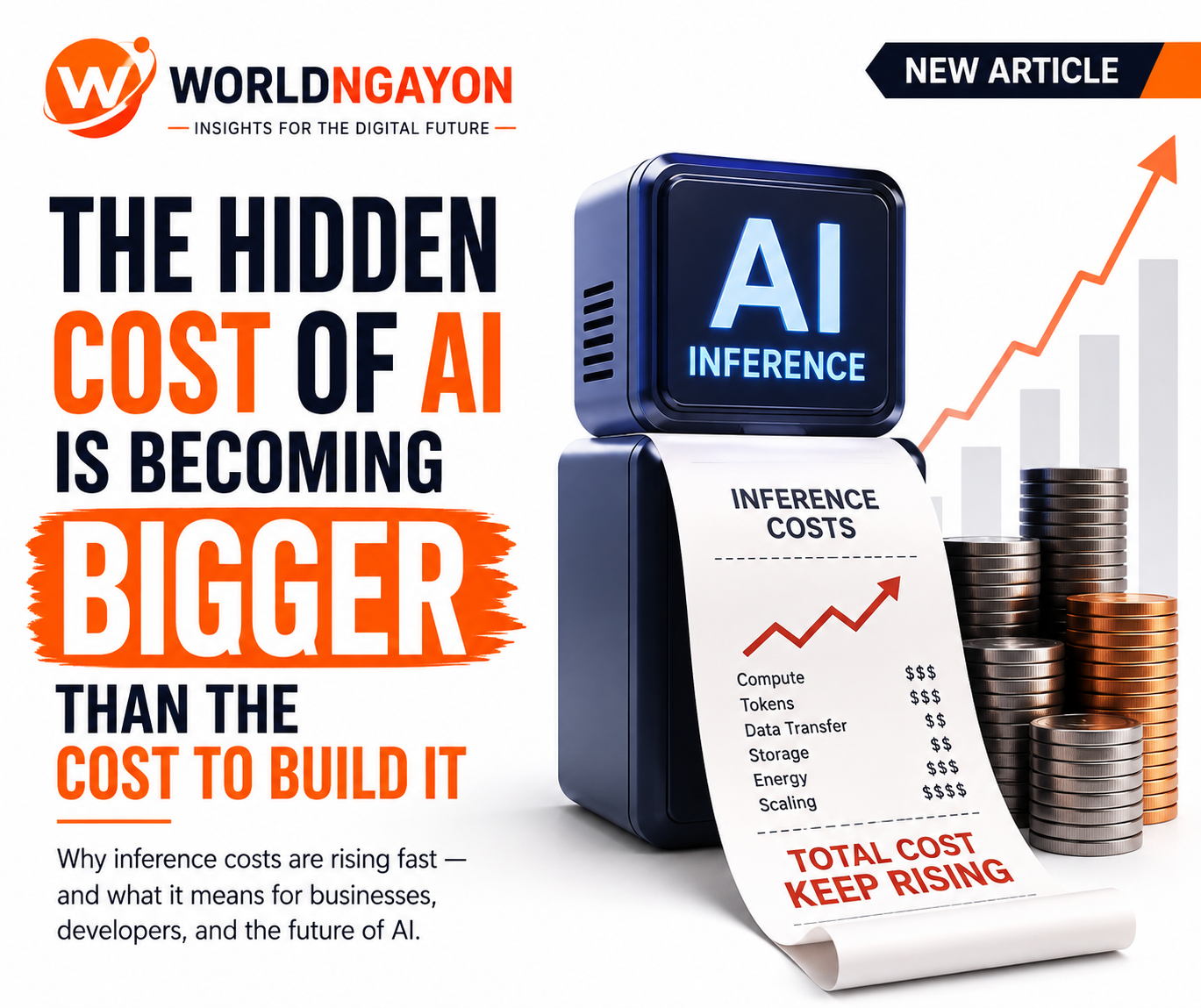
- 🔄 Inflection Point: AI inference spending reached $23.3 billion in 2026, surpassing training spending of $19 billion for the first time — inference now accounts for 55% of total AI infrastructure spending
- 📈 96% Growth: AI-optimized infrastructure-as-a-service is growing at 96% year-over-year, projected to reach $42 billion in 2026, making it the fastest-growing segment of the global IaaS market
- 💰 $66B Projection: Inference spending is projected to reach $66 billion in 2027, rising to 59% of total AI infrastructure spending as companies shift from building models to deploying them
- 🌐 $287B Market: Total IaaS spending reached $287.3 billion in 2026, up 29.3% year-over-year, with AI-optimized infrastructure driving the majority of that growth
- ⚡ What This Means: The economics of AI are shifting from a build-phase to a run-phase — companies that optimize inference costs will gain a durable competitive advantage over those still spending on training
This changed everything. On August 10, 2026, Gartner published a forecast that marks a structural shift in how the world pays for artificial intelligence. For the first time, companies are spending more money running AI models than building them. AI inference spending — the cost of deploying trained models to generate predictions, answer queries, and power applications — hit $23.3 billion in 2026, surpassing the $19 billion spent on training. The implications extend far beyond the data center. They reach every Filipino professional working in technology, every BPO company building AI capabilities, and every business deciding whether to build or buy AI infrastructure.
The shift from training to inference as the dominant cost category signals that AI is moving from the laboratory to the production floor. It is no longer enough to build a model. The question now is whether you can afford to run it.
The Numbers Explained
Gartner’s August 2026 forecast breaks down the AI infrastructure spending landscape with striking clarity. The total infrastructure-as-a-service market reached $287.3 billion in 2026, growing 29.3% year-over-year — a rate that dwarfs nearly every other segment of enterprise IT spending. Within that market, AI-optimized IaaS is the standout: growing at 96% year-over-year to reach $42 billion. This means AI-optimized infrastructure is growing more than three times faster than the overall IaaS market.
The training-versus-inference breakdown is where the structural shift becomes visible. In 2026, AI inference spending reached $23.3 billion, accounting for 55% of total AI infrastructure spending. Training spending stood at $19 billion, making up the remaining 45%. Gartner projects that by 2027, inference will account for 59% of spending, reaching $66 billion, while training will grow more modestly. The gap is widening, not narrowing.
| Category | 2026 Spending | Share | 2027 Projection | Share |
|---|---|---|---|---|
| AI Inference | $23.3B | 55% | $66B | 59% |
| AI Training | $19B | 45% | ~$46B | 41% |
| Total AI Infrastructure | ~$42B | 100% | ~$112B | 100% |
| Total IaaS Market | $287.3B | — | — | — |
The numbers tell a story of maturation. When AI was in its experimental phase, the dominant cost was training — feeding data into models to make them smarter. Now that models are being deployed at scale in customer service, code generation, content creation, and business analytics, the dominant cost is inference — running those models millions of times per day to serve real users.
Why Inference Costs More Than Training Now
Hardeep Singh, senior principal research analyst at Gartner, explained the dynamics driving this shift. Training a large language model is a one-time capital expenditure — you spend heavily for months, then you have a model. Inference is an operating expense that recurs every time someone uses the model. When a single model serves millions of queries per day, the cumulative inference cost quickly exceeds the training cost.
The economics are straightforward. Training a model like GPT-4 or Claude costs tens of millions of dollars in compute time. But running that model to serve billions of user queries costs hundreds of millions of dollars per year in GPU time, electricity, and data center operations. As more companies deploy AI in production, the inference bill compounds. A company that builds a model once but serves it to 10 million users daily will spend far more on inference in the first year than it spent on training.
This is why the Philippine data center buildout matters. The country is investing in new facilities across Luzon, Visayas, and Mindanao to capture a share of this growing inference market. Data centers that host inference workloads — not just training clusters — are the ones that will generate recurring revenue. Training is a one-time event. Inference is forever. The economic logic is simple: companies that host inference workloads collect a toll every time a model runs. Companies that only host training workloads collect a one-time fee. The Gartner press release on August 10, 2026, makes this shift explicit, and industry analysts at Data Center Dynamics have confirmed that Southeast Asian markets are seeing a surge in inference-driven data center demand.
The 96 Percent Growth Story
The 96% year-over-year growth rate for AI-optimized IaaS is the most striking number in the Gartner forecast. It means the market is nearly doubling every year. For context, the overall IaaS market is growing at 29.3% — already a robust rate by enterprise IT standards. AI-optimized infrastructure is growing more than three times faster than the broader market.
This growth is driven by enterprises that moved from AI experimentation to AI deployment in 2025 and 2026. Companies that ran pilot projects in 2024 are now running production workloads. Each production deployment generates continuous inference demand. A bank that deployed an AI chatbot for customer service in 2025 is now paying for inference every minute of every day. A BPO company that automated quality assurance with AI is running models on every call transcript. The bill never stops.
PLDT’s investment in new data center capacity in Southern Luzon is a direct response to this demand. The facility is designed to host AI inference workloads for enterprises that need low-latency access to GPU compute without sending data to Singapore or Tokyo. The economic logic is sound: if inference is the fastest-growing cost category in AI, then hosting inference workloads is the fastest-growing revenue opportunity in data center services.
What This Means for the Philippines
The shift from training to inference has significant implications for the Philippine technology sector. The country’s BPO industry — which employs 1.8 million workers and generates $40 billion in annual revenue — is increasingly integrating AI into its service offerings. Every AI-powered customer service interaction, every automated quality assurance check, every AI-assisted code review generates inference costs. As Philippine BPO companies scale their AI deployments, their inference bills will grow proportionally.
The opportunity is that inference workloads can be hosted anywhere with adequate infrastructure. Unlike training, which is often concentrated in a few hyperscale facilities, inference can be distributed across edge data centers closer to end users. The Philippines, with its growing data center capacity and strategic location in Southeast Asia, is well positioned to capture a share of the regional inference market — if the infrastructure keeps pace with demand.
The risk is that Philippine companies may underestimate the ongoing cost of running AI. A company that builds an AI model for $100,000 in training costs may face $500,000 in annual inference costs. Budgeting for the build phase without planning for the run phase is a common mistake. The Gartner data suggests this mistake is becoming expensive at scale — $23.3 billion expensive in 2026 alone.
The broader economic impact of this shift is explored in our analysis of AI’s economic impact on the Philippines, where we examine how inference cost optimization is becoming a competitive differentiator for technology companies.
The Second-Order Effects — Who Wins and Who Loses
The training-to-inference shift creates winners and losers across the AI value chain. GPU manufacturers benefit either way — they sell chips for both training and inference. But cloud providers that specialize in training may find their margins compressing as training becomes commoditized, while providers that optimize for inference efficiency gain pricing power.
Software companies face a different dynamic. Those that build proprietary models carry both training and inference costs. Those that fine-tune open-source models carry lower training costs but still face full inference costs. The most exposed companies are those that rely on third-party API calls — they pay inference costs to the model provider with no ability to optimize the underlying infrastructure.
For Filipino professionals, the shift creates demand for a new skill set. Inference optimization — reducing the compute cost of running models — is becoming a specialized discipline. Techniques like model quantization, distillation, and dynamic batching can reduce inference costs by 50-80% without significantly degrading output quality. Professionals who master these techniques will be in high demand as companies seek to control their AI inference spending. The demand for inference engineers is a direct consequence of the AI inference spending trend that Gartner has documented.
The broader point is that AI inference spending is reshaping the economics of technology. When inference was cheap — when models were small and user bases were limited — companies could afford to ignore optimization. Now that AI inference spending has surpassed training, optimization is not optional. It is a survival skill for any company running AI at scale. Filipino professionals who develop expertise in inference cost management will find themselves at the intersection of the most expensive line item in enterprise IT and the fastest-growing job category in AI infrastructure.
What Comes Next for AI Infrastructure
Gartner’s projection of $66 billion in inference spending by 2027 assumes continued growth in AI deployment across enterprises. Several factors could accelerate this beyond the forecast. First, the proliferation of AI agents — autonomous systems that run continuous inference loops — could multiply inference demand by orders of magnitude. An AI agent that monitors a system 24/7 generates far more inference calls than a chatbot that responds to occasional queries.
Second, the expansion of AI into edge devices — smartphones, IoT sensors, industrial equipment — will create distributed inference demand that existing cloud infrastructure may struggle to serve. Edge inference requires different infrastructure than cloud inference, and the market for edge AI chips and local inference servers is still nascent.
Third, regulatory requirements for AI transparency and auditability may increase inference costs. If companies must log every AI decision, re-run inference for audit purposes, and maintain explainability records, the compute overhead per query could rise significantly. The European Union’s AI Act and similar regulations in other jurisdictions are still being implemented, and their full cost impact is not yet clear.
For the Philippines, the path forward is clear: invest in inference-capable infrastructure, train professionals in inference optimization, and position the country as a cost-effective destination for hosting AI workloads. The Gartner forecast confirms that the money in AI is moving from building to running. The countries and companies that recognize this shift first will capture the most value.
Frequently Asked Questions About AI Inference Spending
What is the difference between AI training and AI inference?
AI training is the process of feeding data into a model to teach it patterns — a one-time capital expense. AI inference is the process of running a trained model to generate predictions, answer queries, or power applications — a recurring operating expense. In 2026, inference spending ($23.3B) surpassed training spending ($19B) for the first time, according to Gartner.
How much is the AI-optimized IaaS market growing?
According to Gartner’s August 2026 forecast, AI-optimized IaaS is growing at 96% year-over-year, reaching $42 billion in 2026. This is more than three times the growth rate of the overall IaaS market, which grew 29.3% to $287.3 billion. Gartner projects inference spending will reach $66 billion by 2027.
Why does inference cost more than training over time?
Training is a one-time event — you spend heavily for months to build a model. Inference is a recurring cost that happens every time the model is used. When a model serves millions of queries per day, the cumulative inference cost quickly exceeds the training cost. A model trained for $50 million may cost $200 million per year to run in production.
What does the shift from training to inference mean for Philippine BPO companies?
Philippine BPO companies integrating AI into their services will face growing inference costs as they scale deployments. Each AI-powered customer interaction, automated quality check, or AI-assisted process generates ongoing compute costs. Companies must budget for inference as an operating expense, not just training as a capital expense.
Who is Hardeep Singh at Gartner?
Hardeep Singh is a senior principal research analyst at Gartner who specializes in cloud infrastructure and AI spending forecasts. His August 10, 2026 forecast on AI inference spending surpassing training for the first time was published as a Gartner press release and is the primary source for this article’s data.
How can companies reduce AI inference costs?
Companies can reduce inference costs through model quantization (using lower-precision arithmetic), distillation (creating smaller models from larger ones), dynamic batching (grouping queries for efficiency), and hosting inference on optimized infrastructure. These techniques can reduce inference costs by 50-80% without significantly degrading output quality.
Disclaimer: This article is for informational and educational purposes only and does not constitute investment or technology advice. The spending forecasts cited are from Gartner, published August 10, 2026. Market conditions and technology costs can change rapidly. Readers should consult qualified professionals before making business or investment decisions based on this information. WorldNgayon.com is not liable for any actions taken based on the content presented here.