

Table of Contents
Key Takeaway
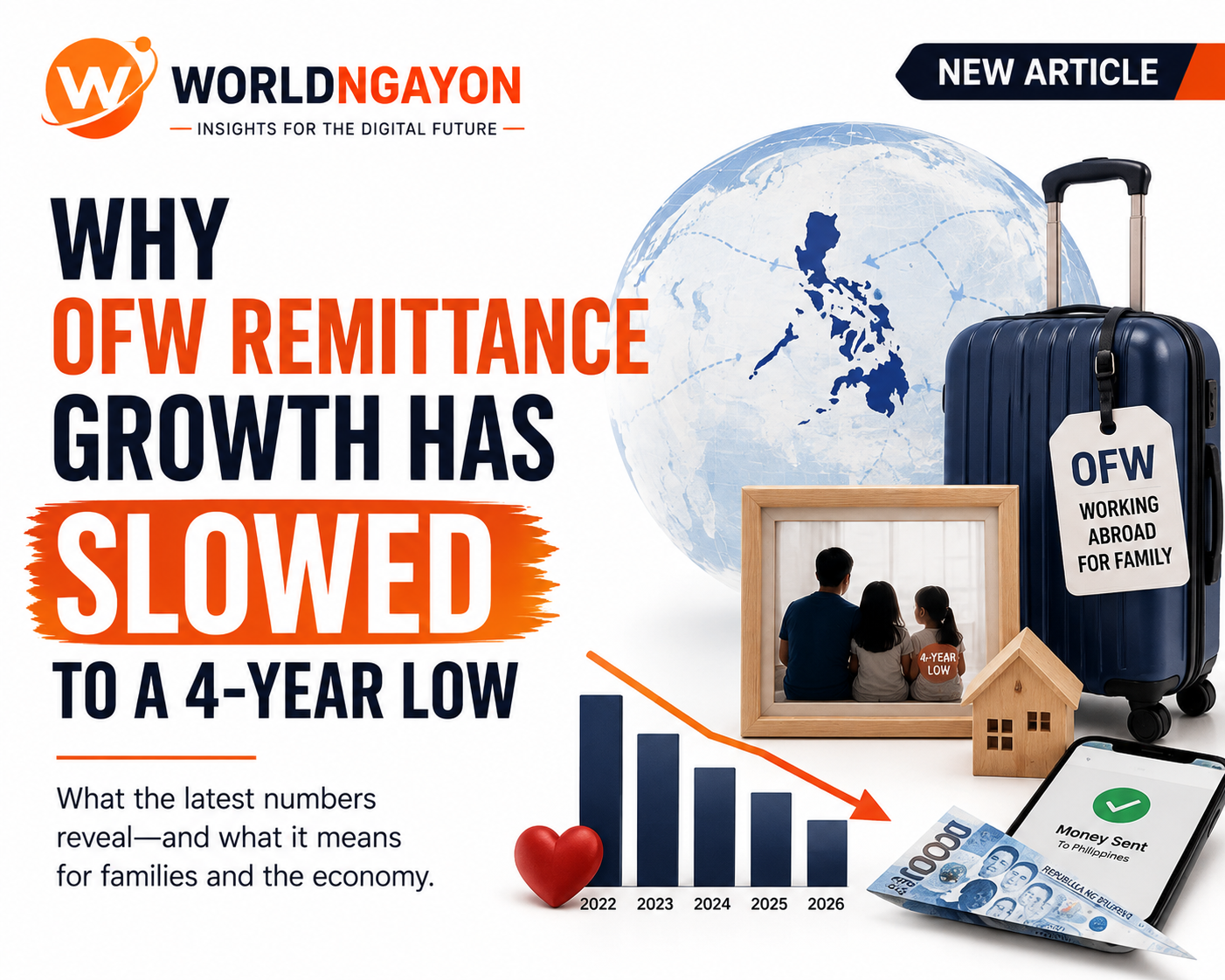
- 📉 Slowest Growth: OFW remittances rose just 1.7% year-on-year to $3.04 billion in June 2026 — the weakest pace since February 2022, according to Bangko Sentral ng Pilipinas data
- 💰 H1 Total: First-half remittances reached $17.15 billion, up only 2.4% — well below the BSP’s full-year growth target of 3.0%
- 🌍 GDP Share Slipping: Remittances fell to 7.1% of GDP from 7.4% a year earlier, signaling structural dependence is easing but not by choice
- ⚔️ Middle East Risk: Conflict in the region threatens Saudi Arabia — the third-largest remittance source — putting further pressure on inflows through 2026
- 🔑 What Professionals Should Watch: Track BSP monthly releases and the Federal Reserve rate path — both directly influence the peso exchange rate that determines how much families receive at home
For four years, the money sent home by overseas Filipino workers has been the economic shock absorber for the Philippines — steady, reliable, and growing. That narrative changed in June 2026. OFW remittances grew just 1.7% year-on-year, reaching $3.04 billion, the slowest pace since February 2022, when the world was still emerging from pandemic-era disruptions. The deceleration is not a blip. It reflects a convergence of pressures — geopolitical conflict in the Middle East, rising living costs for workers abroad, and a structural shift in where Filipino labor is deployed — that together threaten the country’s most important external revenue stream.
The question is not whether OFW remittances will recover next month. They may. The deeper question is whether the Philippines is witnessing the beginning of a structural slowdown in the growth rate of its most critical economic lifeline, and whether policymakers and families alike are prepared for what that means for the future of OFW remittances as a reliable income source.
The Numbers Behind the Slowdown
According to data released by the Bangko Sentral ng Pilipinas, cash remittances coursed through banks and formal channels rose 1.7% year-on-year to $3.04 billion in June 2026. For the first half of the year, the total reached $17.15 billion, a 2.4% increase from the same period in 2025. While the absolute numbers remain substantial, the growth rate tells a different story — one of deceleration. The BSP’s full-year growth target stands at 3.0%, and the first-half pace of 2.4% falls short of that benchmark.
The slowdown becomes more visible when placed in historical context. The last time OFW remittances growth was this weak was February 2022, when the global economy was still reeling from the Omicron wave and travel restrictions suppressed labor mobility. That June 2026 growth matches a pandemic-era trough — without a pandemic — is what makes the data significant. Something structural is happening beneath the surface of OFW remittances data.
Remittances as a share of GDP have also slipped. The BSP reported that remittances accounted for 7.1% of GDP in the first half of 2026, down from 7.4% in the same period a year earlier. The decline is modest in percentage terms but meaningful in absolute terms. For an economy where remittances are the largest source of foreign exchange after services exports, a 0.3 percentage point drop in GDP share represents billions of pesos in reduced domestic consumption capacity.
Why OFW Remittances Are Slowing Now
Several factors are converging to depress growth in OFW remittances. The most immediate is geopolitical. Conflict in the Middle East has disrupted labor markets across the Gulf Cooperation Council region, where hundreds of thousands of Filipinos work in construction, domestic service, healthcare, and hospitality. Saudi Arabia remains the third-largest source of OFW remittances to the Philippines, after the United States and Singapore. Any disruption to employment, wages, or the cost of living in the Gulf directly affects the amount of money that reaches Filipino families through OFW remittances.
Ruben Carlo Asuncion, chief economist at UnionBank of the Philippines, noted that the Middle East situation adds a layer of uncertainty to an already moderating trend. The conflict affects not only employment stability for OFWs in the region but also the exchange rate dynamics that determine how much recipients collect in pesos. When oil prices spike on geopolitical fears, the peso can weaken against the dollar — but if workers earn less or face higher living costs abroad, the net effect on remittance volumes is negative even when the exchange rate moves favorably.
Robert Dan Roces, group economist at SM Investments Corporation, highlighted a second pressure point: the rising cost of living for OFWs in host countries. Inflation in the United States, the largest single source of OFW remittances, has moderated but remains above the Federal Reserve’s 2% target. Filipino workers in the US are spending more on housing, food, and transportation, leaving less disposable income to send home. The same dynamic applies in Singapore, the second-largest source of OFW remittances, where housing costs have surged to record levels. As Business Inquirer reporting has documented, the squeeze on OFW purchasing power is now a multi-year trend, not a temporary blip.
Together, these factors suggest that the June 2026 number is not an anomaly but a reflection of a new normal — one where remittance growth hovers in the low single digits rather than the 3-5% range that prevailed in the post-pandemic recovery years.
What the Numbers Miss — and Why That Matters
The BSP data captures only remittances coursed through formal banking channels and licensed money transfer operators. A significant portion of OFW remittances — particularly from workers in informal employment arrangements or in countries with limited banking access — flows through informal channels that the BSP cannot track. If the economic pressures on OFWs are as broad as the formal data suggests, it is reasonable to expect that informal remittances are under even greater pressure.
There is also a compositional shift underway. The United States remains the largest source of remittances, followed by Singapore and Saudi Arabia. But the growth in remittances from the US and Singapore — both developed economies with strong demand for skilled Filipino labor in healthcare, technology, and finance — is partially offsetting the weakness from the Middle East. This is a positive sign for the long-term composition of remittance flows, but it does not resolve the short-term challenge for families who depend on Gulf-based workers.
The Philippines is also undergoing a broader economic transformation that may reduce its reliance on remittances over time. The business process outsourcing sector, technology startups, and the domestic digital economy are all growing. But none of these sectors has yet reached the scale needed to replace remittances as the country’s primary external income source. The transition, if it comes, is years away.
The Second-Order Effect on Filipino Families
The most immediate impact of slower OFW remittances growth falls on the families who depend on it. OFW remittances fund education, healthcare, housing, and daily consumption for millions of Filipino households. A deceleration from 3% growth to 1.7% growth means fewer pesos available for school fees, medical bills, and home construction. For families with fixed obligations — a mortgage, a child’s tuition, a medical treatment plan — even a small reduction in OFW remittances inflow can force difficult trade-offs.
The exchange rate acts as a partial buffer. When the peso weakens against the dollar, each dollar sent home converts to more pesos, partially offsetting the decline in volume. But this buffer cuts both ways. A stronger peso — which can result from improved trade balances or capital inflows — reduces the peso value of the same dollar remittance. The BSP’s monetary policy decisions, explored in detail in our BSP rate hike analysis for OFW impact, directly influence this dynamic.
Consumer confidence among OFW households is another indicator worth monitoring. The BSP’s own consumer confidence survey, which we examined in our OFW consumer confidence guide, showed that families receiving remittances have grown more cautious about spending, citing uncertainty about the sustainability of inflows. This caution, while rational at the household level, has a macroeconomic effect — it dampens domestic consumption, which is the largest component of Philippine GDP.
What the Experts Say — and What They Don’t
Asuncion of UnionBank emphasized that the structural drivers of OFW remittances growth remain intact — the Philippines continues to deploy workers globally, and demand for Filipino labor in healthcare, maritime, and professional services remains strong. The slowdown in OFW remittances, in his view, is cyclical rather than permanent. But cyclical slowdowns can last longer than expected when geopolitical risks persist, and the Middle East conflict shows no clear resolution path.
Roces of SM Investments pointed to a more nuanced concern. The composition of the OFW workforce is shifting. The proportion of newly deployed workers going to the Middle East has declined, while the proportion going to North America, Europe, and East Asia has risen. This is a positive development for the quality of remittance flows — higher-skilled workers in developed economies tend to send more money and face less employment risk. But the transition period, during which Gulf-based deployments decline faster than new-economy deployments ramp up, can produce exactly the kind of growth deceleration the BSP data is showing.
Neither economist addressed the possibility that AI-driven automation in BPO and customer service sectors — which employ significant numbers of Filipino workers domestically — could compound the effect. If domestic BPO jobs are displaced by AI at the same time that overseas remittance growth slows, the combined impact on household incomes could be more severe than either trend alone suggests. This intersection of domestic automation risk and overseas remittance deceleration deserves more attention than it has received.
What Comes Next — Scenarios for 2026 and Beyond
The base case scenario is that remittance growth stabilizes in the 2-3% range for the remainder of 2026, as the Middle East situation normalizes and the holiday season typically boosts inflows in the fourth quarter. Under this scenario, full-year remittances would reach approximately $38-39 billion, modestly above 2025 but below the BSP’s 3% growth target.
The downside scenario is more concerning. If the Middle East conflict escalates, disrupting oil supplies and labor markets in the Gulf, remittance growth could turn negative — something that has not happened since the pandemic. A sustained drop in Gulf-based remittances would have outsized effects on provinces and regions where OFW families are concentrated. The economic ripple would extend to real estate, retail, education, and banking in those areas.
The upside scenario depends on two factors. First, continued strong growth in remittances from the US and Singapore, driven by demand for healthcare workers and technology professionals. Second, the peso remaining competitive against the dollar, ensuring that each remitted dollar converts to sufficient pesos. If both factors hold, full-year growth could exceed 3%, despite the Gulf weakness.
For Filipino professionals — whether working abroad or at home — the key takeaway is that the era of automatic 4-5% annual OFW remittances growth may be over. Planning around a lower-growth environment is prudent. This means building savings buffers, diversifying income sources, and investing in skills that are less vulnerable to automation and geopolitical disruption. OFW remittances will remain a critical economic lifeline, but the growth rate that families and policymakers have come to expect may need downward revision.
Frequently Asked Questions About OFW Remittances
How much did OFW remittances grow in June 2026?
According to Bangko Sentral ng Pilipinas data, cash remittances rose 1.7% year-on-year to $3.04 billion in June 2026. This was the slowest growth rate since February 2022, reflecting pressures from Middle East conflict and rising living costs for workers abroad.
What was the total remittance inflow for the first half of 2026?
First-half remittances reached $17.15 billion, up 2.4% from the same period in 2025. This falls short of the BSP’s full-year growth target of 3.0%, indicating that the full-year figure may also come in below expectations.
Which countries send the most remittances to the Philippines?
The United States is the largest source of remittances, followed by Singapore and Saudi Arabia. The US and Singapore have shown stronger growth, partially offsetting weakness from Saudi Arabia and other Gulf countries affected by regional conflict.
Why is the Middle East conflict affecting OFW remittances?
The Middle East, particularly the Gulf Cooperation Council region, hosts hundreds of thousands of Filipino workers in construction, domestic service, healthcare, and hospitality. Conflict in the region disrupts employment, raises living costs, and creates uncertainty that reduces the amount workers can send home. Saudi Arabia alone is the third-largest remittance source.
What share of Philippine GDP do remittances represent?
Remittances accounted for 7.1% of GDP in the first half of 2026, down from 7.4% in the same period a year earlier. While the decline is modest, it signals that the country’s reliance on remittances is slowly easing — though not necessarily by design.
What should Filipino professionals do in response to slowing remittance growth?
Professionals should build savings buffers, diversify income sources, and invest in skills less vulnerable to automation and geopolitical disruption. Those working abroad should monitor exchange rate trends and host-country economic conditions. Families receiving remittances should plan budgets around lower-growth assumptions rather than expecting a return to 4-5% annual increases.
Financial Disclaimer: This article is for informational and educational purposes only and does not constitute financial or investment advice. The remittance data cited is from the Bangko Sentral ng Pilipinas and named economists. Exchange rates and economic conditions can change rapidly. Readers should consult qualified financial professionals before making decisions based on the information presented here. WorldNgayon.com is not liable for any actions taken based on this content.