Table of Contents
Key Takeaway
- Physical AI is the next frontier: Beyond chatbots, companies like Figure, Tesla, and Agility Robotics are training robots to navigate real-world environments — warehouses, hospitals, and homes.
- Training data is the bottleneck: Unlike LLMs trained on internet text, physical AI needs millions of real-world movement simulations, and the scarcity of quality data is slowing deployment.
- OFW workers face displacement risks: Manufacturing and logistics roles in Gulf states — traditionally filled by OFWs — are among the first targets for physical AI automation.
- Upskilling is survival: OFWs who learn to work alongside AI systems (robot supervision, data labeling, maintenance) will remain employable as physical AI scales.
🤖 The Data Problem: Physical AI — robots that perform real-world tasks — needs massive amounts of robot training data to match language model capabilities. Collecting this data is difficult, expensive, and unglamorous.
💡 Why OFWs Should Care: As physical AI advances, it will reshape manufacturing, logistics, healthcare, and other industries where millions of OFWs work. Understanding robot training data helps OFWs prepare.
🌍 The Philippines Angle: The country’s large workforce in manufacturing and services positions it to both benefit from and be disrupted by the physical AI revolution.
📈 Investment Opportunity: Companies solving the robot training data problem represent a growing investment sector that OFW investors should watch.
Robot Training Data: The Dirty, Unglamorous Work Behind Physical AI
Artificial intelligence has a data problem. While large language models like ChatGPT trained on vast amounts of text scraped from the internet, physical AI — robots that perform real-world tasks — needs something much harder to collect: robot training data. According to a TechCrunch report published June 17, 2026, some AI labs are already paying companies like XDOF to do this difficult, unglamorous work.
For Overseas Filipino Workers, the rise of physical AI has profound implications. Millions of OFWs work in manufacturing, logistics, healthcare, and other sectors where robots powered by robot training data could soon become commonplace. Understanding how this technology is being developed — and what it means for the future of work — is essential for every OFW planning their career and investment strategy.
“If physical AI is going to match the accomplishments of LLMs, there’s a data problem that needs to be solved,” the TechCrunch report states. Unlike language models that learn from billions of web pages, physical AI systems learn from real-world interactions — picking up objects, navigating spaces, performing delicate tasks. Robot training data is expensive, time-consuming, and often tedious to collect.
What Is Physical AI and Why Does It Need Robot Training Data?
Physical AI refers to artificial intelligence systems that interact with the physical world — robots that move, manipulate objects, and perform tasks in real environments. While language models process text, physical AI processes sensory data from cameras, sensors, and mechanical feedback to learn physical tasks.
The challenge is that robot training data cannot be scraped from the internet. It must be collected in the real world, often by humans performing repetitive tasks while sensors record every movement. This is where companies like XDOF come in — they specialize in collecting the detailed, real-world robot training data that physical AI systems need to learn.
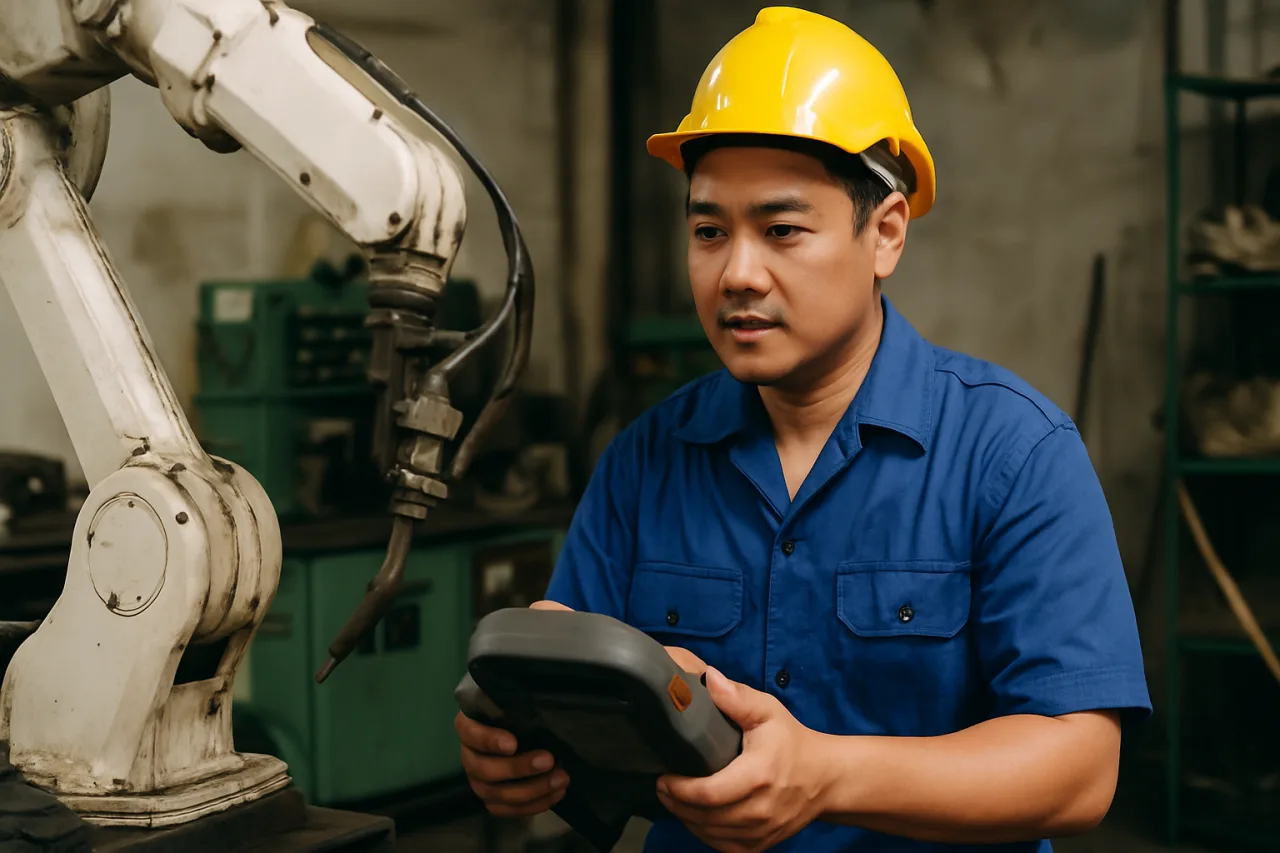
The process is far from glamorous. Workers perform thousands of repetitive tasks — picking up different objects, opening doors, folding clothes, assembling components — while cameras and sensors record every detail. This robot training data is then used to train AI models that can eventually perform these tasks autonomously.
For OFWs, this is both a warning and an opportunity. The warning: many tasks currently performed by human workers — in factories, warehouses, hospitals, and homes — are exactly the kind of tasks that physical AI is learning to automate using robot training data. The opportunity: the physical AI industry needs human workers to collect training data, at least in the near term.
Why OFWs Should Pay Attention to Robot Training Data
The Philippines is a major hub for manufacturing and services, with millions of OFWs working in sectors that physical AI is poised to transform. From factory workers in East Asia to healthcare professionals in the Middle East, OFWs are directly in the path of the physical AI revolution powered by robot training data.
The Bangko Sentral ng Pilipinas (BSP) has previously noted that technological disruption is a key risk factor for the Philippine economy. As physical AI advances — fueled by ever-larger datasets of robot training data — the demand for certain types of labor may decline, while new opportunities in AI-related fields will emerge.
OFWs who understand this shift can position themselves on the right side of it. Those who develop skills in AI supervision, robotics maintenance, or AI-adjacent services will find growing demand. Those who ignore the trend risk being displaced by the very technology they did not prepare for.
The physical AI industry also represents a significant investment opportunity. Companies like XDOF that solve the robot training data collection problem are attracting investment from major AI labs. As the industry grows, so will the opportunities for investors who understand the landscape.
What You Don’t Know: The Hidden Impact of Robot Training Data on OFW Livelihoods
What most OFWs do not realize is that physical AI — trained on massive amounts of robot training data — is already being deployed in industries where they work. Manufacturing facilities in China, Japan, South Korea, and other countries that employ large numbers of OFWs are increasingly using robots powered by physical AI systems.
The healthcare sector — another major employer of OFWs — is also seeing rapid adoption of physical AI. Surgical robots, rehabilitation robots, and caregiving robots are being developed and deployed in hospitals and care facilities around the world. These systems rely on robot training data collected from real medical procedures and patient interactions.
There is also a geographic dimension. The Philippines’ position as a global outsourcing hub means that when companies adopt physical AI trained on robot training data, the effects are felt almost immediately. If a factory in South Korea replaces 1,000 workers with robots, the demand for OFW labor in that facility drops.
At the same time, the Department of Information and Communications Technology (DICT) has been working to position the Philippines as a technology hub. Initiatives to develop AI talent and infrastructure aim to help Filipino workers transition from traditional roles to AI-adjacent positions. For more on the Philippines’ digital policy, see our coverage of DICT’s push for stricter digital regulation.
How OFWs Can Prepare for the Physical AI Era
The rise of physical AI — and the robot training data that powers it — should motivate OFWs to take proactive steps:
1. Develop AI-adjacent skills. Learn about robotics, AI supervision, and related fields. OFWs who can work alongside AI systems — rather than compete with them — will be in high demand. Read our guide on why tech literacy matters for OFW investors.
2. Stay informed about AI adoption in your industry. Whether you work in manufacturing, healthcare, logistics, or services, understand how physical AI and robot training data are being used in your sector.
3. Consider the investment angle. The robot training data industry is growing rapidly. Companies solving the data collection problem, developing robotic systems, or providing AI training services represent potential investment opportunities.
4. Build a diverse skill set. Do not rely on a single skill or job function. The OFWs who will thrive in the AI era are those who can adapt, learn, and pivot.
5. Connect with tech communities. Join online communities, attend webinars, and follow developments in physical AI and robot training data.
The Bigger Picture: Physical AI in 2026
The physical AI industry is at an inflection point. After years of research and development, the technology is beginning to move from laboratories to real-world applications. Companies like XDOF are solving the robot training data collection problem that has held physical AI back, and major AI labs are investing heavily in the space.
For the Philippines — a country that sends millions of workers abroad and is actively trying to position itself as a technology hub — the implications are profound. The decisions made by AI labs, governments, and corporations about robot training data and physical AI will shape the job market for decades to come.
The OFWs who understand this technology and prepare for its impact will be the ones who thrive. Those who ignore it risk being left behind by the most significant technological shift since the internet.
Frequently Asked Questions
What is robot training data?
Robot training data is real-world sensory data collected to teach physical AI systems how to perform physical tasks. Unlike text data used for language models, robot training data must be collected in the real world — often by humans performing repetitive tasks while sensors record every movement.
Why is robot training data important for OFWs?
Physical AI systems powered by robot training data are being deployed in manufacturing, logistics, healthcare, and other sectors where millions of OFWs work. Understanding this technology helps OFWs prepare for changes in the job market.
What is XDOF?
XDOF is a company that specializes in collecting robot training data. They employ workers to perform repetitive physical tasks while sensors record every detail. This data is then used to train AI models that can eventually perform these tasks autonomously.
How will physical AI affect OFW jobs?
Physical AI trained on robot training data will reshape industries where many OFWs work. Some jobs will be automated, while new opportunities in AI supervision, robotics maintenance, and AI-adjacent services will emerge.
Is robot training data a good investment?
The robot training data industry is growing rapidly, with major AI labs investing heavily. Companies solving the data collection problem represent potential investment opportunities, but investors should understand the risks.
What is the Philippines doing to prepare for physical AI?
The Philippine government, through the DICT, has launched initiatives to develop AI talent and infrastructure. The goal is to position the Philippines as a technology hub and help Filipino workers transition to AI-adjacent roles.
Disclaimer: This article is for informational and educational purposes only. It does not constitute professional career or investment advice. The AI landscape is evolving rapidly. For specific guidance, consult with qualified professionals in your field. worldngayon.com is not affiliated with TechCrunch, XDOF, or any organization mentioned in this article.