Table of Contents
Reading Time: 7 minutes
Key Takeaway
- 🏭 The open weights surge went from side bet to main force this month: Xiaomi’s MiMo-V2.6-Pro became the #1 open model on the Artificial Analysis Intelligence Index (score 46, first of 114 tracked) — trained for $2.62 million in under six days.
- 🧠 The recipe is now public: MIT-licensed weights, the reinforcement-learning code, and 7,000+ task environments shipped on Hugging Face on September 22 — anyone with a cluster can retrace how the leaderboard was taken.
- 🏭 Cohere’s Command A+ made the enterprise lane open: a 218B sparse MoE workhorse that runs on as few as two H100 GPUs, built for agentic workflows and private deployment — the compliance-bound buyer’s first credible open choice.
- 💵 The price collapse is real for freelancers and SMBs: MiMo Flash API costs $0.14 per million input tokens and $0.28 per million output — workhorse multimodal (text, image, video, audio) AI at about 3% of the frontier API price.
- 🇵🇭 The Filipino professional’s arbitrage: open weights + cheap inference mean agency-grade AI capability now costs the price of a VPS — the same arbitrage this site’s self-hosting guides have been building all year.
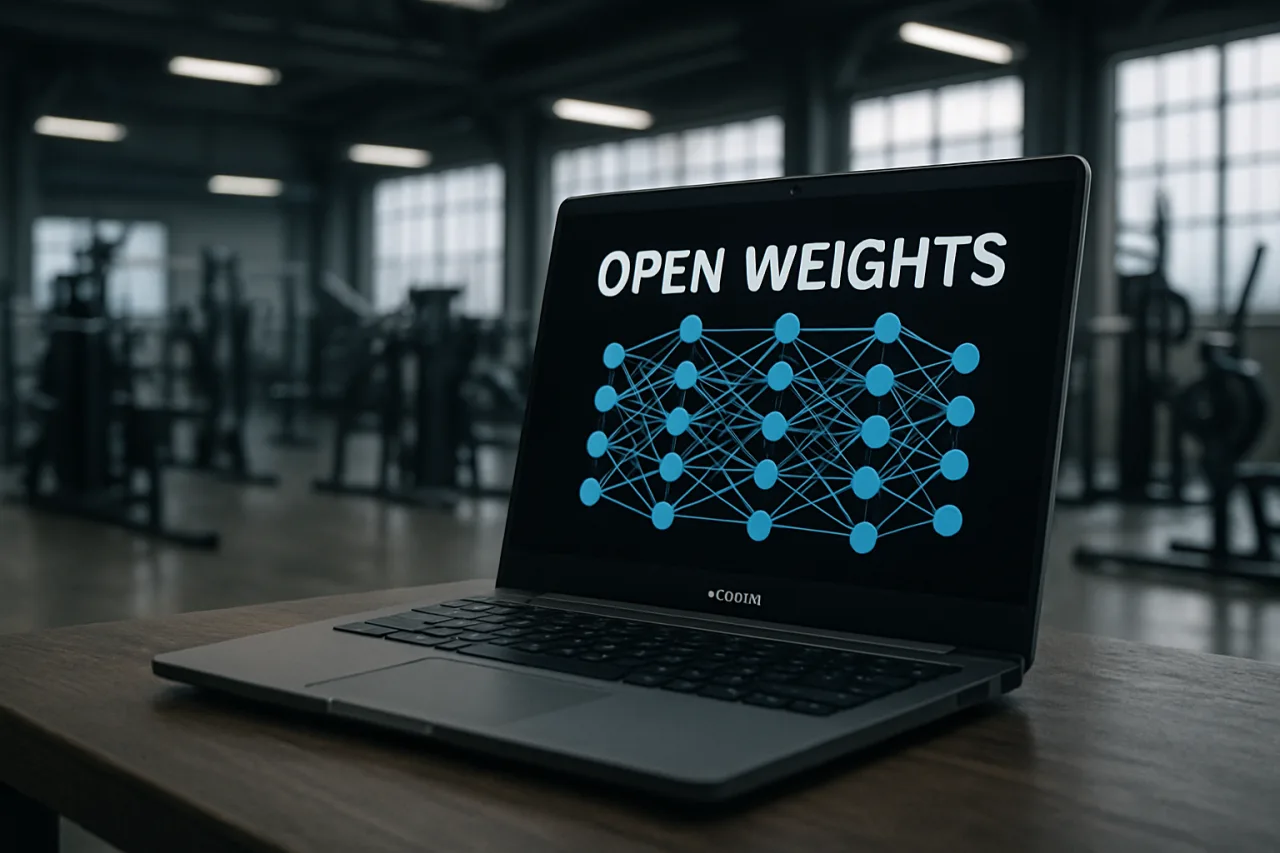
The open weights surge crossed its milestone this week, and it did not arrive as a press release from a famous lab — it arrived as a leaderboard result nobody can argue with: Xiaomi’s MiMo-V2.6-Pro took the top spot among 114 open-weights models on the Artificial Analysis Intelligence Index with a score of 46, putting an MIT-licensed model you can download today at the front of a field it entered only weeks ago. The numbers around it tell the story faster than any trend piece: the reinforcement-learning run behind Pro cost about $2.62 million and finished in under six days; the Flash sibling’s run cost $0.85 million; the API prices at $0.435 per million input tokens for Pro and $0.14 for Flash — a fraction of the frontier labs’ pricing from the same week’s price war. Cohere’s Command A+ sealed the enterprise lane: a 218B sparse mixture-of-experts model that runs on as few as two H100 GPUs, built for exactly the private, auditable deployments that corporate buyers require. This piece is the professional’s read on what the open-weights surge actually changed in September 2026 — who can now build what, at what cost, and where the Filipino freelancer, agency owner, or self-hoster should place a bet this quarter.

The Week the Open Weights Surge Took the Lead
Three drops in one week redraw the capability map. Xiaomi’s MiMo-V2.6 series (September 22): Pro and Flash weights published under MIT license on Hugging Face alongside the full reinforcement-learning stack — the RL code and 7,000+ task environments used to train them — making it the first time the complete recipe behind a #1 open model shipped in public; Pro runs a 1-million-token context over text, images, video, and audio, and Flash prices at $0.14/$0.28 per million tokens. Cohere’s Command A+ (May 2026 release, now the enterprise reference): a 218B sparse MoE designed for agentic workloads that needs only two H100 GPUs to run — the first open model positioned squarely for regulated, private-deployment buyers rather than hobbyists. The leaderboard context: Artificial Analysis now tracks 114 open-weights models, and the open weights field’s best — MiMo-V2.6-Pro at 46 — sits within striking distance of closed frontier scores while costing an order of magnitude less to run. The open weights surge is no longer the budget alternative on someone else’s benchmark; it is the value frontier on everyone’s benchmark.
WorldNgayon Analysis: The strategic shift is in who owns the recipe. When the #1 open model’s training pipeline — weights, code, environments — is MIT-licensed and downloadable, capability stops being a lab’s moat and becomes a community’s toolkit; every quarter this compounds, and September 2026 is when it became undeniable.
Bottom Line: The open-weights surge turned model downloads into capability purchases — $2.62 million bought a #1 leaderboard slot and gave the recipe away.
MiMo-V2.6 — the Anatomy of a $2.62M Leaderboard Run
The Pro model’s architecture explains why the run was cheap and fast: a hybrid sliding-window backbone with multi-token prediction, visual and audio encoders feeding one omnimodal stack, and a 1-million-token context window — the parts list of a model built for agentic work rather than chat demos. Xiaomi reports Pro scoring 46 on the Artificial Analysis index (independent benchmark coverage remains thin, which the practical reader should keep in mind), and the API pricing undercuts every closed frontier model by an order of magnitude: $0.435 per million uncached input tokens and $0.87 per million output for Pro; $0.14 and $0.28 for Flash. The RL story is the part with the deepest implications: the Pro run took under six days and about $2.62 million — and the Flash run about $0.85 million — with the environments and training code published for anyone to reproduce or fork. For a Philippine agency or a solo developer, the practical translation is direct: a model that handles text, images, video, and audio at a million-token context, downloadable and self-hosted, with an API fallback priced near zero — the tooling ceiling just moved from “what can I afford” to “what can I orchestrate” — and the AI World This Week archive tracks the weekly price war behind it.
Bottom Line: One week, one MIT license, one leaderboard — the open-weights surge proved frontier-adjacent capability is now a download away, with a training recipe attached.
Command A+ — Why the Enterprise Lane Opening Matters More Than Benchmarks
Hobbyist leaderboards decide headlines; procurement departments decide revenue, and Cohere’s Command A+ was built for the procurement path. The 218B sparse mixture-of-experts design activates a fraction of the network per token, which is why it runs on as few as two H100 GPUs — a hardware bill a serious mid-size company can actually approve — while Cohere positions it for complex reasoning per its Command A+ announcement, multimodal and multilingual agentic tasks, and private deployment where data never leaves the buyer’s walls. That last clause is the open weights surge’s quiet conquest: the compliance-sensitive sectors — banks, telcos, government-adjacent services, the BPOs serving all three — previously had no open option that checked the boxes, and Command A+ is built to check them. Its availability through Cohere’s standard API alongside private deployment means the same enterprise workhorse can start as a rented endpoint and end as a self-hosted deployment, which is exactly the migration path Philippine BPOs running client-data-sensitive accounts need when their multinational clients ask “where does our data actually go?” The market signal matches: the Artificial Analysis cohort now treats open-weights entries as mainstream candidates, not curiosities, and 51%-plus self-hosted mindshare in the adjacent media-server world shows where this appetite leads.
Bottom Line: The enterprise lane opened when the open option met the compliance checklist — Command A+ is that intersection, and it runs on hardware the buyer already prices.
What the Open Weights Surge Means for Filipino Builders
The arbitrage is the point, and it lands in three tiers. Tier one — the solo professional: an open-weights model on rented infrastructure (the VPS patterns this site publishes weekly) plus the MiMo Flash API for burst capacity gives you an AI stack with a fixed monthly cost smaller than one family dinner — the margin math that let one freelance writer lose a career in 2025 now lets one win it back with owned tools; the practical pattern is in the AI freelance impact analysis. Tier two — the agency: private deployment is now two GPUs or a beefy VPS away — a Manila shop can run Command A+ inside its own network, answer the data-residency question with architecture instead of promises, and sell “your data never leaves our infrastructure” as a differentiator the frontier API cannot match. Tier three — the BPO enterprise: the sector the PIDS AI adoption study found leading the country’s firm-level adoption (14.9% overall, concentrated exactly here) now has an open stack that makes the adoption decision about operations instead of licenses — the PIDS gap playbook maps the hiring side. Across all three tiers the pattern is identical: the open-weights surge converts AI capability from an operating expense paid to a foreign API into an asset owned on infrastructure you control — which is the same trade this site’s entire self-hosting line has been teaching with Vaultwarden, Immich, and Nextcloud.
WorldNgayon Analysis: The open-weights surge is the software-side mirror of the self-hosting movement: own the capability, rent only the electricity. Filipino builders who learned that muscle on a photo vault will learn it faster here.
Bottom Line: Capability is now downloadable, the recipe is public, and the monthly cost of running it is the same price class as the VPS guides already on this site.
The Caveats — What “Open” Does Not Include
Three honest limits keep this from being a utopia piece. Compute, not just weights: MiMo’s $2.62 million RL run is cheap by frontier standards and still beyond a startup’s budget — the open recipe lets you fine-tune and deploy, but the next leaderboard jump still belongs to whoever funds the next run; the hardware side stays locked in a supply-chain squeeze (Alibaba’s own 20-gigawatt-by-2032 target is explicitly limited by chip shortages). Benchmarks, not guarantees: the 46 score is Xiaomi’s reported figure, independent coverage is thin, and an index score says nothing about your task — run your own eval on your own data before betting a client project. Support, not community magic: open weights come with a Hugging Face repo and a changelog, not a support contract — the enterprise that self-hosts Command A+ owns the ops burden (updates, security patching, capacity) that a frontier API vendor otherwise sells as a service. The 12.0-versioning discipline in the adjacent Jellyfin ecosystem taught the same lesson: pin versions, read release notes, test before upgrading. Open is an architecture decision, not a free lunch — and in 2026 it is finally an architecture decision worth making.
Bottom Line: Open weights move the cost from licenses to labor — the teams that price the labor honestly are the ones the open weights surge rewards.
The Open Weights Scoreboard for Q4
One table to keep on the wall this quarter, with the response written next to each line. Watch one — the Artificial Analysis open-weights index: MiMo-V2.6-Pro at 46 is the number to beat; when a new open release passes it, evaluate for your stack within the week, because the leaderboard is now moving monthly. Watch two — API floor prices: Flash’s $0.14 per million input tokens is the reference point; any workload you run above roughly triple that price should have a documented reason. Watch three — enterprise deployment wins: each announced Command A+-class private deployment in banking, telco, or BPO is a signal the compliance lane has opened for good; agencies selling data-residency should track these the way sales teams track competitor pricing. Watch four — the hardware squeeze: chip shortage headlines (Alibaba’s supply-chain admission, the 20-gigawatt-by-2032 horizon) set the pace of the entire race — when supply loosens, self-hosting gets cheaper; when it tightens, API prices dip as vendors compete for the workloads that cannot wait. Four lines, five minutes a week, and the open weights surge stays a plan instead of a headline.
Frequently Asked Questions
What is the open-weights surge?
The rapid rise of fully downloadable AI models: Xiaomi’s MiMo-V2.6-Pro became the #1 open-weights model on the Artificial Analysis Intelligence Index (46, first of 114) with MIT-licensed weights published September 22, 2026, alongside the reinforcement-learning code and 7,000+ training environments — capability previously locked inside frontier labs now ships as a download.
How good is Xiaomi MiMo-V2.6?
Xiaomi reports a score of 46 on the Artificial Analysis Intelligence Index for Pro — the top open-weights result — with omnimodal input (text, image, video, audio), a 1-million-token context, and API pricing of $0.435/$0.87 per million tokens for Pro and $0.14/$0.28 for Flash. Independent benchmark coverage remains limited, so treat vendor numbers as a starting point for your own evaluation.
What is Cohere Command A+ used for?
Enterprise agentic workloads — complex reasoning, multimodal tasks, multilingual agents — with private deployment options: the 218B sparse MoE architecture runs on as few as two H100 GPUs, making self-hosted, data-never-leaves-the-building AI practical for compliance-sensitive companies at a fraction of closed-API lock-in.
Can a small Philippine business actually run open models?
Yes at the API tier today (Flash pricing is ~$0.14 per million input tokens) and yes on rented infrastructure for mid-size deployments; full self-hosting of frontier-class open models needs serious hardware (multiple H100-class GPUs) — the practical ladder is API first, fine-tuned open model second, self-hosted private deployment when the data-residency requirement or the volume justifies it.
Is open-source AI safe for client work?
With the same diligence as any infrastructure: pin versions, read the license (MIT is permissive; verify model-specific terms), run your own evaluation on your data, and keep the ops burden visible — patching, capacity, security. The teams that treat open models like the self-hosted services they already run will find the discipline familiar.
Financial Disclaimer: This article is for general information and education, not personalized investment or business advice. Prices, scores, and release details reflect vendor publications and secondary reports as of September 27, 2026. WorldNgayon.com is not an investment adviser; verify details with the primary vendors before making business decisions.