Table of Contents
Key Takeaway
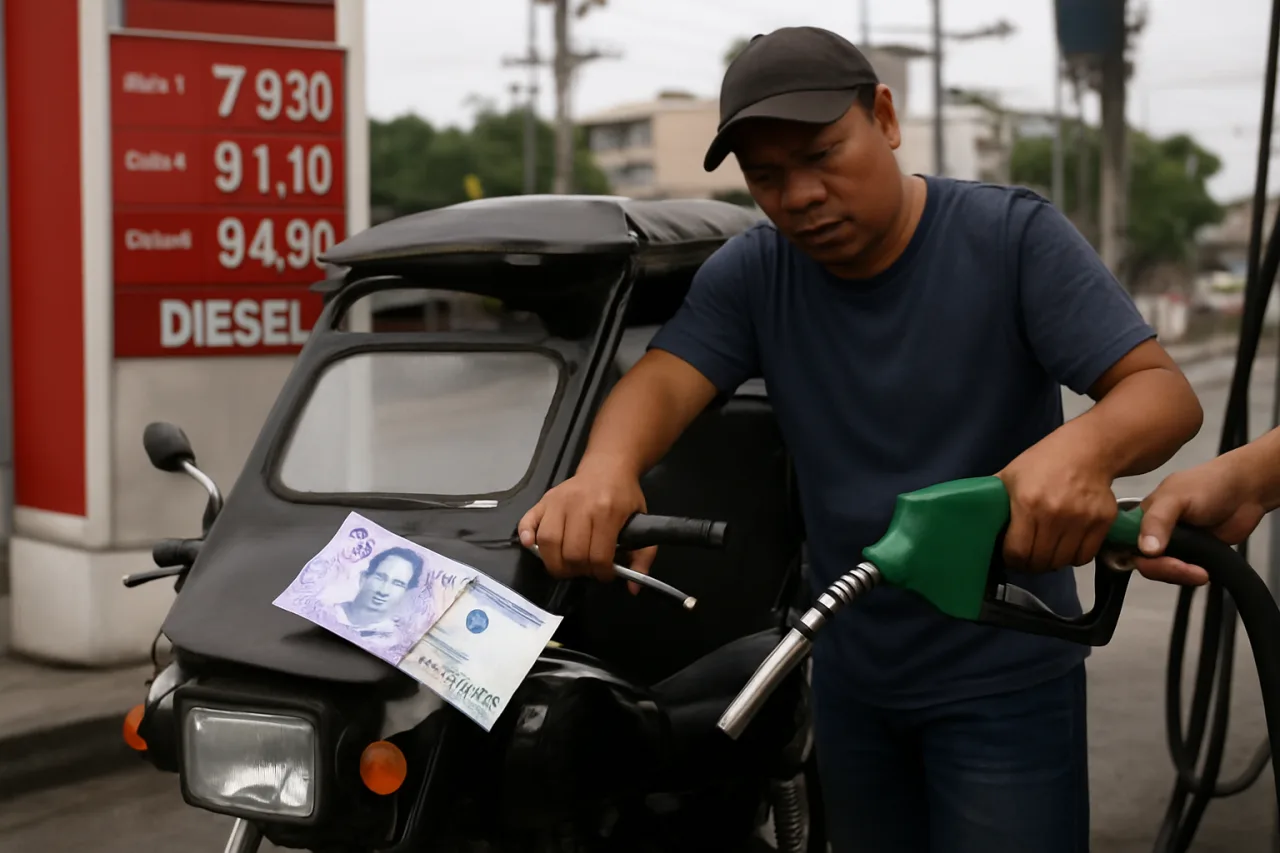
- ⛽ Tuesday’s pump prices jumped by the most in months: gasoline rose by up to ₱5.70 a liter and diesel by ₱4.30, pushing Metro Manila common retail prices to around ₱90.10 a liter for diesel — roughly 64% above pre-war levels, per Department of Energy monitoring.
- 🛢️ The barrel is driving it: Brent crude crossed $100 for the first time since July and touched $108 on September 14 after drone strikes shut Saudi Arabia’s East-West pipeline — a closure that threatens up to 4% of global oil supply.
- 💱 The oil price peso squeeze is double-barreled: the peso closed at a record-low ₱62.86 on September 14, so every imported fuel shipment costs more pesos even before the crude price rise shows up at the pump.
- 🧾 What to do this week: transport operators, logistics-dependent businesses and OFW families budgeting in pesos should re-cost September fuel lines now — analysts see the pressure lasting into the quarter, not ending Tuesday.
The price at the pump moved on Tuesday by more than it has in months — and the number on the sign is really two crises multiplied together. The oil price peso squeeze announced itself as the biggest fuel reset in months: retailers raised gasoline by up to ₱5.70 a liter and diesel by ₱4.30 effective September 15, after the Department of Energy announced the week’s adjustments on Monday, while Brent crude crossed the $100 line and kept climbing to around $108 as drone strikes closed Saudi Arabia’s East-West pipeline. On the same day, the peso closed at a record low of ₱62.86 to the dollar. Crude is priced in dollars; the Philippines buys crude in dollars and sells it in pesos. When the barrel and the peso move the wrong way in the same week, the pump price does not add — it compounds. Economists have a blunter name for the combination: an oil price peso squeeze.
This is the costliest fuel week since the conflict began, and the oil price peso squeeze is not a one-week event reshaping energy markets in late February, and it lands on every jeepney operator, delivery rider, logistics manager and household budget in the country at once.
The September 15 Hike, by the Numbers
| Product | Adjustment (₱/liter) | Metro Manila common retail price |
|---|---|---|
| Gasoline (RON95) | +5.70 | ₱91.40 |
| Gasoline (RON91) | +5.70 | ₱85.80 |
| Diesel | +4.30 | ₱94.40 |
| Kerosene | +4.62 | ₱124.52 |
Before the adjustment, DOE monitoring showed Metro Manila common retail prices at ₱85.70 for gasoline RON95, ₱80.10 for RON91, ₱90.10 for diesel and ₱119.90 for kerosene for the week of September 8 to 14. The prior week had already delivered a heavy hike — gasoline up ₱4.69, diesel up ₱5.18, kerosene up ₱5.58 — meaning two consecutive weekly increases in the ₱4 to ₱6 range. For scale: in the last full week before the fighting began on February 28, common retail prices ran ₱56 for RON95, ₱55 for diesel and ₱54.70 for RON91. Diesel at the pump is now roughly ₱40 a liter — about 72% — above where it stood when the year was still “normal.”
Estimates published before the DOE announcement ranged lower — Jetti Petroleum projected diesel up ₱2 to ₱2.50 and gasoline up ₱4.50 to ₱5 — and the actual increases came in above them, a signal of how violently the spot market moved between the estimate and the reset.
The Oil Price Peso Squeeze: Why Oil Crossed $100 This Week
The trigger chain is specific. On September 9, Brent settled above $100 for the first time since July after fresh attacks on oil infrastructure and shipping. On September 11, a drone strike launched from Iraq forced Saudi Arabia to shut the 1,200-kilometer East-West pipeline — the route that moves crude to the Red Sea precisely to avoid the congested Strait of Hormuz. Analysts peg the closure at up to 4% of global oil supply. By September 14, Brent was trading near $107.51 and WTI above $102 after renewed Houthi strikes on Saudi facilities and Iranian attacks on shipping, with Saudi crude exports already down to roughly 3.2 million barrels a day last month, per energy-market trackers — a volume not seen in more than a decade.
The second-order effects are showing up in the products Filipinos actually burn. Diesel has surged to record highs internationally, and Singapore jet fuel spot prices have exceeded $200 a barrel at points this year, according to Rice University’s Baker Institute, which has tracked the war’s energy aftershocks for the Philippines specifically. Asian refiners have cut runs as Gulf product flows tighten, and middle distillates — diesel and jet fuel — are the grades where the shortage bites hardest. The Philippines imports the bulk of its refined fuel, which converts every dollar of global product inflation directly into pesos at the pump.
Oil markets are not uniformly bearish on where this ends. ING analysts maintain a base case of $80 Brent for the final quarter, noting sizeable volumes still transit the strait; HSBC raised its 2026 Brent forecast to $90 as the crisis drags on; other houses see $120 scenarios if a full Hormuz closure materializes. The spread between those views is the risk budget every fuel-dependent business is now managing.
The Peso Side of the Oil Price Equation
The pump-price math fails without the second variable. The second half of the oil price peso squeeze showed up in the currency market: the peso weakened 18 centavos on September 14 to close at ₱62.86, past its previous record close of ₱62.68 on September 11, and touched ₱62.875 intraday. Economists cited by ABS-CBN see ₱63 within the week, and year-end talk has drifted toward ₱64. Two forces feed the slide: the strong-dollar environment as the US Federal Reserve holds rates higher for longer, and the oil shock itself — a country that pays more dollars for energy sees its currency come under corresponding pressure.
That feedback loop is the quiet danger at the heart of the oil price peso squeeze. Higher oil worsens the trade balance; a weaker peso makes the next oil shipment more expensive; the pump price resets higher again. Households experience it as a tricycle fare increase and a delivery surcharge, never seeing the mechanism. Remittance-dependent families feel a partial offset — every dollar sent home now converts to more pesos — but the peso’s weakness is itself a symptom of the same global pressures squeezing the fuel bill. Our earlier breakdown of the peso slide covers that ledger in detail.
Who Feels the Oil Price Peso Squeeze First — and What to Do Now
The oil price peso squeeze hits transport first: jeepney and tricycle operators facing diesel line items that have grown by a third since February, delivery riders whose weekly fuel spend now competes with food budgets, and logistics firms whose contracts were priced before $100 oil. The second wave is retail: carriers pass costs to shippers, shippers to merchants, merchants to shelves. The government’s response levers — fuel subsidies for franchised transport, targeted vouchers — exist but move slowly relative to weekly price resets.
Practical moves against the oil price peso squeeze, given two consecutive big hikes and forecasts that pressure persists: consolidate errands into fewer trips; for operators, re-cost routes and consider a fare or delivery surcharge conversation now rather than after margins break; for small businesses with delivery-dependent revenue, renegotiate fuel-escalation clauses before the next reset; for households, budget fuel lines at the new ₱90-plus diesel level for September, not the August average. Drivers of diesel vehicles should also compare stations weekly — retail spreads widen in volatile markets, sometimes by ₱1 to ₱2 a liter.
Budget discipline matters more than timing the market. Nobody knows whether Brent spends October at $85 or $120 — the analyst spread covers both — but every scenario keeps the peso under strain and the pump above pre-war levels. The planning assumption that survives all scenarios is simple: fuel is a bigger line item now, and the budget that ignored that fact in August will feel it in October.
The OFW Ledger: Dollars Up, Peso Bills Up
For families split across currencies, the oil price peso squeeze cuts both ways at once. The dollar side is good news on paper: at ₱62.86, every $500 remittance converts to about ₱31,430 — thousands of pesos more than the same transfer bought a year ago, which is why remittance-receiving households have felt a cushion even as prices rose. The peso side is the bill shock: a family that drives 60 kilometers a week in a diesel car spent roughly ₱1,400 a month on fuel at pre-war prices; the same driving now costs more than ₱2,300, and delivery-inflated food prices nibble at the rest. The net position depends on which side of the ledger is bigger, but the direction is the same for everyone — the purchasing power of a fixed peso salary is shrinking, while only dollar earners enjoy the counterweight.
The strategic answer for dollar earners is the one remittance analysts have repeated all year: send on schedule, not on rate hunches, and bank the windfall into goals that outlast the cycle — school fees, emergency funds, small assets — rather than absorbing it into weekly spending that will not shrink when the peso strengthens again.
What Manila Can and Cannot Do About It
Presidents can jawbone OPEC; they cannot vote the barrel down. The government’s levers against the oil price peso squeeze are narrower than public frustration demands. On the fuel side, the tools are targeted relief — fuel subsidies for franchised public transport, Pantawid-type distributions when pump thresholds trigger, and strategic stock monitoring — all of which cushion specific groups but cannot compress the global price that sets the reset every Tuesday. On the currency side, the BSP has already lifted its policy rate to 5% this year to defend purchasing power, and further tightening trades growth for peso stability; the central bank has also stepped into the market at times to smooth the slide, a tactic that spends reserves and buys time rather than changing direction.
Structural answers are slower than the weekly reset. Every electric jeepney that replaces a diesel unit, every solar installation that shaves a factory’s grid draw, and every logistics route optimized out of the network is a permanent reduction in the country’s exposure to the Gulf’s next bad week. The Philippines’ fuel import bill is a structural position built over decades, and the exit is equally slow — which is why every oil shock since the 1970s reads like a rerun with new actors.
For the reader, the honest takeaway is that policy cushions; it does not shield. That is the rhythm of every oil price peso squeeze: the subsidy arrives after the fare has already risen; the peso intervention smooths the path but does not reverse it. Planning on cushions is a strategy; planning on shields is a hope.
Frequently Asked Questions About the Oil Price and Peso Squeeze
What is the oil price peso squeeze?
It is the compounding of two simultaneous shocks: world oil rising above $100 a barrel on war-driven supply disruptions, and the peso falling to a record low near ₱63 against the dollar. Because the Philippines imports fuel in dollars and sells it in pesos, both movements push pump prices up together — the current squeeze combines record dollar oil with a record-weak peso.
How much did fuel prices increase on September 15, 2026?
Gasoline rose by up to ₱5.70 per liter, diesel by ₱4.30, and kerosene by ₱4.62, effective Tuesday, September 15, following DOE-announced adjustments. It was the second consecutive week of large increases, after gasoline rose ₱4.69 and diesel ₱5.18 the week before.
Why are oil prices above $100 again?
The US-Iran conflict has disrupted shipping and infrastructure: attacks on vessels in the Strait of Hormuz, Houthi strikes on Saudi facilities, and a September 11 drone strike that shut Saudi Arabia’s East-West pipeline — a closure analysts estimate threatens up to 4% of global oil supply. Brent crossed $100 on September 9 and traded near $108 by September 14.
What is the peso exchange rate now?
The peso closed at a record low of ₱62.86 per dollar on September 14, 2026, after touching ₱62.875 intraday. Economists expect it to test ₱63 within the week, with some year-end forecasts at ₱64.
Does the weak peso make fuel more expensive?
Yes. The Philippines imports most of its refined fuel and pays in dollars, so a weaker peso raises the peso cost of every shipment even at a constant dollar price. The current squeeze combines both effects — record dollar oil and a record-weak peso.
Will fuel prices go down soon?
Forecasts diverge: ING holds an $80 Brent base case for Q4 assuming Hormuz flows stay open, HSBC raised its 2026 forecast to $90, and escalation scenarios reach $120 or more. No credible analyst expects a return to pre-war pump prices while the conflict continues.
How can transport operators and small businesses cope?
Re-cost routes at current diesel prices, open fare or surcharge conversations before margins break, negotiate fuel-escalation clauses into delivery contracts, compare retail stations weekly as spreads widen in volatile markets, and plan budgets on the new ₱90-plus diesel level rather than pre-war averages.
Financial Disclaimer: This article is for informational and educational purposes only and does not constitute financial advice. Fuel prices, exchange rates and market forecasts change rapidly; readers should verify current figures with official sources before making financial decisions.