Key Takeaway
- 🏦 The Japan residence fee revision takes effect October 1, 2026 — permanent residency applications rise from ¥10,000 to ¥200,000 (20×).
- 📅 Applications accepted by September 30, 2026 pay the old fees — even if approval comes months later.
- 🧾 Extensions and status changes leave the flat ¥6,000 rate and move to tiered fees by permitted period — roughly ¥10,000-¥15,000 for short grants, up to ¥70,000-¥75,000 for five-year stays.
- 💳 Online applications pay by convenience store or bank only — no credit card, no QR — with a ¥330 payment charge added.
- 🧮 An OFW family filing two applications can save the price of a plane ticket by beating the deadline — that is the action this week.
Table of Contents
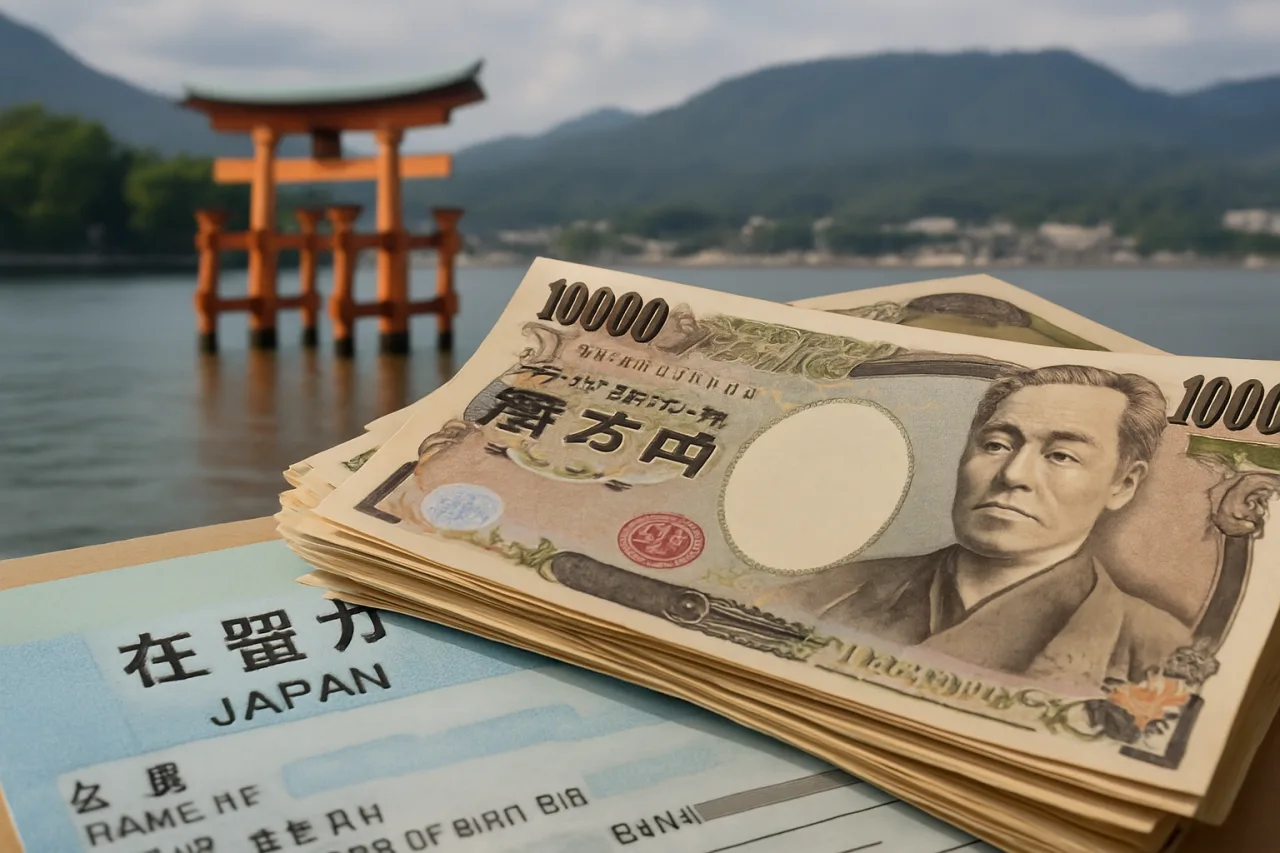
The Japan residence fee revision is now law, and Filipinos who built a life in Japan have until the last day of September to make a decision that saves them up to ¥190,000 — about ₱71,000. The Immigration Services Agency of Japan published the revision that Cabinet adopted on August 25, 2026: from October 1, the residence fee schedule changes, and the biggest single jump lands on the document most Filipino workers chase after years of paying taxes — permanent residency. The application fee rises from ¥10,000 to ¥200,000, a twenty-fold increase, the sharpest single move in the whole table.
The Full Fee Change, Line by Line
For years the system was almost invisible in its simplicity: one application for extension or change of residence status cost a flat ¥6,000 when filed on paper (¥5,500 for most online filings), whether the permit granted was three months or five years. That uniform rate disappears on October 1. The new structure prices each permission by how long it lets you stay, with the Ministry of Justice’s published table showing the following for online applications received on or after October 1: a grant of three months or less costs ¥10,000; three to six months costs ¥15,000; and the scale continues climbing with the length of the permit — roughly ¥30,000-class for one-year grants and up to ¥70,000-¥75,000 for five-year grants, with a separate ¥330 payment processing charge on top for online filers.
The jump that reshapes family budgets is the permanent residency application: ¥10,000 becomes ¥200,000. For a Filipino engineer in Nagoya who planned to file for PR next spring, that is a planned expense of about ₱3,700 becoming about ₱74,000 at current rates — overnight. Renewal and change-of-status fees climb on the same day, and the visa sticker itself rises to ¥15,000 for a single-entry visa for visitors, a five-fold increase that touches the family members an OFW sponsor visits with.
One detail changes everything for timing: the fee you pay is set by the day your application is accepted, not the day it is approved. The Ministry of Justice states plainly that applications received by September 30, 2026 pay the pre-revision fees even if permission is granted months later. That single sentence is worth ¥190,000 to a PR applicant who files this week.
Why Japan Moved Now — the Story Behind the Japan Residence Fee Revision
The official reasoning is cost recovery: the Immigration Services Agency runs residency processing, border screening, and the new digital infrastructure that the foreign-resident population now demands, and the government argued the flat ¥6,000 fee — unchanged for years while processing costs climbed — no longer reflected the actual cost of a five-year review, which involves income verification, tax records, and background checks across multiple agencies. The Justice Ministry’s proposal had been presented to the ruling party’s panels as early as June 24, 2026, with the ordinance adopted by Cabinet on August 25 and published with the full schedule. NHK’s report on the Cabinet decision confirms the move, and non-Japanese residents now exceed three million, and each procedural category the agency handles carries its own processing weight — the table prices that reality.
For Filipino readers the policy matters more than the politics. Japan is the second-largest concentration of Filipino workers abroad after the Middle East, with tens of thousands on engineer/specialist-in-humanities, specified skilled worker, and nursing/carework paths — statuses that renew on one-to-five year cycles. Every renewal, every status change to a better job class, every PR application after the ten-year tax record is complete — all of it now carries the new price tag from October 1.
The OFW Math: What the Japan Residence Fee Hike Costs in Pesos
Convert the headline changes and the family conversation becomes concrete. At roughly ¥1 = ₱0.37:
- PR application: ¥10,000 → ¥200,000 — a jump of about ₱70,300 per application. A married couple filing separately pays double.
- Five-year extension (engineer track): flat ¥6,000 → up to ¥70,000-¥75,000 — about ₱23,700-₱25,500, versus roughly ₱2,200 before.
- One-year renewal (the most common careworker and SSW grant): ~¥30,000 — about ₱9,000, versus ₱2,200.
- Status change to a better qualifying status — the move many OFWs make from SSW track to engineer track — prices on the same tiered schedule.
A household where both spouses renew and one applies for PR in the same quarter faces a combined increase approaching ₱95,000 — most of a plane ticket home, arriving in a single procedure season. That is the budget line that earns its place in the family spreadsheet.
What To Do Before September 30 — and What To Do If You Cannot
If your renewal or PR application is ready or nearly ready: file now. The rule is acceptance-day pricing, so an application accepted by September 30 locks the old fee regardless of approval date. Immigration processing for PR routinely takes months — that lag now works in the filer’s favor if the envelope beats the deadline. Online filers should note the payment methods: convenience-store or bank payment only, no credit card and no QR code, with the ¥330 processing fee added; prepare the payment step so a payment failure does not push acceptance past the deadline.
If you cannot file by the deadline: the increase is not a barrier to status — it is a cost of the service. Budget it, and weigh one consideration seriously: PR applications are judged on a ten-year record of tax and pension compliance, so an application delayed by one month to gather a missing tax certificate costs ¥190,000 more only if it crosses October 1. The savings from rushing an incomplete application are zero — Immigration can reject and re-charge — so the correct move is complete-and-file if possible, complete-and-budget if not.
Employers and staffing agencies handling renewals for Filipino workers should sweep their caseloads now: every worker whose card expires in November or December is a September-30 candidate. The ¥190,000 difference between complete paperwork filed this week and the same paperwork filed next month is the kind of number that decides whether an employee appreciates HR or resents it.
The Wider Signal for Filipino Workers Abroad
Japan is not hostile — the fee revision lands alongside the country’s expanding specified-skilled-worker intake, and the government frames the revenue as funding faster processing and better digital services. Read it as the maturing of a system: the era of symbolic immigration fees is ending across high-income economies, and residence itself is becoming a priced service. The OFW response is what it has always been — verify the facts from the official source, act inside the window when acting is cheap, and treat documentation as the asset it is. The ten-year record that earns a Filipino PR in Japan took years of tax filings to build; the ¥200,000 that protects it is real money, but it is the smallest line in the ledger of what that record already earned.
Key Facts Table
| Procedure | Old fee | New fee from Oct 1 | OFW impact (₱) |
|---|---|---|---|
| Permanent residency application | ¥10,000 | ¥200,000 | +₱70,300 |
| Extension / status change — 3 months or less | ¥6,000 flat (¥5,500 online) | ¥10,000 | +₱1,500 |
| Extension — 3 to 6 months | ¥6,000 | ¥15,000 | +₱3,400 |
| Extension — 1 year class | ¥6,000 | ~¥30,000 | +₱8,900 |
| Extension — 5 years | ¥6,000 | up to ¥70,000-¥75,000 | +₱23,600-25,500 |
| Visa sticker (single) | ¥3,000 | ¥15,000 | +₱4,400 |
Figures from the Ministry of Justice revision announcement and Cabinet ordinance of August 25, 2026, effective October 1, 2026; peso conversions at ₱0.37/¥ and rounded.
The Remittance Connection: How the Hike Ripples Back to Manila
A fee increase in Tokyo is a line item in a remittance plan in Quezon City. The Filipino workers affected most — PR applicants and five-year-track engineers — are precisely the households whose remittances anchor budgets back home. A ¥200,000 PR application is a month of disciplined savings diverted from an investment account into a government fee; a ¥70,000 renewal is a missed tuition installment if it arrives unplanned. The correct response is not alarm but scheduling: the fee schedule is published years’ worth of dates in advance, and a family that knows its renewal calendar can split the impact across two remittance cycles instead of one.
There is also a currency layer. Yen earnings convert to pesos at the OFW’s chosen rate and channel; a ¥200,000 payment moved through the cheapest remittance channel saves more in fees than a rushed transfer would. The household that treats the October 1 deadline the way it treats tuition — scheduled, budgeted, never a surprise — converts a policy change into a calendar entry.
Questions Filipino Workers in Japan Are Asking Their HR Offices
Three questions dominate the conversations in Filipino community groups from Nagoya to Yokohama this week. First: does the fee change affect the Certificate of Eligibility application that employers file before a worker arrives? No — the COE procedure keeps its own schedule; the revision prices permissions granted after arrival. Second: does an employer have to pay the new fees? The fee follows the applicant, not the employer, though company-paid relocation policies increasingly cover residence costs the way they cover rent. Third: does filing online change the price? No — the tiers are identical; online filings add the ¥330 payment processing charge and require convenience-store or bank payment.
The fourth question is the one with money attached: is there any way to avoid the ¥200,000? The honest answer is the September 30 acceptance rule — the only legitimate discount is the calendar. No agent, no fixer, and no expediter changes the published schedule, and the applications that matter are judged on their paperwork, not on who carries the envelope.
Frequently Asked Questions
Does the new fee apply if my application is still pending in October?
No. Pricing follows the acceptance date: applications received by September 30, 2026 pay the old schedule even if approval arrives later.
Does the PR fee change apply to a spouse’s application too?
Yes — each application carries its own fee, so a couple filing two PR applications faces ¥400,000 from October 1 versus ¥20,000 before.
Can I pay the online application fee with a credit card?
No. Online applications pay by convenience-store or bank payment only, with a ¥330 processing charge added.
Do these fees apply to tourist visas?
The single-entry visa fee rises from ¥3,000 to ¥15,000; the change covers residence procedures and visa issuance, not the Certificate of Eligibility process itself.
Is there any exemption for long-term taxpayers?
The published revision prices by procedure, not by years paid — the ten-year record determines approval, and now also determines how much the approval costs.
What happens to my ¥200,000 if the PR application is denied?
Immigration publishes no automatic refund for denials after full review, which is the strongest argument for filing complete paperwork: the fee pays for the review, not the outcome. A denial on missing documents is the most expensive way to learn a lesson.
Should I hire an administrative scrivener (gyoseishoshi) to file?
Many Filipino applicants do, and the scrivener fee is separate from the government fee — the government fee is set by the table above regardless of who files. What matters this week is the acceptance date, whether the envelope is stamped by you or by a professional.
Where is the official fee table published?
The Immigration Services Agency publishes the revision schedule and the online-application fee table on its official site (moj.go.jp), including the acceptance-date rule and the payment methods.
Financial Disclaimer: This article is for general information only and is not professional financial or legal advice. Immigration procedures and fees change; verify current requirements with the official Immigration Services Agency of Japan or a licensed administrative scrivener before acting.