Key Takeaway
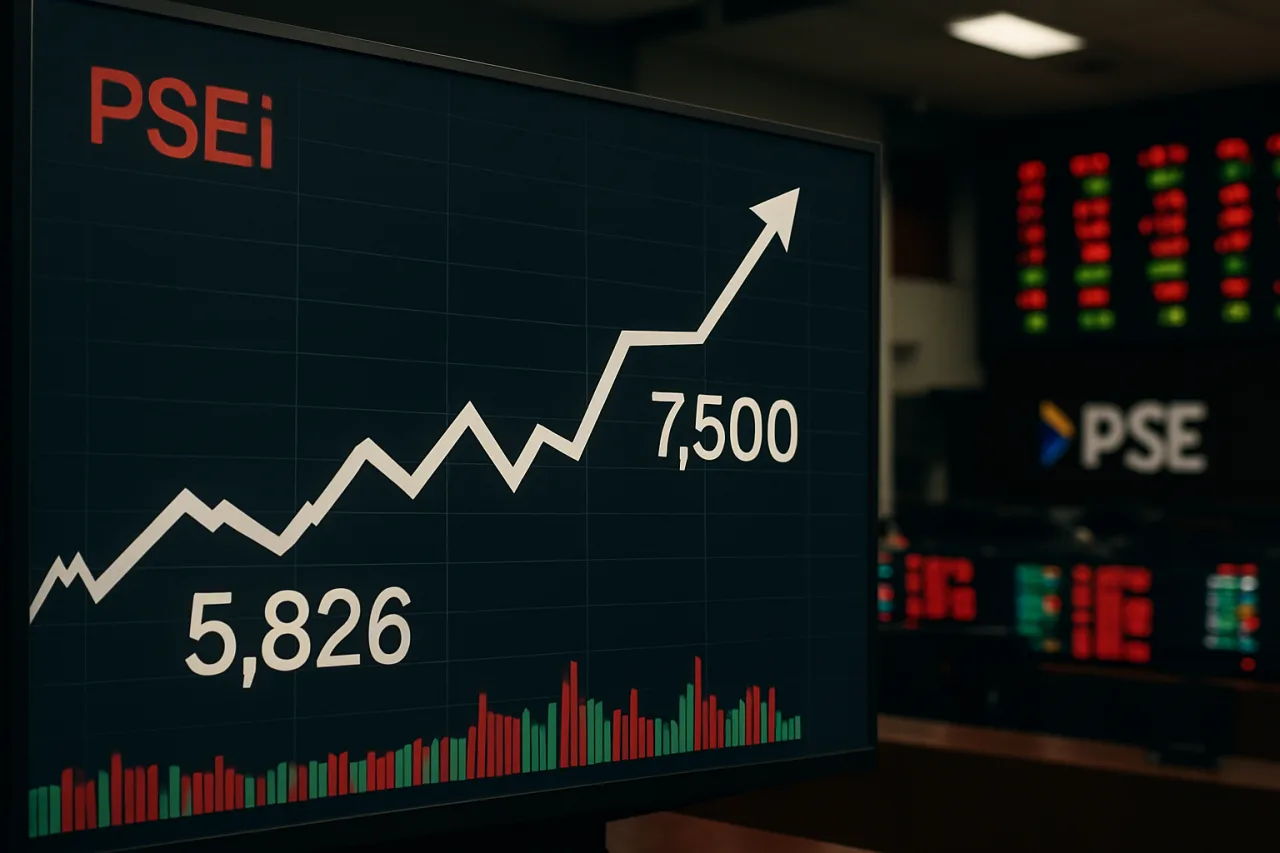
- 📊 Friday closed flat by a thread: PSEi 5,629.03 (−0.01%) on ₱5.55B traded — the market is treading water one trading day before the biggest liquidity drain of the year.
- 🚪 The GCash IPO liquidity lock opens tomorrow, 9:00 a.m. Tuesday, and runs to noon-sharp Monday, October 12 — every peso parked for GCASH allocation is a peso not fighting in the secondary tape.
- 🎯 The 5,600 threshold band is live: a break opens an air pocket toward 5,500 while the queue drains cash; a reclaim of 5,700 would signal the squeeze tape.
- 🗓️ The whole week is event-loaded: GCash allocations Tuesday, Ethereum’s Glamsterdam fork 9:53 PM Tuesday, US Fed minutes Wednesday, and first post-window tape Friday.
- 🧭 The OFW playbook stays boring on purpose: fund in advance, subscribe early in the GCASH window, hold no leverage through the band, and let the calendar — not emotion — set the trades.
Market strip (Friday, Oct 2): PSEi 5,629.03 −0.44 pts (−0.01%) · value traded ₱5.55B · intraday: opened 5,653.42, touched +0.42% by mid-morning, faded to flat · breadth 77 advancers / 109 decliners · month-to-date PSEi −7.26%. Data: PSE edge disclosures, Trading Economics index tape, and First Metro Securities’ close note.
The Tape in One Paragraph: a Market Waiting for Tomorrow
GCash IPO liquidity is the lens for every number below — because Friday was a do-nothing session by design. The index opened 24 points higher, spent the morning near 5,652, and gave all of it back to close 0.44 points lower at 5,629.03 — a −0.01% day on ₱5.55B of trading that feels heavier in the averages than it looked at the close. Breadth told the real story: 77 advancers against 109 decliners means the flat index hid mild distribution underneath. This is what a market looks like when it is holding its breath: month-to-date the PSEi is down 7.26%, the year-over-year gap is −7.85%, and everyone from treasurers to tricycle drivers knows what tomorrow brings — subscription day for the largest IPO in Philippine history. Cash is being counted and earmarked, not deployed. The tape is quiet because the queue is loud.
Related: PSE Watch #013: the GCash IPO Week’s First Stress Test — the 5,700 She
Why GCash IPO Liquidity Week Changes the Math
Here is the GCash IPO liquidity problem in one sentence: the offer window that opens tomorrow (October 6–12, at the final ₱6.60 price) will absorb tens of billions of pesos into a frozen subscription account — money that cannot chase stocks — the GCash IPO liquidity lock-up in its purest form, average down dips, or defend the index band while it waits. Our October 1 watch sized the queue at roughly ₱53B of potential retail-plus-cornerstone interest, and the cornerstone book already locked 68.8% of institutional demand at the anchor price. Until allocations are confirmed (expect results around October 13–16) and refunds or excess subscriptions flow back, the secondary market is trading with one hand tied. Two mechanical consequences follow. First, thin tapes exaggerate moves both directions — band breaks get uglier, and genuine bounces get sharper. Second, the calendar now has a built-in cash-return date: October 20, listing day, when allocation money finally becomes equity and unallocated cash returns to circulation. PSE Watch reads that as a mid-month liquidity trough with a known end date — which is a planning input, not a panic signal.
The 5,600 Band: the Threshold Map Is Live
Friday’s PSE dynamic threshold review mapped the three bands the exchange’s new circuit logic watches — and the index now sits inside the lower one. Levels that matter this week:
- 5,600 — the first tripwire. Friday closed 29 points above it on flabby breadth. A close below 5,600 while ₱53B sits queued would confirm the liquidity-trough tape — expect the GCash IPO liquidity air pocket toward 5,500 before any orderly bounce.
- 5,700 — the squeeze trigger. Reclaiming it (index has not closed above 5,700 since late September) flips the reading: short-covering into a thin tape can run faster than the tape deserves. Squeeze rallies are for selling into, not chasing.
- 5,500 — the capitulation shelf. Only in a no-GCash-cash + band-break scenario. If the tape ever prints here, the threshold review’s cascade rules — not gut feel — should drive every order.
The honest caveat: these are liquidity-conditioned levels, not predictions. The queue drain distorts everything until October 13–16; the map is built to survive that distortion, not to deny it.
The Monday Order Map: 5 Checks Before You Touch Anything
- Fund-split rule. Money committed to the GCASH subscription (via the in-app GStocks lane or your broker) must already be settled and untouchable. The remaining pool is the only cash allowed to trade the secondary tape this week. Mixing them is how accidental overexposures happen.
- Subscribe early, not at noon Monday. The window closes 12:00 noon sharp on October 12 — and last-day exchange queues historically spike on 10-figure IPO demand. Early-window subscription also buys you the clearest refund path if allocations come back short.
- No leverage through the band. A thin-tape 5,600 break with a full subscription queue is precisely the condition where margin desks get harvested. If a position depends on borrowed money, size it down before the band tests, not after.
- Value-average only into strength days. If you accumulation-mode into the trough, do it on the calm sessions (Tuesday and Wednesday mornings, before US data) — never into a 5,600 break.
- Dividend names are a different asset this week. High-payout holdings don’t care about the GCash queue; their Oct–Nov declarations get paid regardless. Defensive income sizing here beats index-timing heroics.
The Week Ahead: Every Date That Moves Money
Tuesday, October 6 — GCASH offer window opens 9:00 a.m.; subscription taps go live in-app and across brokers; Ethereum’s Glamsterdam fork activates 9:53 PM Manila (fees on testnet; mainnet expected within the quarter — see our separate fee-morning explainer).
Wednesday, October 7 — US Fed minutes land (the odds-flip document that already redrew peso thinking); watch how the index digests a 5,600 test with the queue at full depth.
Thursday–Friday, October 8–10 — first tape sessions with subscription money fully parked; GCash allocation expectations start getting priced and gossiped; watch value turnover as the GCash IPO liquidity trough indicator.
October 13–16 — expected GCASH allocation confirmations and refunds; October 20 — listing day under ticker GCASH, the week the cash comes home. The GCash October playbook carries the full timeline with the subscription arithmetic.
What This Means for the OFW Portfolio
For the overseas Filipino with a ₱10,000–₱100,000 tranche this month, the week has exactly three money moves, and none of them require watching a ticker: (1) complete the GCASH subscription inside the window if an allocation was the plan — this is a once-in-a-decade float at a ₱6.60 entry, and the drill page walks every tap on every platform; (2) hold the remaining peso pool in interest-bearing sweep or high-yield digital-bank parking until the allocation results define your real cash position — the parking yield is the fee the GCash IPO liquidity trough pays you for waiting; (3) do nothing dramatic in the secondary tape until the band resolves. PSE Watch has said it for three weeks running: this phase of the GCash IPO liquidity cycle rewards accounts that are funded, verified, and patient. The GCash IPO liquidity week is a cash-location contest, and the boring answer — pre-funded, early-subscribed, unleveraged, parked — is the one that wins it.
The Refund Week Playbook: October 13–20
Most coverage ends at the subscription deadline; the money week actually has two acts left, and both are GCash IPO liquidity events. Act one is allocation week, October 13–16: the issuing desk finalizes who received what, unallocated cash unwinds back to subscriber accounts, and the exchange’s books normalize ahead of the listing. For the secondary market the practical signal is watchable — peso liquidity that was frozen comes home in tranches, turnover picks up through the week, and the tape’s depth returns session by session. Act two is listing day itself, October 20: allocation money converts into a tradable security, and two audiences collide — subscribers who were never market participants buying their first ticker, and traders positioning around the debut. History’s honest lesson from Philippine mega-listings is that debut-week tapes are volatile in both directions and that refund-week flows favor the boring trades: parking yields, staggered averages, and patience. Plan the calendar around these two acts and the week stops feeling like fog.
A Worked Example: one OFW’s ₱25,000 Through Liquidity Week
Numbers beat advice, so here is an honest case. An overseas worker with ₱25,000 committed for the month enters the week like this: ₱6,600 funds a GStocks subscription for one board lot of GCASH at the final ₱6.60 (any unfilled portion returns during allocation week); ₱12,000 stays in a two-tranche peso-parking split — half available for a value-average if the tape calmly offers the 5,500–5,600 zone on a no-panic session, half untouched until after listing day; the remaining ₱6,400 keeps the family budget whole, which is the move that makes every other move safe. If the fund breaks 5,600 with panic breadth, the parked half simply waits for stabilization — the queue’s frozen cash plus the family’s untouched tranche are the discipline. The point of the worked example is not the splits; it is that a GCash IPO liquidity week is survivable for any tranche size when every peso has a job and a date before the week begins.
The parking-yield math inside the wait
The quietest profit in the strategy is the one nobody posts about: the parked tranche earns while it waits. Philippine digital banks have been paying 4–6% annualized on peso savings through the September rate cycle, and liquidity-tight weeks like this GCash IPO liquidity lock are precisely when their onboarding promos spike — meaning the ₱12,000 parking tranche in the worked example above earns roughly ₱40–₱60 for the two weeks of the window, and the family-tranche buffer earns its own yield as a separate account. Scale that to the actual OFW book: a ₱100,000-month remitter parking ₱60,000 through the subscription cycle captures about ₱200–₱300 of yield that a passive checking balance simply donates to the bank. The move takes about ten minutes: open or top up the high-yield account before the window opens, sweep the parking tranche, and let the calendar do the compounding. It is the opposite of trading heroics — and inside a thin, queue-drained tape, boring yield on parked pesos beats brave losses on forced trades more often than anyone tweets.
Date Beads: the three circles for your calendar
① October 6, 9:00 a.m. — the GCASH window opens; the funded-and-verified reader taps subscribe before the week crowds the queue. ② October 7, evening Manila — the Fed minutes land on a full-queue tape; the 5,600 band’s first real test is likely this session or the next. ③ October 20 — listing day: the cash-and-refund cycle completes, and the market’s normal depth is measure again. Everything else this week is noise between these three beads.
Frequently Asked Questions
Is the PSEi closed for a holiday on October 6, 2026?
No — Tuesday, October 6 is a normal trading day (the regular 9:30 a.m.–12:00 p.m. and 1:00–2:45 p.m. schedule), and the GCASH offer opens the same morning across subscription channels.
Will the GCash IPO really drain the market?
Partially and temporarily. Roughly ₱50B+ of subscription interest gets frozen between October 6 and allocation week; historical mega-IPO weeks show index tapes flattening and thinning until refunds flow. It is a measurable cash-location event, not a bearish thesis.
When do GCash IPO allocations come out?
Expect confirmations in the October 13–16 window after the October 12 noon close, with refunds for unallocated portions flowing right after — ahead of the October 20 listing.
What should I do if the PSEi breaks 5,600 this week?
Follow the threshold map: no new leveraged positions, let the air pocket print, and only begin rebuilding on a stabilized reclaim — liquidity troughs punish impulsive averaging most.
Which PSE Watch edition covers the threshold bands?
The Friday review did — see the PSE dynamic threshold order map for the three-band mechanics and the exchange-side rules behind this week’s levels.
Does the GCash IPO liquidity drain affect remittance timing?
Indirectly, yes. Peso-parking rates on digital banks tend to firm up when local liquidity tightens, so funds waiting in the Philippines this week may earn slightly better holding yields — check your digital-bank rate before the window closes, and remember allocation refunds flow back the week of October 13–16.
OFW Money Starter Kit: the budget templates, remittance comparator, and the scam-check card — free, 30 seconds to grab. Get the kit here.
Financial Disclaimer
General information only — not financial advice. Market levels, IPO terms, and timelines reflect public disclosures and reporting as of October 2, 2026, and yield to official PSE, issuer, and regulator documents. IPO allocations may be scaled and refunds delayed; equities involve loss risk, and past tape behavior does not guarantee future results. Consult a licensed financial advisor for personal decisions.