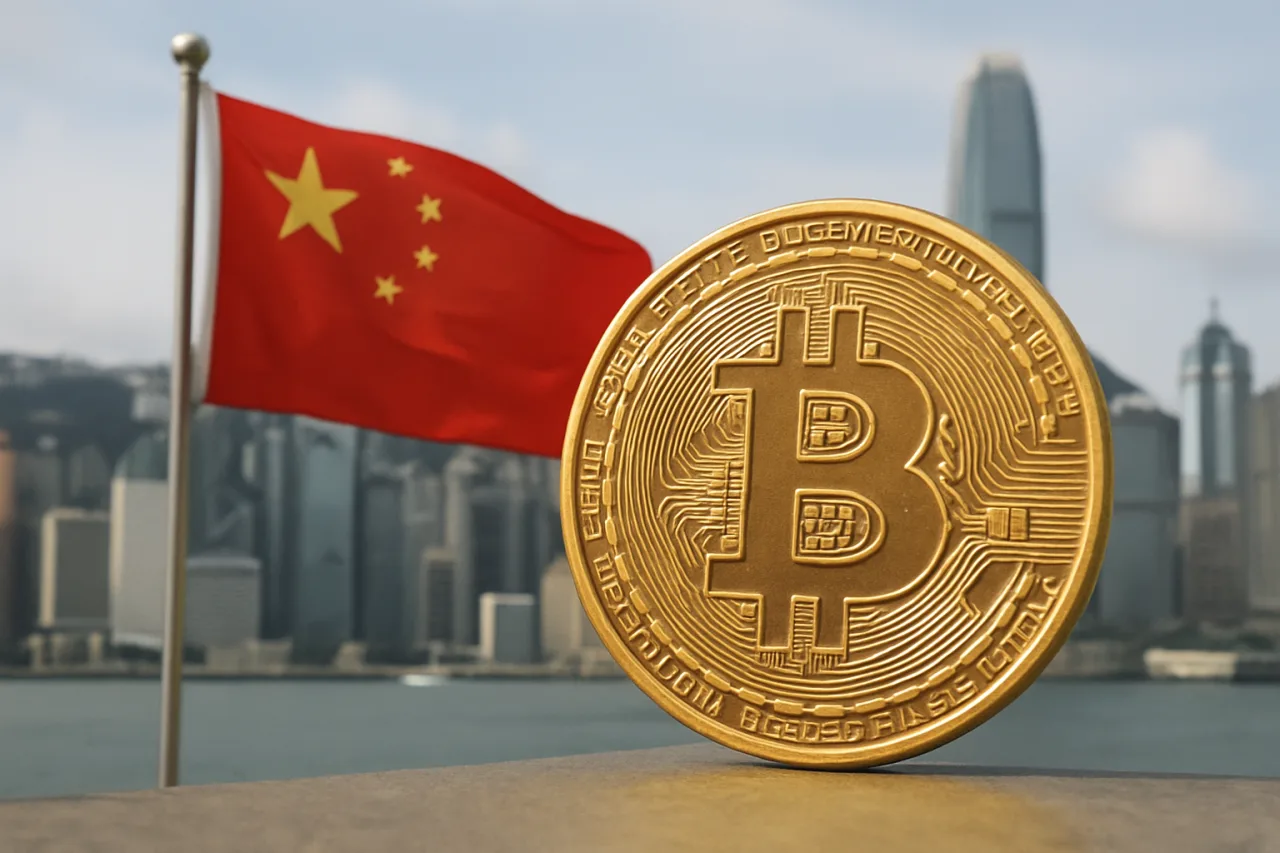
China Crypto Reopening — the Supercycle Math vs Ban 2.0
Table of Contents
Key Takeaway
- 🇨🇳 The headline scenario is real; the policy is not: Solana Company CEO Joseph Chee told CNBC on October 6 that a China crypto reopening could trigger a supercycle — conditional, risk-management-gated, no timeline — while Beijing’s own February 2026 framework codified the opposite direction onshore.
- ⚖️ Ban 2.0 is the legal baseline: the February 6 joint notice (eight agencies, PBOC-led) reaffirmed trading as illegal financial activity, extended reach to offshore platforms serving mainland users, banned offshore yuan stablecoins, and added a civil-invalidity clause that turns crypto deals into personal losses.
- 🧪 Hong Kong is the experiment, not the announcement: licensed stables, tokenization pilots, ETF rails are running in a contained lane that Beijing can study, throttle, or copy — the pressure-valve design that lets innovation proceed without mainland liberalization.
- 📊 A managed reopening would be a genuine supercycle input: the mainland’s population base dwarfs the ETF era’s flows — but the honest pricing today says 5% (Polymarket’s onshore-odds) and the honest watch-list is Hong Kong’s rails, not rumors.
China crypto reopening is the story the market keeps rehearsing — and October 6 gave it a fresh reading: Joseph Chee, the former UBS Asia investment-banking head now running Solana Company, told CNBC’s Squawk Box Asia that if China manages the risks and reopens crypto access, digital assets “could” enter a supercycle, with Bitcoin the cleanest beneficiary. Financial headlines ran the China crypto reopening version without the conditional; this ledger runs the version with it — because the condition is the whole story: Beijing spent February 2026 hard-coding the ban into a new legal baseline, and the distance between a CEO’s scenario and China’s completed law is where every peso-and-cent of this trade lives. Both layers below are receipt-verified — the claim against its broadcast, the law against its notice — plus the watch-signals that would actually tell you the China crypto reopening door is opening, and the if-then math for what it would move.
The Claim, Receipt-First: What Chee Actually Said About China Crypto Reopening
- The venue and date: CNBC Squawk Box Asia, October 6, 2026 (the broadcast) — Chee spoke as CEO of Solana Company (NASDAQ: HSDT), the digital-asset treasury firm; the Wall Street Journal had carried his companion argument days earlier: “China will find a way to manage crypto.”
- The actual conditional: “could trigger another supercycle” — explicitly tied to China managing the risks well. He described a scenario dependent on Beijing’s handling, not a done deal and not a timeline. The nuance matters because the circulating summary leaned harder (“will”) than the on-air record.
- The mechanism he named: scale — the mainland is one of the largest pools of potential crypto users on earth, walled off by the September 2021 crackdown; reopening access would restore a demand reservoir the ETF era has never priced.
- The geography he named: Hong Kong as Beijing’s testing ground — where policymakers can run licensing, stablecoin, and tokenization experiments before anything mainland-facing.
- The interest he carries: his firm profits directly from SOL inflows and adoption — the disclosure our ledger standard applies to every forecast, because interest doesn’t make an analysis wrong; it makes it weighted.
The Law on the Ground: Beijing Completed Ban 2.0 in February
While reopening narratives trend, China’s actual regulatory architecture moved the other way — and it did so with unusual finality. On February 6, 2026, eight Chinese regulatory authorities led by the People’s Bank of China jointly issued the Notice on Further Preventing and Addressing Risks Related to Virtual Currencies — the document that abolished the 2021 notice and became the new legal baseline. The core layers, receipt-checked via law-firm analyses and the U.S. Library of Congress’s monitoring (the LoC entry):
- Status: cryptocurrencies are not legal tender; virtual-currency trading and related business activity constitute illegal financial activity onshore.
- Offshore reach: foreign platforms serving mainland residents online are treated as conducting illegal financial activity inside China — the ban follows the user, not the border.
- Rails named: marketing, traffic facilitation, payment settlement and clearing, and even naming/registering entities that support crypto activity are targeted by name — the plumbing that kept offshore exchanges liquid in the 2021–25 era is now enforcement surface.
- Stablecoin priority: unauthorized offshore issuance of yuan-pegged stablecoins is banned outright, framed as an AML, fraud, and cross-border fund-transfer vector — the lane Beijing wants cleared for its own controlled experiments.
- The civil clause: investing in virtual currency or related products now violates “public order and good morals,” rendering such transactions legally invalid — losses land on the individual instead of the platform. The ban stopped being purely administrative; it became a civil shield against restitution claims.
- The carve-outs: real-world-asset tokenization proceeds only in narrow, supervised, state-vetted lanes — onshore-backed tokens via approved channels, offshore issuance tightly regulated through the CSRC; the Draft Financial Law (2026) confirms prohibition while gesturing at exactly those controlled pathways.
Prediction markets price the gap between narrative and law directly — the Polymarket contract and its reading (CryptoSlate’s analysis): the onshore RMB→BTC question (Chinese citizens legally buying Bitcoin with yuan inside China by December 31, 2026 — announcement-level) sits around 5% on Polymarket, down from far higher hope months ago. The market has looked at the architecture and concluded: this is not a door cracking open; it is a wall, completed, with a laboratory across the harbor.
One complicating number deserves its line: China’s Bitcoin mining share rebounded to roughly 14% by October 2025 (industry indices put estimates between 15–20%), despite the mining ban — a signal of enforcement drift at local levels, not of policy reversal. The February 2026 notice makes no accommodation for mining; drift is not doctrine.
The 30× Demand Gap: Why the Rumor Refuses to Die
The China crypto reopening thesis survives every ban cycle because the arithmetic underneath it never changed: the mainland’s user base is measured in hundreds of millions of smartphone households with an established gold-and-risk-appetite culture, and its access to offshore exchanges has persisted through VPNs and OTC desks despite everything. The current market — priced on U.S. spot ETF flows in the billions of dollars per quarter, institutional custody, and stablecoin settlements measured in trillions annually — has never been able to draw on that demand directly. The gap between China’s suppressed demand and the ETF-era market’s scale is the speculation’s fuel: any credible sign of a managed reopening would reprice a market that today carries roughly 5% odds of the announcement happening at all.
That’s the China crypto reopening supercycle math in one line: Chee’s scenario isn’t priced into anything — and 1.4 billion people’s access, even managed and throttled, is the largest unrealized demand event the market has on its board. The counter-math is the law itself: Beijing’s February framework didn’t drift toward liberalization; it consolidated. The speculation lives exactly in the space between those two realities — and Beijing’s own incentives (capital control in a weakening-yuan era, AML pressure, the digital yuan’s rollout priorities) all argue the door stays managed-shut for now.
Hong Kong: the Pressure Valve, Not the Preview
Beijing’s design becomes legible through Hong Kong — the lens every China crypto reopening read must pass: the city launched Asia’s first spot Bitcoin and Ethereum ETFs in April 2024, built a stablecoin licensing regime (first licenses expected in small, tightly-supervised batches), and is piloting tokenized real-world assets under rules that keep everything auditable and state-visible. Two tells define the arrangement’s true nature: when Ant Group and JD.com planned Hong Kong stablecoin launches, Beijing’s intervention suspended the plans — innovation proceeds only when it reinforces, rather than circumvents, central oversight; and zero issuers sat on the regulator’s register into early 2026, with the first batch deliberately kept “a very small number.” Hong Kong’s function is experimental: a pressure valve where China can run digital-asset infrastructure through a contained jurisdiction — a laboratory bench at the edge of the financial system, not a corridor to the mainland. Chee’s China crypto reopening reading (Hong Kong as testing ground) matches the architecture; the error would be reading the valve as a countdown.
The China Crypto Reopening Watch-Signals Dashboard
- Signal 1 — HKMA licensed-issuer scale. The register’s first batch is deliberately small; a second batch licensing at real scale (major issuers, yuan-linked products under HKD supervision) is the first visible step of a template that could scale. Watch the register, not the rumors.
- Signal 2 — the RWA pilot outcomes.Tokenized Exchange-Fund Bills and similar state-side pilots (programmed through end-2026) prove out the state-supervised tokenization lane — the exact carve-out the February notice created. Real settlement volume there = the lane Beijing wants working before any mainland-facing thinking.
- Signal 3 — the enforcement texture. A softening shows up as selective non-enforcement of rails (OTC desks operating openly, banking channels quietly tolerated) — the pre-2021 texture returning BEFORE any legal change. A hardening shows as payment-channel freezes and platform blocks. Enforcement texture is the earliest honest signal — legal text follows it.
- Signal 4 — the Draft Financial Law’s final text. The consultation document gestures at controlled pathways; the enacted version’s treatment of virtual currency (and of RWA tokenization’s scope) is the single most binding text to watch in the cycle.
- Signal 5 — the announcement itself. Prediction markets price the literal announcement (Chinese citizens legally buying BTC by end-2026) near 5% — any move from 5% toward double digits is the market re-reading the door. It is both the cheapest signal to follow and the most honest: money, not narrative.
The If-Then Math: What a Managed Reopening Would Actually Move
- First-order: BTC as the onramp asset. If Beijing manages a reopening (licensed venues, KYC’d rails, quota’d flows), Bitcoin is the asset the new demand names first — the same pattern every reopening story assumes, and the one the ETF era proved: institutional rails carried flows into BTC and ETH, and retail followed the legal rails.
- Second-order: the stables layer. A managed reopening runs on the stablecoin plumbing Beijing now bans offshore — meaning the reopening path runs through licensed Hong Kong-issued yuan-linked or multi-currency stables, not the offshore USDT lanes of the 2021–25 era. The stable issuers positioned in Hong Kong’s regime are the real reopening infrastructure.
- Third-order: L1s as rails, not just tokens. Chee’s firm’s thesis (Solana as the rail) is the market-wide thesis: whichever chains carry the volume benefit on usage metrics, not just price — the throughput frame our Glamsterdam outcome report tracked live — the supercycle in adoption terms is throughput, and the chains’ own fee-and-throughput data (the kind Glamsterdam’s gas-target changes move) are the measurable beneficiary.
- The honest denominator: even the most bullish managed China crypto reopening case takes quarters-to-years (licensing, rails, quotas), and the interim policy risk is the Feb 2026 law itself — asset seizures through the civil-invalidity clause, platform blocks, and banking-rail freezes are the bear case’s teeth. A supercycle thesis without the ban-law in the risk column is a headline without a ledger.
What It Means for the Individual Holder
Practical China crypto reopening translation, lanes and caution — because the reopening narrative moves markets that carry OFW-era positions, and the honest use is preparation, not prophecy:
- The narrative is tradable information, not tradable confirmation: a CEO scenario on CNBC is one dial in the China crypto reopening watch-list, not a buy signal — the Polymarket 5% and the February law are the other two in the same frame.
- Reopening-driven rallies retrace when the rumor stalls: the ETF-flow sizing rules from our October watch apply — if a China headline moves a coin you hold, decide by your own risk lanes (the discipline our remittance-budget and fee-audit pieces cover for peso-side decisions), not by the headline’s velocity.
- The stables layer matters to corridors: Philippine remittance rails (BSP-endorsed stablecoin pilots) ride the same regulated-stablecoin architecture Hong Kong is licensing — the reopening story’s infrastructure layer is the corridor layer, which is why this ledger watches the HKMA register with corridor eyes — the peso-side design our BSP stablecoin rails piece maps end to end.
- The security lane never holidays: reopening narratives spike phishing, fake-exchange registrations, and recovery scams — the incident discipline our breach-response plan carries. A supercycle story brings a scam cycle with it; the lanes stay on.
Frequently Asked Questions
Is China reopening crypto trading?
No. The February 6, 2026 joint notice from eight PBOC-led agencies reaffirmed the trading ban as illegal financial activity, extended it to offshore platforms serving mainland users, and added civil-invalidity clauses. What exists is Hong Kong’s contained experiment — licensed stablecoins, tokenization pilots, ETF rails — which is a pressure valve, not a reopening. Watch the watch-signals above, not the narrative cycle.
Could China’s reopening really trigger a Bitcoin supercycle?
The scenario is mathematically plausible and institutionally far: a managed reopening of even quota’d access would draw from one of the world’s largest suppressed-demand pools, and the ETF era’s flows — billions per quarter — would be the smaller comparison. But the conditional chain (risk-management framework → licensed rails → quota’d access → mainland-facing policy change) has no announced steps on the mainland today, and prediction markets price the literal onshore-legalization announcement near 5% for 2026. A real supercycle input, gated by nothing announced yet — that’s the honest whole sentence.
Why did Solana Company’s CEO say China will find a way to manage crypto?
His public argument runs: the scale demands a managed framework eventually, Hong Kong is running the template experiments, and China’s own state-vetted tokenization lane needs working rails that resemble crypto infrastructure. His firm’s position is worth weighing against the argument’s weight: Solana Company profits directly from SOL inflows and adoption. The analysis and the interest both get reported — the ledger’s standard.
What did China ban in February 2026?
The February 6 joint notice (eight agencies) reaffirmed: crypto is not legal tender; trading/exchange/intermediary business is illegal onshore; offshore platforms serving mainland users are treated as illegal activity; payment-settlement, marketing, facilitation, and entity-naming channels are targeted; offshore yuan-pegged stablecoins are banned; investing in crypto now conflicts with “public order and good morals,” invalidating deals with losses personal to investors. RWA tokenization continues only in narrow, supervised carve-outs.
Will yuan stablecoins be allowed?
Offshore yuan-pegged stablecoins are banned by the February notice, framed as AML and capital-flow vectors — and Chinese tech giants’ Hong Kong stablecoin plans were suspended after Beijing stepped in. The controlled lane Beijing is building runs through Hong Kong’s licensed regime (HKD-linked coins first, tiny-batch issuers) and the digital yuan — supervised state-adjacent rails, not private yuan stables. PBOC advisors have floated an offshore yuan stablecoin “as a possibility” — a possibility, not a program.
What should Filipino crypto holders watch now?
The honest dashboard: Hong Kong’s licensed-issuer register and RWA pilot volumes (the template signals); the enforcement texture on mainland rails (the earliest true signal); the final Draft Financial Law text (the binding one); and the prediction-market odds on the onshore-announcement question (the market’s own re-pricing in real time). Everything else — the CEO interviews, the “will/could” headlines, the reunion rumors — is narrative texture while the door stays managed-shut.
Final Word: Read the Law, Watch the Valve, Size for the If
The China crypto reopening trade is a forecast layered on a completed wall: a conditional CEO scenario (could, if risks are managed) on one side; a February legal baseline (ban re-codified, civil losses personal, rails targeted) on the other — with Hong Kong’s regulated experiment as the only place the future is actually being built today. The watch-signals dashboard is the useful part of the story: the HKMA register, the RWA pilots’ settlement volumes, the enforcement texture, the final law text, and the prediction-market odds — five honest dials on a question the industry will keep narrating regardless. Read the law, watch the valve, size for the if — the supercycle thesis is real as arithmetic and premature as policy, and the difference between those two words is where this story’s risk and its opportunity both live. Every future China crypto reopening headline lands on the same dashboard — the register, the pilots, the enforcement texture, the law text, the odds — and readers who keep that frame outrun the narrative every single cycle.
If this intelligence helps you, you can add WorldNgayon as a preferred source on Google (https://www.google.com/preferences/source?q=worldngayon.com, rel=nofollow noopener) — free, one click, and it tells the engine you want independent, verification-first tool reporting in your results.
Financial Disclaimer
This piece covers cryptocurrencies, prediction markets, and policy scenarios; digital assets are high risk and nothing here is investment, legal, or tax advice. Verify every price, quote, and legal claim against primary sources and qualified counsel in your jurisdiction before acting; decisions remain the reader’s own responsibility.