Table of Contents
Key Takeaway
- You CAN buy from abroad: OFWs who want to buy house Philippines can legally purchase property without being physically present through a Special Power of Attorney (SPA).
- Pag-IBIG is your best friend: The OFW-only housing loan program offers rates as low as 4.5% with 0% down payment options through OFW Home Direct.
- The process is 6 steps: Save, Choose location, Get pre-approved, Select property, Sign documents via SPA, Close and claim.
- Avoid these mistakes: Buying without title verification, skipping bank pre-approval, using unofficial agents, and forgetting transfer taxes (0.75-6% of property value).
- Best locations for OFWs: Cavite, Laguna, Bulacan, Pampanga, and Cebu offer the best balance of affordability, proximity to airports, and rental demand.
Why Every OFW Should Buy a House in the Philippines
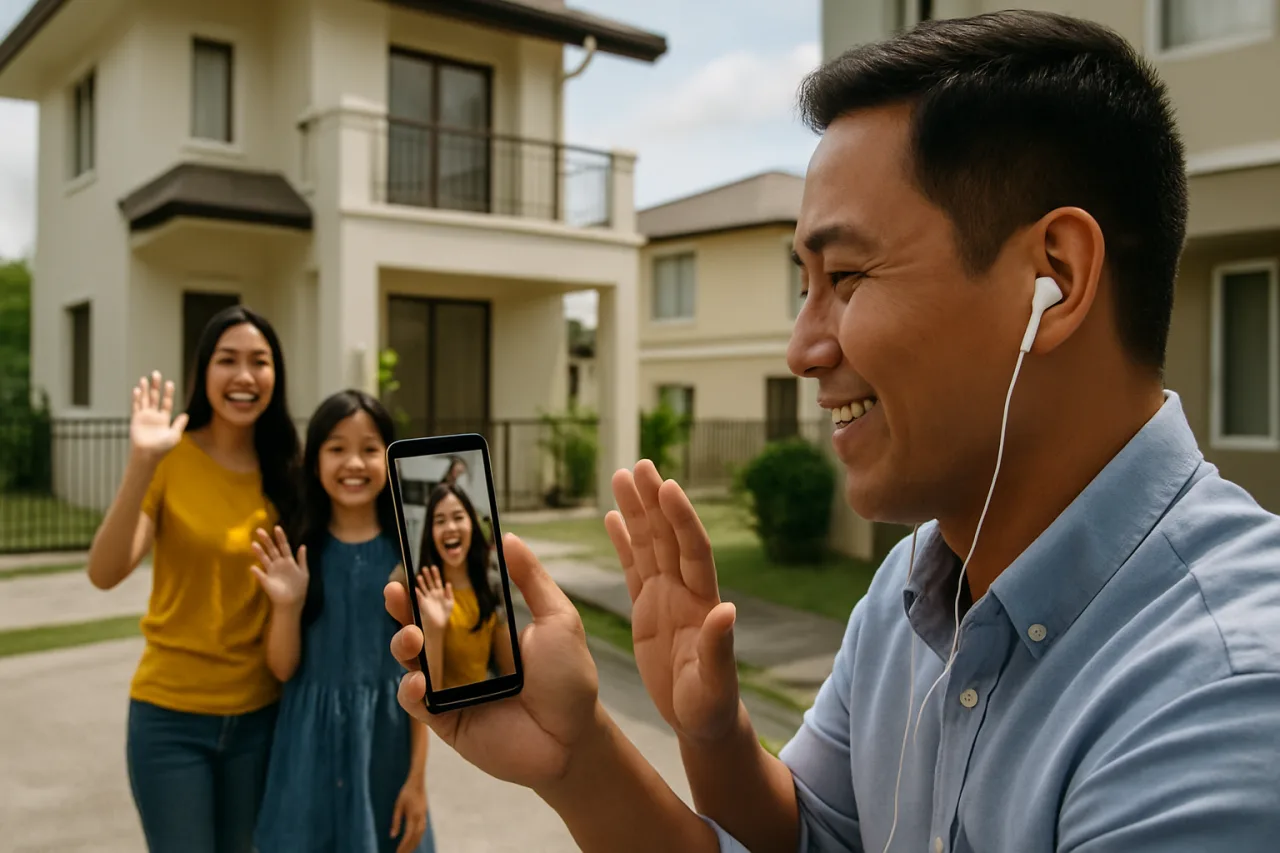
If you are wondering how to buy house Philippines while working abroad, this guide covers everything you need to know, you are not alone. Let us be honest: every OFW dreams of owning a house in the Philippines. After years of working abroad, missing birthdays, enduring the heat of the Gulf, or braving winters overseas, having a home waiting for you changes everything.
But here is what most OFWs do not realize: you do not need to wait until you come home permanently to buy a house. You can start building your real estate portfolio right now, from wherever you are in the world.
According to the Bangko Sentral ng Pilipinas (BSP), OFW remittances hit a record .02 billion in January 2026 alone and a significant portion of that goes directly into real estate. The Philippine property market is now worth 4 billion and OFWs are the single largest buyer segment.
This guide walks you through the complete process to buy house Philippines from abroad, step by step, with real numbers, legal requirements, and practical tips that no other guide covers.
Step 1: Determine Your Budget Before You Buy House Philippines
Before you even look at properties, you need to know exactly how much you can afford. Here is the OFW-specific calculation:
The 30 Percent Rule for OFW Home Buyers
Financial planners recommend that your monthly amortization should not exceed 30 percent of your monthly income. For OFWs earning in foreign currency, this is actually an advantage because your earning power is higher than most local buyers.
| Item | Amount |
|---|---|
| Monthly income | 110,000 pesos (2,000 USD at 55 pesos) |
| Max monthly amortization (30%) | 33,000 pesos per month |
| Pag-IBIG loan at 4.5% for 30 years | approximately 6,200,000 max loan |
| Bank loan at 7% for 20 years | approximately 3,800,000 max loan |
Hidden Costs Most OFWs Forget
Most OFWs budget only for the house price. Budget for these additional costs:
- Transfer Tax: 0.50 to 0.75 percent of selling price
- Documentary Stamp Tax: 1.5 percent of selling price
- Registration Fees: 0.25 percent of selling price
- Notarial Fees: 500 to 2,000 pesos per document
- Real Estate Agent Commission: 3 to 5 percent of selling price
- Home Insurance: 5,000 to 15,000 pesos per year (required by banks)
- Move-in costs: Renovations, furniture, utilities connection
Total additional costs: approximately 6 to 10 percent of the property selling price.
Step 2: Choose Your Location to Buy House Philippines
Not all locations are equal for OFW buyers. You need to consider proximity to the airport for your vacations, rental demand if you plan to rent it out while abroad, infrastructure development, and price appreciation potential.
Top 5 Locations for OFW Home Buyers in 2026
1. Cavite (Bacoor, Imus, General Trias)
- Price range: 2M to 8M pesos for house and lot
- Why: Closest to NAIA airports, massive infrastructure (CALAX, CAVITEX), OFW-friendly communities
- Rental yield: 6 to 8 percent annually
2. Laguna (Calamba, Sta. Rosa, Cabuyao)
- Price range: 3M to 12M pesos
- Why: Near industrial zones, SLEX access, growing middle-class communities
- Rental yield: 5 to 7 percent annually
3. Bulacan (Malolos, Marilao, Meycauayan)
- Price range: 1.5M to 6M pesos
- Why: Most affordable near Metro Manila, North-South Commuter Railway coming
- Rental yield: 5 to 7 percent annually
4. Pampanga (San Fernando, Angeles, Mabalacat)
- Price range: 2.5M to 10M pesos
- Why: Clark International Airport, growing economic zone, OFW families already settled
- Rental yield: 6 to 8 percent annually
5. Cebu (Mandaue, Talisay, Minglanilla)
- Price range: 2.5M to 10M pesos
- Why: Second-largest economy, international airport, strong rental market
- Rental yield: 6 to 9 percent annually
Step 3: Get Pre-Approved Before You Buy House Philippines
This is where OFWs have a unique advantage. You have three powerful financing options that local buyers do not always qualify for.
Option A: Pag-IBIG Housing Loan (BEST to Buy House Philippines)
Pag-IBIG OFW housing loan is the most generous program available:
- Interest rate: As low as 4.5 percent per annum (2026 rate)
- Loan term: Up to 30 years
- Maximum loan: 6,000,000 pesos
- Down payment: As low as 10 percent (0% through OFW Home Direct program)
- OFW requirement: Active Pag-IBIG membership with at least 24 monthly contributions
How to apply from abroad:
- Log in to the Pag-IBIG Virtual Portal
- Submit requirements: valid passport, employment contract, proof of income (last 3 months payslips)
- Get pre-qualification letter (takes 2 to 4 weeks)
- Read our guide on Pag-IBIG MP2 savings to boost your down payment
- Use the pre-qualification letter to shop for properties
Option B: Bank Housing Loan
Major banks like BPI, BDO, and Metrobank offer OFW housing loans:
- Interest rate: 6.5 to 8.5 percent per annum (2026 rates)
- Loan term: Up to 20 to 25 years
- Maximum loan: Up to 20,000,000 pesos depending on bank
- Down payment: 20 to 30 percent of property value
Option C: In-House Financing (Developer)
- Interest rate: 8 to 12 percent per annum (higher than banks)
- Down payment: 10 to 20 percent
- Term: 5 to 15 years (shorter)
- Advantage: Faster approval, less documentation
Recommendation: Always try Pag-IBIG first. The 4.5 percent rate saves you millions over 30 years compared to bank or in-house financing.
Step 4: Find and Evaluate Properties to Buy House Philippines
How to Search for Properties from Overseas
- Lamudi Philippines — largest property portal with OFW-specific filters
- Dot Property — verified listings with virtual tour options
- Developer websites: Camella, Lessandra, Brittany, DMCI Homes — all have OFW desks
Due Diligence Checklist (DO NOT SKIP)
- Title verification: Request the Certified True Copy of Title from the Registry of Deeds and check for liens or adverse claims.
- Tax declaration: Ensure real estate taxes are paid up to date. Unpaid taxes become YOUR responsibility as buyer.
- Physical inspection: Hire a trusted relative or professional inspector. Photos and video calls are not enough.
- Developer track record: Check the developer license and completed projects if buying pre-selling.
- Location verification: Check flood risk via Project NOAH and fault line proximity.
- HOA restrictions: Review homeowners association rules as some restrict rentals.
Red Flags to Watch For
- Seller refuses to show the original title
- Price is significantly below market value
- No tax receipts available
- Property is in a flood-prone area with no disclosure
- Seller pressures you to decide immediately
- No written contract, only verbal agreements
Step 5: Sign Documents Using Special Power of Attorney (SPA)
This is the most critical step for OFW buyers. Since you cannot be physically present to sign documents, you need a Special Power of Attorney (SPA).
What is an SPA?
An SPA is a legal document that authorizes someone (your attorney-in-fact) to act on your behalf in property transactions. This person can sign the Contract to Sell or Deed of Absolute Sale, process title transfer at the Registry of Deeds, pay taxes and fees, and claim the new title in your name.
How to Get an SPA as an OFW
Option 1: Philippine Consulate or Embassy (RECOMMENDED)
- Book an appointment at the nearest Philippine consulate or embassy
- Bring valid passport, 2×2 photo, details of the property and attorney-in-fact
- Execute the SPA before a consular officer (cost approximately 20 to 30 USD)
- The consulate notarizes and authenticates the document
Option 2: Local Notary plus Apostille
- Have the SPA notarized by a local notary public in your host country
- Authenticate through the Philippine consulate (apostille or red ribbon)
- Send the original to your attorney-in-fact in the Philippines
Choosing Your Attorney-in-Fact
Choose someone you trust completely, a spouse, parent, or sibling. This person will have legal authority to sign binding documents on your behalf.
Step 6: Close the Deal and Claim Your Home
The Closing Process
- Sign the Deed of Absolute Sale — Your attorney-in-fact signs on your behalf via SPA
- Pay the taxes: Capital Gains Tax (6%), Documentary Stamp Tax (1.5%), Transfer Tax (0.5-0.75%)
- Process title transfer — At the Registry of Deeds
- Pay loan proceeds — Bank or Pag-IBIG releases the loan amount to the seller
- Claim the new title — In your name at the Registry of Deeds
- Transfer tax declaration — At the local Assessor Office
Timeline: How Long Does It Take?
| Step | Duration |
|---|---|
| Document signing and notarization | 1 to 2 weeks |
| Tax assessment and payment | 2 to 4 weeks |
| Title transfer processing | 2 to 8 weeks |
| Loan release (if applicable) | 1 to 2 weeks |
| Total estimated time | 2 to 4 months |
Also see: OFW Real Estate Investing Guide for building a property portfolio, and our Pag-IBIG Home Loan Rate Update for the latest financing options.
OFW-Specific Tips to Buy House Philippines Successfully
Tip 1: Use Your OFW Status to Buy House Philippines Faster
Many developers have dedicated OFW desks with special payment terms. You can often get lower down payment (as low as 5-10%), extended terms (up to 24 months), OFW-exclusive discounts (2-5% off), and free Pag-IBIG loan processing assistance.
Tip 2: Buy Pre-Construction to Build Equity When You Buy House Philippines
If you are not moving in for 3 to 5 years, buying pre-selling gives you the lowest price, flexible payment terms during construction, and maximum capital appreciation by turnover. Only buy from reputable developers: DMCI Homes, Ayala Land, Camella, Lessandra, Brittany, or Rockwell.
Tip 3: Rent Out Your Property While You Work Abroad
Your house does not have to sit empty. A 3M peso house in Cavite rents for 15,000 to 20,000 per month. A 5M peso house in Laguna rents for 25,000 to 35,000 per month. This rental income can cover most or all of your monthly amortization.
Tip 4: Keep All Documents Safe After You Buy House Philippines
Scan and cloud-store every document including title, tax receipts, and contracts. Keep originals in a fireproof safe with a trusted family member. Set calendar reminders for annual real estate tax payments due every January.
Frequently Asked Questions (FAQ)
Can an OFW Buy House Philippines or Any Property Type?
OFWs and former Filipino citizens can buy up to 1,000 square meters of residential land and 5,000 square meters of agricultural land. Condominium units have no ownership restrictions regardless of citizenship status.
What is the Minimum Income to Buy House Philippines?
For Pag-IBIG, there is no strict minimum income. They evaluate based on your capacity to pay (monthly amortization should not exceed 40 percent of gross monthly income). Banks typically require a minimum gross monthly income of 50,000 pesos for a 2M+ loan, but OFW income in foreign currency is assessed favorably.
Can I buy a house if I am not a Filipino citizen anymore?
Yes, but with limitations. Former natural-born Filipinos can buy up to 1,000 sqm of residential land. If you are a foreign spouse of a Filipino citizen, you can buy in your spouse name. Condominium purchases have no citizenship restrictions.
How Much Down Payment to Buy House Philippines?
Pag-IBIG requires as low as 10 percent down payment (0% through OFW Home Direct for select developments). Banks require 20 to 30 percent. In-house developer financing requires 10 to 20 percent.
What happens if I cannot pay my housing loan while abroad?
Both Pag-IBIG and banks offer restructuring options. Pag-IBIG is particularly lenient with OFWs. They offer payment holidays, term extensions, and restructuring programs. The key is to communicate early if you are struggling. Never just stop paying without notice to your lender.
Should I Buy House Philippines or Rent When I Retire?
Buying is almost always better for OFWs. You build equity instead of paying someone else mortgage. Philippine property values have appreciated 5 to 8 percent annually over the past decade according to BSP data. You have a guaranteed place to live when you return. You can rent it out while abroad to generate income.
What Documents Do I Need to Buy House Philippines as OFW?
Prepare these in advance: valid passport, employment contract, certificate of employment with compensation, proof of Pag-IBIG contributions (if using Pag-IBIG loan), Special Power of Attorney (notarized and authenticated), and Tax Identification Number (TIN). Some banks also require a credit report from your host country.
Financial Disclaimer
This article is for informational purposes only and does not constitute financial, legal, or real estate advice. Property values, interest rates, and government policies will change. Always consult with a licensed real estate broker, Pag-IBIG representative, or financial advisor before making property investment decisions. Past performance of the Philippine real estate market does not guarantee future results. The author is not liable for any financial losses resulting from decisions made based on this guide.