Table of Contents
Key Takeaway
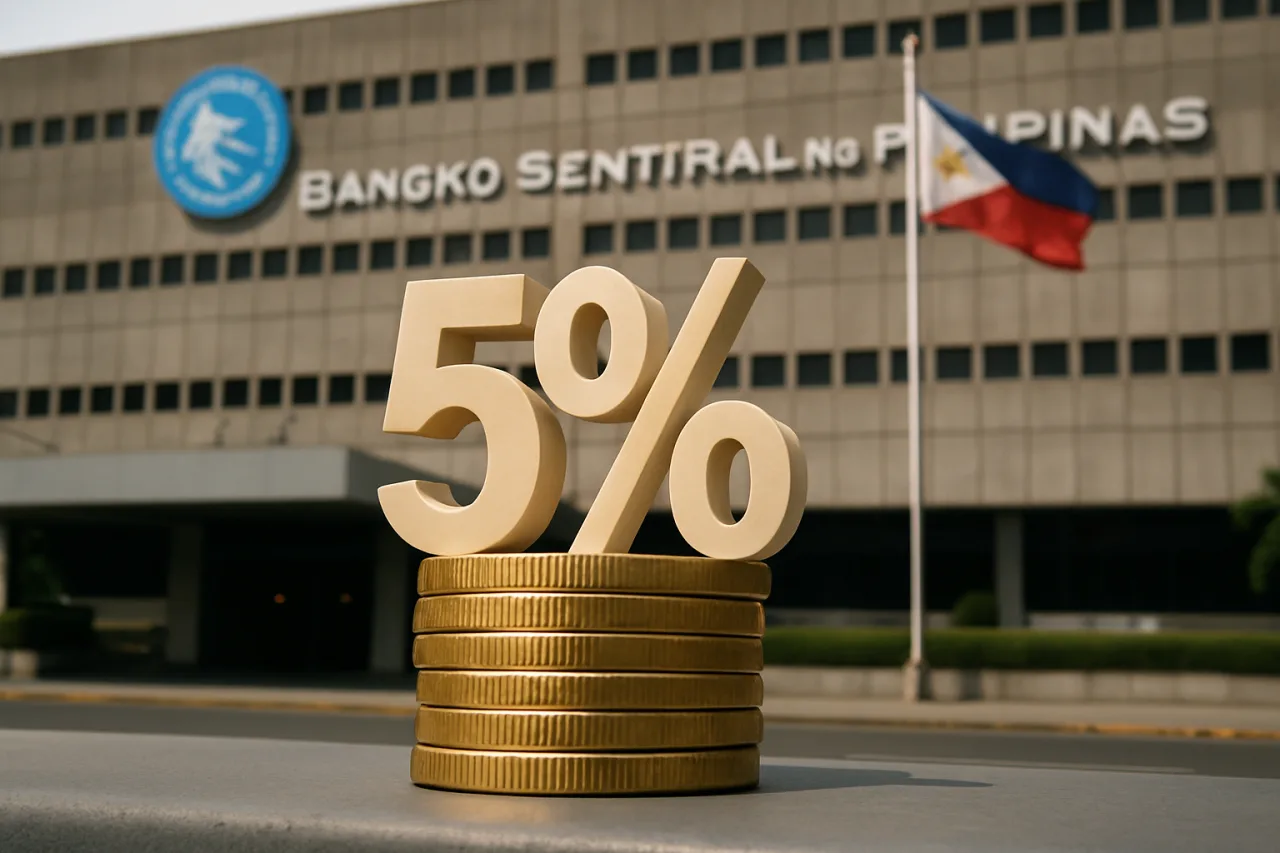
- 📅 The Meeting: The Bangko Sentral ng Pilipinas (BSP) meets on August 27, 2026, and 11 of 15 economists surveyed by the Inquirer expect a third consecutive 25-basis-point rate hike, bringing the benchmark BSP interest rate to 5 percent.
- 📊 The Numbers: Inflation eased to 6.2 percent in July 2026 — still more than double the BSP’s 3 percent target. GDP growth slowed to 2.3 percent in Q2, the weakest since the pandemic. The peso hit a record low of ₱61.98 against the dollar on July 24.
- 🏦 The Stakes: A third BSP interest rate hike would bring cumulative rate increases to 75 basis points since April, raising borrowing costs for every Filipino with a mortgage, car loan, credit card balance, or business loan.
- 💰 What to Do: Lock in fixed rates before Thursday if you are planning a major loan. Move savings to high-yield digital bank accounts offering 4-6 percent APY. Delay non-essential borrowing until the rate cycle peaks.
- 🔮 The Outlook: Bank of America expects this to be the final hike of the cycle. MUFG sees two more increases to 5.25 percent. Either way, rates stay elevated through 2026.
Before you sign that loan document this week, stop. The Bangko Sentral ng Pilipinas is widely expected to raise the BSP interest rate to 5 percent on August 27, 2026 — the third consecutive hike this year and a move that will make every peso you borrow more expensive. Eleven of fifteen economists surveyed by the Philippine Daily Inquirer predict a 25-basis-point increase at Thursday’s Monetary Board meeting, which would bring the overnight reverse repurchase rate from 4.75 percent to 5 percent and push the cumulative tightening cycle to 75 basis points since April.
The decision pits two forces against each other: an inflation rate that refuses to fall to target, and an economy that has slowed to its weakest pace outside the pandemic. For Filipino professionals — whether you carry a housing loan with BPI, a car loan with BDO, or a credit card balance with Metrobank — the practical consequence is the same. Your monthly payments are about to go up, or stay elevated for longer than you expected.
Why the BSP Interest Rate Is Rising Again
The BSP’s tightening cycle began in April 2026, when the Monetary Board raised the benchmark BSP interest rate from 4.25 percent to 4.50 percent. A second 25-basis-point hike followed in June, bringing the rate to 4.75 percent. Now, with the August 27 meeting looming, the case for a third hike rests on three pillars: persistent inflation, peso weakness, and the need to maintain a rate buffer against potential U.S. Federal Reserve action.
Inflation has eased for three straight months, reaching 6.2 percent in July 2026 according to the Philippine Statistics Authority. But that figure remains more than double the BSP’s 3 percent target midpoint and well above the 2-4 percent target band. Jun Neri, lead economist at Bank of the Philippine Islands, told the Inquirer that inflation risks remain tilted to the upside despite the recent deceleration.
“Near-term risks are concentrated in food and energy,” Neri said. “Adverse weather remains a key concern, with habagat-driven monsoon rains and flooding raising the risk of further crop damage just as food supply conditions were beginning to stabilize.” He also cited a potential Super El Niño, the recent ₱60 minimum wage increase in Metro Manila (lifting the daily minimum to ₱755 for non-agricultural workers), and second-round inflation effects as risks that justify another hike.
The Peso Factor: Why a Stronger Rate Defends the Currency
Beyond inflation, the peso’s slide to a record low is pressuring the BSP to act. The local currency hit ₱61.98 against the dollar on July 24, 2026 — the weakest close in Philippine history — before settling at ₱61.815 on August 19, the second-lowest close on record. Aris Dacanay, economist at HSBC Global Investment Research, told the Inquirer that the BSP could help stabilize the peso by building a buffer against potential Fed action through rate hikes.
“The BSP could, therefore, help stabilize the peso by building a buffer against potential Fed action through rate hikes,” Dacanay said. “This would be helpful since the spread between the BSP and Fed policy rates, in real terms, is currently minimal, if not flat.” A rate hike would also help the central bank avoid dipping into its reserves to intervene in the peso market, he added.
The peso’s weakness has direct consequences for every Filipino. A weaker peso means higher costs for imported goods — from fuel to electronics to the raw materials that Filipino businesses rely on. For OFWs sending money home, a weaker peso means their remittances buy more pesos, but the inflation that accompanies currency depreciation erodes that purchasing power. You can read more about the peso’s record decline and what it means for your money in our complete peso record low analysis.
The Growth Dilemma: Hiking Into a Slowdown
Here is the tension at the heart of Thursday’s decision. The same higher interest rates that are meant to curb inflation also weigh on economic activity — and the Philippine economy is already slowing sharply. GDP growth decelerated to 2.3 percent in the second quarter of 2026, the weakest expansion outside the pandemic since 2009. Pantheon Macroeconomics cut its 2026 GDP growth forecast to just 2.8 percent, while Bank of America projects 2.5 percent for the full year.
Not everyone on the Monetary Board’s survey agrees that a hike is the right call. Four of the fifteen economists polled expect the BSP to hold at 4.75 percent. Chinabank argued that “the case for a hold is getting stronger because the economy is already operating below potential, leaving little evidence of demand-driven inflation that would warrant another immediate hike.” Miguel Chanco, chief emerging Asia economist at Pantheon Macroeconomics, agreed, noting that “the inflation numbers have surprised to the downside relative to consensus, as did the Q2 GDP print, which to us suggests that a hold, at least for now, would be the prudent position.”
The BSP itself has signaled a more cautious approach. Governor Eli Remolona Jr. said last week that the central bank would take a “less aggressive” stance, and the BSP noted that the chance of a more aggressive 50-basis-point hike remains “slim.” The central bank is reassessing the inflation outlook as it factors in the renewed Middle East conflict, higher wages, fresh U.S. tariffs, and exchange rate movements — a complex mix that makes Thursday’s decision genuinely uncertain despite the consensus forecast.
What This Means for Your Loans and Savings
If the BSP delivers the expected hike, the BSP interest rate moves to 5 percent. The overnight deposit facility rises to 4.50 percent and the overnight lending facility to 5.50 percent. These BSP interest rate changes ripple through the entire financial system — from the interest banks charge on loans to the yields they offer on deposits.
Here is what changes for Filipino professionals:
Mortgages and Housing Loans: Variable-rate mortgages tied to the BSP’s policy rate will see monthly payments increase. A ₱3 million, 20-year mortgage at 7 percent currently costs about ₱23,260 per month. If the effective rate rises by 25 basis points to 7.25 percent, the monthly payment climbs to roughly ₱23,800 — an additional ₱540 per month, or ₱6,480 per year. Over the life of the loan, that is nearly ₱130,000 in additional interest.
Car Loans: Auto financing rates, which typically track the BSP rate plus a bank margin, will edge higher. A ₱1 million, 5-year car loan at 8 percent costs about ₱20,280 per month. At 8.25 percent, the payment rises to about ₱20,430 — ₱150 more per month.
Credit Cards: Credit card interest rates, which are already among the highest consumer rates in the Philippines at 24-42 percent per annum under BSP Circular 1096, may not change directly with a 25-basis-point policy move. But the broader tightening environment keeps credit costs elevated.
Savings and Time Deposits: This is the upside. Higher BSP interest rate levels mean higher deposit yields. Digital banks like Tonik, Maya Bank, and GoTyme already offer 4-6 percent APY on savings, and those rates may rise further. Traditional banks, which typically offer 0.10-0.25 percent on savings, may face pressure to raise deposit rates to compete. You can compare the best high-yield options in our digital banks Philippines guide.
The OFW Dimension: Remittances and Exchange Rates
For overseas Filipino workers, the BSP interest rate decision creates a paradox. Higher rates could strengthen the peso by attracting foreign capital and reducing pressure on the currency — which means each dollar, riyal, or dirham sent home buys fewer pesos. But if the peso continues to weaken despite the hike, OFW remittances gain purchasing power while inflation erodes it.
The Department of Migrant Workers reported on August 24, 2026, that fourteen Filipino seafarers from the MT Acheloos were assisted in Muscat following a missile incident on July 20. The ongoing Middle East conflict, which has already prompted the repatriation of over 10,000 Filipinos, remains a key driver of both peso weakness and inflation. Oil price volatility tied to US-Iran tensions feeds directly into Philippine fuel and food costs — the same inflation the BSP is fighting. For a deeper analysis of how rate hikes affect OFW families, see our BSP rate hike OFW impact guide.
What the Experts Predict: One More or Two More?
The debate is not whether the BSP will hike on Thursday — the consensus is clear on that. The real question for the BSP interest rate outlook is what happens after August 27. Two competing views have emerged:
Bank of America — This Is the Last Hike: BofA Global Research believes the BSP will raise the rate to 5 percent in August and then signal that the tightening cycle is complete. “We think a moderate inflation print may be enough for the Bangko Sentral to proceed with one more rate hike in August but signal that they may have already reached their target, having raised the policy rate 75 bp YTD by then,” BofA economists wrote. BofA forecasts Philippine inflation at 6.7 percent by yearend — the fastest pace in three years.
MUFG — Two More Hikes Coming: Japan-based MUFG Global Markets Research is pricing in two more 25-basis-point increases, which would bring the key policy rate to 5.25 percent. MUFG also sees the peso eventually recovering to trade below ₱61 per dollar “at a gradual pace,” contingent on continued BSP hawkishness and tentative improvement in government spending.
After August 27, the Monetary Board holds two more policy reviews this year — on October 22 and December 17. Those meetings will determine whether the cycle ends at 5 percent or extends to 5.25 percent. For now, Bank of America’s view that August is the terminal hike is the base case — but it depends heavily on the inflation trajectory through the fourth quarter.
Your Action Plan Before Thursday
With the rate decision three days away, here are the concrete steps Filipino professionals should consider:
1. Lock in fixed rates now. If you are planning to take out a housing loan or refinance an existing variable-rate mortgage, do it before August 27. Fixed-rate loans protect you from further rate increases, and the current rates — before the third hike — are as low as they will be for the foreseeable future.
2. Move savings to high-yield accounts. Digital banks regulated by the BSP offer 4-6 percent APY on savings, compared to 0.10-0.25 percent at traditional banks. After Thursday’s expected hike, these rates may rise further. Moving ₱100,000 from a traditional bank at 0.25 percent to a digital bank at 5 percent earns you an additional ₱4,750 per year — risk-free and PDIC-insured up to ₱1 million.
3. Delay non-essential borrowing. If you were planning to finance a car purchase, a home renovation, or a business expansion, consider waiting until the rate cycle peaks. If BofA is correct and August is the last hike, borrowing costs stabilize at 5 percent — still high, but not rising further. If MUFG is right and two more hikes come, waiting until Q4 2026 could save you 50 basis points.
4. Review your investment portfolio. Higher interest rates typically pressure equity valuations, particularly property and infrastructure stocks on the PSEi. But they also make fixed-income investments more attractive. If you hold UITFs or bond funds, the yield environment is improving. For PSEi-specific guidance, see our PSEi August 2026 market outlook.
5. Monitor the BSP’s post-meeting statement. The key signal to watch for the BSP interest rate on Thursday is not the rate decision itself — that is expected. The critical signal is whether Remolona’s statement signals the end of the cycle or leaves the door open for more. “Data-dependent” language means more hikes are possible. “We have reached our target” language means the cycle is over.
Frequently Asked Questions About BSP Interest Rate
What is the current BSP interest rate?
The current BSP interest rate — the overnight reverse repurchase rate — is 4.75 percent as of the June 2026 Monetary Board meeting. The BSP raised it by 25 basis points in April and another 25 basis points in June, bringing cumulative increases to 50 basis points. The August 27, 2026, meeting is expected to deliver a third 25-basis-point hike to 5 percent.
How does a BSP interest rate hike affect my loan?
A BSP interest rate hike increases the cost of borrowing across the banking system. Variable-rate loans tied to the policy rate see immediate payment increases. Fixed-rate loans are unaffected until the fixed period expires. For a ₱3 million, 20-year mortgage, a 25-basis-point increase adds roughly ₱540 per month. Credit card rates, which are regulated separately under BSP Circular 1096, are less directly affected but remain elevated in a tightening environment.
Will the BSP raise rates again after August 2026?
Bank of America believes the August hike to 5 percent will be the final increase of the cycle. MUFG Global Markets Research expects two more hikes, bringing the rate to 5.25 percent. The BSP’s next two meetings after August are on October 22 and December 17, 2026. The decision will depend on whether inflation continues to ease toward the 3 percent target and whether the peso stabilizes.
How does the BSP interest rate affect the peso?
Higher BSP interest rate levels typically support a currency by attracting foreign capital and widening the interest rate differential with other central banks. The peso hit a record low of ₱61.98 per dollar on July 24, 2026. HSBC’s Aris Dacanay noted that a rate hike helps the BSP “build a buffer against potential Fed action” and avoids the need to dip into reserves to defend the currency. However, if inflation and growth concerns persist, rate hikes alone may not reverse the peso’s structural decline.
What is the BSP’s inflation target?
The BSP’s inflation target is 3 percent ± 1 percentage point, meaning the target band is 2-4 percent. Inflation has been above this band since April 2026, reaching 6.2 percent in July. The BSP’s June 2026 Monetary Policy Report projects inflation at 6.4 percent for 2026, declining to 4.5 percent in 2027 and 3.1 percent in 2028 — meaning prices will not return to target until at least 2028.
Should I lock in a fixed-rate mortgage before the August 27 BSP meeting?
If you are planning to take out a mortgage or refinance, locking in a fixed rate before August 27 is advisable. The expected rate hike will raise borrowing costs across all loan types. Even if this is the final hike of the cycle (as BofA expects), rates will remain at 5 percent for the foreseeable future — there is no scenario where borrowing gets cheaper in the near term. Compare offers from at least three banks and prioritize fixed rates over variable rates in this environment.
Disclaimer: This article is for informational purposes only and does not constitute financial advice. Interest rates, inflation forecasts, and economic projections are subject to change. Consult a licensed financial advisor before making borrowing, lending, or investment decisions. Data sources include the Bangko Sentral ng Pilipinas, Philippine Statistics Authority, Bank of America Global Research, HSBC Global Investment Research, MUFG Global Markets Research, Pantheon Macroeconomics, and the Philippine Daily Inquirer.