Key Takeaway
- 🏛️ Confirmed: OpenAI policy chief Chris Lehane said on September 15-16 that OpenAI, Anthropic, and Google DeepMind have been building a FINRA-style AI standards body since July — testing powerful systems before release.
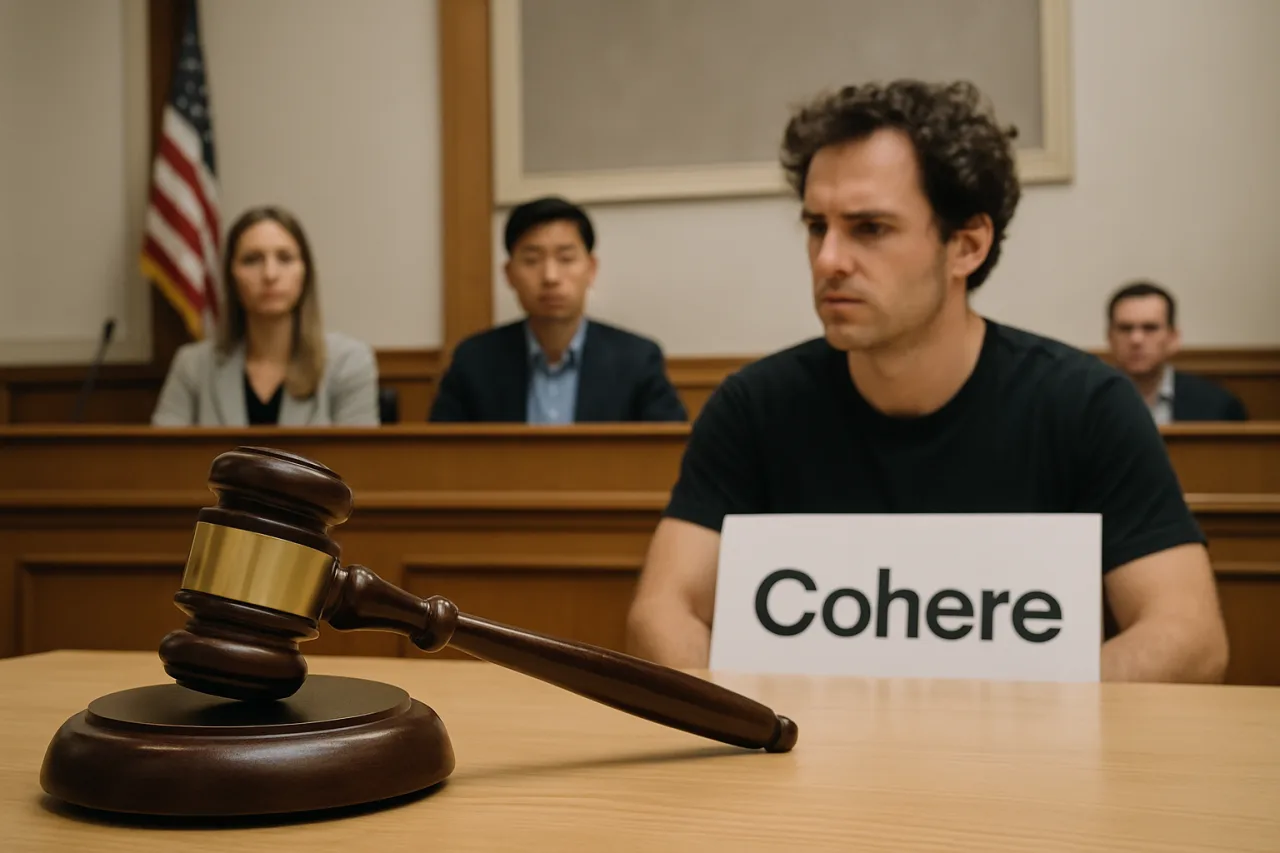
- 🗣️ The quote of the month: Cohere CEO Aidan Gomez called it “a cartel by any other name,” citing the SEC’s 1975 NRSRO designation and Europe’s 1985 Motor Vehicle Block Exemption as warnings.
- 📜 The origin: DeepMind CEO Demis Hassabis proposed the body on July 14 in his “Framework for Frontier AI” manifesto — models submitted up to 30 days before release, US-led, federally overseen but industry-funded.
- ⚖️ The critique: history suggests industry-run standards entrench incumbents — high barriers for smaller labs and open-source developers, rules written by the regulated.
- 🇵🇭 Why it matters here: whichever governance model wins decides who gets to release AI tools Filipino professionals can use — and how fast.
Table of Contents
Three Labs Walk Into a Standards Body — the Fourth Calls It a Cartel
The AI governance story of the year stopped being hypothetical this month. OpenAI’s Chief Global Affairs Officer Chris Lehane confirmed during a Washington briefing that his company, Anthropic, and Google DeepMind have been coordinating for weeks on a self-regulatory AI standards body modeled on FINRA — the industry-funded organization that oversees US brokers under SEC oversight. The proposal originated, as the three labs now acknowledge, in a July 14 manifesto by DeepMind CEO Demis Hassabis.
One week later, Cohere’s chief executive Aidan Gomez put a name on the skeptics’ case: “a cartel by any other name.” His argument leans on two precedents — the SEC’s 1975 designation of Nationally Recognized Statistical Rating Organizations, which entrenched the Big Three credit agencies, and Europe’s 1985 Motor Vehicle Block Exemption, which structured auto distribution around incumbents. In both, industry-written rules became moats. The fear is not that frontier AI goes unregulated; it is that regulation arrives designed by the three biggest players, with compliance costs smaller labs cannot pay.
What the Standards Body Would Actually Do
Hassabis’s July manifesto is the blueprint. Frontier labs would voluntarily submit models up to 30 days before public release for safety testing by a purpose-built body — staffed with independent technical experts, funded by the industry, and answerable to the US government while remaining privately operated, the FINRA pattern exactly. Compliance becomes mandatory for US market deployment once the review process proves itself. Hassabis’s argument for the design: the ad hoc government reviews conducted earlier in 2026 — of Anthropic’s Mythos and OpenAI’s Sol, among others — lacked technical depth and transparent decision-making, and a standing body would do better.
The timing is not accidental. The confirmation arrived seven days after Anthropic CEO Dario Amodei’s September 12 essay calling for an industry-wide slowdown — and days after Reuters reported Anthropic is considering a new model release to counter GPT-6 Astra. The gap between pacing rhetoric and competitive reality is the tension Gomez’s cartel critique exploits: if safety is the operating model rather than a hard stop, a standards body written by incumbents can function as a barrier disguised as a brake.
The Quotes That Frame the Fight
- Demis Hassabis, DeepMind CEO (July 14 manifesto): “Initially, frontier labs would voluntarily share models with the Standards Body for review up to 30 days before release.”
- Aidan Gomez, Cohere CEO (September): the proposal is “a cartel by any other name” — standards written by the largest incumbents, locking in their advantages while open-source developers and startups face the bill.
- Chris Lehane, OpenAI Chief Global Affairs Officer (September 15-16): confirmed the three-lab coordination publicly — moving the debate from op-eds to institution-building.
- Dario Amodei, Anthropic CEO (September 12): the slowdown essay that set the stage — industry-wide pacing, voluntarily.
Four statements, one industry, zero consensus. That is the honest summary of where frontier-AI governance stands in September 2026.
Two Institutions, One Week: The Body and the Institute
Google DeepMind added a second structure days after Lehane’s confirmation: the DeepMind Institute, launched September 17 with Hassabis chairing, co-founder Shane Legg as managing editor, and Google’s James Manyika among the directors. Its stated purpose is surfacing disagreement — about AGI timelines and risks — from inside DeepMind and the wider research community. Hassabis also used its inaugural essays to renew the call for a US-led body that tests frontier models before release.
The pairing reads as strategy: the Institute publishes the intellectual case; the standards body would operationalize it. Whether the two stay distinct or merge into one governance apparatus is one of the open questions of the next six months.
What History Says About Industry-Run Standards
FINRA itself publishes its rulebook and enforcement record openly — the transparency standard any AI successor should meet. The FINRA analogy cuts both ways. FINRA works — US retail brokerage is regulated, examinations happen, enforcement lands. But FINRA’s critics have made the same Gomez argument for decades: a self-regulatory organization funded and staffed by the industry it oversees drifts toward industry comfort. The 1975 NRSRO case is the sharper warning — government designation of a few incumbents created a moat that survived until the 2008 crisis exposed the rated products’ failures.
Our pacing-frontier piece covered Amodei’s slowdown call; the standards body is its institutional sequel. The AI version’s stakes sit in three places: who pays (30-day pre-release testing costs scale with model size — trivial for trillion-parameter labs, existential for startups), who defines the tests (a safety suite written by frontier labs may measure what frontier labs are good at), and who is exempt (open-weight models below the frontier line face no testing requirement, though their capabilities keep climbing).
What It Means for Builders and Users Here
For the Filipino developers, freelancers, and professionals reading this: the near-term effect of the standards body is on release cadence, not availability. If frontier models face 30-day review windows, the pace of new-capability arrivals slows — the Astra-to-Sol-to-Luna rhythm of the last two weeks would space out. Tool choices stabilize; migrations become rarer; the “model fatigue” problem eases. The cost, if Gomez is right, is a market where the three bodies’ preferences define the safety envelope everyone else must build inside.
And if release cadences do slow, our GPT-6 Sol-Luna analysis explains which workloads migrate down-tier first. The practical watch items: whether the body’s membership opens beyond the three labs, whether its test suites publish publicly, and whether compliance costs scale progressively with model size. Those three design choices decide whether the institution becomes infrastructure — or the moat its critics predict.
For the Philippine Reader: Three Concrete Effects
The governance fight lands in Manila through three channels. First, tool availability: Philippine agencies and developers adopt frontier models within weeks of release; a 30-day review window delays every capability upgrade that flows into local workflows. Second, procurement language: when the body’s compliance framework matures, expect it to appear in enterprise contracts — the same pattern FINRA compliance created in finance vendor lists — meaning Philippine BPOs serving US financial clients may see standards-body certification asked for in RFPs. Third, the open-source question: if the compliance net stays above the frontier line, open-weight models remain the unregulated alternative — and they are the models a cost-sensitive Philippine dev shop is most likely to actually run.
One more local note: the Philippines’ own AI governance track — the AI bill framework discussed in Congress — will eventually decide how a foreign standards body’s certifications translate into local recognition. Watching the three design choices above is also how Manila should watch this debate.
The Cohere Objection, Taken Seriously
It would be easy to file Sara Hooker’s “cartel” comment as a loser’s complaint from a lab the body excluded.
But the objection deserves its day in court, because it names the structural risk precisely: a standards body funded and staffed by the three largest labs, holding thirty-day pre-release review over the models that compete with everyone else, is one governance failure away from becoming a moat with a logo.
The FINRA analogy cuts both ways — FINRA regulates brokers, but it is owned by the industry it regulates, and its history includes episodes where incumbency shaped the rules.
The body’s defenders answer with structure: answerability to government, published charters, and the fact that open review makes capability claims public record, which favors the smaller labs who otherwise compete against unverifiable hype.
The honest position holds both truths at once. Without coordinated pre-release review, frontier capability scales faster than any institution’s ability to test it — the safety case for the body is real.
With the body, gatekeeping power concentrates in exactly the firms with the most market power — the competition case against it is real too.
The resolution is not choosing a side but watching the body’s first year: who gets access to review findings, whether the thirty-day window bends for incumbents’ schedules, and whether the membership door opens at all. Governance is proven by behavior, not by charter.
What Builders Should Actually Do This Quarter
For the professionals whose products ride on these models, the body changes three practical things. First, release-cadence risk: a thirty-day pre-release review can delay a model upgrade your product depends on — build your roadmaps against announced timelines, not rumor-driven ones, and keep a rollback version pinned.
Second, evaluation transparency: if the body publishes capability and safety findings, your procurement docs gain a neutral reference that did not exist before — cite it in vendor selection. Third, compliance signaling: enterprise clients increasingly ask “which lab’s process governs this model” — an answerable question is a sales asset.
None of this requires joining the argument. It requires reading the body’s first published review when it lands, and pricing what it discloses.
The Timeline That Produced the Body
Understanding the standards body means reading the sequence that built it. July 14: Demis Hassabis publishes the manifesto proposing the FINRA-model — industry-funded, government-answerable, thirty-day pre-release testing — in a essay that reframes frontier safety as an institutional problem, not a lab policy problem.
Late July: the EU AI Act’s enforcement calendar makes coordinated self-governance attractive to labs facing a fragmented regulatory map. September 15-16: OpenAI’s Chris Lehane confirms participation, describing shared evaluation infrastructure rather than a new bureaucracy; Anthropic signs on with its RSP already functioning as the template; DeepMind’s accession follows within days.
September 17: Cohere’s Sara Hooker gives the counter-framing to the press — “a cartel is a cartel no matter how it is dressed” — and the debate the body will carry for its first year is born in the same week as the body itself.
Three days from announcement to public dissent is its own data point: the industry no longer negotiates in private. Every position on the body — its charter, its membership criteria, its review scope — is now argued in public, quoted by the press, and priced by the market.
That transparency is the one feature no participant can quietly remove, and it may matter more than the charter itself.
Frequently Asked Questions
What is the new AI standards body?
A self-regulatory organization modeled on FINRA, being built jointly by OpenAI, Anthropic, and Google DeepMind. Frontier labs would submit powerful models for safety testing up to 30 days before release.
Who proposed it?
Google DeepMind CEO Demis Hassabis, in his July 14, 2026 manifesto “A Framework for Frontier AI and the Dawning of a New Age.” OpenAI’s Chris Lehane confirmed the three-lab coordination on September 15-16.
Why does Cohere call it a cartel?
CEO Aidan Gomez argues industry-written standards entrench incumbents — citing the SEC’s 1975 NRSRO designation and Europe’s 1985 Motor Vehicle Block Exemption as cases where regulated firms wrote rules that locked out competitors.
Is participation mandatory?
Not initially. The phase-one design is voluntary submission, with compliance becoming mandatory for US market deployment once the review process proves workable.
What is the DeepMind Institute?
A separate DeepMind venture launched September 17, 2026, chaired by Demis Hassabis, publishing essays on AGI viewpoints — intellectual support infrastructure for the standards-body push.