Table of Contents
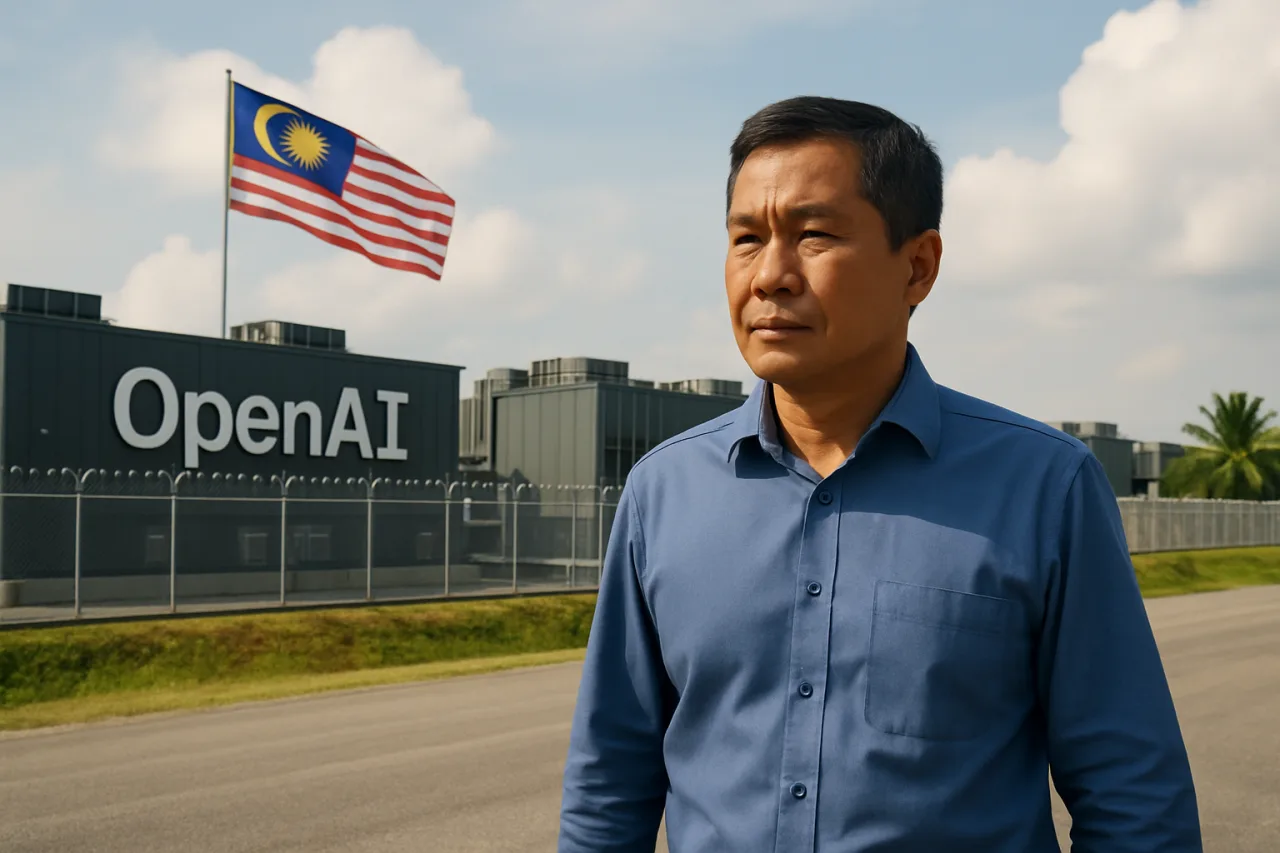
AI data centers in Malaysia became OpenAI’s newest frontline this week: the ChatGPT maker signed on as anchor customer for two Firmus Technologies data centers in Malaysia, a multi-year deal announced Tuesday, September 9, 2026, that pushes the Australian infrastructure company past 900 megawatts of contracted capacity. “This multi-year partnership marks the moment Asia-Pacific becomes a producer of intelligence, not just a consumer of it,” said Tim Rosenfield, Firmus’s co-founder and co-CEO — a claim worth taking apart, because if it holds, Southeast Asia’s role in the AI economy changes from renting compute to selling it.
Related: AI Data Center Power Proven: How AI’s Grid Problem Works
Related: Southeast Asia AI Infrastructure Race: The Gigawatt Week That Priced t
Key Takeaway
- 🌏 The deal: OpenAI will contract dedicated compute from two Firmus AI factory sites in Malaysia, running Nvidia’s next-generation Vera Rubin processors — confirmed by Reuters, MarketWatch, and TechNode Global on September 9.
- 📈 The scale: the partnership lifts Firmus’s total contracted capacity past 900 MW across Asia-Pacific, with two sites operational in Australia and Singapore and five more under development over the next 24 months.
- 💰 The money trail: Firmus raised $2 billion at a $10.5 billion valuation in August, with Nvidia, Coatue, and Blackstone on the register — and the OpenAI contract lands weeks before a rumored IPO that could be one of Australia’s largest.
- 🇵🇭 Why it matters here: Malaysia just leapfrogged the Philippines in the regional AI infrastructure race — and the gap between the two countries is now a policy choice, not a fate.
The deal’s mechanics are straightforward and the implications are not. Firmus will deploy Nvidia’s Vera Rubin processors at scale across Asia-Pacific, integrating Vera Rubin NVL72 rack-scale systems with its proprietary HyperCube platform — a prefabricated infrastructure unit combining liquid cooling, mechanical systems, and electrification, manufactured in regional New South Wales. OpenAI’s vice president of compute strategy, Sachin Katti, framed the deal plainly: “These new data centers in Malaysia will help us serve growing demand for OpenAI’s products across the region and around the world.” Reuters reported that financial terms and OpenAI’s specific power allocation were not disclosed, and that the deal comes ahead of a rumored Firmus IPO this year. Shares of Maas Group, an Australia-listed investor in Firmus, rose 4.2 percent on the announcement — the market’s verdict on who just won. The infrastructure economics behind deals like this one — and why AI data centers now compete with national grids for power — are the same forces we tracked in the AI server price shock coverage earlier this season.
Inside the Firmus OpenAI Malaysia Deal
Strip the press-release language and the arrangement is a triangle: American chips (Nvidia Vera Rubin), Australian engineering (Firmus’s HyperCube prefab units), Malaysian electricity and land, sold to an American customer (OpenAI) to serve users worldwide. Each corner of that triangle tells you something about where the AI economy is heading. The chips confirm Nvidia’s grip on the frontier remains total. The prefab model shows infrastructure is becoming a manufacturing business — repeatable units built in a factory, shipped, and stacked, rather than bespoke construction projects. And the Malaysian siting confirms what regional watchers have tracked for a year: Southeast Asia has become the fastest-growing AI data center market on Earth, with Malaysia emerging as the preferred destination despite concerns over electricity and water use that local regulators are only beginning to grapple with. The full Reuters filing documents the terms, including what was left undisclosed.
The deal also completes OpenAI’s regional hedging strategy. Within days, OpenAI locked in compute from the US (the DOE’s $1.9 billion loan to restart an Iowa nuclear plant for Google’s benefit shows how scarce power has become even in America), Europe, the Gulf, and now Southeast Asia. For a company burning capital to serve hundreds of millions of weekly users, geography is risk management: every new grid is a hedge against the energy politics of the last one. Malaysia’s entry into that portfolio is the region’s ticket into the compute oligopoly — and the first time an anchor OpenAI tenancy has landed on Philippine-adjacent soil.
“Producer of Intelligence” — Testing the Claim
Rosenfield’s line is the quote the deal will be remembered by, so it deserves an honest reading. The case for it: tokens generated in Malaysia will serve OpenAI users across the region and globally, which is a literal production of intelligence — computation transformed into economic output on Southeast Asian soil, employing local technicians, paying local power bills, anchored to local grids. That is structurally different from the consumption model, where the region buys AI services billed from abroad. Firmus’s own numbers support the trajectory: past 900 MW contracted, two sites live, five under construction with ready-for-service targets inside 24 months.
The case against is equally concrete. The hardware is American, the customer is American, the platform stack (Nvidia’s DSX AI Factory) is American, and the intellectual property above the compute — the models, the weights, the revenue — flows to San Francisco and its investors. TNW’s analysis put it plainly: the OpenAI contract “is the most valuable page in the prospectus,” announced from Sydney one week before a rumored IPO. Malaysia is hosting the factory, not owning the recipe. Whether “producer of intelligence” means manufacturing capacity or economic sovereignty is exactly the question regional policymakers should be asking — because the two definitions lead to very different national strategies. Both things are true at once: Asia-Pacific now produces compute it never produced before, and the profits and models still ride home on American planes.
What 900 Megawatts of AI Data Centers Actually Means
A megawatt is an abstraction until you price it. One megawatt of IT load supports roughly enough computing for tens of thousands of concurrent AI users, and the rule of thumb across the industry is that each rack of frontier-grade accelerators draws 50 to 120 kilowatts — meaning Firmus’s 900 MW contracted portfolio represents thousands of racks of the most sought-after hardware on the planet. At typical industry build costs of $10 million to $15 million per megawatt, the Firmus pipeline implies billions in physical plant across seven sites — money flowing into construction trades, power infrastructure, and local employment wherever the AI data centers rise. For context, the entire Philippine grid serves peak demand near 17,000 MW; one anchor customer’s contracted AI load across a single regional company now approaches five percent of that national figure. That is the scale at which this industry now negotiates with countries, not just utilities.
The power arithmetic is why the region’s map is being redrawn. Malaysia’s attraction is not mystery — it is the combination of relatively affordable industrial electricity, land at scale, government incentives, and grid capacity that can absorb hyperscale demand, all within fiber reach of Singapore’s financial customers. The Philippines competes on some of those axes and loses on others today, but the window is measured in years, not decades: AI data centers are the rare infrastructure class where a five-year national sprint can still capture a durable share, because demand is growing faster than any single country can build. Investors tracking this convergence through listed vehicles already have a Philippine entry point, which we mapped in the data center REIT guide — the capital market is pricing in the same race this deal just accelerated. The governments that treat compute as strategic infrastructure, the way Gulf states treated desalination a generation ago, will own the next decade’s industrial geography; the rest will host everyone else’s.
Why the Philippines Should Read This Deal Twice
The uncomfortable comparison is with the Philippines, which has been racing to build its own AI infrastructure story — a push we documented in our report on the Philippine AI infrastructure drive, anchored on New Clark City, and in our analysis of whether the Pax Silica partnership can turn the Philippines into an AI power. Malacañang confirmed on September 1 that no proposal yet exists to establish AI data centers beyond New Clark City — a sentence that reads differently after Malaysia signed an anchor customer the same week. The Philippine advantages are real: English-speaking engineering talent at scale, submarine-cable density, and a power market actively courting industrial demand. The disadvantages are now quantified: Malaysia moved first, and in infrastructure races, first movers compound — grids, permits, workforces, and anchor customers stack advantages year over year. The honest scorecard after this week: Malaysia has an OpenAI anchor tenancy, a $2 billion infrastructure backer, and a public playbook; the Philippines has the talent, the demand, and the geography — and is one anchor-tenant signature away from making that race real.
The lesson from the Firmus deal is not that the Philippines lost; it is that the entry ticket is knowable and the playbook is public. Firmus assembled three ingredients — cheap power, prefab construction technology, and an anchor customer’s signature — and turned them into a 900 MW franchise in under three years. Any element of that formula is procurable by Philippine actors: the power through the grid modernization programs already underway, the anchor through government and enterprise offtake agreements, the construction expertise through partnership rather than reinvention. What cannot be postponed is the decision. Every quarter of delay widens the gap between hosting the region’s intelligence and merely consuming it — and the difference, as this deal shows, is measured in gigawatts, not talking points. The Philippines has the talent to staff AI data centers and the demand to fill them; what separates ambition from a signed contract is exactly the kind of week Malaysia just had.
For OFW professionals, the deal’s meaning is more immediate than national strategy. AI data centers are becoming a global employment sector — electrical and mechanical technicians, network engineers, facilities managers, safety officers — with Firmus alone building seven sites across four countries. Filipino engineers already staff data centers in Singapore, and Malaysia’s expansion will hire from the same regional pool. The workers who gain in this cycle are the ones who add data-center certifications to their portfolios while the build-out is young. The Philippines can send its workers to the region’s AI factories, or build its own — the smartest version of the next decade is both. And for professionals watching capital markets rather than job boards, the same convergence shows up in listed infrastructure plays, which is why our Philippine data center REIT analysis pairs naturally with this deal.
Frequently Asked Questions About the Malaysia AI Data Centers Deal
What is the Firmus-OpenAI deal?
Australian AI infrastructure firm Firmus Technologies signed OpenAI as anchor customer for two data centers in Malaysia under a multi-year partnership announced September 9, 2026. OpenAI will contract dedicated compute capacity; the deal lifts Firmus’s total contracted capacity past 900 megawatts.
Where exactly are the AI data centers located?
The two Malaysian sites join Firmus’s regional portfolio — two operational AI factories in Australia and Singapore, and five more under development across Asia-Pacific with ready-for-service targets over the next 24 months. The Malaysian facilities will run Nvidia’s Vera Rubin processors on Nvidia’s DSX platform combined with Firmus’s HyperCube liquid-cooled prefab units.
Why does OpenAI want compute in Malaysia?
Geographic diversification. OpenAI is contracting capacity across the US, Europe, the Gulf, and now Southeast Asia to serve global demand and hedge against power constraints in any single market. Malaysia is currently Southeast Asia’s fastest-growing AI data center market, per TechNode Global’s reporting on the deal.
Does this mean Malaysia will “produce intelligence”?
Partially. Firmus co-CEO Tim Rosenfield called it “the moment Asia-Pacific becomes a producer of intelligence, not just a consumer of it” — and compute generated in Malaysia will indeed serve regional users. But the chips, models, and platform remain American, so Malaysia hosts production while the models and revenues remain foreign-owned. Host economy, foreign brain.
What does this mean for the Philippines?
It is a benchmark. The Philippines’ AI infrastructure plans remain centered on New Clark City with no additional proposals confirmed as of September 1, 2026, while Malaysia just secured the region’s first OpenAI anchor tenancy. The deal’s playbook — cheap power plus prefab construction plus anchor customer — is replicable, and Filipino data-center engineers are already in demand across the region for the same build-outs.
The race for AI data centers is no longer a headline from another hemisphere; it is a decision the Philippines is watching from the front row. Malaysia just showed what one anchor tenant changes, and the next move in Southeast Asia’s compute map is still available to be made.