Table of Contents
Key Takeaway
- 🚨 Demand Surge: Switzerland needs 120,000+ foreign workers by 2027, and Filipino professionals in healthcare, hospitality, and engineering are among the most sought-after — OFW SwitzerlandGuide opportunities are expanding rapidly in 2026.
- 💰 Salary Range: OFW workers in Switzerland earn CHF 3,500-8,000/month (PHP 225,000-515,000), the highest salary range among European OFW destinations.
- 🎯 Visa Pathway: The Swiss B Permit for qualified workers is the primary route, requiring a confirmed job offer, recognized qualifications, and minimum salary thresholds set by canton.
- ⚡ Cost Warning: Switzerland has the highest cost of living in Europe — budget CHF 2,000-3,000/month for basic expenses. Your higher salary must account for this.
- 🛡️ Pro Tip: Apply through Swiss federal job portal ch.ch and verify employers against the cantonal registry — illegal recruitment for OFW Switzerland jobs is rising as demand outpaces legitimate channels.
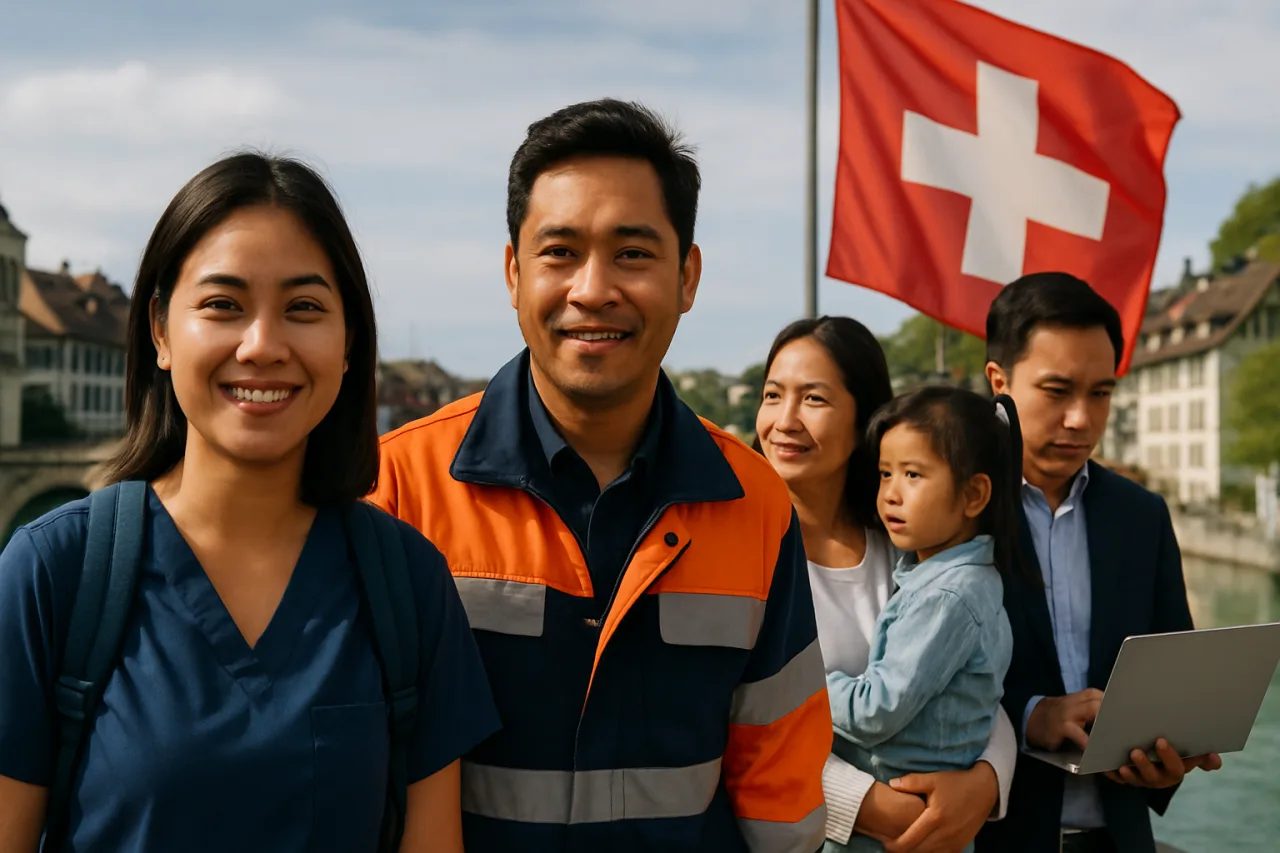
For Filipino professionals seeking the highest-paying OFW destination in Europe, an OFW Switzerland career path offers unmatched earning potential. Switzerland’s combination of world-class salaries, strong labor protections, and a growing demand for foreign skilled workers makes it one of the most attractive destinations for OFW professionals in healthcare, engineering, hospitality, and information technology. In 2026, the Swiss government has expanded work permit quotas for non-EU nationals, creating more opportunities than ever for qualified Filipino workers to build careers in the heart of Europe. This guide covers everything you need to know — from visa requirements and salary expectations to cost of living and permanent residency pathways.
Why OFW Switzerland Is Booming in 2026
Switzerland faces a critical labor shortage that intensifies every year. With an aging population, low birth rate, and one of the highest GDPs per capita globally, the country cannot fill positions from its domestic workforce alone. The Swiss Federal Statistical Office reports that 25% of the workforce is foreign-born — and that percentage is growing.
For OFW workers specifically, several 2026 developments make Switzerland more accessible than ever. The updated Swiss Immigration Act expanded the B Permit quota for non-EU qualified workers from 8,000 to 10,500 annually. Healthcare sector demand has surged 18% year-over-year, with Swiss hospitals actively recruiting Filipino nurses and caregivers. The hospitality industry, still recovering from pandemic-era staffing losses, is offering permanent contracts with housing benefits to Filipino hotel workers.
An OFW Switzerland career now extends beyond traditional caregiver roles. Filipino engineers, IT professionals, accountants, and culinary workers are finding opportunities in Zurich, Geneva, Basel, and Bern — cities that offer some of the highest salaries in the world. If you’re comparing European OFW destinations, OFW Norway and OFW Denmark also offer excellent salary packages, though with different visa structures.
Salary Guide by Sector
| Sector | Role | Monthly (CHF) | Monthly (PHP) | Annual (CHF) |
|---|---|---|---|---|
| Healthcare | Registered Nurse | 5,500-7,000 | 355,000-452,000 | 66,000-84,000 |
| Healthcare | Caregiver / Elderly Care | 3,500-4,500 | 226,000-290,000 | 42,000-54,000 |
| Hospitality | Hotel Receptionist | 4,000-5,000 | 258,000-323,000 | 48,000-60,000 |
| Hospitality | Executive Chef | 5,500-8,000 | 355,000-516,000 | 66,000-96,000 |
| Engineering | Mechanical Engineer | 6,000-8,000 | 387,000-516,000 | 72,000-96,000 |
| IT | Software Developer | 6,500-9,000 | 420,000-581,000 | 78,000-108,000 |
| Finance | Accountant | 5,500-7,500 | 355,000-484,000 | 66,000-90,000 |
Exchange rate: 1 CHF = approximately PHP 64.50 (as of June 2026)
Visa Pathways for OFW Switzerland Workers
Switzerland uses a dual permit system that distinguishes between EU/EFTA nationals and non-EU workers. As a Filipino citizen, you fall under the non-EU category, which means you need a specific work permit tied to a confirmed job offer.
B Permit (Aufenthaltsbewilligung): The primary work permit for non-EU professionals. Valid for 1-2 years, renewable. Requires a confirmed job offer from a Swiss employer who has proven they could not find a qualified candidate from Switzerland or the EU. Quota-limited: 10,500 permits available annually for non-EU workers in 2026.
L Permit (Kurzaufenthaltsbewilligung): Short-term permit valid for up to 1 year. Used for seasonal work, temporary assignments, or internship positions. Can be upgraded to a B Permit if the employer extends the contract. Quota-limited at 4,000 annually.
C Permit (Niederlassungsbewilligung): Permanent residence permit. Available after 5-10 years of continuous residence (5 years for US/Canadian citizens, 10 years for other nationals including Filipinos). Grants unrestricted work access and property purchase rights.
2026 Changes: The Swiss Federal Council reduced the C Permit waiting period for highly qualified non-EU workers from 10 years to 5 years for those with a Swiss university degree or earning above CHF 120,000 annually. This benefits Filipino professionals with advanced degrees and senior positions.
Cost of Living Breakdown
| Expense Category | Monthly (CHF) | Monthly (PHP) | Notes |
|---|---|---|---|
| Shared Housing | 800-1,200 | 51,600-77,400 | Outside city center |
| Private Studio | 1,300-1,800 | 83,850-116,100 | City center |
| Food / Groceries | 400-600 | 25,800-38,700 | Cooking at home |
| Health Insurance | 300-500 | 19,350-32,250 | Mandatory by law |
| Transportation | 100-200 | 6,450-12,900 | Half-fare travelcard |
| Phone / Internet | 50-80 | 3,225-5,160 | Prepaid + WiFi |
| Miscellaneous | 200-400 | 12,900-25,800 | Clothing, personal care |
| Total (Shared) | 2,050-2,980 | 132,225-192,210 |
Remittance Strategy for OFW Switzerland Workers
With Swiss franc salaries and Philippine peso expenses, your remittance strategy can save or lose thousands of pesos per month. The key is minimizing conversion fees and transfer costs.
Wise (Recommended): Transfers from CHF to PHP cost 0.5-1.0% in fees. Mid-market exchange rate with no markup. Transfer time: 1-3 hours. Most OFW Switzerland workers save CHF 30-50/month compared to bank transfers. Sign up for Wise
Bank-to-Bank (UBS, Credit Suisse to BPI, BDO): 2-4% total cost including exchange rate markup and fees. Transfer time: 3-5 business days. Useful for large one-time transfers.
Remittance Centers (Western Union, Tess Pay): 3-6% total cost. Fastest option for cash pickup. Best for emergency remittances only.
Employment Sectors Deep Dive
Healthcare: Swiss hospitals and care homes are the top employers for OFW Switzerland workers. The Federal Office of Public Health projects a shortage of 30,000 nurses by 2028. Filipino nurses with IELTS 7.0+ and at least 2 years of experience are highly competitive. Swiss employers typically cover German/French language training, health insurance, and provide housing assistance.
Hospitality: Hotels in Zurich, Geneva, and Interlaken recruit Filipino workers for front desk, housekeeping management, and food and beverage roles. Major employers include Marriott, Hilton, and Swiss hotel chains like Victoria Jungfrau. Most positions include housing subsidies and meals on duty.
Engineering and IT: Swiss companies in Basel (pharmaceutical engineering), Zurich (financial technology), and Lausanne (biotech) hire Filipino engineers and developers. English is widely spoken in these sectors. Salaries are the highest among OFW Switzerland roles but require advanced degrees and 3+ years of experience.
Pre-Departure Requirements for OFW Switzerland
Before departing for Switzerland, Filipino workers must complete these steps:
1. DMW Registration: Register with the Department of Migrant Workers and obtain an Overseas Employment Certificate (OEC). Verify your recruiter is DMW-licensed.
2. Swiss Work Permit Approval: Your employer applies for your B or L permit through the cantonal migration office. You cannot enter Switzerland to work without permit approval.
3. NBI Clearance: Obtain a valid NBI clearance (required by both DMW and Swiss authorities). Processing time: 5-10 working days.
4. Medical Examination: Complete a medical exam at a DMW-accredited clinic. Swiss employers may also require a separate medical assessment.
5. Language Requirements: Healthcare workers must demonstrate B1-level German or French (depending on the canton). Some employers provide language training post-arrival, but having a certificate before departure significantly strengthens your application.
6. Diploma Authentication: Have your degrees authenticated by the DFA (Apostille convention applies to Switzerland) and, for regulated professions, recognized by the Swiss Red Cross or relevant professional body.
Rights and Protections for OFW Switzerland Workers
Switzerland has among the strongest labor protections in the world. As an OFW Switzerland worker, you are entitled to:
Minimum Wage: While Switzerland has no national minimum wage, cantonal minimums apply. Geneva’s minimum wage is CHF 23.27/hour (the highest in Europe). Your work permit is tied to a minimum salary threshold that ensures you earn above the local standard.
Working Hours: Maximum 45 hours/week for industrial workers, 50 hours for non-industrial. Overtime must be compensated at 125% salary or time off. Most OFW Switzerland workers report 40-42 hour weeks.
Paid Leave: Minimum 4 weeks paid vacation annually (5 weeks for workers under 20). Public holidays vary by canton (typically 9-13 per year). Maternity leave: 14 weeks at 80% salary.
Health Insurance: Mandatory for all residents. Employer does not pay health insurance directly, but your salary reflects this cost. Monthly premiums range from CHF 300-500 depending on deductible and canton.
Path to Permanent Residency
For OFW Switzerland workers seeking long-term settlement, the path to permanent residency is clear but requires patience:
Year 1-2: B Permit (tied to employer). Build language skills and professional network.
Year 3-5: B Permit renewal. Demonstrate integration (language proficiency, tax compliance, no criminal record).
Year 5-10: Apply for C Permit when eligible. Standard requirement: 10 years continuous residence. Fast-track (5 years): Swiss university degree OR annual income above CHF 120,000.
Year 10+: C Permit holders can apply for Swiss citizenship after 10 years of residence (3 of the last 5 years before application). Dual citizenship is permitted — you do not need to renounce Philippine citizenship.
Common Pitfalls and How to Avoid Them
Illegal Recruiters: Only DMW-licensed agencies can recruit Filipino workers for Switzerland. Verify your agency at dmw.gov.ph. Never pay placement fees for jobs in Switzerland — Swiss employers cover recruitment costs by law.
Underestimating Living Costs: Switzerland’s cost of living shocks many first-time OFW workers. A CHF 4,000/month salary sounds impressive until you realize your expenses are CHF 2,500+. Budget carefully before committing.
Language Barriers: Switzerland has four official languages (German, French, Italian, Romansh). The canton where you work determines which language you need. Healthcare workers in Zurich need German; those in Geneva need French. Start language training before departure.
Ignoring Tax Obligations: Switzerland taxes foreign workers at source (withheld by employer). However, if you earn above the cantonal threshold, you must file a tax return. Failure to file can result in penalties and permit renewal problems. To maximize your Swiss salary, use Wise for OFW transfers to avoid hidden fees when remitting to the Philippines.
Frequently Asked Questions (FAQ)
Q: How much can an OFW Switzerland worker remit monthly?
A: After living expenses of CHF 2,000-3,000/month, most OFW Switzerland workers remit CHF 1,000-3,000/month (PHP 64,500-193,500). Healthcare workers on B Permits typically remit CHF 1,500-2,500/month consistently.
Q: Do I need to speak German or French to work in Switzerland?
A: For healthcare and social work: yes, B1 minimum is required. For IT, engineering, and academia: English may suffice, but learning the local language dramatically improves job prospects and daily life quality.
Q: How long does the Swiss work permit process take?
A: 6-12 weeks from application to approval. Your employer submits the application to the cantonal migration office. Processing times vary by canton — Zurich and Geneva are slowest (8-12 weeks), smaller cantons may be faster (4-6 weeks).
Q: Can my family join me in Switzerland?
A: B Permit holders can apply for family reunification after 12 months of residence. Family members receive B Permits with work authorization. You must prove you can support your family (adequate housing and income above the social assistance threshold).
Q: Is Switzerland better than other European OFW destinations?
A: Switzerland offers the highest salaries in Europe but also the highest cost of living. Net savings potential (salary minus expenses) is comparable to Norway and Denmark. The main advantages are: political stability, high safety standards, efficient public services, and a clear path to permanent residency.
Q: What happens if I lose my job in Switzerland?
A: B Permit holders have 90 days to find new employment before the permit expires. Swiss unemployment insurance provides 70-80% of your previous salary for up to 2 years (after completing 12+ months of contributions). Register with the RAV (regional employment office) immediately.
Q: Can I switch employers on a Swiss B Permit?
A: Yes, but your new employer must apply for a new work permit. You cannot start working for the new employer until the permit is approved. The 90-day unemployment rule applies during the transition. For more on OFW employment rights abroad, see our OFW Deployment Guide 2026.
Q: Do I need OWWA membership for OFW Switzerland work?
A: Yes. OWWA membership is mandatory for all OFW workers regardless of destination. Benefits include life insurance, education assistance for dependents, and repatriation assistance. Register at the DMW office before departure.
Q: How are OFW Switzerland workers taxed?
A: Non-EU workers on B Permits are taxed at source — your employer withholds tax from your salary monthly. Tax rates vary by canton and range from 10-25% depending on income, marital status, and canton of residence. You do not need to file a separate tax return unless your income exceeds cantonal thresholds.
Disclaimer: This article is for informational purposes only. Salary figures, visa requirements, and regulations are subject to change. Always verify current requirements with the Swiss embassy and DMW before making employment decisions. Remittance rates vary by provider and date. This post contains affiliate links — we may earn a commission if you sign up through our links at no extra cost to you.