Key Takeaway
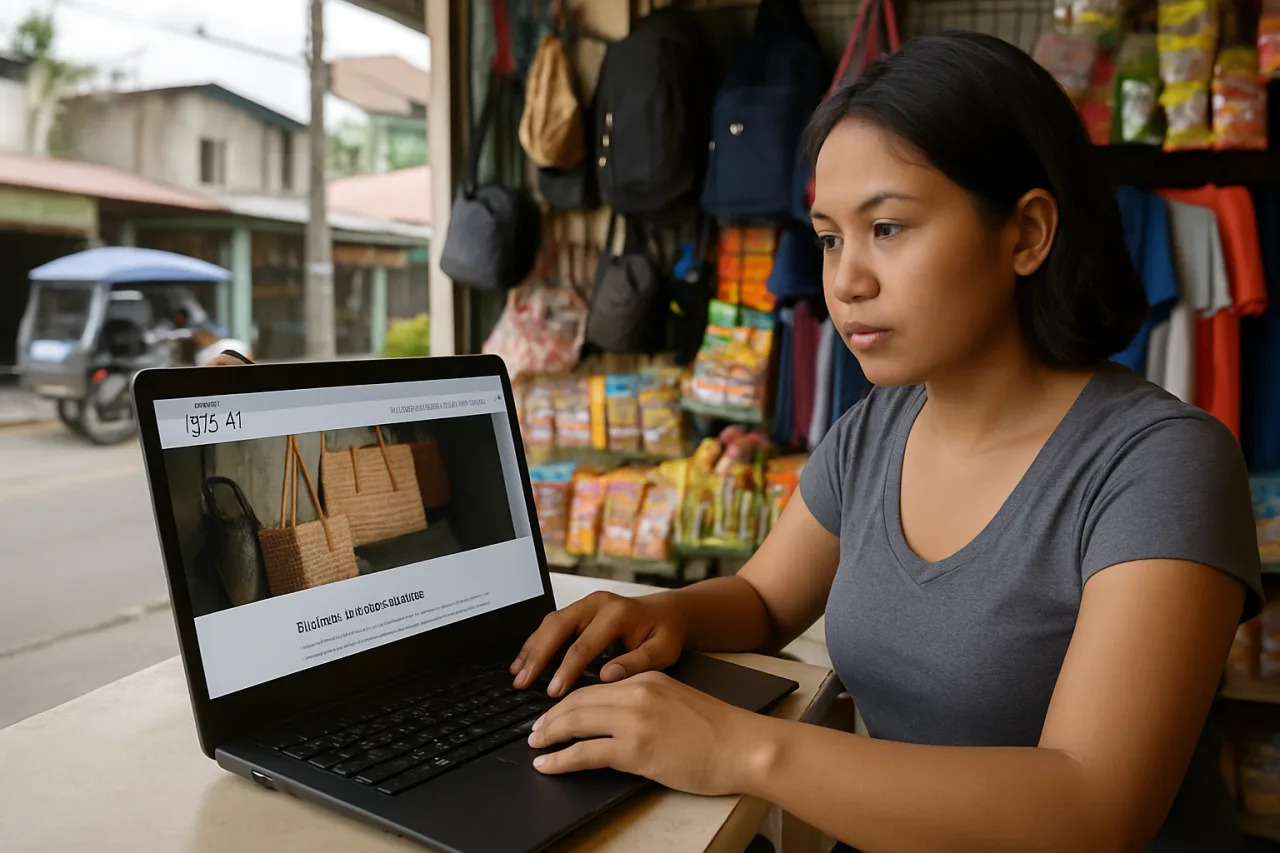
- 🏪 The AI website builder promise is real for Philippine small businesses: describe your shop in a paragraph, and Hostinger’s builder drafts a complete site — pages, layout, text, images — in minutes, refined live in an afternoon.
- 💸 The price anchor: entry plans run under $3/month on current promos (about ₱170) — versus the ₱15,000-30,000 quotes local freelance developers quote for a simple business site.
- 📝 The 7-step flow: describe the business → pick the AI draft → fix the text in plain Filipino-English → connect the domain → set payments/booking links → publish → point your Facebook page at it.
- ⚠️ The honest limits: AI drafts are starting points, not finished sites — expect to rewrite the copy in your own voice, check mobile rendering on real phones, and expect zero SEO magic without content work.
- 🇵🇭 The real unlock for PH businesses: a website the owner can edit themselves beats a beautiful site that needs a developer for every price change — and the AI builder’s edit-as-you-see-it interface is the first one sari-sari owners actually maintain.
Every Filipino small business has heard the quote: ₱30,000 for a “simple” five-page website, three weeks delivery, and a developer who answers slowly after launch. The AI website builder flips that equation in 2026 — you describe your shop in a paragraph, the builder drafts the whole site, and you edit it like a document until it’s yours, live, for the price of a monthly cell load. This guide walks the actual flow on Hostinger’s builder (the tool this site’s hosting guides use), the seven steps from description to live URL in one afternoon, the honest limits no marketing page prints, and the checklist that tells you whether your business needs this — or something else.
Table of Contents
What an AI Website Builder Actually Does
The AI website builder category works like this: you answer a few questions (business type, name, services, tone), and the AI generates a complete first draft — homepage, about page, contact page, service pages, written copy, stock imagery, mobile-ready layout. You then edit the draft the way you’d edit a document: click text to change it, swap images, drag sections. The technology is genuinely new-capability — the draft arrives 70-80% usable, per this guide’s own experience running these tools — and the remaining 20% is your voice, your photos, your prices. Two honest clarifications the marketing skips: an AI website builder is not a developer (it cannot build custom booking logic or integrations your workflow invents), and it is not SEO (it produces clean structure, but rankings come from content and reviews — the work after launch). For the standard Filipino small-business need — a credible, current, owner-maintainable site — the builder category is now genuinely good enough, and the price is the rest of the story.
Step 1: Describe Your Business — the Brief That Controls Everything
The AI website builder draft is only as good as the brief: what the business does, who it serves, what makes it different, what a visitor should do (order, book, message, visit). The sari-sari-to-service template this guide recommends: “I run [business name], a [type of business] in [city]. We serve [customers] who need [main need]. My services are [list 3-5 with prices]. Customers should [call/Message/book/visit]. My tone is [warm/professional/family-run].” Paste it into the builder’s AI prompt and the specificity pays off immediately: vague briefs (“bakery in Laguna”) produce generic drafts; briefs with prices, service names and a location produce drafts that need 20% editing instead of 60%. The one professional trick: put your best sentence in the brief — the line you’d say to a walk-in customer — because the AI will build the homepage around the strongest raw material you give it.
Step 2: the AI Draft — What You Get in Two Minutes
Two minutes after the brief, the draft exists: a homepage with your business name, a hero section, service cards with the descriptions you listed, an about section written from your tone instructions, a contact block, and filler images standing in for yours. On Hostinger’s builder the draft includes the text the AI wrote from your brief — genuinely usable framing copy that needs your facts (prices, hours, exact services) more than rewriting. The evaluation habit for the draft: judge it like a contractor’s first mockup, not a finished site — check the structure (does the page order match how customers think about your business?), check the mobile view first (most Filipino customers arrive on phones), and list the three worst text lines for editing. The draft is where the AI website builder earns its “afternoon” promise: the alternative — briefing a developer, waiting a week, reviewing a mockup, revising — consumes the same afternoon and produces less control.
Step 3: the Afternoon Edit — Text, Images, Layout
The AI website builder edit pass is where the site becomes yours: Text first: fix prices and service names to exact reality (AI-written prices are placeholders — the one error that embarrasses), rewrite the about paragraph in your own words, and cut any sentence you wouldn’t say to a customer. Images: swap the stock photography for your own phone photos — your actual store, your actual work, your actual team — because the single biggest credibility gap in AI-built sites is stock imagery where customers expect reality; six good phone photos outperform thirty stock ones. Layout: keep the draft’s structure (it’s professionally arranged), fix only what bothers you — section order, one banner image, the contact button’s position. The trap to avoid: tweaking for two days. The draft-plus-edit model works because “good enough and live” beats “perfect and coming soon” — your customers are on Facebook today; they can be on your site by tonight.
Step 4: Domain, Payments and the Facebook Bridge
Three launch mechanics finish the afternoon. Domain: a .ph or .com domain (₱700-900/year) beats the free subdomain for credibility — a business card that reads yourbusiness.com instead of yourbusiness.hostingsite.com is the difference between a web address and a web apology; the builder’s plan usually includes a free first-year domain. Payments and contact: wire the ways customers actually pay and reach you — GCash number or Maya link in the header, the order form sending to your Messenger or email, the phone number tap-to-call on mobile. The builder handles the links; the judgment call is showing payment options prominently (Filipino customers look for the GCash logo before the About page). The Facebook bridge: the step most guides skip — add the new URL to your Facebook page’s button and bio, because your existing followers are the site’s first visitors and its first review generators. The AI website builder site plus your existing Facebook audience is the full loop; neither alone is the business’s web presence.
The Honest Limits — Where the Builder Stops
Four limits the launch-day euphoria hides. Custom functionality: complex booking systems, member logins, custom integrations are beyond builder scope — the moment your business needs them, it needs a developer, and the builder was the bridge, not the destination. SEO reality: the builder produces clean structure and fast pages, but rankings come from content, reviews and local listings — the site you built today needs the Google Business Profile, the customer-review flow and the content updates this site’s SEO guides teach, or it will be a beautiful invisible page. Copy quality ceiling: AI-written text is competent and generic; your voice, your testimonials, your actual photos are the differentiation — the sites that win add those within the first month. The maintenance promise: the builder’s real advantage is that you can edit — a price change takes 30 seconds, no developer ticket — but only if you actually do it; the sites that fail are the ones launched and abandoned. The AI website builder is honest infrastructure: it lowers the cost of being online; it does not lower the cost of being good.
The Cost Math, the Prices, the Verdict
The AI website builder numbers, verified against the 2026 reviews: Hostinger’s website builder plans run under $3/month on current promos (tooltester’s review notes the plan supports up to 100 sites with AI features included), roughly ₱170/month at current rates — versus the ₱15,000-30,000 one-time quote for a developer-built simple site that then costs ₱500-1,500 per update request. The math resolves over year one: the builder route costs about ₱2,000-2,400 including the domain, pays monthly, and stays owner-editable; the developer route costs 100× the annual price upfront, and every change after launch re-enters the queue. The verdict for the standard Filipino small business — shop, salon, tutorial services, catering, repair, BPO-adjacent services — is a genuine recommendation: the AI website builder delivers a credible site at 1% of the developer quote, editable by the person who knows the business. The verdict against: businesses needing custom systems, heavy e-commerce catalogs, or content-driven SEO plays — those are WordPress-and-developer territory, and this site’s migration guide covers that path. For everyone else, the afternoon is the price and the website is the asset.
Affiliate disclosure: WorldNgayon may earn a small commission when you use our links, at no extra cost to you. Full details on our disclaimer page.
Frequently Asked Questions
What is the best AI website builder for Filipino small businesses?
Hostinger’s AI builder is the value pick for 2026: AI drafting included on plans under $3/month (about ₱170), a free first-year domain, and hosting included — versus Wix’s higher entry price and Squarespace’s design-first pricing that suits studios more than sari-saris. The honest comparison: any builder on the under-$5 comparison list works; the decision factors are price, included domain, and how comfortable the owner is with the editor.
How much does an AI website builder cost?
Under $3/month on Hostinger’s current promos — roughly ₱170/month with the domain included in year one — against ₱15,000-30,000 for a developer-built simple site plus ₱500-1,500 per update after launch. The builder route wins on total cost of ownership for any business that updates its own prices, hours or promos more than twice a year.
Can AI really build my whole website?
The AI website builder builds the draft: complete pages, layout, competent copy and imagery from your business description — typically 70-80% of a simple business site. The remaining 20% is yours: exact prices, your own photos, your voice in the text, and the contact/payment links. What AI does not build: custom booking systems, complex integrations, or content strategy — the builder gets you live; the work after launch makes you found.
Do I need coding skills to use an AI website builder?
None — the entire interaction is typing descriptions and clicking to edit, closer to using a document editor than any traditional tool. The one skill that matters is writing your brief clearly (this guide’s template) and doing the afternoon edit honestly. Owners who can operate Facebook’s business tools can operate this.
Will my AI-built website rank on Google?
Structure yes, rankings earned: the builder produces fast, mobile-ready, properly structured pages — the technical foundation is handled. Rankings come from what you add after launch: a Google Business Profile, customer reviews, useful content and local keywords. The builder is the foundation; the SEO work this site’s guides teach is the building. AI-built sites that stay static stay invisible.
Can I use my own domain name?
Yes — connect a domain you own (₱700-1,200/year for .com or .ph) or claim the free first-year domain included with the hosting plan. The professional rule: a real domain (yourbusiness.ph) on your cards, receipts and Facebook page outperforms the free subdomain for trust — and it transfers with you if you ever move builders.
Final Word: the Afternoon Is the Whole Point
The AI website builder revolution is not technological — it is economic: the ₱30,000 quote becomes a ₱170/month subscription, the three-week wait becomes an afternoon, and the maintenance dependency becomes a self-serve edit box. The Filipino small businesses that win with it are the ones that treat the AI draft as a beginning: their photos in, their prices exact, their voice in the copy, their Facebook audience pointed at the new address. The afternoon it takes is the smallest investment a business can make in owning its corner of the internet — and in 2026, with the tools this good and the price this low, the honest reason not to have a website has finally run out.