Table of Contents
The AI stocks selloff absorbed a record earnings week. TSMC Q3: NT$763.06B net profit (~$23.55B), +68.7% — sixth straight record — but the ADR closed -1.80% | CoreWeave: $50B debt, bonds near 15%, shares fell as much as 8.3% | Nvidia: $105B OpenAI Ohio guarantee meets a lender reality-check; stock -3.2% to $221.30 | Thursday: Dow +556 (+1.08%) while the Nasdaq sat at a near one-month low
Key Takeaway
- 📊 The AI stocks selloff just swallowed a record earnings print: TSMC reported its sixth straight record quarter (net profit +68.7% to NT$763.06B ≈ $23.55B) – and the stock fell 1.8% anyway. When record profits can’t lift a stock, the market is pricing something else: financing risk.
- 💸 The debt layer is the story: CoreWeave – the biggest AI-cloud borrower with Nvidia on its shareholder register – carries about $50B in debt; its bonds surged toward 15% yields, and its shares fell as much as 8.3% this week. Investors are repricing who eats the losses if AI financing wobbles.
- 🏦 Nvidia’s $100B+ financing bet met a lender reality-check: Reuters reports lenders are demanding higher guarantees than Nvidia originally outlined for the OpenAI data-center leases (up to $105B of residual-value guarantees on the 4.25GW Ohio campus), because modeling how long chip revenue lasts is hard.
- 🔄 Thursday rotated, not crashed: the Dow jumped 556 points (+1.08%) to 52,183 while AI-linked names stayed wounded (Nvidia -3.2% on the day, AMD -5.6% mid-week); the S&P 500 snapped a 3-day losing streak at 7,744 (+0.33%). Money is moving inside the market – not leaving it.
- 🧭 The investor takeaway: separate the AI trade into two ledgers – companies with debt-funded growth (CoreWeave, and everything that borrowed like it) versus companies funding expansion from cash flows (TSMC itself). The selloff is a financing repricing, not (yet) a demand failure – TSMC’s CEO called AI demand “extremely robust” and confirmed talks to join Musk’s Terafab complex in Texas.
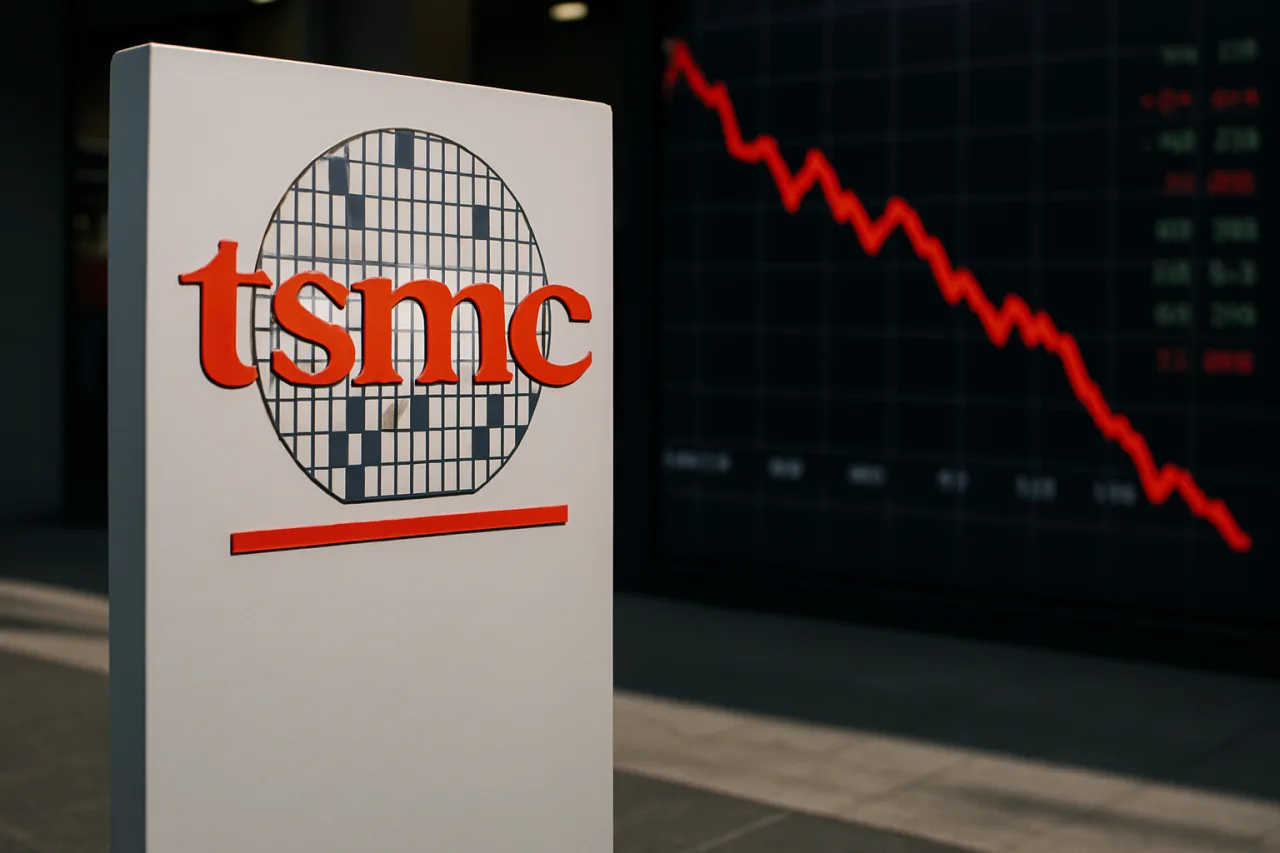
AI stocks selloff is the phrase that swallowed one of the strongest earnings weeks of the year. On Thursday, Taipei’s TSMC – the semiconductor foundry behind nearly every advanced AI chip on earth – reported third-quarter net profit of NT$763.06 billion, about $23.55 billion, up 68.7% from a year earlier (CNBC on the sixth straight record). It was the sixth consecutive record quarter. Revenue for the quarter came in around NT$1.49 trillion, and management called AI demand “extremely robust.” The Wall Street reaction: the stock closed down 1.80% at $422.25.
A record company falling on a record print is not an earnings story. The AI stocks selloff is a financing story – and this article maps the week’s AI stocks selloff the way an investor needs it: which numbers actually printed, where the debt sits, what lenders are now demanding, how the rotation traded, and the two-ledger test anyone holding AI-exposed stocks or funds should run before month-end.
What Actually Printed in the AI Stocks Selloff Week: Five Prints
- TSMC (Thursday): Q3 revenue about NT$1,494.24B (≈$46.7B), net profit NT$763.06B ($23.55B), +68.7% y/y – a sixth straight record quarter, ahead of estimates. CEO C.C. Wei stayed “prudent” into 2027 and confirmed TSMC is in talks about joining Elon Musk’s planned “Terafab” chipmaking complex in Texas, evaluating expansion beyond its existing Arizona build-out. “The AI market continues to be very strong,” Wei said. The stock still closed -1.80%.
- CoreWeave (Wednesday-Thursday): the Nvidia-backed AI-cloud group’s bonds surged to yields near 15% (CNBC on the bond blowout) as investors balked at the debt behind the AI build-out (Reuters’ debt spotlight via Yahoo Finance); shares sank as much as 8.3% intraday Wednesday before steadying Thursday. Total debt on the books, per Reuters: roughly $50 billion.
- Nvidia (all week): shares closed $221.30 Thursday (-3.2%), about 9% below the $243.37, 52-week high set Oct 6 – and Reuters reported that lenders financing Nvidia’s OpenAI data-center bet want higher guarantees than first outlined (the financing build-out), struggling to calculate how long revenue from the chips will last.
- The rotation (Thursday): Dow +556 points (+1.08%) to 52,183; S&P 500 +0.33% to 7,744 (snapping a three-day losing streak); Nasdaq +0.1% after sliding to a near one-month low the day before (the Tuesday breadth read, ts2.tech). The AI selloff is real; the “market crash” is not – Thursday’s money rotated into value, not out of stocks.
- The macro link (Tuesday-Thursday): September CPI printed at 3.7% (versus 3.6% expected), pushing October Fed-hike odds up sharply and lifting yields. Reuters’ Mike Dolan tied the AI-stock tumbling directly to the rising borrowing costs – the same cost-of-money move that squeezed crypto and rate-sensitive sectors this week.
The Debt Map: Where the AI Stocks Selloff Is Actually Priced
The AI build-out has quietly divided the market into two balance-sheet species:
- Cash-flow funders: TSMC, Apple, Microsoft, Alphabet, Broadcom – companies whose AI investment runs out of operating cash flow. A yield spike hurts their paper valuations, not their plans.
- Debt funders: CoreWeave, neocloud players, data-center REITs, private-credit vehicles, energy partners financing gigawatt campuses. Their expansion capacity is a function of borrowing costs.
CoreWeave’s bonds approaching 15% yields is the market’s way of saying, across the whole AI stocks selloff: the debt side of the AI trade now carries junk-bond terms. That repricing flowed straight through equities – CoreWeave’s 8.3% intraday slide and the wider Nasdaq weakness on Thursday – because the build-out’s marginal buyer (the next GPU cluster, the next campus) depends on that credit staying open.
The financing chain that raised the alert, in one paragraph: Nvidia has agreed to deploy $30B of a $100B commitment into OpenAI, backed by a letter of intent for 10 gigawatts of Nvidia systems, and separately is providing up to $105B in residual-value guarantees on OpenAI’s 20-year lease of the 4.25-gigawatt (initial) SB Energy campus in Pike County, Ohio – in which Nvidia is also investing $1.5B. OpenAI has a separate ~$300B compute agreement with Oracle. Bloomberg’s deal-tracking graphics dubbed the structure “circular deals” – chipmakers financing the customers who buy the chips. When lenders demand higher guarantees on those structures, “circular” stops being a talking point and becomes a credit question: how long does the chip revenue stream that secures the loans actually last? Reuters reported lenders are now asking exactly that, wanting more protection than Nvidia first offered.
Why TSMC Fell Anyway in the AI Stocks Selloff – and What the Stock Is Pricing
TSMC’s -1.8% is the cleanest read on the whole week. The profit print was flawless. The AI demand signal was explicit (“extremely robust”). The strategic optionality was real – the Musk Terafab talks add a second US-expansion lane beyond Arizona. None of it moved the stock, because TSMC’s stock (like every AI-exposed name this week) is not being repriced on earnings: it is being repriced on the financing assumptions around its customers. If the indebted layer of the AI economy – the CoreWeaves, the private data-center financiers, the OpenAI $300B commitments – gets squeezed by funding costs, the demand curve everyone extrapolates bends late in the curve. TSMC’s investors sold the second derivative, not the quarter.
That logic also tells you what would stop the AI stocks selloff: any stabilization in the debt layer. CoreWeave’s shares steadying Thursday (+5.94% at the close-check, per Reuters’ follow-up) on dip-buying was the tape’s first tell that the financing panic, so far, is repricing – not collapsing.
The Two-Ledger Test: What an Investor Should Actually Do With This Week
The practical reading order for AI-exposed portfolios:
- 1. Sort holdings by funding model. For every AI name you hold (stocks or a tech-heavy fund), check one number: capital spending funded by operating cash flow versus debt. The debt-funded cohort is where the selloff’s pain concentrates – the cash-flow funded cohort is where drawdowns historically recover first.
- 2. Watch the credit tape, not just the stock tape. CoreWeave’s bond yields at ~15% – and any further blowouts in neocloud or data-center credit – are the weekly early-warning line. Stocks moved after bonds moved this week; in financing-driven selloffs, credit leads and equities follow.
- 3. Track the guarantee chain, not the deal headlines. The $105B Ohio residuals, the $100B/$30B Nvidia-OpenAI deployment pace, the Oracle compute agreement – each is a claim on a future revenue stream. If lenders’ demands raise (Reuters reported they want more), the effective cost of every new AI campus rises, and the marginal growth projects get cancelled before demand does.
- 4. Respect the Fed calendar. The same CPI print that lifted hike odds also lifted the borrowing costs under the AI trade. The October 28 FOMC decision is now a two-market event: the rate decision and the AI-financing read at the same time. That is exactly the dual-market setup we mapped in this week’s Fed rate hike crypto tape piece – December’s projected hike date is the next repricing line for indebted AI names as much as for BTC.
- 5. If you are a long-horizon holder of the cash-flow funders (TSMC-class names), this week’s AI stocks selloff was a financing-panic discount, not a demand disappointment – the CEO’s own words and the Terafab optionality say the build-out continues. The discipline is position sizing that survives the volatility while the debt layer deleverages; the capex-wall analysis from earlier this month maps the numbers behind that bet.
- 6. For Filipino-global-fund investors: most peso-denominated access to this tape runs through US-tech-heavy global funds and ETFs. The AI selloff week is a reminder that those funds’ net asset values now carry the tech weighting concentrated in the same debt-sensitive cohort – the same level-map discipline we run on the PSEi applies to reviewing your tech allocation before adding, not after the drawdown; memory-price exposure is mapped separately in Micron’s memory-cost analysis.
What to Watch Next
- CoreWeave bond prints – whether yields hold near 15% or blow through; the equity follows the credit.
- Nvidia’s lender negotiations – any announced increase in guarantee terms on the OpenAI Ohio leases, and the pace of the $30B/$100B deployment.
- October 28 FOMC – the hike-decision tape hits rate-sensitive AI borrowers first.
- TSMC’s Terafab decision – whether the Texas talks convert into a second US fab commitment; it would be the biggest structural AI-capacity announcement of the quarter.
- Mega-cap earnings (late October) – whether Microsoft/Alphabet/Meta-class capex guidance confirms the build-out is demand-driven, not financing-driven. Their cash-flow-funded budgets are the ballast of the AI stocks selloff math: if hyperscaler capex guidance holds while debt costs rise, the two-ledger split holds; if guidance wobbles, the repricing reaches the cash-flow cohort too.
FAQ
Why did TSMC stock fall after record earnings?
The market repriced financing risk, not TSMC’s quarter: the same week, CoreWeave’s debt yields pushed near 15% and lenders demanded more guarantee protection on Nvidia’s OpenAI data-center financing. Investors read indebted AI customers as the demand curve’s weak point and marked down AI-exposed names – including a flawless TSMC print.
What is the “AI stocks selloff” story this week in one sentence?
Record earnings from the AI supply chain (TSMC +68.7% profit) could not offset a repricing of the debt financing the AI build-out (CoreWeave’s $50B debt, Nvidia’s $105B guarantee negotiations), so the tape rotated out of AI names while the broader market barely moved.
Is Nvidia in trouble because of the OpenAI financing deals?
Nvidia’s stock fell about 9% from its 52-week high this week as Reuters reported lenders want higher guarantees than originally outlined on the OpenAI data-center leases. The deals themselves ($100B commitment, $30B deployed, $105B Ohio lease guarantee) are structured commitments – the market is repricing how durable the financing chain is, not whether Nvidia’s chips sell.
What is CoreWeave and why do its bonds matter to AI stocks?
CoreWeave is an Nvidia-backed AI-cloud provider carrying roughly $50B in debt to fund GPU data centers. Its bond yields near 15% signal what the market now charges for AI build-out leverage – the reference rate every similar borrower faces – which is why its slide dragged down the whole AI equity tape.
Should investors sell AI stocks after this week?
The week’s evidence supports sorting, not blanket selling: cash-flow-funded AI businesses (TSMC-class) faced a financing panic discount, while debt-funded names carry the actual repricing risk. Position sizing that survives volatility, watching credit spreads and the October 28 Fed decision, is the discipline the tape is asking for.
Financial Disclaimer: This article is for general information and analysis, not financial advice. Markets evolve; figures reflect the October 13-16, 2026 window from cited sources. Verify current prices, filings, and guidance before making investment decisions, and consult a licensed adviser. Stocks and crypto assets can lose value.